


























Views
Downloads

Essential 2-Digit Addition Worksheet | Grade 2 Math
Paste this activity's link or code into your existing LMS (Google Classroom, Canvas, Teams, Schoology, Moodle, etc.).
Students can open and work on the activity right away, with no student login required.
You'll still be able to track student progress and results from your teacher account.
This comprehensive Grade 2 math worksheet masters 2-digit addition through four distinct instructional phases. Students transition from concrete base ten block representations to abstract vertical calculations and real-world money applications. By the final page, learners demonstrate fluency in adding within 100, building the essential foundation for more complex multi-digit arithmetic and everyday financial literacy.
At a Glance
- Grade: Grade 2 · Subject: Math
- Standard:
2.NBT.B.5— Fluently add within 100 using strategies based on place value- Skill Focus: 2-Digit Addition & Place Value
- Format: 4 pages · 21 problems · Answer key included · PDF
- Best For: Classroom practice, homework, or formative assessment
- Time: 20–30 minutes
What's Inside
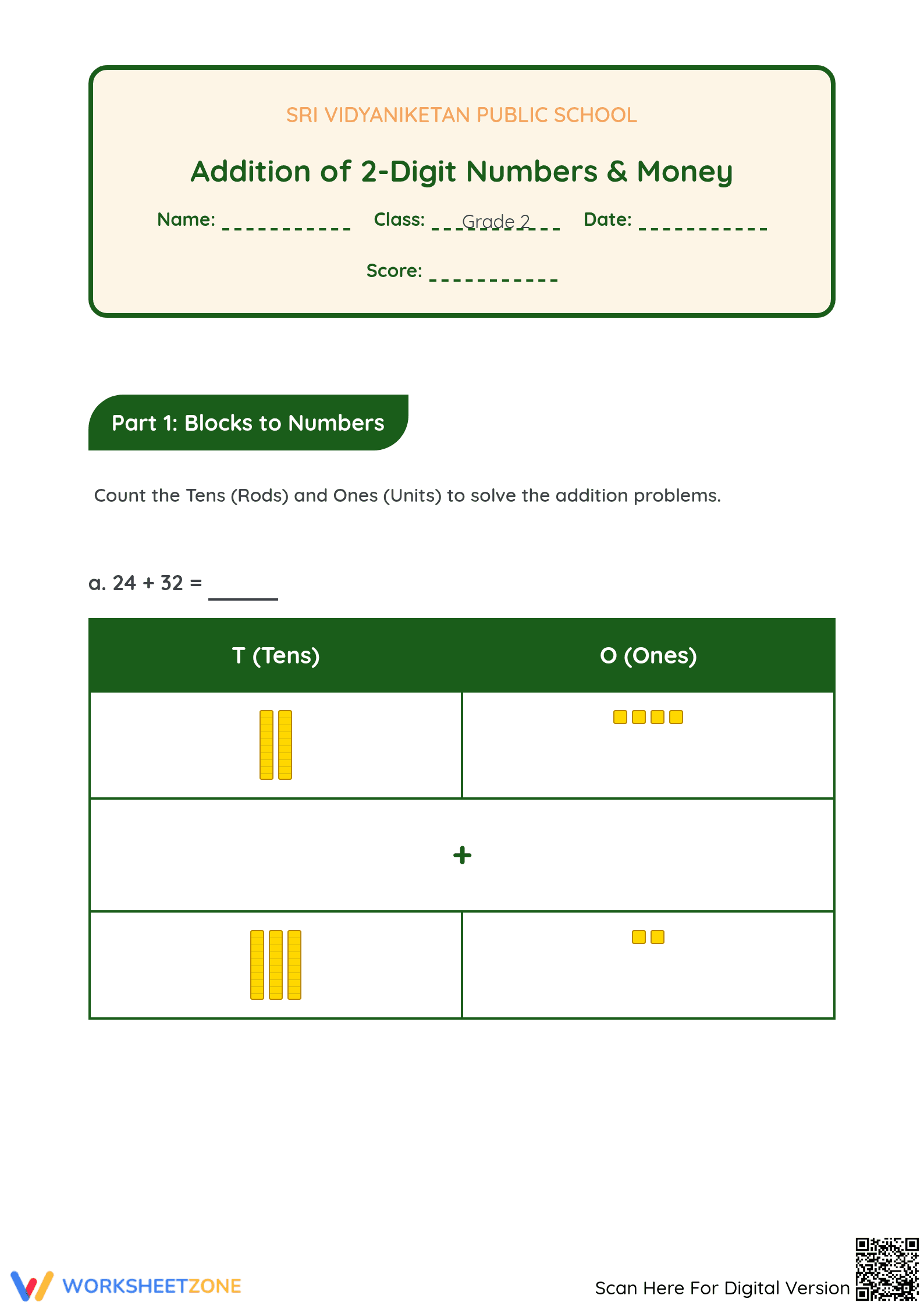
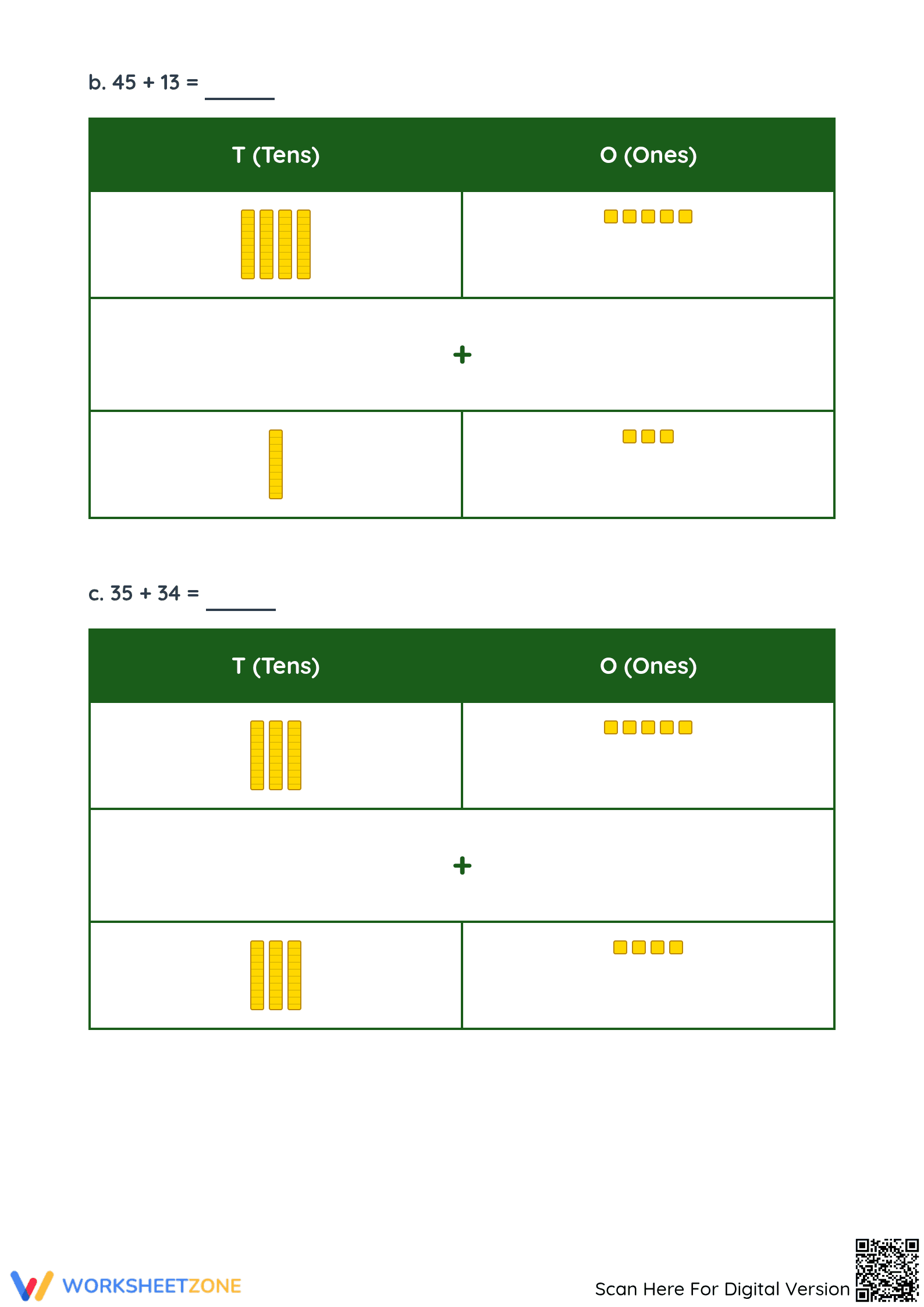
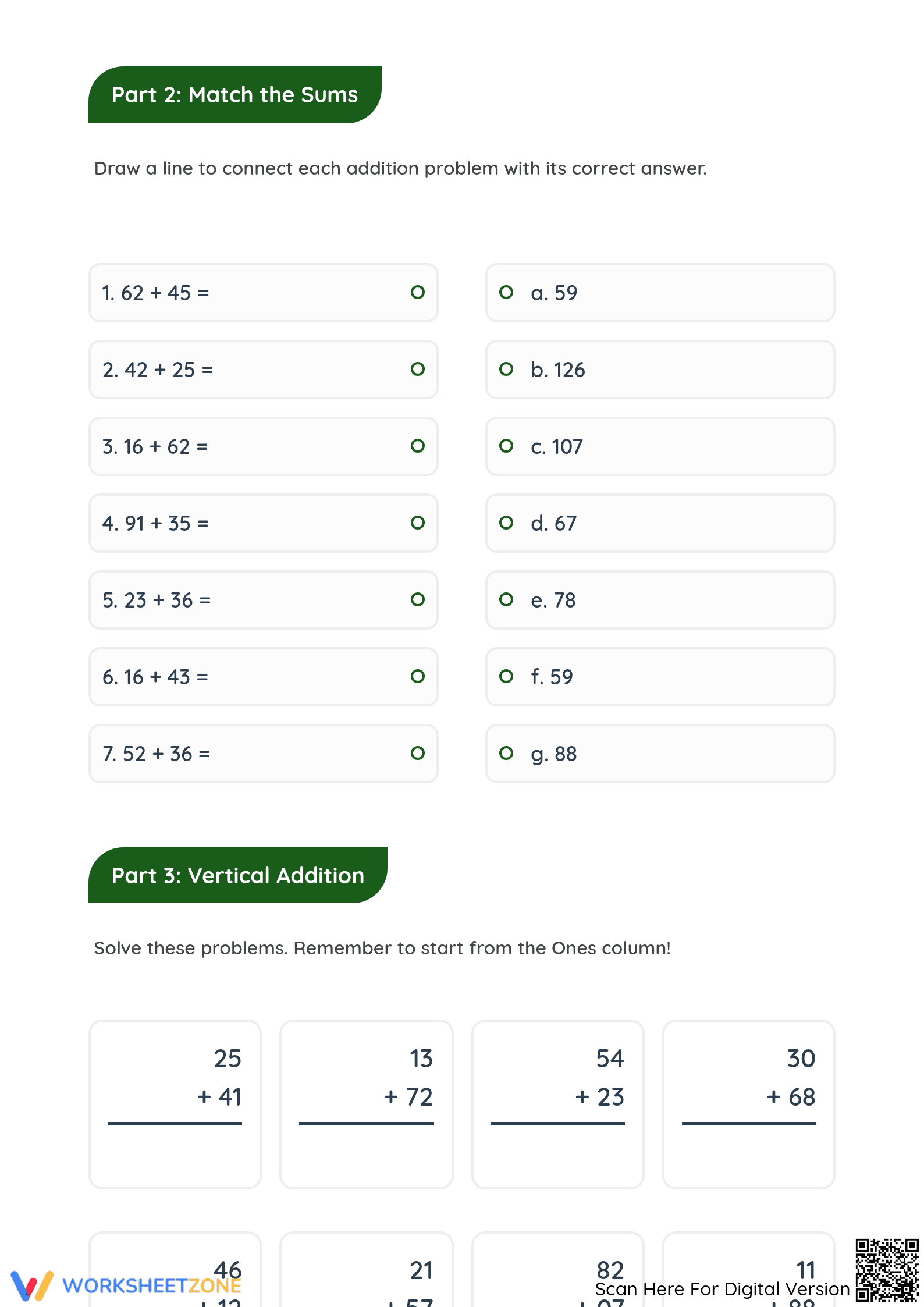
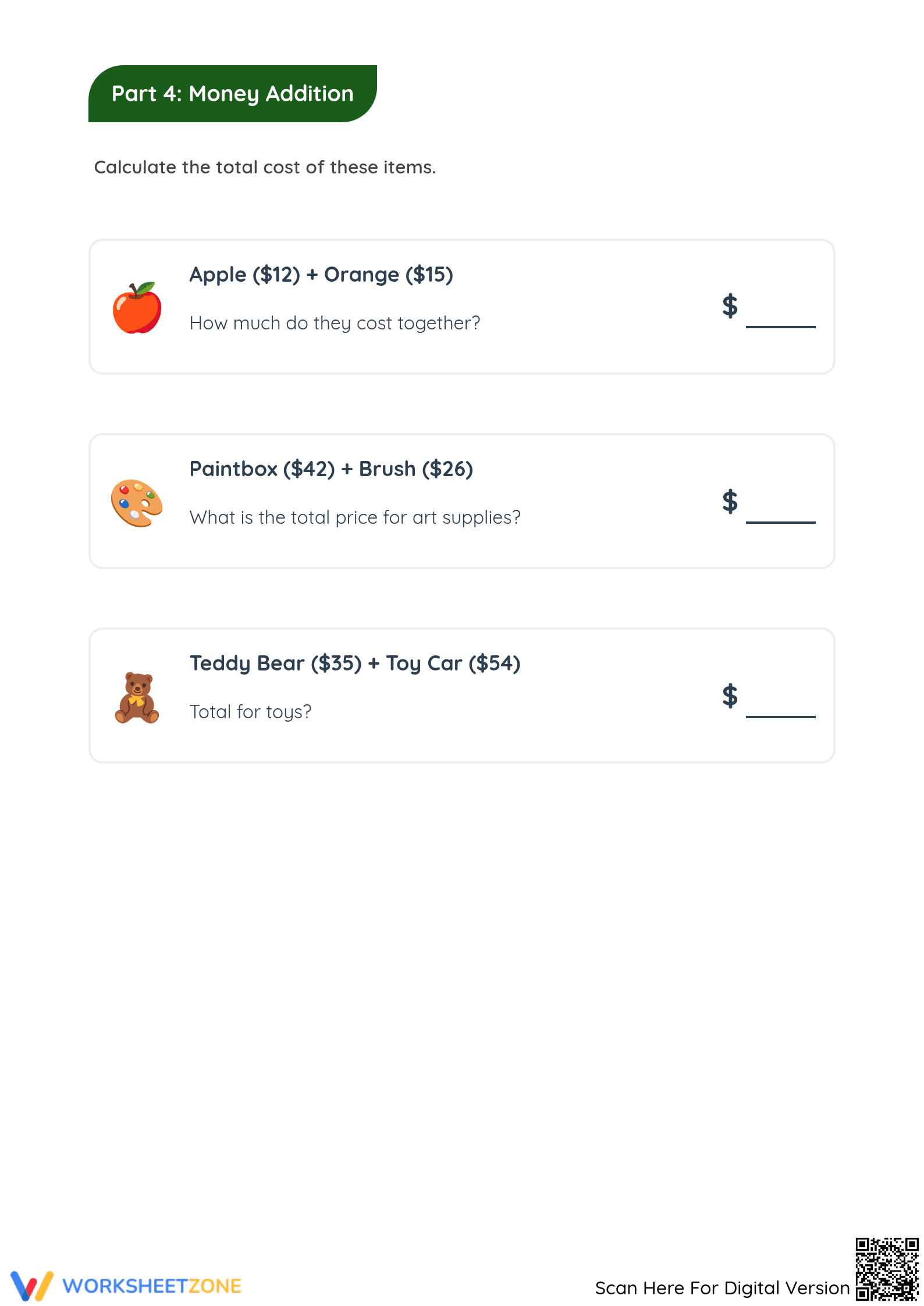
This 4-page PDF resource provides 21 diverse addition tasks. It includes visual base ten block modeling (3 problems), a matching activity (7 problems), traditional vertical alignment practice (8 problems), and money-based word problems (3 problems). The clear layout ensures student focus, while the included full-page answer key allows for immediate feedback and efficient grading by teachers or parents.
Skill Progression
- Guided Practice: Students begin with visual scaffolds using "tens" rods and "ones" units to physically see the composition of sums, reducing cognitive load during the initial learning phase.
- Supported Practice: The matching and vertical sections bridge the gap toward abstraction, requiring students to align place values correctly and calculate sums ranging from 50 to 126.
- Independent Practice: The final "Money Addition" section applies these skills to realistic scenarios involving item costs, ensuring students can transfer their mathematical knowledge to practical life situations.
This structured sequence follows the gradual-release model, moving from concrete "I Do" visual aids to independent "You Do" word problem solving.
Standards Alignment
Primary standard 2.NBT.B.5 (Fluently add and subtract within 100 using strategies based on place value, properties of operations, and/or the relationship between addition and subtraction). This resource specifically targets the addition component within the base-ten number system. This standard code can be copied directly into lesson plans, IEP goals, or district curriculum mapping tools.
How to Use It
Use this worksheet as a mid-unit assessment after introducing place value strategies for addition. For formative observation, watch students during the "Vertical Addition" section to ensure they are starting in the ones column rather than the tens, as this is a common early error. Most Grade 2 students will complete all four pages within a single 25-minute math block.
Who It's For
Designed for Grade 2 students following CCSS or similar state standards. It provides excellent differentiation for Grade 1 students ready for enrichment or Grade 3 learners needing a remedial refresh on base-ten concepts. Pair this resource with physical base ten blocks for students who struggle with the transition from the first to the second page.
This Grade 2 mathematical resource is meticulously designed to support CCSS.MATH.CONTENT.2.NBT.B.5, emphasizing the critical transition from concrete place value representations to abstract procedural fluency. Research from Fisher & Frey (2014) highlights that providing multiple representations—such as the base ten blocks and vertical formats used here—is essential for deepening student understanding of numerical relationships. By incorporating 21 varied tasks that culminate in real-world money applications, the worksheet aligns with the National Assessment of Educational Progress (NAEP) recommendations for integrated skill practice. This multifaceted approach ensures that students do not merely memorize addition facts but develop a conceptual grasp of how digits interact across place value columns. An answer key supports efficiency, allowing educators to quickly address misconceptions. This worksheet serves as a high-quality tool for both initial instruction and targeted intervention in early elementary mathematics.


