


























Views
Downloads

Printable Loud and Quiet Sounds Worksheet | Grade 1 Science
Paste this activity's link or code into your existing LMS (Google Classroom, Canvas, Teams, Schoology, Moodle, etc.).
Students can open and work on the activity right away, with no student login required.
You'll still be able to track student progress and results from your teacher account.
This engaging Grade 1 science worksheet helps students distinguish between loud and quiet sounds in their everyday environment. By analyzing familiar scenarios, young learners build foundational observation skills and develop a practical understanding of volume and sound energy.
At a Glance
- Grade: 1 · Subject: Science
- Standard:
1-PS4-1— Observe and categorize different types of sound volumes- Skill Focus: Identifying loud and quiet sounds
- Format: 3 pages · 16 problems · PDF
- Best For: Independent practice or centers
- Time: 15–20 minutes
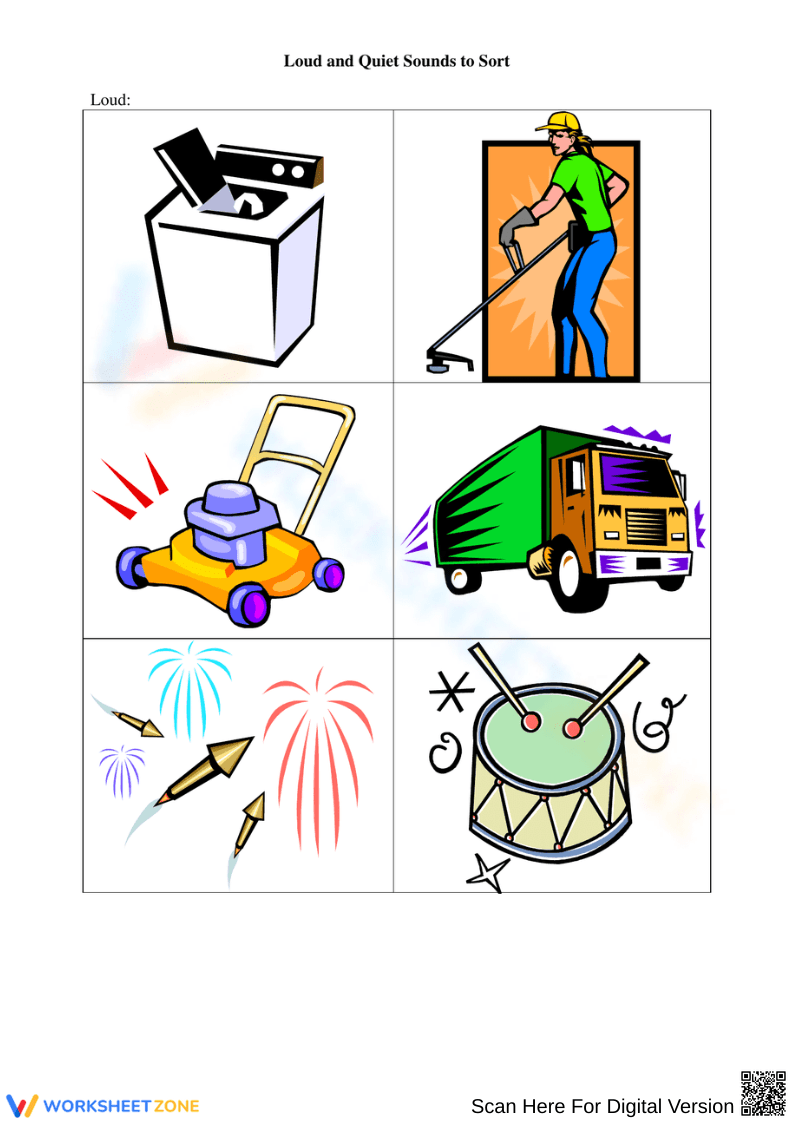
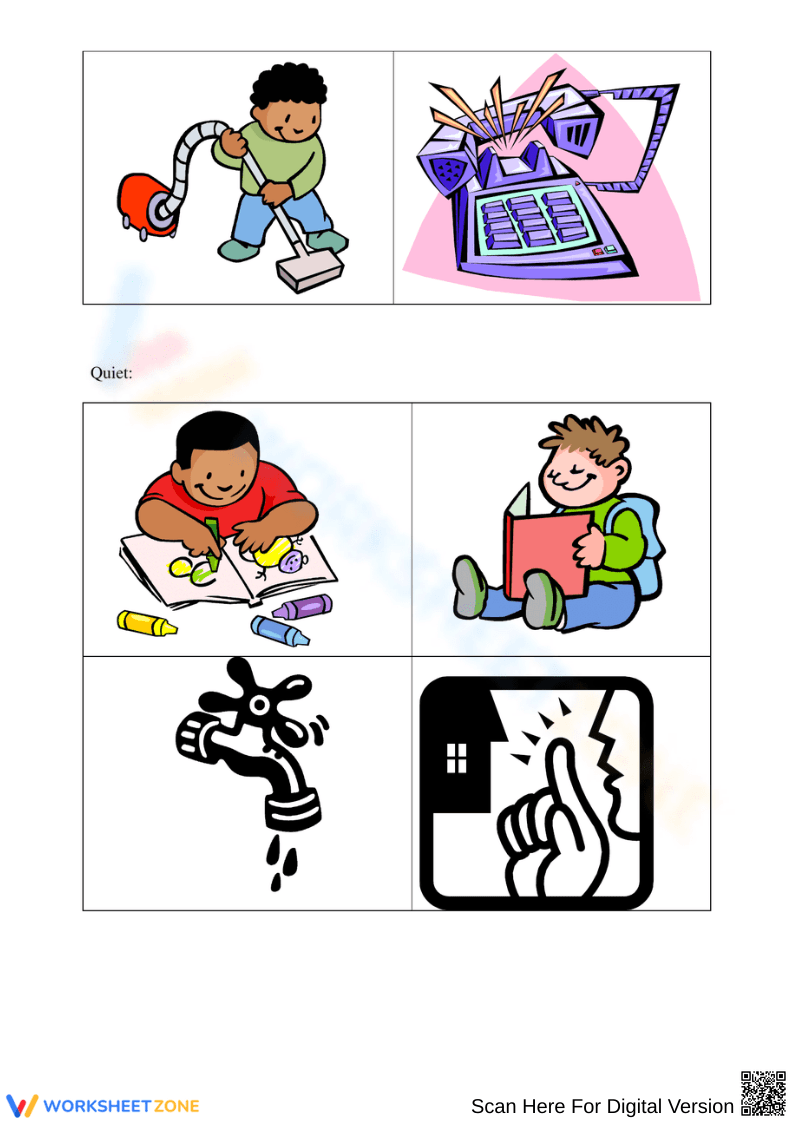
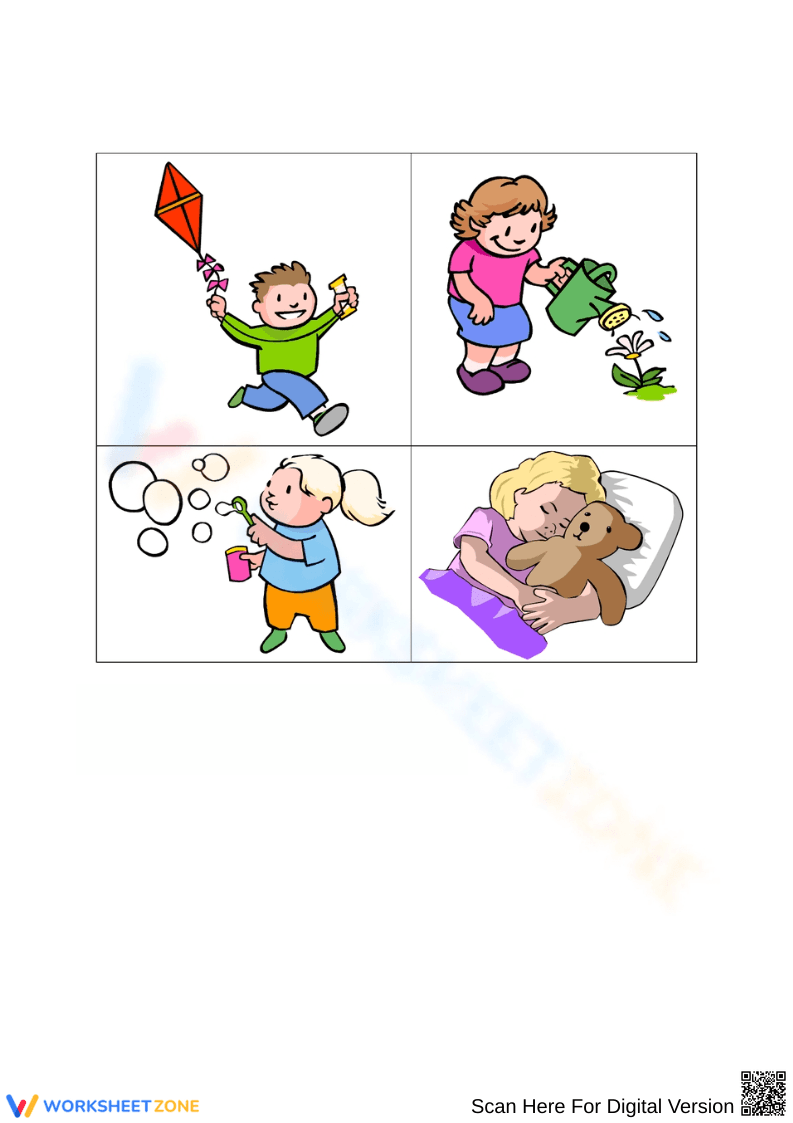
This three-page printable features 16 colorful, highly relatable illustrations that prompt students to categorize everyday activities by their sound level. The first section focuses on loud noises, featuring images like a roaring lawnmower, a rumbling truck, and booming fireworks. Subsequent pages introduce quiet activities, such as a child reading, a dripping faucet, and someone whispering. The clear, visual format makes it highly accessible for early readers.
Designed for immediate classroom implementation, this resource requires absolutely no teacher setup.
- Print (1 minute): Simply download the PDF and print the three-page set. The vibrant images print beautifully in color or grayscale.
- Distribute (1 minute): Hand out the sheets during your science block or place them in a science center for independent sorting.
- Review (3 minutes): Quickly check student understanding as a whole class by having students share which activities they identified as loud or quiet.
With under two minutes of total prep time, this is an ideal, stress-free addition to any substitute teacher plan or busy afternoon schedule.
This activity aligns with 1-PS4-1, supporting students as they investigate how sound works in the physical world. While the standard focuses on vibrations, categorizing volume is a crucial prerequisite skill for understanding sound waves and energy transfer. Both standard codes can be copied directly into lesson plans, IEP goals, or district curriculum mapping tools.
This worksheet is perfect as an introductory activity before direct instruction on sound energy. Teachers can use it as a whole-group sorting game by cutting out the images, or assign it as independent seatwork. As a formative assessment tip, observe whether students can explain why an object is loud or quiet, prompting them to think about the energy required for each action. Expect students to complete the categorization in 15 to 20 minutes.
This resource is primarily designed for first and second-grade students exploring physical science concepts. The heavy reliance on visual cues makes it an excellent tool for English Language Learners (ELLs) and visual learners who benefit from seeing concepts in action. It pairs perfectly with a hands-on lesson using musical instruments or a classroom anchor chart detailing different sound levels.
Integrating visual categorization tasks into early science education significantly enhances a student's ability to grasp abstract physical concepts. When students work on identifying loud and quiet sounds, they are actively engaging with the foundational elements of 1-PS4-1. They learn to observe and categorize different types of sound volumes, which builds critical analytical skills. According to a recent ScienceDirect TpT Analysis, early elementary science resources that utilize familiar, real-world imagery increase student engagement and retention by providing concrete examples of abstract ideas. By evaluating everyday occurrences—like a ringing telephone or a sleeping child—students bridge the gap between their personal experiences and formal scientific observation. This structured approach to volume differentiation ensures that young learners develop the vocabulary and conceptual framework necessary for more advanced physical science investigations in later grades.


