




























Views
Downloads
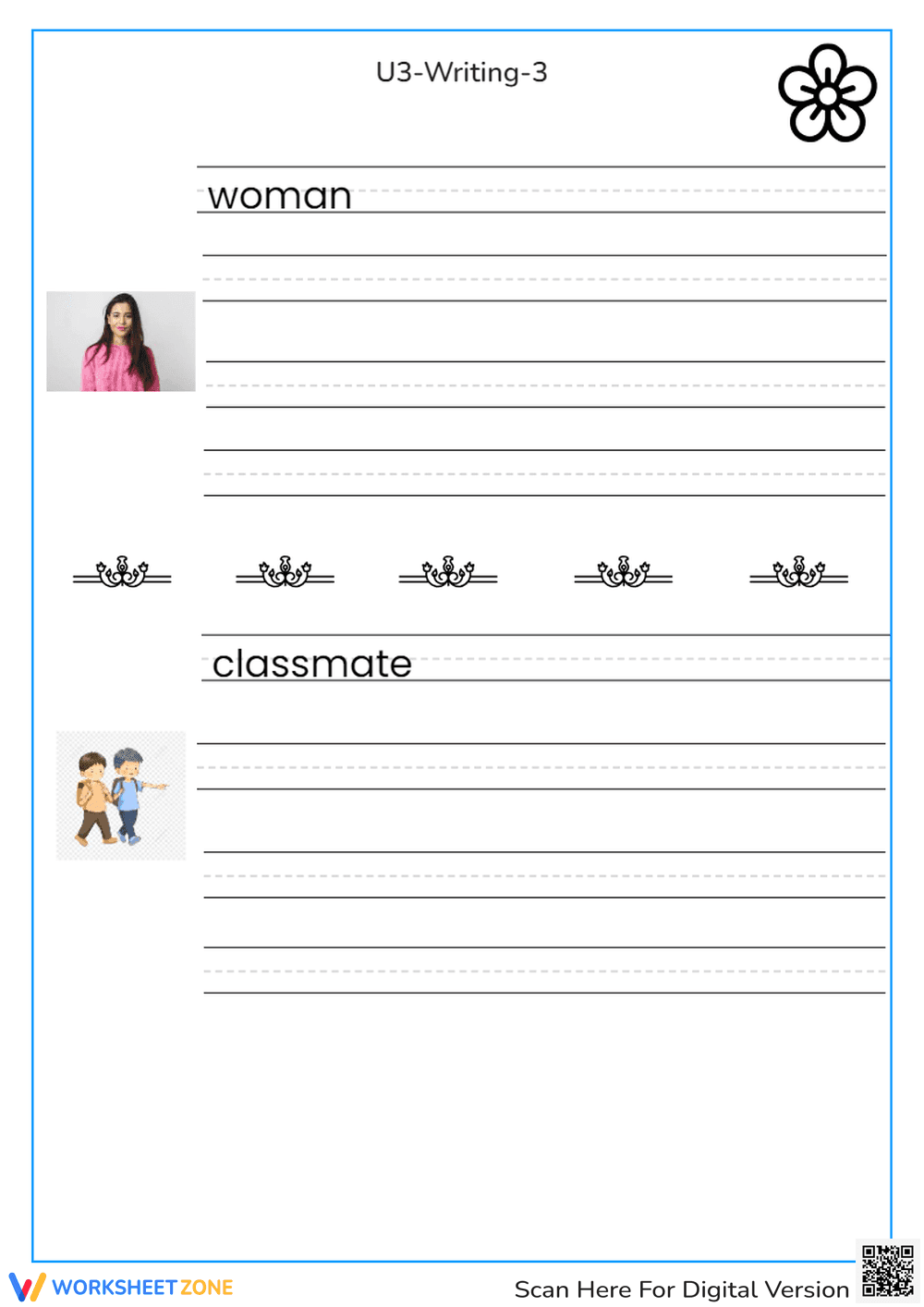

Kindergarten Handwriting Practice | Essential Printable

Paste this activity's link or code into your existing LMS (Google Classroom, Canvas, Teams, Schoology, Moodle, etc.).
Students can open and work on the activity right away, with no student login required.
You'll still be able to track student progress and results from your teacher account.
This Kindergarten handwriting worksheet provides focused practice for early writers to develop fine motor skills and letter formation. By tracing and copying high-frequency words, students build the muscle memory necessary for legible writing. This resource bridges the gap between letter recognition and word production through structured, repetitive practice on primary-ruled lines.
At a Glance
- Grade: Kindergarten · Subject: Handwriting
- Standard:
CCSS.ELA-LITERACY.L.K.1.A— Print many upper- and lowercase letters with proper formation- Skill Focus: Letter formation and word copying
- Format: 1 page · 2 target words · Visual cues included · PDF
- Best For: Independent morning work or literacy centers
- Time: 10–15 minutes
What's Inside
The worksheet features two specific vocabulary words, "woman" and "classmate," paired with clear visual illustrations to support word recognition. Each word is presented in a clear font followed by 8 rows of primary-ruled lines with dotted mid-lines. This layout encourages students to practice the word multiple times, ensuring they understand spacing and height requirements for different characters.
Zero-Prep Workflow
This resource is designed for immediate classroom implementation. 1. Print: Select the single-page PDF and print enough copies for your group (30 seconds). 2. Distribute: Hand out the sheets during your writing block or as students arrive (1 minute). 3. Review: Walk the room to provide immediate feedback on pencil grip and stroke order (ongoing). Total teacher preparation time is under 2 minutes, making it an ideal sub plan addition.
Standards Alignment
The primary focus is `CCSS.ELA-LITERACY.L.K.1.A`, which requires students to print many upper- and lowercase letters. By practicing multi-letter words, students also touch upon `CCSS.ELA-LITERACY.L.K.1.B`, using frequently occurring nouns. Both standard codes can be copied directly into lesson plans, IEP goals, or district curriculum mapping tools to ensure compliance with state and national frameworks.
How to Use It
Use this worksheet as a formative assessment tool during the first 15 minutes of the school day. Observe students as they write to identify those struggling with specific letter strokes, such as the "w" in woman or the "s" in classmate. It also serves as an excellent quiet activity for students who finish their primary literacy tasks early or as a homework reinforcement tool.
Who It's For
This resource is ideal for Kindergarten students, English Language Learners (ELLs) who need visual support for new vocabulary, and students receiving occupational therapy for fine motor development. It pairs naturally with an anchor chart showing proper letter formation strokes or a direct instruction lesson on community members and school relationships.
According to Fisher & Frey (2014), the gradual release of responsibility begins with clear modeling, which this worksheet supports through its "see and copy" format. Research indicates that repetitive handwriting practice in early childhood is not merely a motor task but a cognitive one that reinforces letter-sound recognition and orthographic mapping. This Grade Kindergarten handwriting resource addresses `CCSS.ELA-LITERACY.L.K.1.A` by providing 8 lines of structured practice for specific vocabulary. By integrating visual cues with repetitive writing tasks, the worksheet helps students transition from isolated letter formation to fluid word production. This approach aligns with evidence-based literacy instruction that emphasizes the importance of handwriting fluency in freeing up cognitive resources for higher-level composition tasks later in the elementary years. Teachers can use this 1-page tool to document progress in fine motor control and letter-size consistency across the school year.


