


























Views
Plays
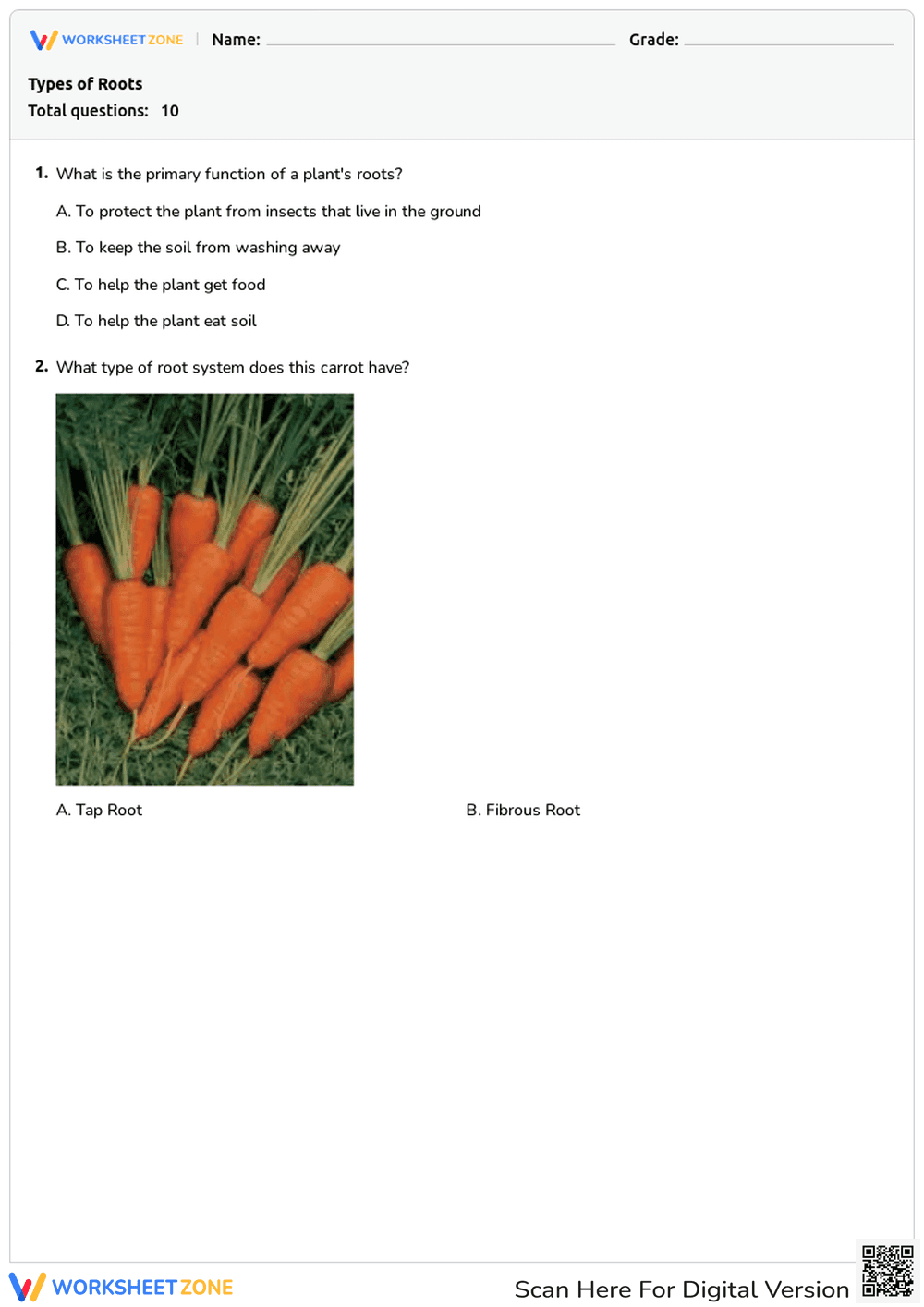
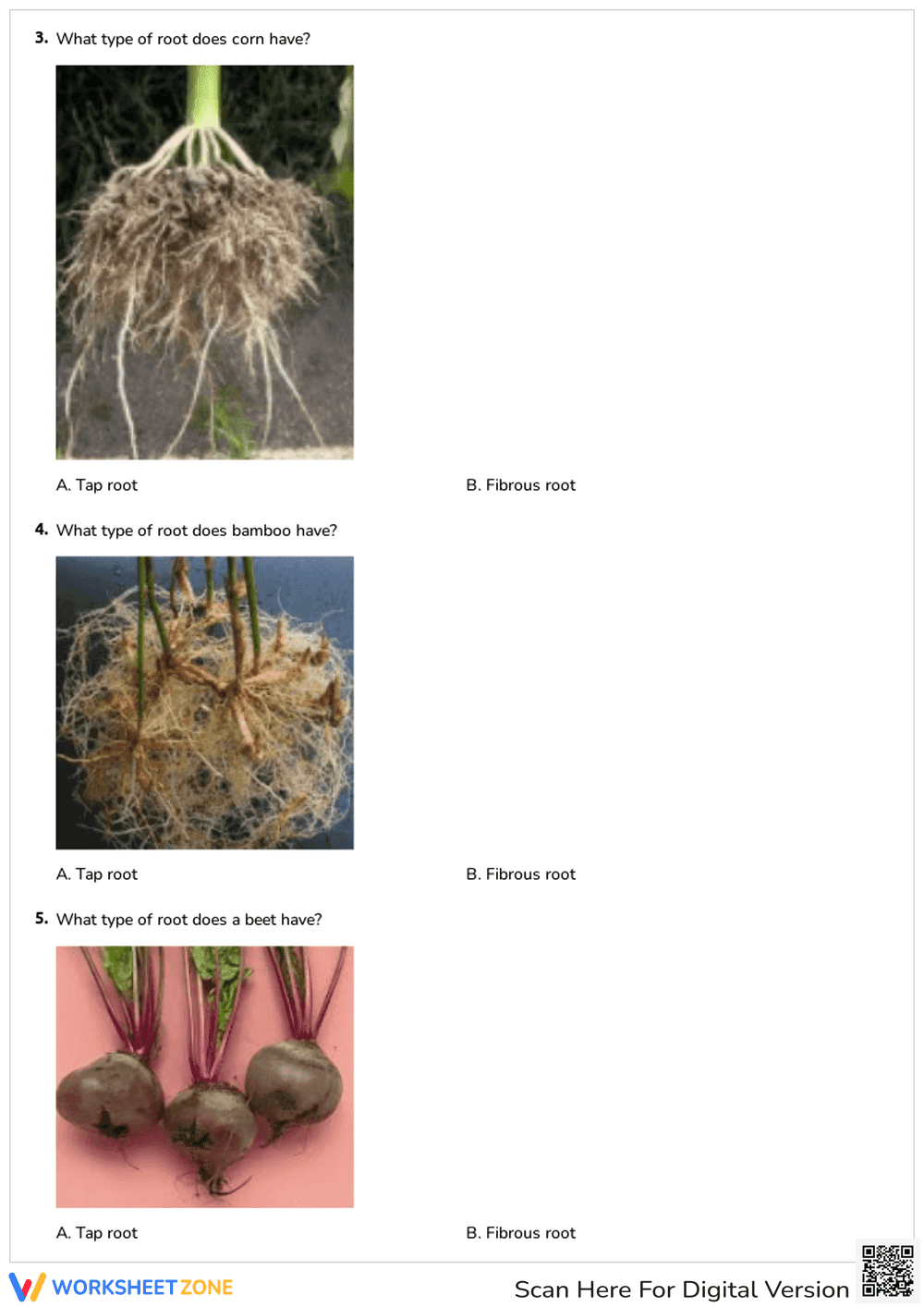
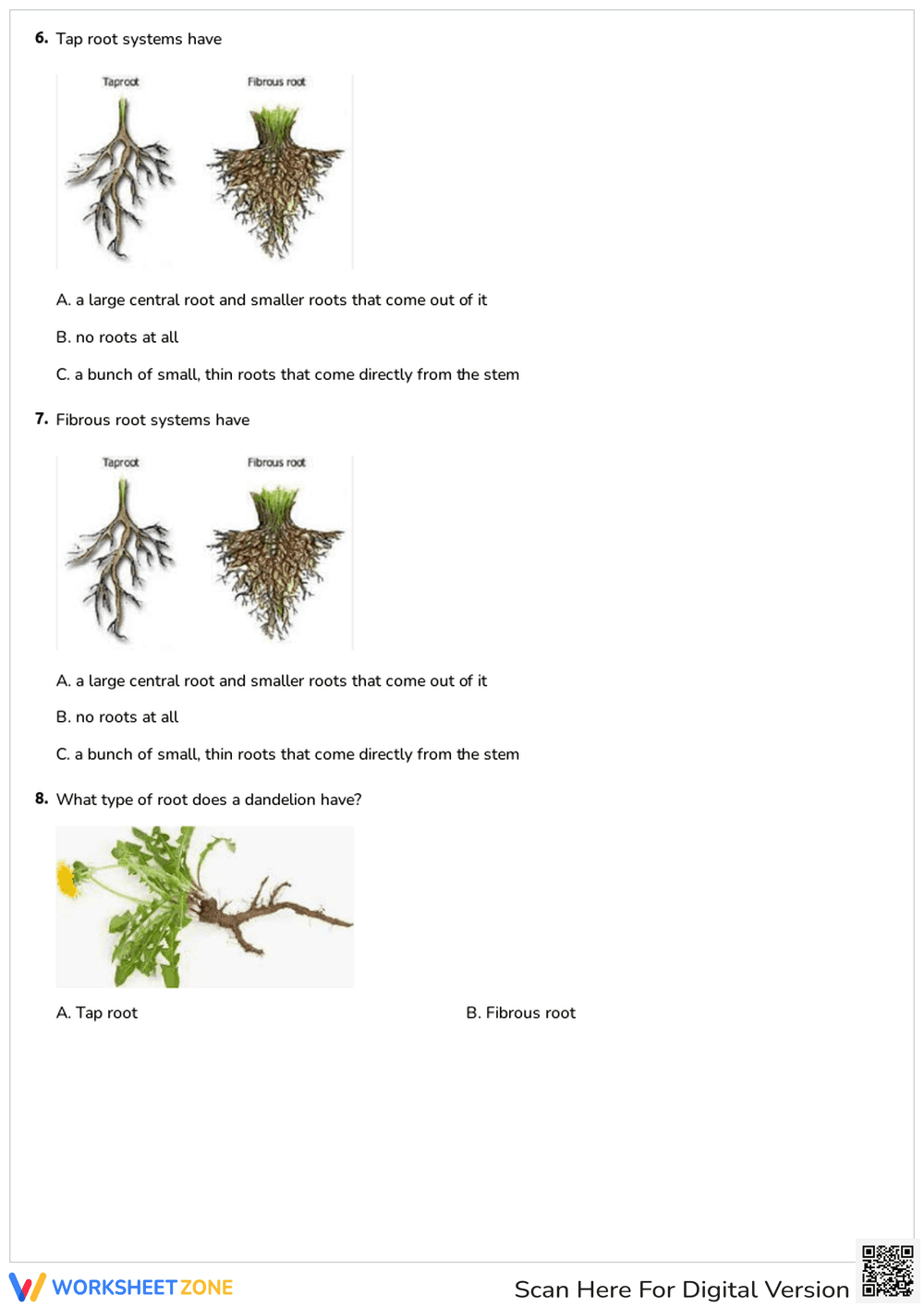
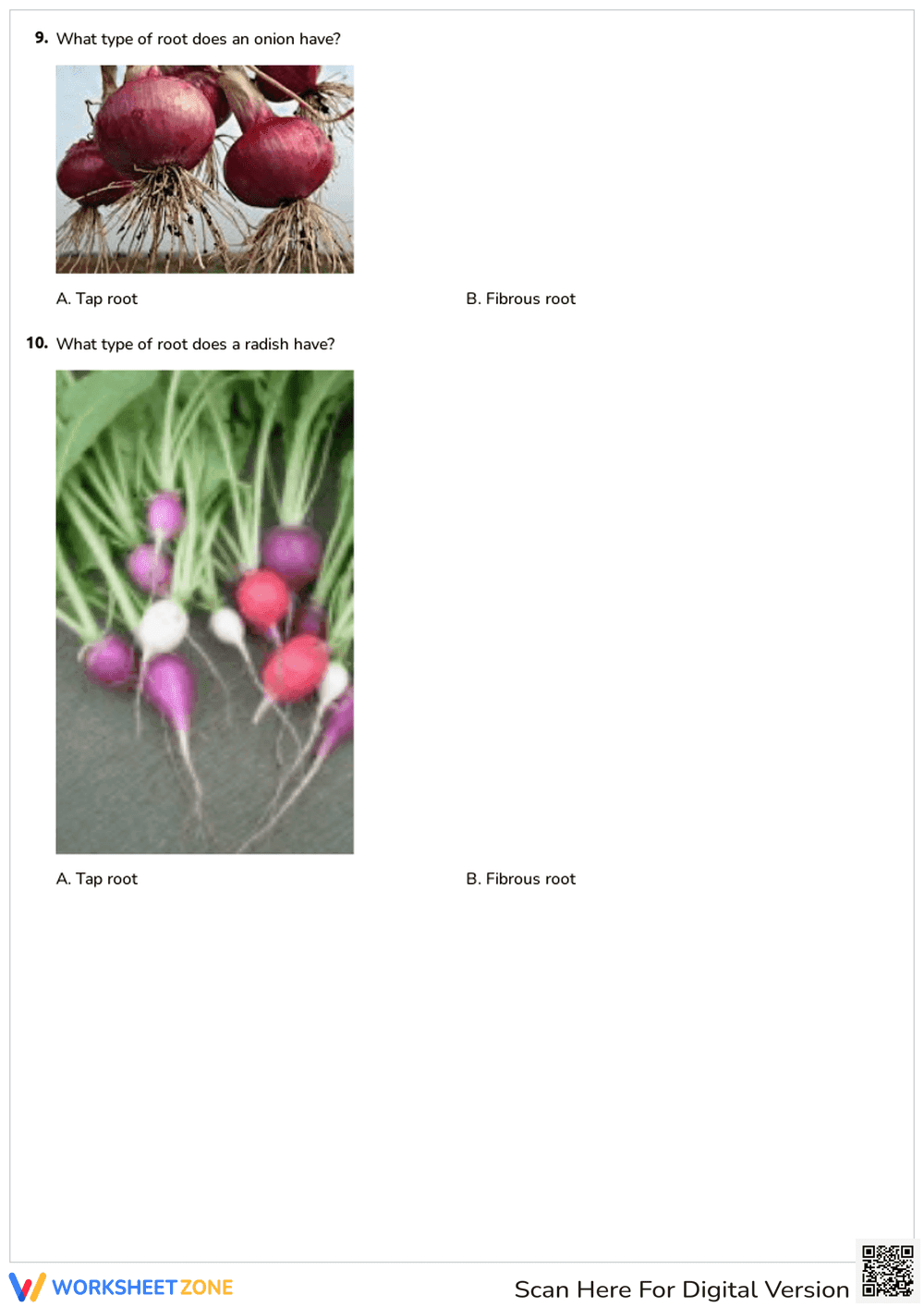

Types of Roots Worksheet | Grade 1-3 Essential Science
Paste this activity's link or code into your existing LMS (Google Classroom, Canvas, Teams, Schoology, Moodle, etc.).
Students can open and work on the activity right away, with no student login required.
You'll still be able to track student progress and results from your teacher account.
This Grade 1-3 science worksheet helps students distinguish between tap and fibrous root systems through visual identification and functional analysis. By examining real-world examples like carrots and corn, learners develop a concrete understanding of how plant structures support survival and growth in various environments.
At a Glance
- Grade: 1-3 · Subject: Life Science
- Standard:
1-LS1-1— Identify how plant parts help them survive, grow, and meet their needs- Skill Focus: Root system identification
- Format: 4 pages · 10 problems · Answer key included · PDF
- Best For: Formative assessment or science sub plans
- Time: 15–20 minutes
This 4-page PDF contains 10 multiple-choice questions designed for quick assessment. It features high-quality images of various plants, including carrots, beets, and onions, to provide visual context for biological concepts. The layout includes clear definitions of root types and a section on the primary biological functions of roots, such as nutrient absorption and soil stabilization.
Zero-Prep Workflow
- Print (1 min): Generate the four-page document directly from your browser or PDF reader.
- Distribute (1 min): Hand out the quiz as a standalone activity or a supplement to a plant biology lesson.
- Review (5 min): Use the included answer key for rapid grading or a whole-class review session.
This streamlined workflow makes it an ideal choice for emergency sub plans or end-of-unit reviews where teacher preparation time is limited to under two minutes.
Standards Alignment
Primary standard `1-LS1-1`: "Use materials to design a solution to a human problem by mimicking how plants and/or animals use their external parts to help them survive, grow, and meet their needs." This worksheet specifically addresses the survival functions and structural variations of root systems. Both standard codes can be copied directly into lesson plans, IEP goals, or district curriculum mapping tools.
How to Use It
Use this as a formative assessment after a direct instruction lesson on plant anatomy. It works well as a "check for understanding" to see if students can apply definitions to visual examples. During the activity, observe if students can distinguish the single thick root of a tap system from the web-like structure of a fibrous system. Expected completion time is 15-20 minutes.
Who It's For
Designed for early elementary students in Grades 1, 2, and 3 learning basic biology. It is particularly effective for visual learners who benefit from the photographic examples provided for each question. Pair this with a live root observation activity or a plant anatomy anchor chart for a comprehensive learning experience.
According to Fisher & Frey (2014), visual scaffolding through photographic examples significantly enhances the acquisition of domain-specific vocabulary in early science education. This worksheet utilizes this principle by pairing the terms "tap root" and "fibrous root" with clear, recognizable images of common vegetables. By engaging with 10 distinct tasks, students move from simple identification to understanding the structural differences that define plant survival strategies. Aligned with the 1-LS1-1 standard, this resource ensures that Grade 1-3 learners meet core life science benchmarks while developing critical observation skills. The structured format allows for immediate feedback, a key component of effective formative assessment in the primary classroom. This resource provides a reliable method for documenting student progress toward mastery of plant biology concepts without requiring extensive teacher setup.


