




























Views
Downloads

Turkey Life Cycle Science Cards | Grade 3 Essential

Paste this activity's link or code into your existing LMS (Google Classroom, Canvas, Teams, Schoology, Moodle, etc.).
Students can open and work on the activity right away, with no student login required.
You'll still be able to track student progress and results from your teacher account.
These turkey life cycle science cards provide a hands-on way for students to explore biological growth and development. By using these Montessori-style 3-part cards, learners identify key stages from egg to adult turkey. This resource simplifies complex biological concepts into digestible, visual steps that promote independent discovery and vocabulary acquisition in the classroom.
At a Glance
- Grade: 3 · Subject: Science
- Standard:
3-LS1-1— Develop models to describe that organisms have unique and diverse life cycles- Skill Focus: Turkey Life Cycle
- Format: 3 pages · 6 stages · Answer key included · PDF
- Best For: Science centers and independent vocabulary practice
- Time: 15–20 minutes
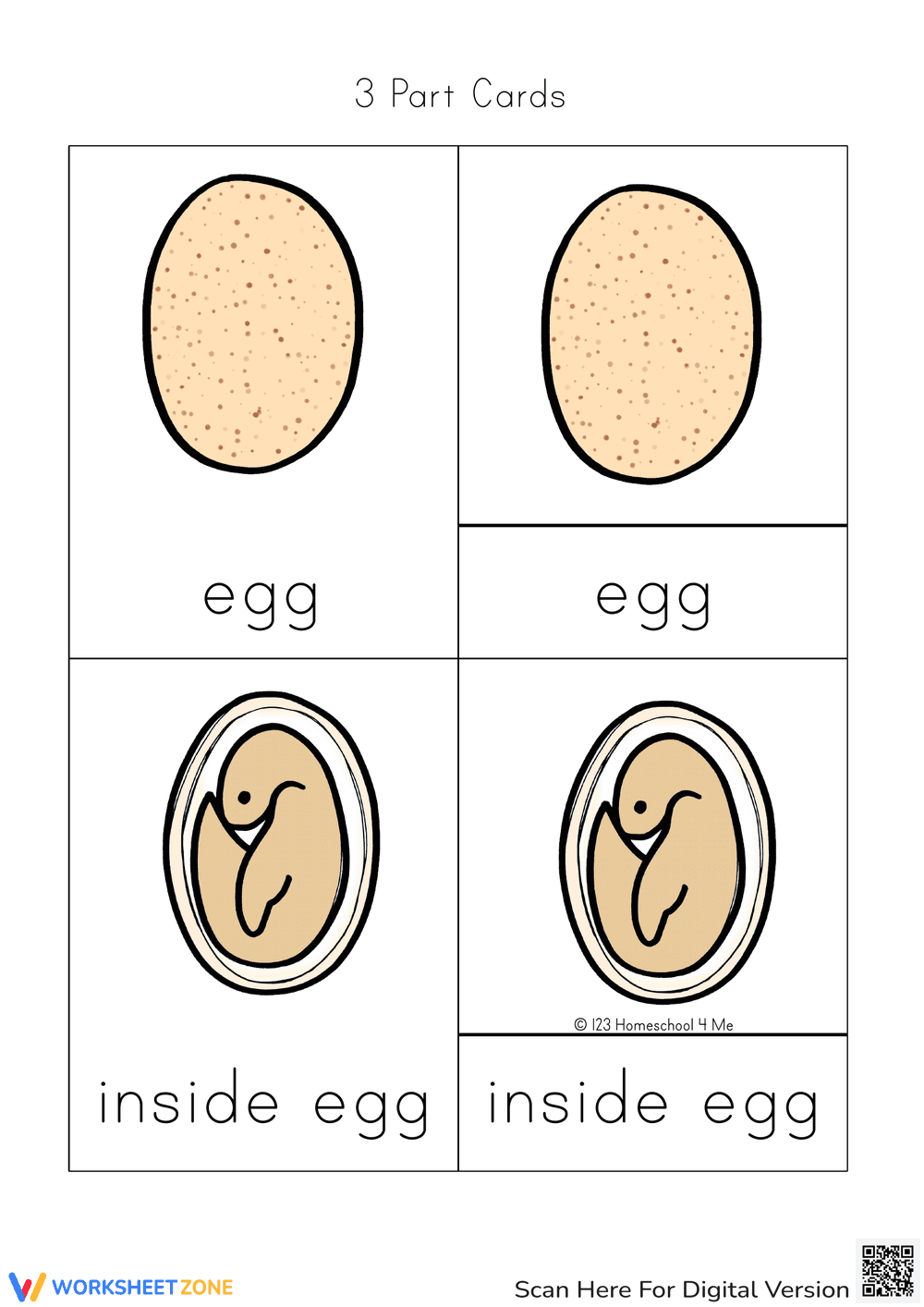
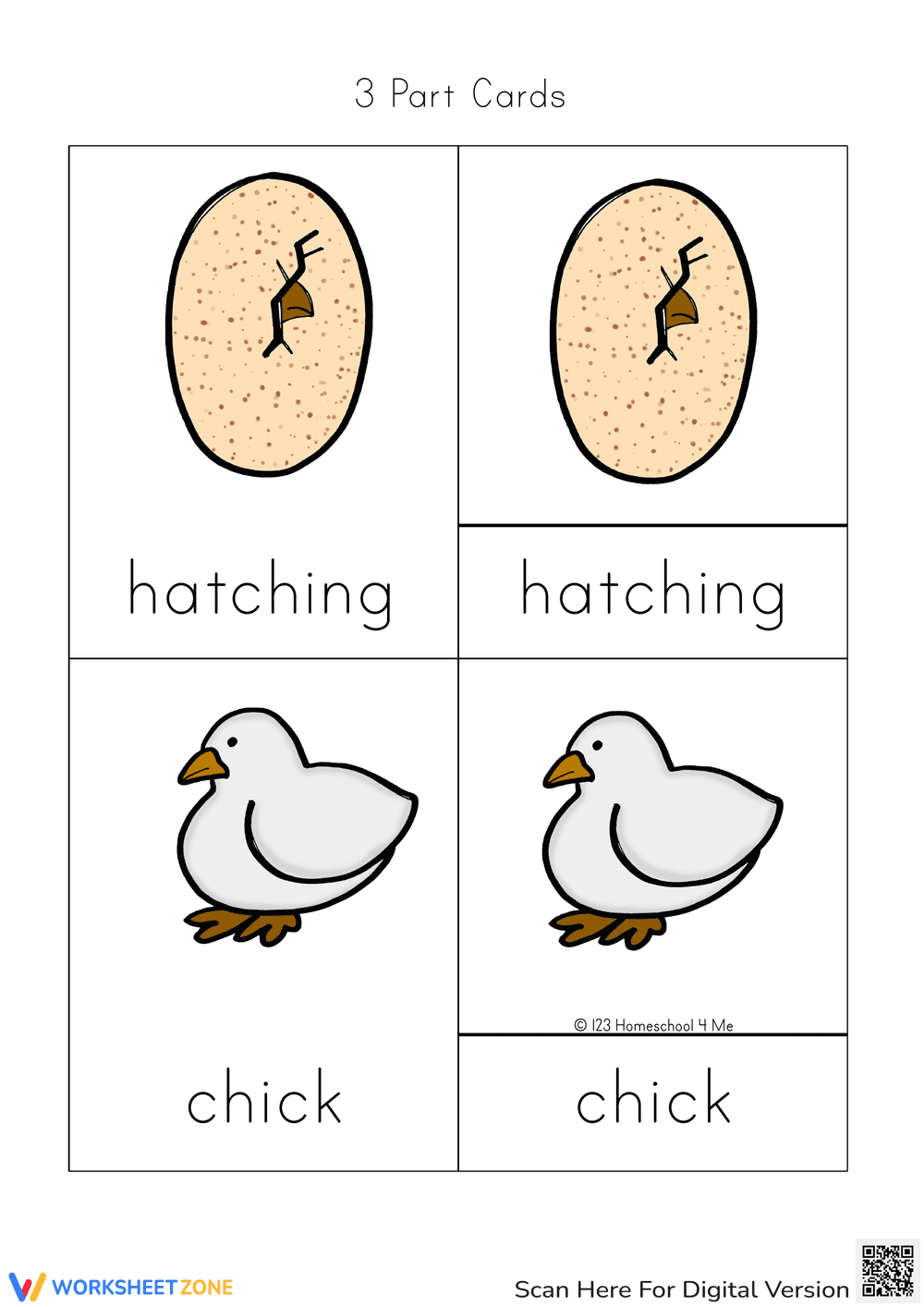
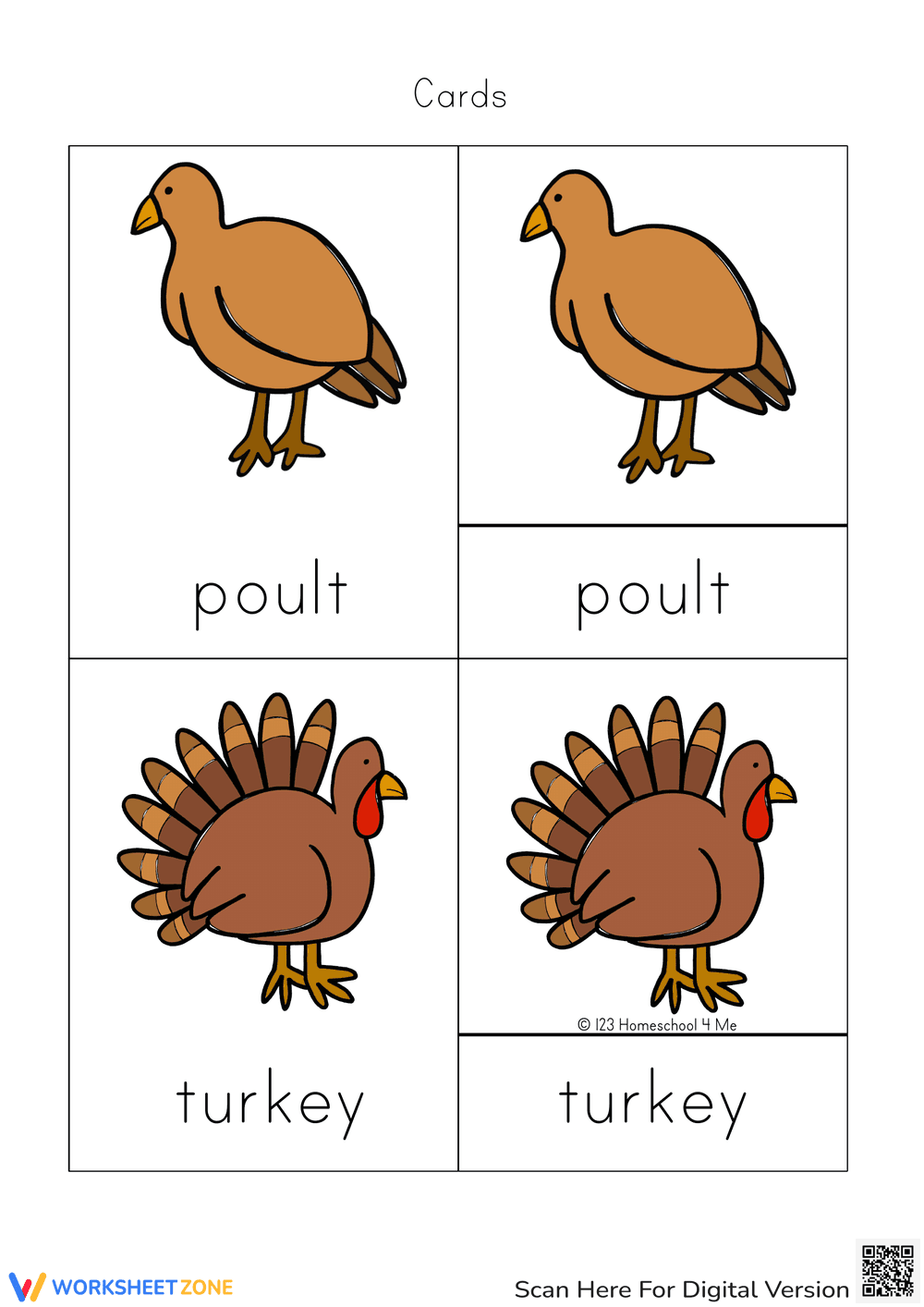
The set includes 3 high-quality PDF pages featuring 6 distinct stages of a turkey's development: egg, embryo (inside egg), hatching, chick, poult, and adult turkey. Each stage is presented in the classic 3-part card format: a control card with image and label, a picture card, and a separate word label. This structure allows for self-correction and independent study during science rotations.
Implementing this resource requires minimal effort. First, print the 3 pages on heavy cardstock for durability (1 minute). Second, cut along the provided lines to separate the control cards, images, and labels (5 minutes). Finally, distribute the cards to science centers or small groups for immediate student engagement (1 minute). Total teacher preparation time is under 7 minutes, making this an ideal solution for busy mornings or sub plans.
This resource aligns with `3-LS1-1`, which requires students to develop models to describe that organisms have unique and diverse life cycles but all have in common birth, growth, reproduction, and death. By sequencing these cards, students visualize the specific growth patterns of poultry. Both standard codes can be copied directly into lesson plans, IEP goals, or district curriculum mapping tools.
Use these cards during a life science unit as a primary sorting activity. After a direct instruction lesson on birds, place the cards in a science station for students to sequence the stages chronologically. Teachers can perform a formative assessment by observing if students can correctly match the "poult" and "chick" labels to the corresponding images without using the control cards as a guide.
This resource is designed for Grade 3 students but is highly effective for English Language Learners (ELLs) and students with IEPs who benefit from visual aids. It pairs naturally with a non-fiction passage about farm animals or a classroom anchor chart detailing bird anatomy and development. The clear illustrations ensure that students of all reading levels can participate in the science curriculum.
According to the RAND AIRS 2024 report on elementary science instruction, visual modeling of biological processes significantly improves long-term retention of life science vocabulary. These turkey life cycle cards utilize the 3-part card method, a proven pedagogical tool that supports the 3-LS1-1 standard by allowing students to construct a mental model of avian growth. Research from Fisher & Frey (2014) emphasizes that scaffolded visual tools like these help bridge the gap between observation and conceptual understanding. By providing 6 distinct stages, including the often-overlooked poult phase, the worksheet ensures a comprehensive look at the organism's development. This resource is an effective, evidence-based addition to any Grade 3 curriculum focusing on life cycles and biological diversity, offering a clear path to mastery through tactile and visual interaction with scientific concepts.


