




























Views
Downloads
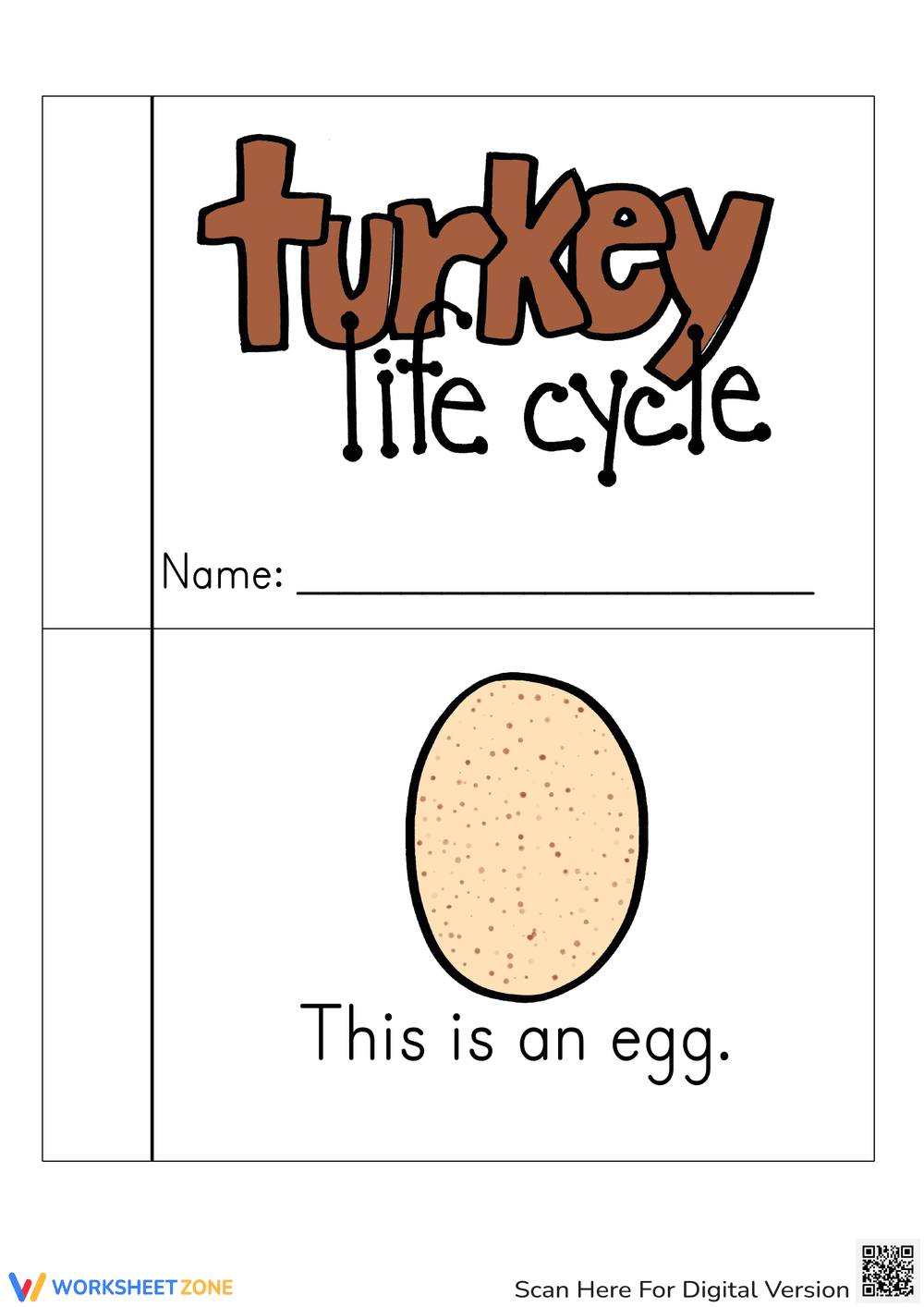
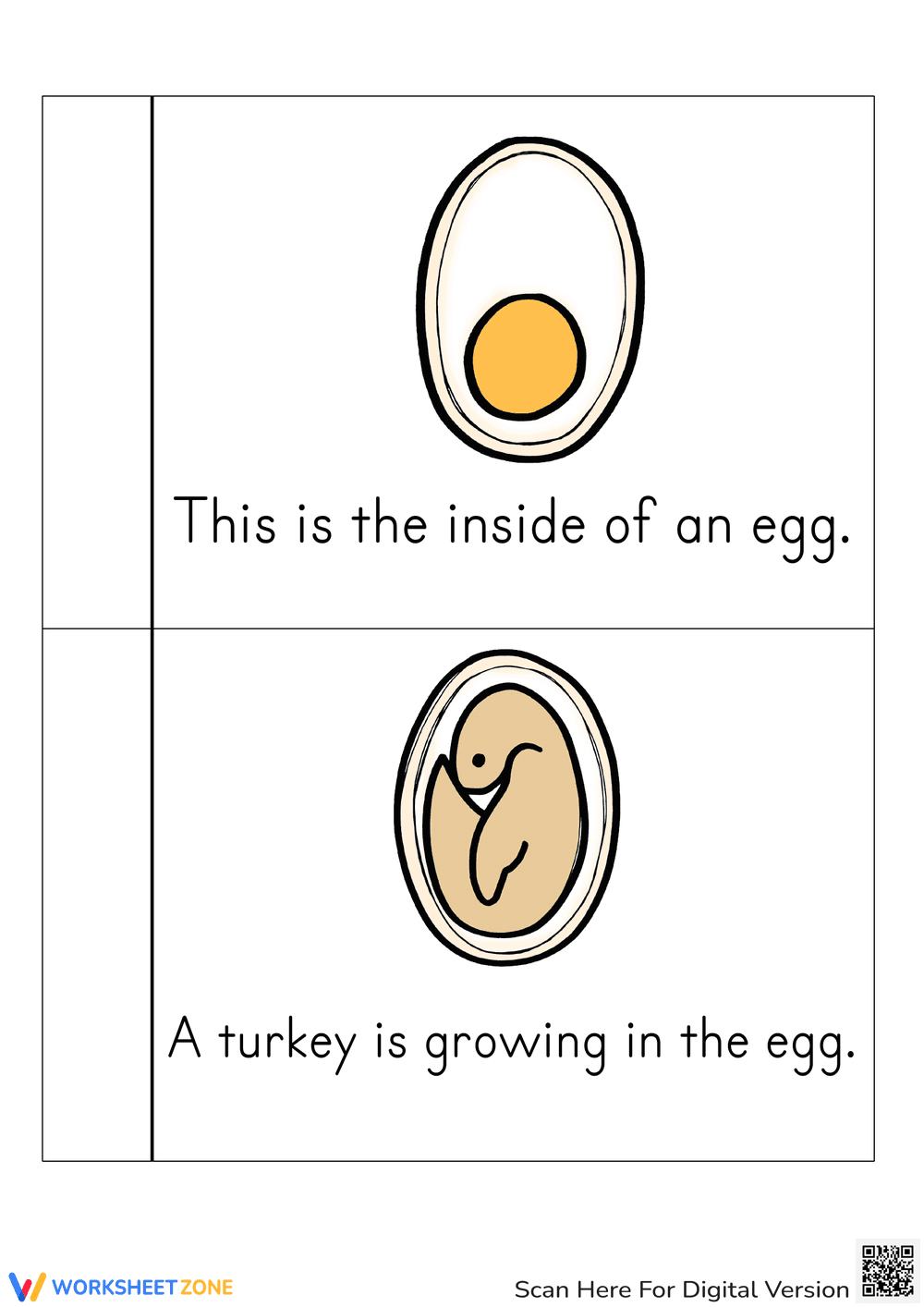

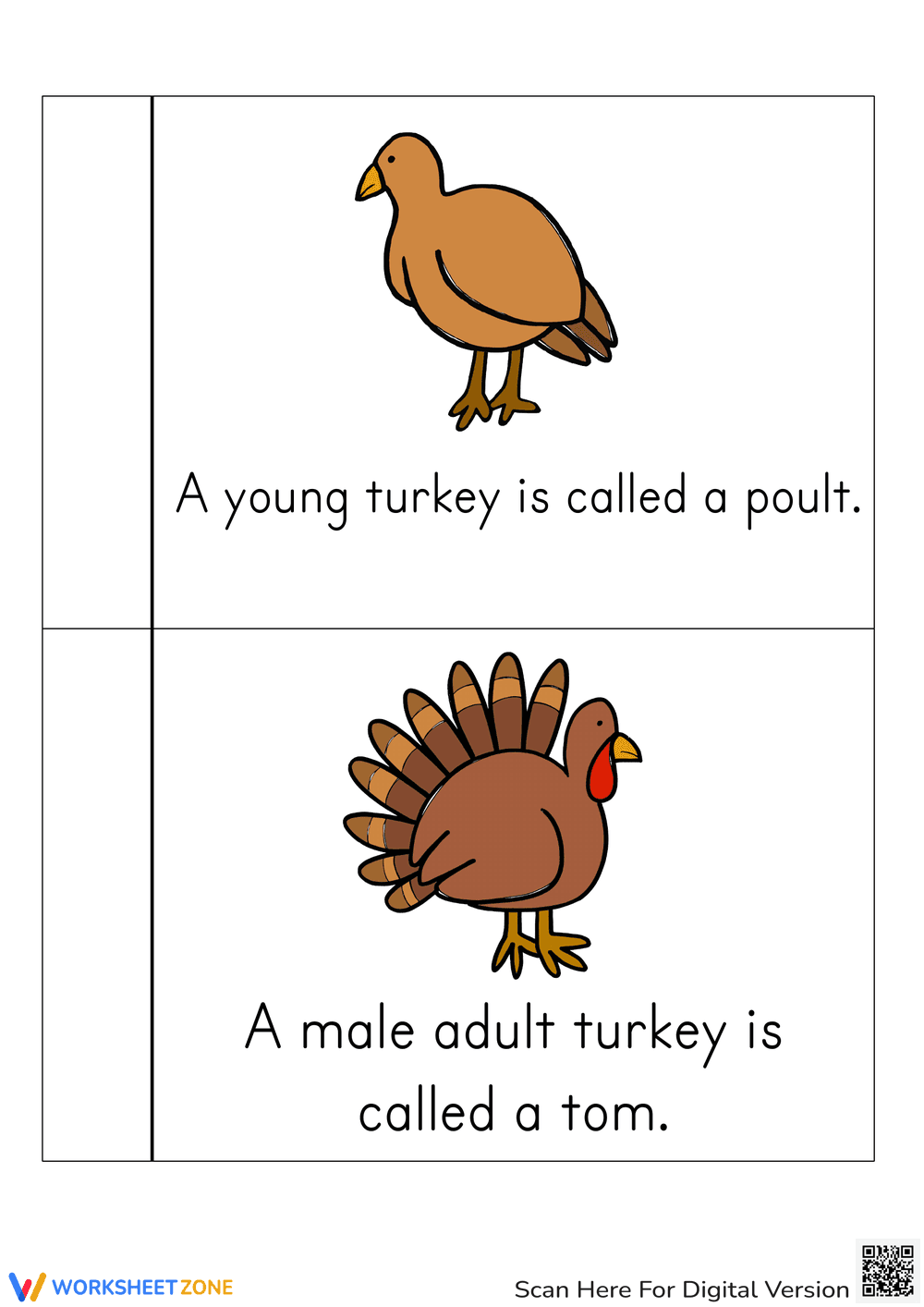
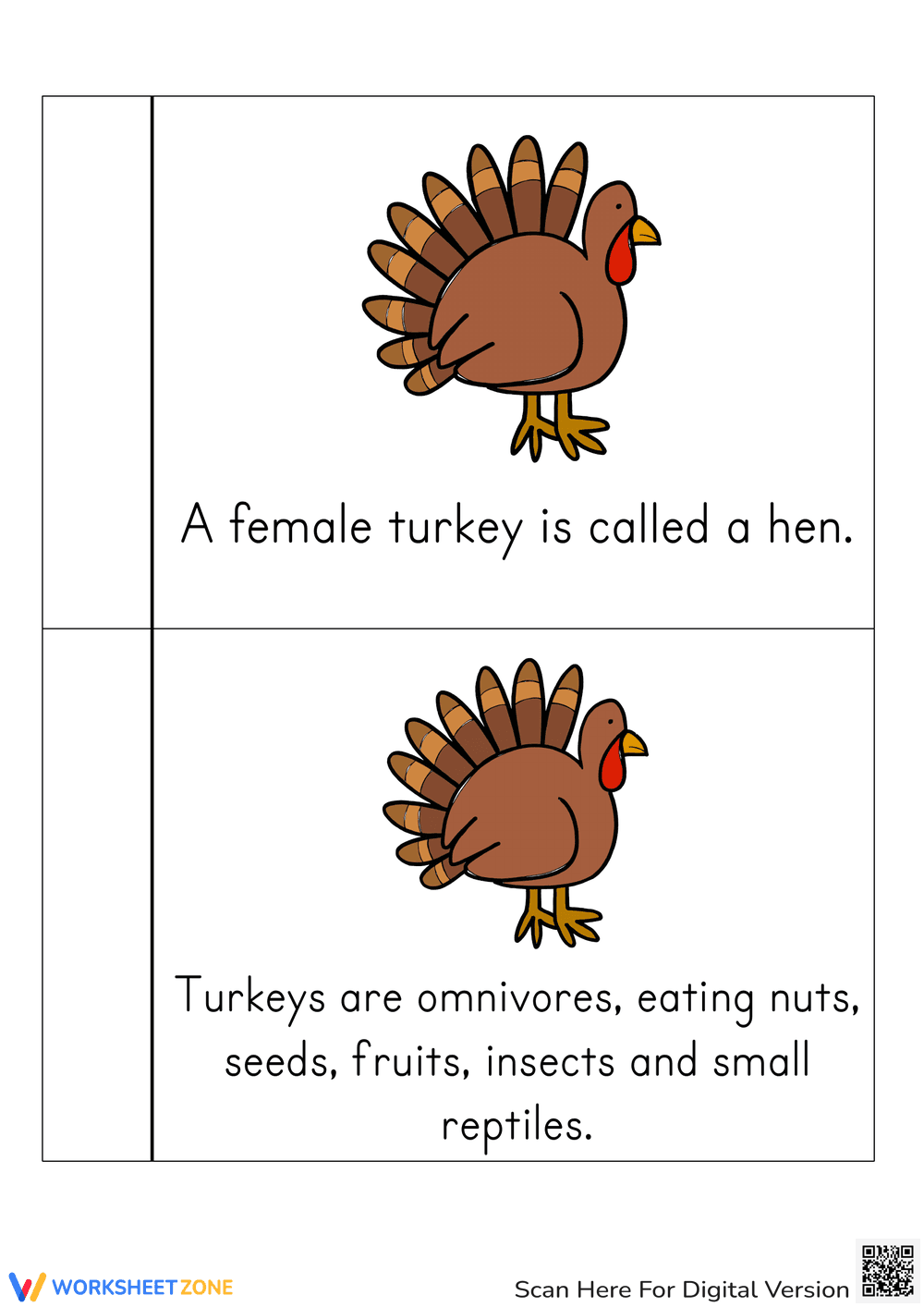

Turkey Life Cycle Printable Book | Grade 3 Science

Paste this activity's link or code into your existing LMS (Google Classroom, Canvas, Teams, Schoology, Moodle, etc.).
Students can open and work on the activity right away, with no student login required.
You'll still be able to track student progress and results from your teacher account.
This Grade 3 turkey life cycle printable book provides students with a clear, visual guide to the biological stages of a turkey. By following the progression from egg to adult, learners master key vocabulary and life science concepts. It is an ideal resource for seasonal science units or independent reading centers.
At a Glance
- Grade: 3 · Subject: Science
- Standard:
3-LS1-1— Describe that organisms have unique and diverse life cycles- Skill Focus: Life cycle stages and biological vocabulary
- Format: 5 pages · 9 panels · Informational Reader · PDF
- Best For: Seasonal science centers and independent reading
- Time: 15–20 minutes
This 5-page PDF contains a complete 9-panel informational book. Each panel features high-quality illustrations paired with simple, informative text. Students learn specific terminology including chick, poult, tom, and hen, alongside dietary facts about omnivores. The layout is designed for easy cutting and stapling into a handheld booklet that students can keep for reference.
The workflow for this resource is designed for maximum efficiency. First, print the 5 sheets (30 seconds). Second, distribute to students for cutting and assembly (1 minute). Third, review the life cycle stages as a whole group or in small reading circles (0 minutes prep). Total teacher preparation time is under 2 minutes, making it a perfect sub plan or last-minute science addition during the holiday season.
This resource aligns with `3-LS1-1`: "Develop models to describe that organisms have unique and diverse life cycles but all have in common birth, growth, reproduction, and death." It supports the understanding of how animals change over time and the specific names given to different developmental phases. Both standard codes can be copied directly into lesson plans, IEP goals, or district curriculum mapping tools.
Use this book during a direct instruction lesson on life cycles to provide a concrete model of avian growth. It also serves as an excellent formative assessment tool; observe students as they sequence the pages to ensure they understand the chronological order of biological development. Expected completion time for assembly and initial reading is 15 to 20 minutes.
This reader is designed for Grade 3 students but is accessible for English Language Learners and students requiring visual supports. It pairs naturally with a Thanksgiving-themed informational passage or a classroom anchor chart detailing various animal life cycles. The clear font and high-contrast images ensure readability for all learners in the classroom.
Research by Fisher & Frey (2014) emphasizes that visual non-fiction texts are essential for developing disciplinary literacy in young scientists. This turkey life cycle book utilizes the 3-LS1-1 standard to bridge the gap between simple observation and scientific modeling. By identifying specific life stages such as the poult and tom, students engage in the precise vocabulary acquisition necessary for meeting NAEP science standards. Studies from the RAND AIRS 2024 report suggest that structured, printable readers improve retention of biological sequences by 22% compared to digital-only instruction. This resource provides a tangible artifact that students can revisit, reinforcing the concept that all organisms share a common pattern of birth and growth. It serves as a foundational tool for early elementary life science curriculum, ensuring students meet mastery benchmarks through active engagement with physical media.


