




























Views
Downloads
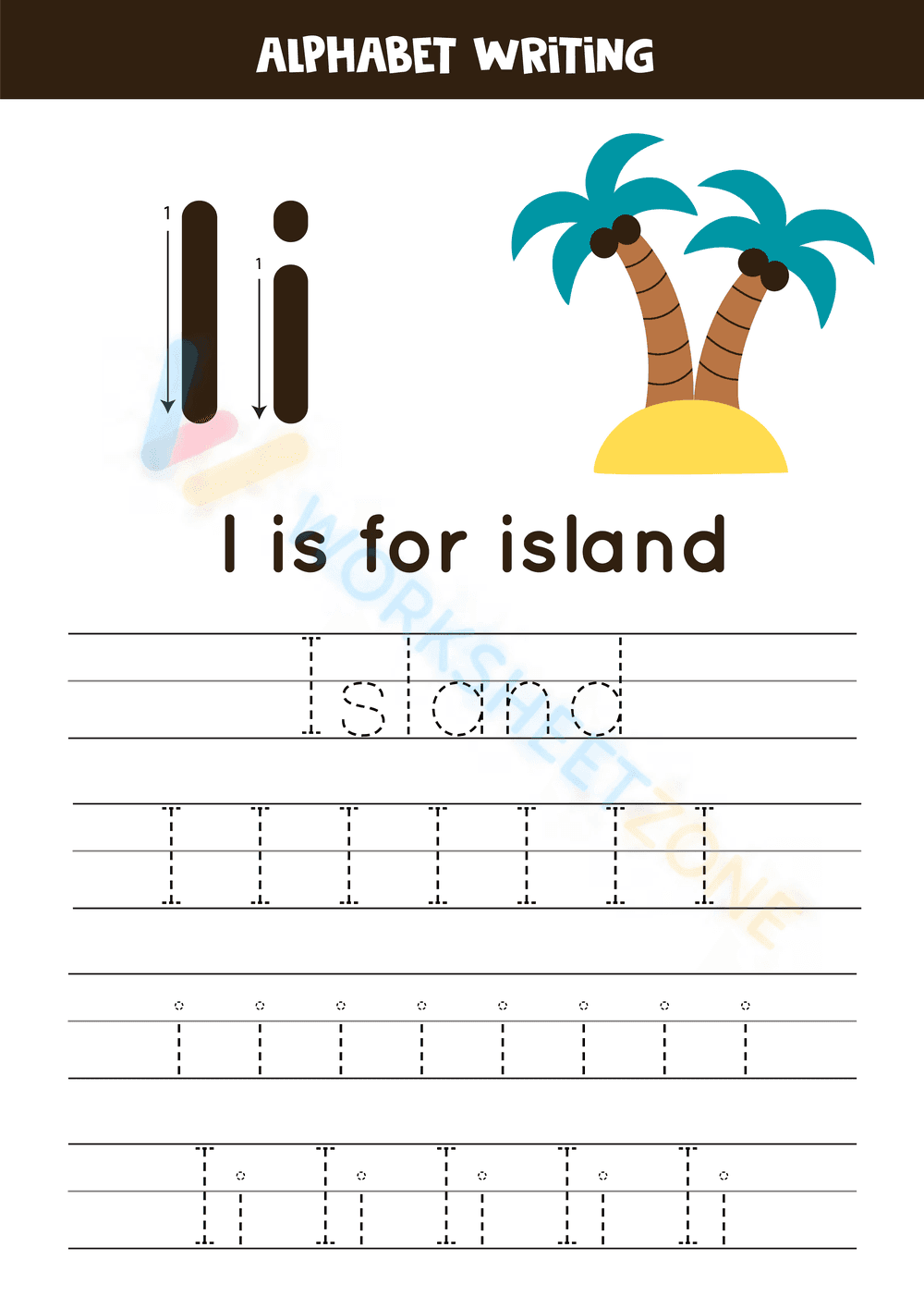

Kindergarten Letter I Tracing — Printable ELA Worksheet

Paste this activity's link or code into your existing LMS (Google Classroom, Canvas, Teams, Schoology, Moodle, etc.).
Students can open and work on the activity right away, with no student login required.
You'll still be able to track student progress and results from your teacher account.
This printable letter I tracing worksheet helps early learners master uppercase and lowercase letter formation. Students practice fine motor control by tracing the letter I, the word island, and individual letter strokes, building the muscle memory needed for legible handwriting and early reading success.
At a Glance
- Grade: Kindergarten · Subject: ELA Phonics and Handwriting
- Standard:
CCSS.ELA-LITERACY.L.K.1.A— Print lowercase and uppercase letters legibly during writing tasks- Skill Focus: Letter I formation, stroke order, and beginning sounds
- Format: 1 page · 31 tracing targets · No teacher answer key required · PDF
- Best For: Independent morning work and handwriting practice
- Time: 10–15 minutes
What's Inside
This single-page worksheet features a clear layout for young writers. Large guide letters show correct stroke order for uppercase and lowercase I, paired with an island illustration to reinforce the short letter sound. Students trace the word "Island" before completing three lines of tracing practice: uppercase I, lowercase i, and combined pairs.
Zero-Prep Workflow
This resource is designed for immediate classroom deployment with zero teacher preparation. Follow these three steps:
- Print (1 minute): Send the single-page PDF to your printer. No sorting is necessary.
- Distribute (30 seconds): Hand out sheets with pencils. Visual guides allow students to start immediately.
- Review (30 seconds): Walk the room to check grip. Grading is visual and instantaneous.
With under two minutes of prep, this worksheet is ideal for morning routines or sub plans.
Standards Alignment
This activity aligns with CCSS.ELA-LITERACY.L.K.1.A, requiring students to print lowercase and uppercase letters. The keyword "island" supports phonics instruction under CCSS.ELA-LITERACY.RF.K.1.D by reinforcing letter-sound relationships. Both codes can be copied directly into lesson plans or IEP goals.
How to Use It
Use this worksheet during your phonics block after direct instruction on the letter I. Guide the class in tracing the letters in the air, then transition students to independent desk work. Observe pencil grip and stroke direction. This 12-minute activity serves as an excellent formative assessment for letter formation.
Who It's For
This worksheet is tailored for kindergarteners learning letter formation. It also provides remedial support for first-grade students struggling with handwriting legibility. Pair this worksheet with a letter-sound song to create a cohesive phonics lesson.
This letter tracing worksheet targets the foundational literacy standard CCSS.ELA-LITERACY.L.K.1.A, focusing on the plain-English skill of printing lowercase and uppercase letters legibly. According to research by Fisher & Frey (2014) on the gradual release of responsibility, structured visual scaffolds—such as the numbered stroke guides and dotted tracing lines featured on this page—are critical for helping early learners transition from guided instruction to independent writing mastery. By providing immediate visual feedback and clear pathways for pencil movement, the worksheet reduces cognitive load, allowing students to focus on fine motor control and letter-sound association. This structured practice builds the muscle memory necessary for automatic letter recognition and writing fluency, which are key predictors of later reading comprehension. Teachers can confidently integrate this evidence-based tool into daily handwriting routines, small-group interventions, or independent center activities to support early ELA development.


