


























Views
Downloads

Printable Gingerbread Alphabet Tracing: Lowercase A-Z
Paste this activity's link or code into your existing LMS (Google Classroom, Canvas, Teams, Schoology, Moodle, etc.).
Students can open and work on the activity right away, with no student login required.
You'll still be able to track student progress and results from your teacher account.
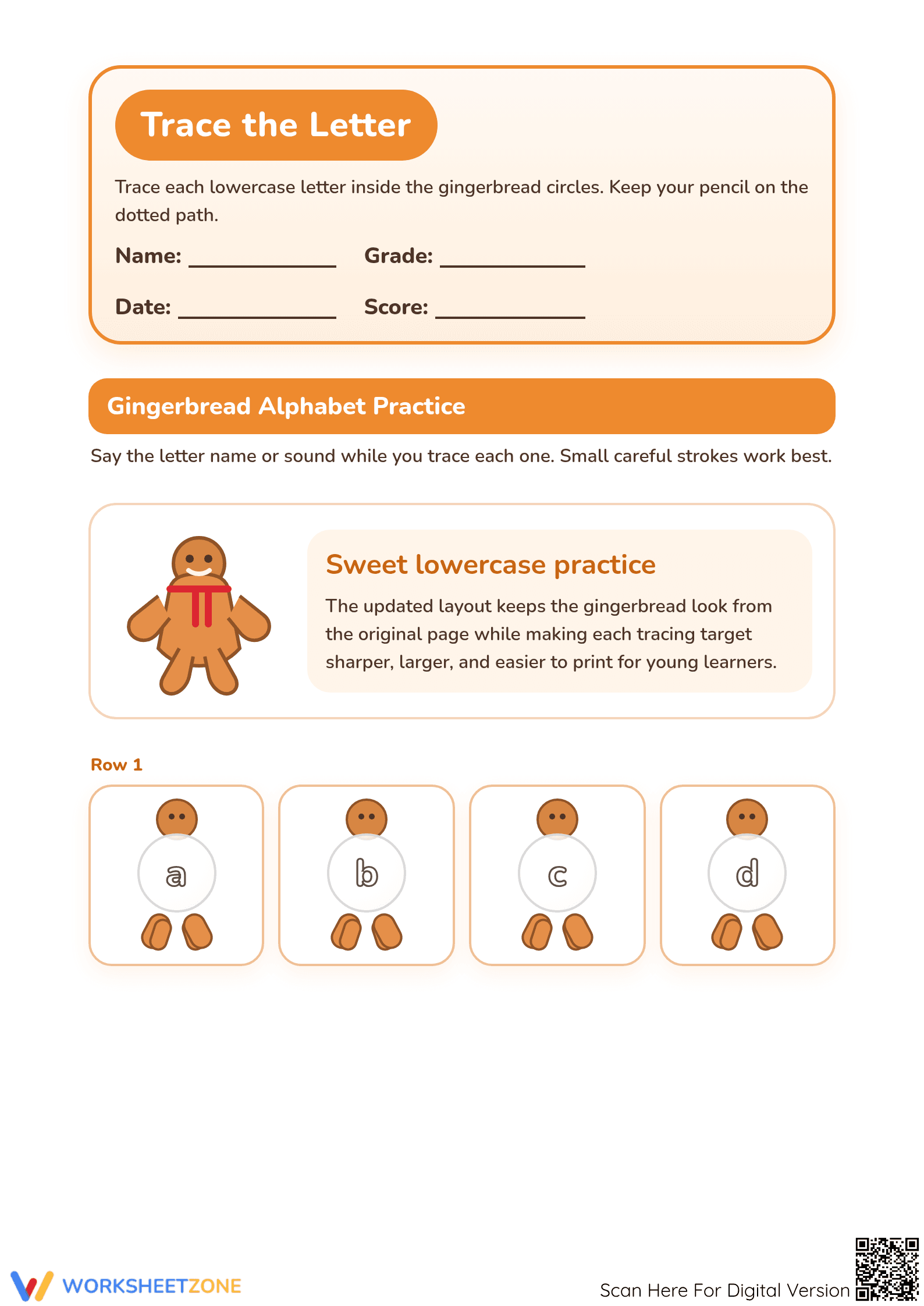
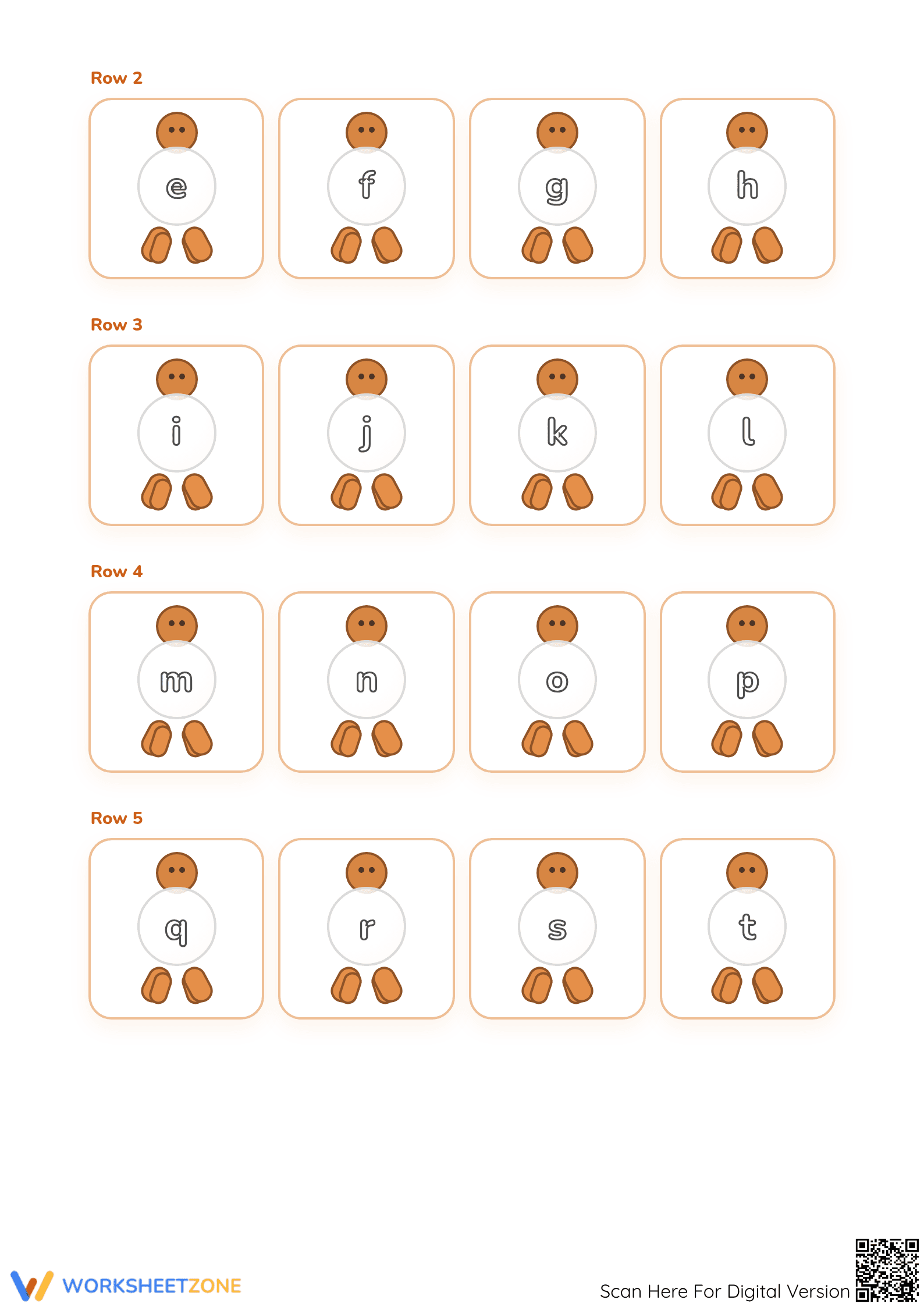
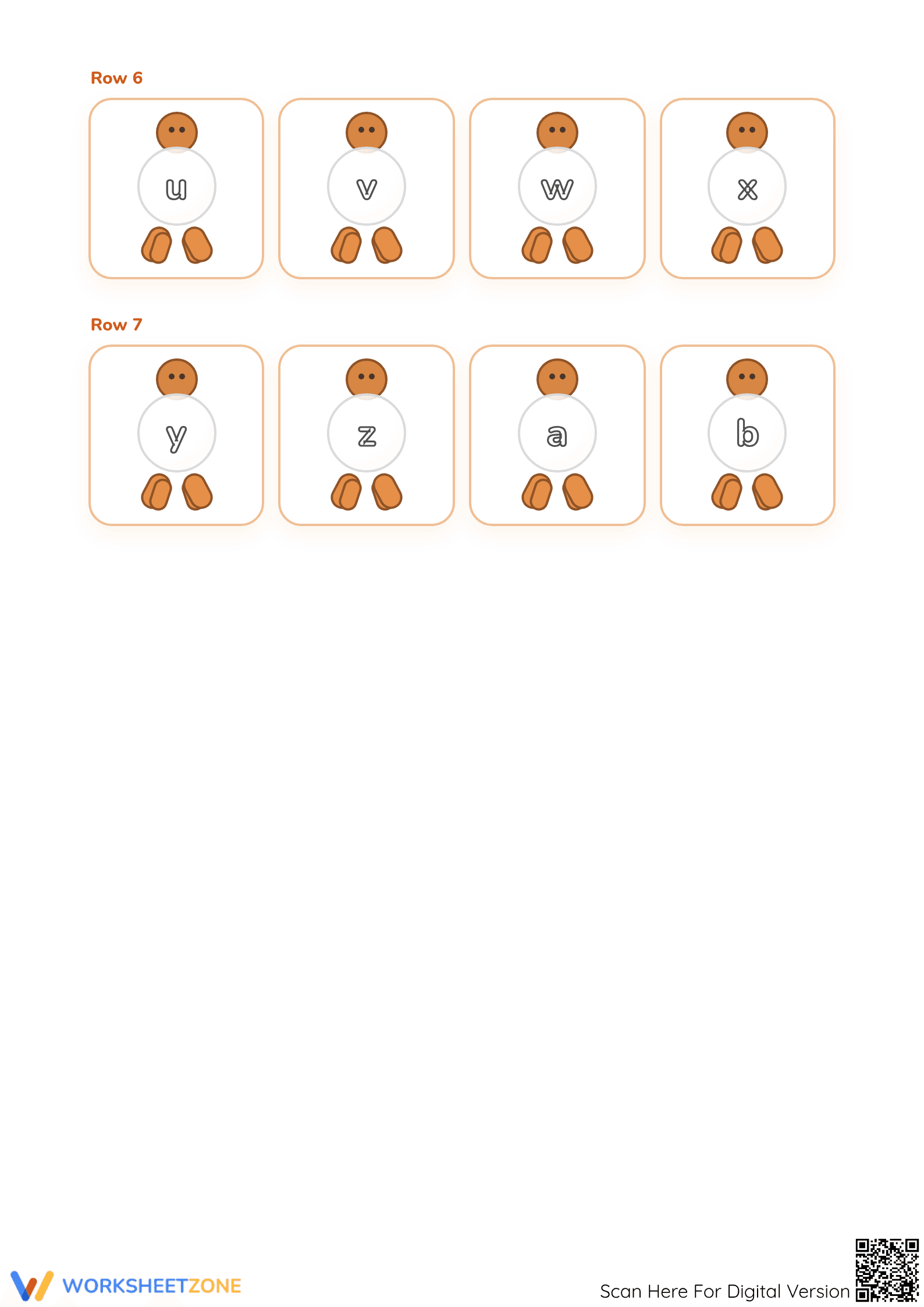
This Gingerbread-themed alphabet tracing worksheet provides a seasonal and engaging way for early learners to master lowercase letter formation. Students trace every letter from a to z within whimsical gingerbread circles, strengthening fine motor control and letter recognition. This resource ensures students build the muscle memory required for confident, independent writing through structured, repetitive practice.
At a Glance
- Grade: Kindergarten · Subject: English Language Arts
- Standard:
CCSS.ELA-LITERACY.L.K.1.A— Print many upper- and lowercase letters with proper stroke sequence- Skill Focus: Lowercase letter formation and stroke control
- Format: 3 pages · 28 tracing targets · Answer key included · PDF
- Best For: Literacy centers and seasonal morning work
- Time: 15–20 minutes per page
What's Inside
This 3-page PDF features lowercase letters a to z plus two bonus targets. Each letter is housed inside a sharp gingerbread man graphic for print clarity. Dotted paths guide stroke sequence, while the layout ensures targets are large and accessible for developing motor skills.
Zero-Prep Workflow
This resource is designed for immediate deployment. Follow a simple process: Print (30 seconds), Distribute (1 minute), and Review. Total preparation time is under two minutes, making it ideal for sub plans or seasonal centers. The instructions allow students to begin immediately without complex coaching.
Standards Alignment
The primary alignment is CCSS.ELA-LITERACY.L.K.1.A, which requires students to print many upper- and lowercase letters. By focusing exclusively on lowercase formation, this worksheet also supports CCSS.ELA-LITERACY.RF.K.1.B by helping students recognize that spoken words are represented by specific sequences of letters. Both standard codes can be copied directly into lesson plans, IEP goals, or district curriculum mapping tools.
How to Use It
Use this worksheet during the final phase of a gradual release lesson on letter formation. It serves as an excellent formative assessment tool; teachers should observe students during Row 1 to ensure they are keeping their pencils on the dotted path. Alternatively, assign one page per day as a seasonal homework packet to reinforce letter recognition over a three-day period.
Who It's For
This resource is tailored for Preschool, Kindergarten, and Grade 1 students who are developing foundational writing skills. It is particularly effective for students requiring extra fine motor support. Pair this worksheet with a gingerbread-themed alphabet book or a sensory salt tray for a multi-sensory literacy experience that bridges the gap between tactile play and paper-and-pencil tasks.
The CCSS.ELA-LITERACY.L.K.1.A standard emphasizes the fundamental importance of letter formation as a prerequisite for fluency in writing and spelling. According to a ScienceDirect TpT Analysis, structured tracing activities provide the necessary scaffolding for young learners to move from imitation to independent production. Mastery of the lowercase alphabet is a critical predictor of later reading success, as it allows cognitive resources to shift from the mechanics of handwriting to the higher-order tasks of composition and comprehension. Research from Fisher & Frey (2014) suggests that repetitive, guided practice in a low-stakes, themed environment increases student engagement and reduces the anxiety often associated with early writing. By providing 28 clear tracing targets across a seasonal 3-page layout, this resource offers the high-dosage practice required to solidify neural pathways associated with alphabetic literacy and fine motor precision in early childhood education.


