




























Views
Downloads


Essential Water Cycle Pack | Grade 2 Science Printable

Paste this activity's link or code into your existing LMS (Google Classroom, Canvas, Teams, Schoology, Moodle, etc.).
Students can open and work on the activity right away, with no student login required.
You'll still be able to track student progress and results from your teacher account.
This Grade 2 water cycle worksheet pack provides a comprehensive exploration of Earth's water systems. Students identify key processes like evaporation and precipitation through interactive labeling and hands-on experimentation. By connecting vocabulary to visual diagrams, learners develop a concrete understanding of how water moves through our environment to meet biological needs.
At a Glance
- Grade: 2 · Subject: Science
- Standard:
2-ESS2-3— Obtain information to identify where water is found on Earth- Skill Focus: Water cycle terminology and processes
- Format: 8 pages · 7 tasks · Answer key included · PDF
- Best For: Comprehensive unit introduction or sub plans
- Time: 45–60 minutes
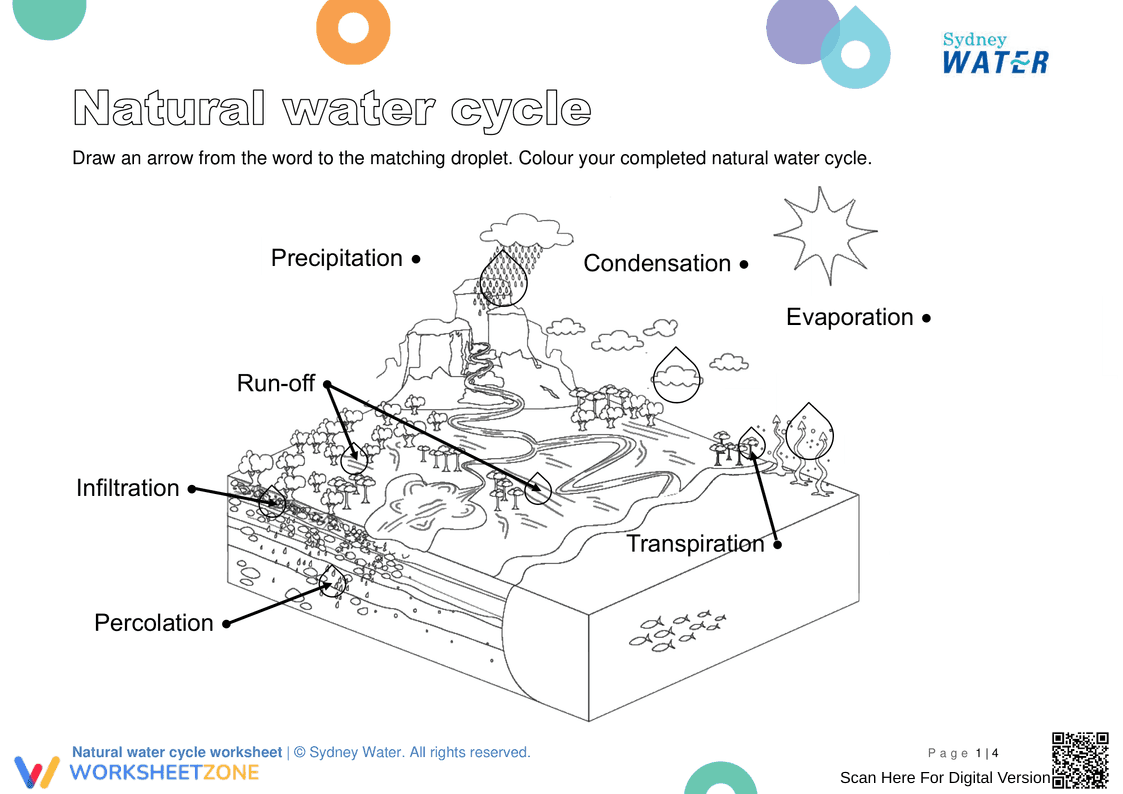
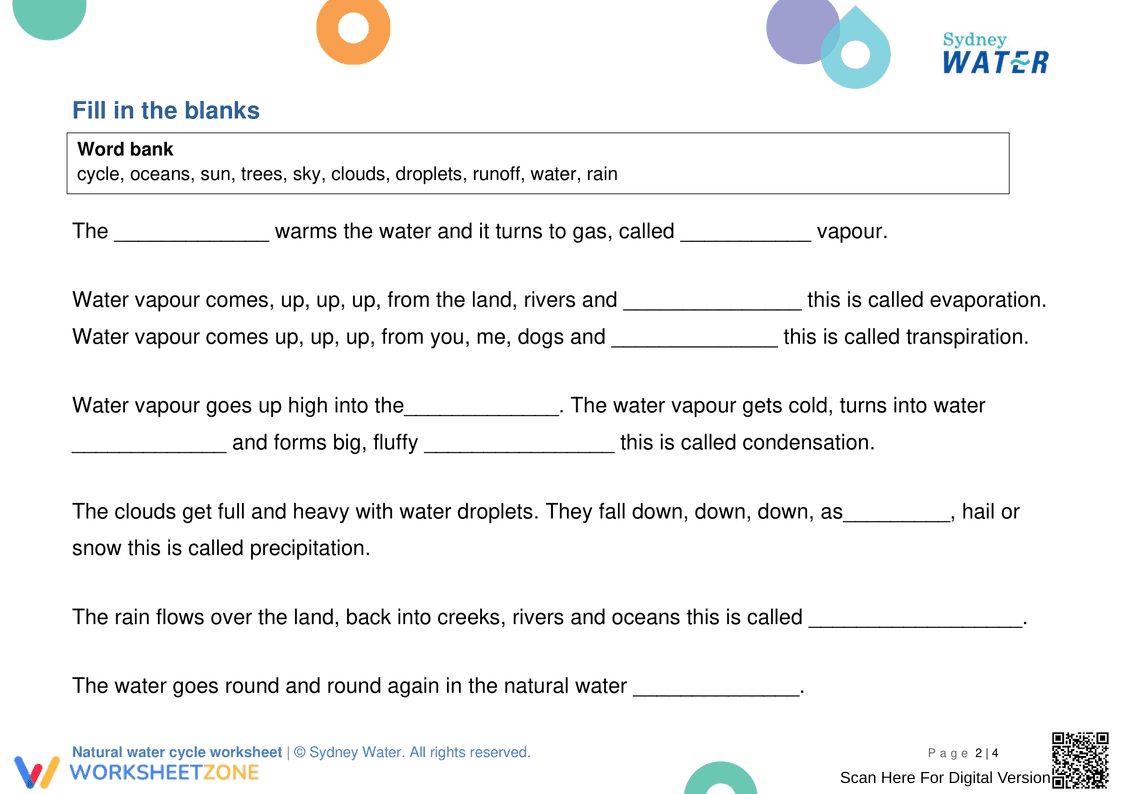
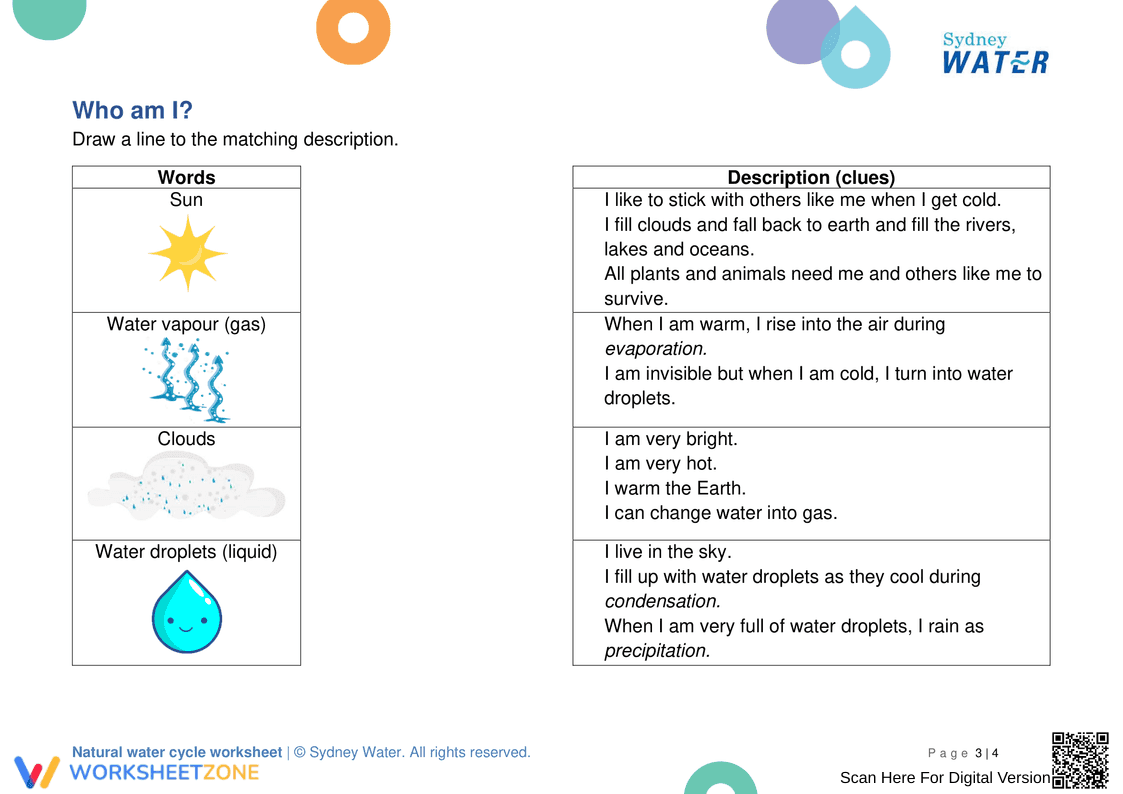
What's Inside: This 8-page PDF contains a diverse array of instructional tools. It features a detailed natural water cycle diagram for labeling, a cloze-style fill-in-the-blank narrative with a word bank, and a "Who Am I?" matching activity for term definitions. Additionally, the pack includes a word search for vocabulary reinforcement, a "See, Think, Wonder" inquiry sheet, and a multi-day observation log for a jar-based water cycle experiment.
Zero-Prep Workflow: This resource is designed for immediate classroom implementation with three simple steps. First, print the 8-page sequence for your class, which takes approximately 1 minute. Second, distribute the packets; the self-explanatory instructions allow students to begin immediately without lengthy teacher introductions. Finally, review the completed diagrams and experiment logs using the included answer key. Total teacher preparation time is under 2 minutes, making it an ideal solution for emergency sub plans or busy science blocks.
Standards Alignment: The primary focus is `2-ESS2-3`, which requires students to obtain information to identify where water is found on Earth and that it can be solid or liquid. This worksheet extends that knowledge by illustrating the movement between those locations. It also supports `K-2-ETS1-1` by encouraging students to observe and record data during the jar experiment. Both standard codes can be copied directly into lesson plans, IEP goals, or district curriculum mapping tools.
How to Use It: Use this pack during the "Explain" and "Elaborate" phases of a 5E science lesson. Start with the "See, Think, Wonder" page to activate prior knowledge before moving to direct instruction with the labeling diagram. For formative assessment, observe students during the "Who Am I?" matching task to identify misconceptions about condensation versus evaporation. The experiment pages are best used over a 3-day period to track water level changes in sunny versus shady spots.
Who It's For: This resource is tailored for second-grade general education classrooms but is highly effective for English Language Learners (ELLs) due to the heavy use of visual scaffolding and word banks. It pairs naturally with a classroom anchor chart or a read-aloud about weather patterns. The varied task types ensure that both kinesthetic learners and those who prefer traditional writing stay engaged throughout the unit.
Research from the RAND AIRS 2024 study emphasizes that high-quality science curriculum must integrate literacy tasks with empirical observation to improve long-term retention. This worksheet pack achieves this by combining technical vocabulary acquisition (Standard 2-ESS2-3) with a structured "Measure and Compare" experiment. By requiring students to document water height changes over several days, the resource moves beyond rote memorization into active scientific inquiry. Fisher & Frey (2014) note that such gradual release models—moving from labeled diagrams to independent data collection—are essential for developing mastery in early elementary science. This 8-page unit provides the necessary scaffolding to ensure students can accurately describe the movement of water through evaporation, condensation, and precipitation. The inclusion of inquiry-based prompts like "What do I wonder?" fosters the critical thinking skills necessary for meeting NGSS performance expectations in the primary grades.


