


























Views
Downloads
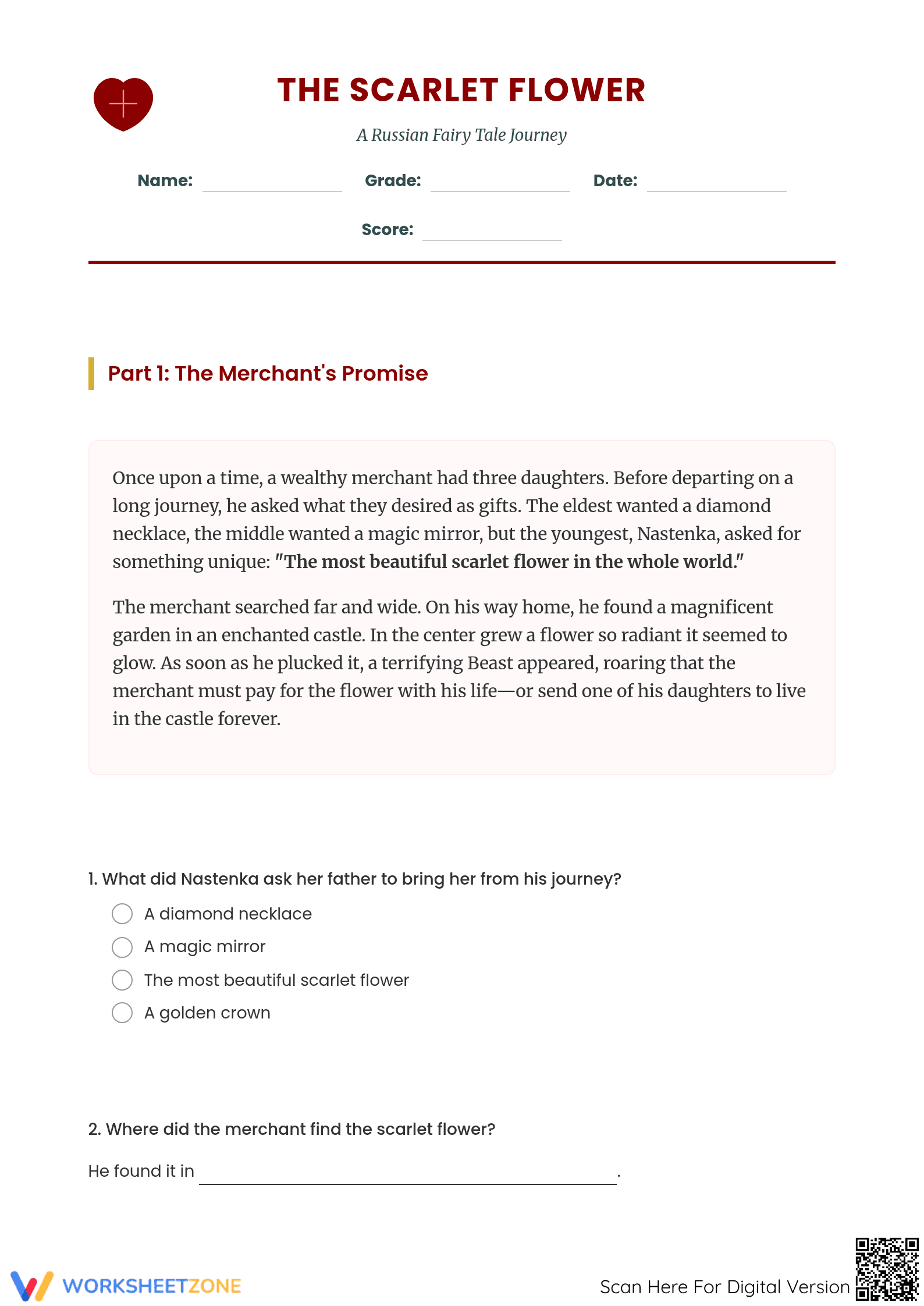
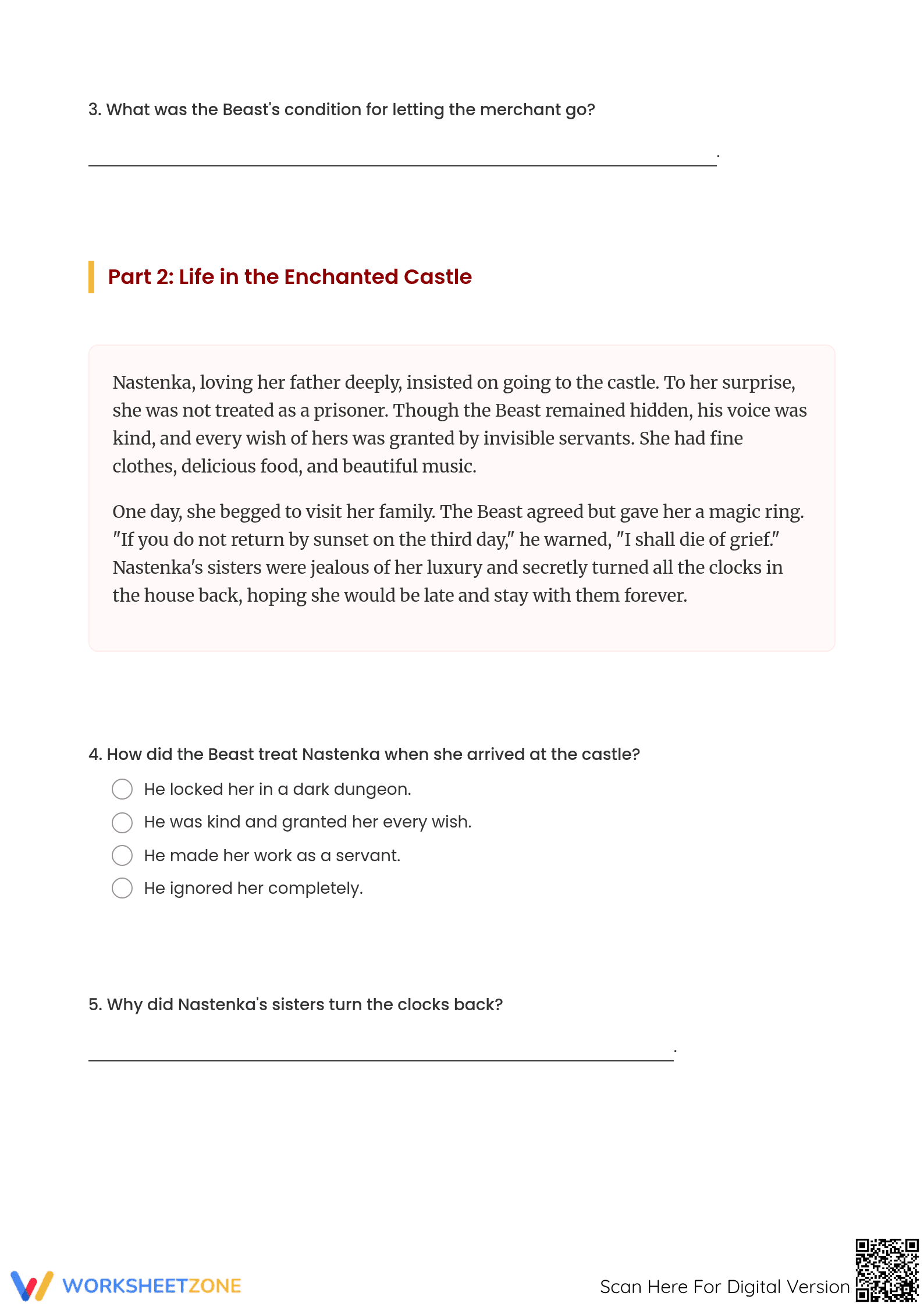
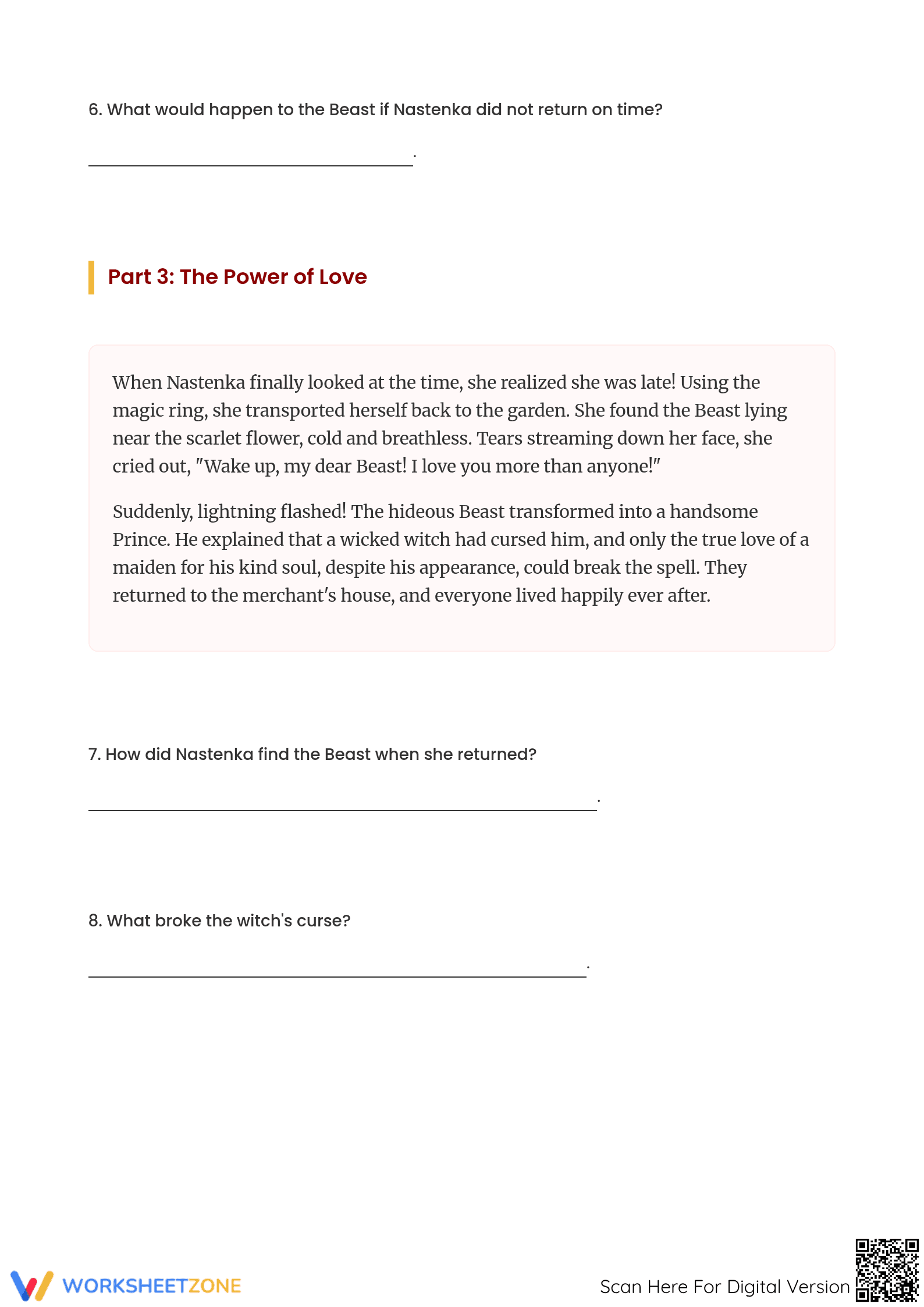
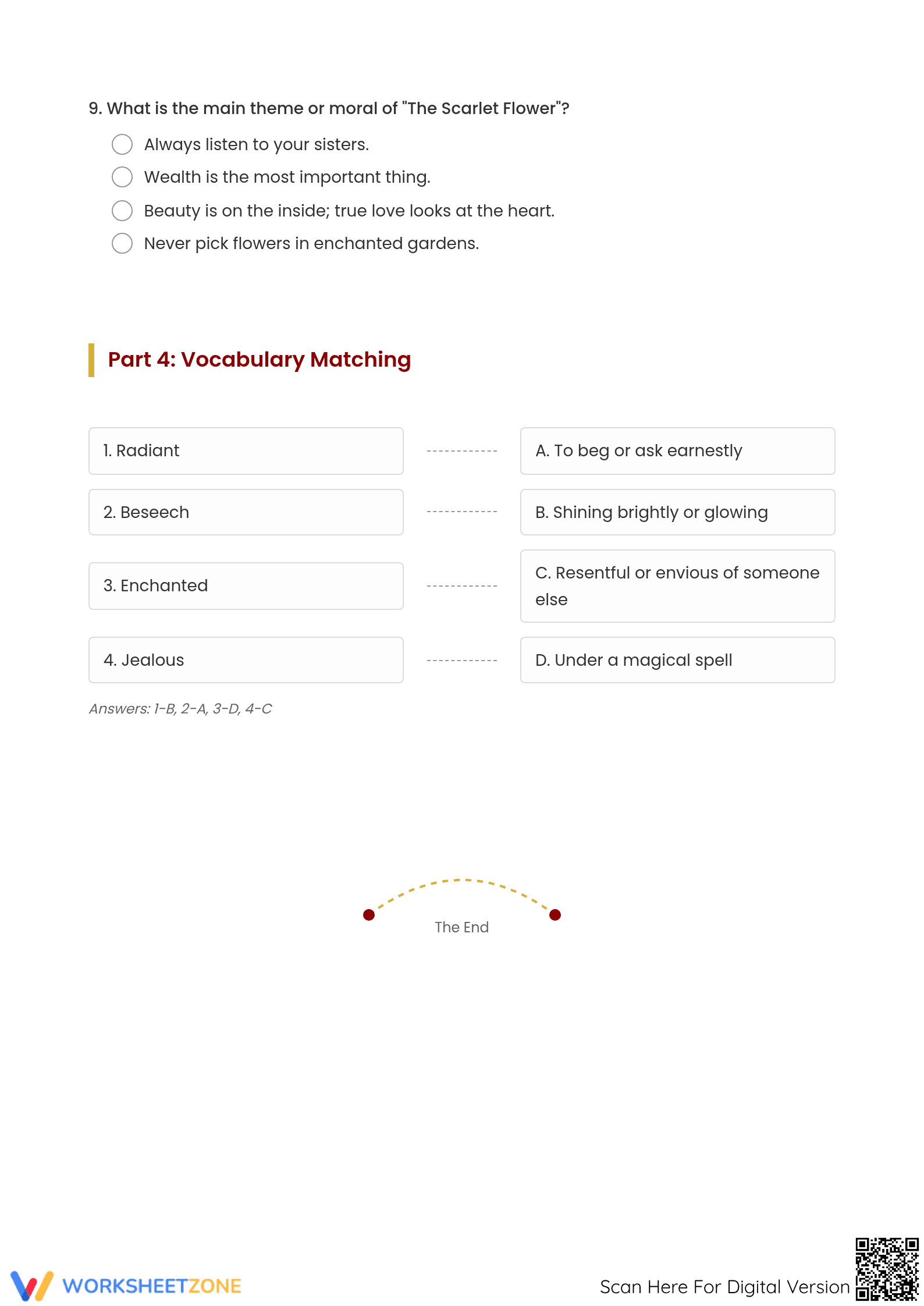

Essential RL.4.9 Worksheet: The Scarlet Flower — Grade 4-6
Paste this activity's link or code into your existing LMS (Google Classroom, Canvas, Teams, Schoology, Moodle, etc.).
Students can open and work on the activity right away, with no student login required.
You'll still be able to track student progress and results from your teacher account.
Mastering Comparative Literature with Russian Folklore
This comprehensive reading comprehension worksheet guides students through "The Scarlet Flower," a captivating Russian fairytale that mirrors the classic motifs found in Western traditional literature. By analyzing this specific text, learners develop the critical ability to identify recurring patterns of events and themes across cultures. This resource ensures students achieve a deep understanding of plot structure and character motivation while building essential academic vocabulary.
At a Glance
- Grade: 4–6 · Subject: ELA & Reading
- Standard:
RL.4.9— Compare and contrast themes and patterns of events in traditional literature stories- Skill Focus: Fairytale Analysis & Reading Comprehension
- Format: 4 pages · 13 problems · Answer key included · PDF
- Best For: Comparative literature lessons and reading assessments
- Time: 30–45 minutes
What's Inside
The packet contains a four-part adaptation of the Russian story, broken down into manageable segments: The Merchant's Promise, Life in the Enchanted Castle, and The Power of Love. Each section is paired with targeted comprehension questions, including multiple-choice items and open-ended responses. The final page features a specialized vocabulary matching task that reinforces four high-frequency academic words found within the narrative. A full answer key is included to facilitate quick grading.
Mastery Evidence
Each of the thirteen tasks is specifically designed to elicit evidence of student mastery regarding traditional literature structures. The comprehension questions map directly to the sub-skills of the RL.4.9 standard, requiring students to extract evidence about the quest, the magical intervention, and the moral resolution. Teachers can use the student responses to categorize performance into tiers of proficiency, identifying those who can accurately identify patterns versus those ready for deeper cross-cultural comparisons. These data points can be entered directly into IEP progress notes or district curriculum trackers.
Standards Alignment
The primary focus is RL.4.9: "Compare and contrast the treatment of similar themes and topics and patterns of events in stories, myths, and traditional literature from different cultures." This worksheet provides the essential Russian text necessary for students to perform a high-level comparison against familiar Western stories like Beauty and the Beast. Both standard codes can be copied directly into lesson plans, IEP goals, or district curriculum mapping tools to ensure instructional compliance.
How to Use It
This resource is best utilized during the middle of a unit on traditional literature. After students are familiar with a standard Western version of the story, assign this worksheet as a guided practice activity. During the lesson, observe how students handle the transition between the familiar plot and the unique Russian details. It also serves as a robust formative assessment; a student's ability to correctly identify the Beast's condition or the sisters' betrayal indicates a strong grasp of narrative conflict and resolution.
Who It's For
While designed for Grade 4, 5, and 6 ELA classrooms, this material is particularly effective for students requiring structured support in literary analysis. The clear headings and segmented text provide natural scaffolds for English Language Learners and students with processing needs. It pairs naturally with an anchor chart comparing fairytale elements such as magical objects, transformations, and moral lessons.
According to the RAND AIRS 2024 report on traditional literature, exposing upper elementary students to cross-cultural variants of familiar narratives—such as this Russian rendition of the Beauty and the Beast motif—significantly enhances their ability to analyze patterns of events and thematic development. This four-page worksheet focuses on RL.4.9 by requiring students to extract key details and compare the merchant's promise, the enchanted castle, and the resolution of the curse against their existing knowledge of Western fairytales. By engaging with thirteen structured tasks including multiple-choice comprehension, short-answer synthesis, and specialized vocabulary matching, learners demonstrate mastery in identifying universal archetypes and culturally specific nuances. This evidence-based approach aligns with the Fisher & Frey (2014) model of gradual release, ensuring students move from literal retrieval to higher-order comparative analysis. Educators can utilize these findings to document student progress toward grade-level literature standards using the included answer key for immediate formative feedback.


