


























Views
Downloads
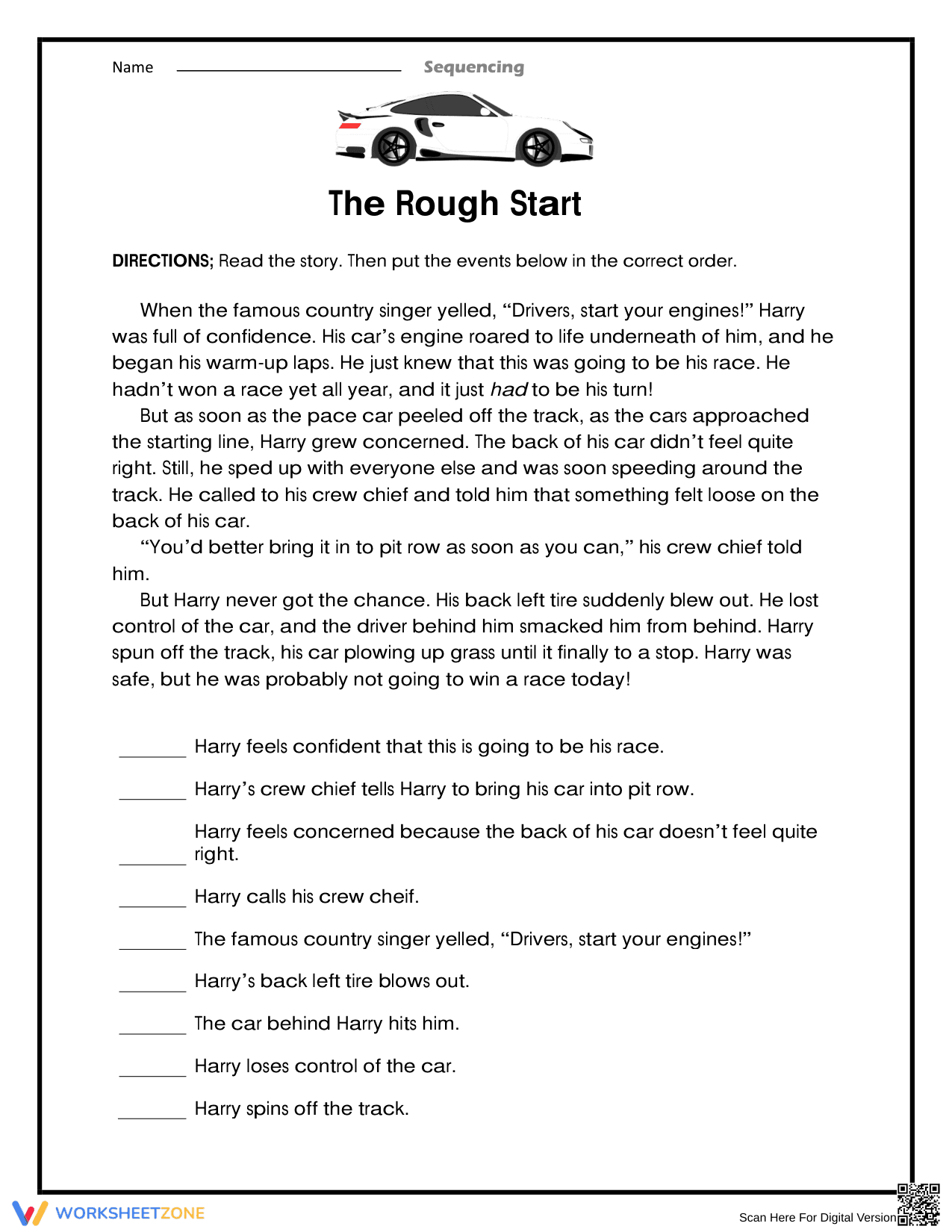

Essential Grade 2 Sequencing Worksheet | The Rough Start
Paste this activity's link or code into your existing LMS (Google Classroom, Canvas, Teams, Schoology, Moodle, etc.).
Students can open and work on the activity right away, with no student login required.
You'll still be able to track student progress and results from your teacher account.
This Grade 2 sequencing worksheet helps students master chronological retelling through a high-interest racing story. By ordering nine specific events from "The Rough Start," learners develop a deeper understanding of narrative structure and plot development. Students will analyze transition words and cause-effect relationships to rebuild the story accurately from beginning to end.
At a Glance
- Grade: 2 · Subject: English Language Arts (ELA)
- Standard:
CCSS.ELA-LITERACY.RL.2.2— Recount stories and determine their central message using key plot details.- Skill Focus: Chronological Sequencing
- Format: 1 page · 9 problems · Answer key included · PDF
- Best For: Literacy centers and independent reading practice
- Time: 15–20 minutes
What's Inside
This resource features a single-page layout containing a narrative passage titled "The Rough Start" followed by a list of nine out-of-order story events. The clear typography and racing-themed illustration engage young readers. A complete answer key is provided to ensure quick and accurate grading or self-correction for students as they work through the chronology.
Zero-Prep Workflow
This zero-prep worksheet is designed for immediate classroom integration. First, print the single PDF page in under 30 seconds. Next, distribute the copies to students for a 15-minute independent activity. Finally, review the answers as a whole group in under 2 minutes using the provided key. This efficient workflow makes it an ideal choice for substitute lesson plans or quick formative assessments.
Standards Alignment
The primary alignment is CCSS.ELA-LITERACY.RL.2.2, which requires students to recount stories and determine central messages. By identifying the sequence of Harry’s race, students satisfy the requirement for identifying key details in a text. This standard code can be copied directly into lesson plans, IEP goals, or district curriculum mapping tools to track student mastery of narrative progression.
How to Use It
Assign this worksheet as a formative assessment after a lesson on narrative structure to check for student comprehension. Alternatively, use it in a small group setting where students can discuss the clues in the text that indicate the correct order of events. Observations during this time can provide valuable data on individual reading fluency and logical reasoning skills.
Who It's For
This worksheet is perfect for second-grade students who are building their foundational reading skills. It provides necessary scaffolding for struggling readers while offering a concise challenge for those on grade level. Pair this resource with a graphic organizer for story mapping to further extend the learning experience and support students who require additional visual cues.
According to research by Fisher & Frey (2014), the ability to sequence events is a critical precursor to complex reading comprehension and summary writing. This resource directly targets CCSS.ELA-LITERACY.RL.2.2 by requiring students to identify the logical progression of key details within a literary text. Educational data from NAEP consistently indicates that students who master basic narrative sequencing in the early elementary years demonstrate significantly higher proficiency in informational text analysis in later grades. By providing structured practice with nine distinct plot points, this worksheet helps bridge the gap between simple retelling and academic summarizing. The inclusion of a high-interest racing theme aligns with cognitive load theory, ensuring that students remain engaged while performing the rigorous mental work of textual reconstruction and logical deduction. This targeted practice builds the stamina required for higher-order literacy tasks.


