


























Views
Downloads

Kindergarten Reading: The Missing Boat — Essential Worksheet
Paste this activity's link or code into your existing LMS (Google Classroom, Canvas, Teams, Schoology, Moodle, etc.).
Students can open and work on the activity right away, with no student login required.
You'll still be able to track student progress and results from your teacher account.
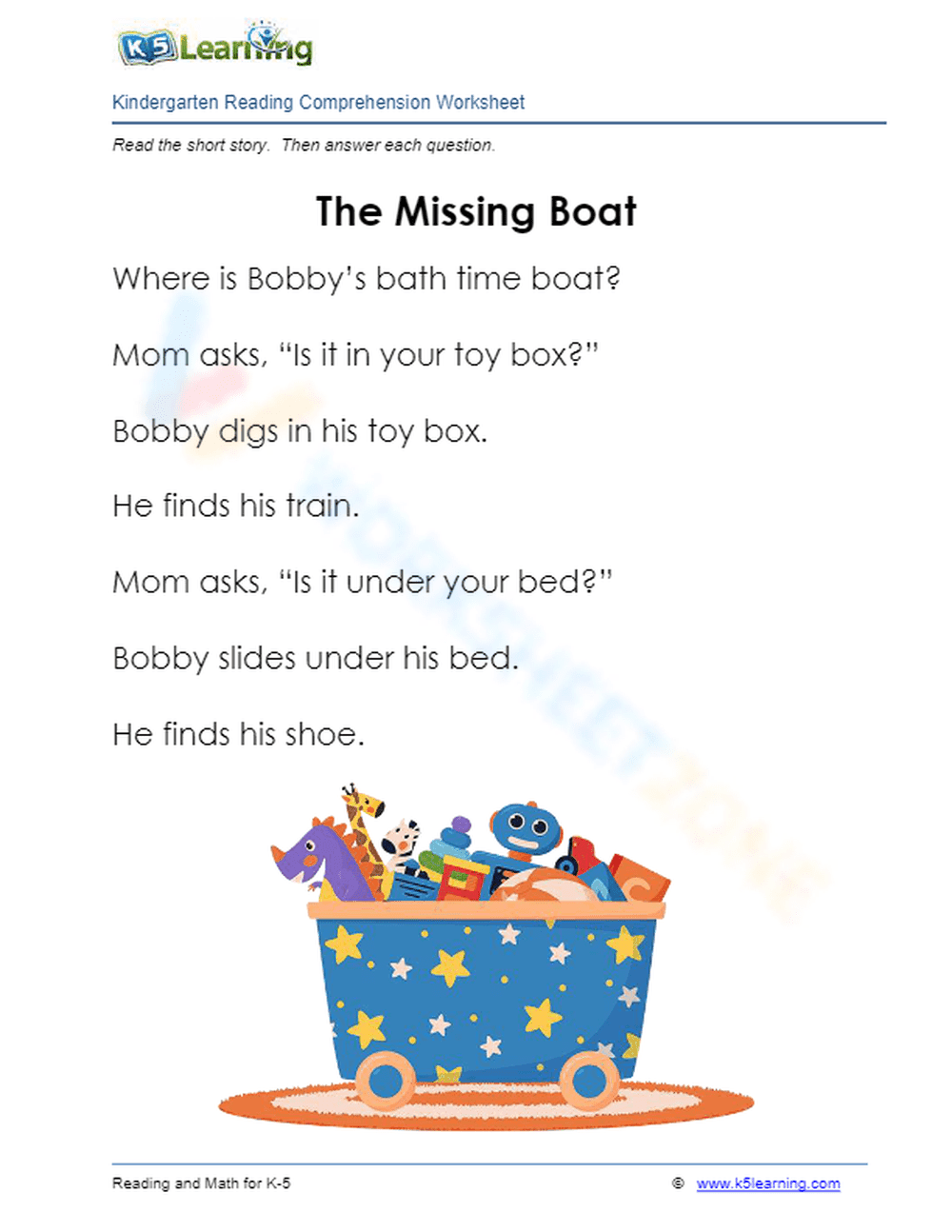
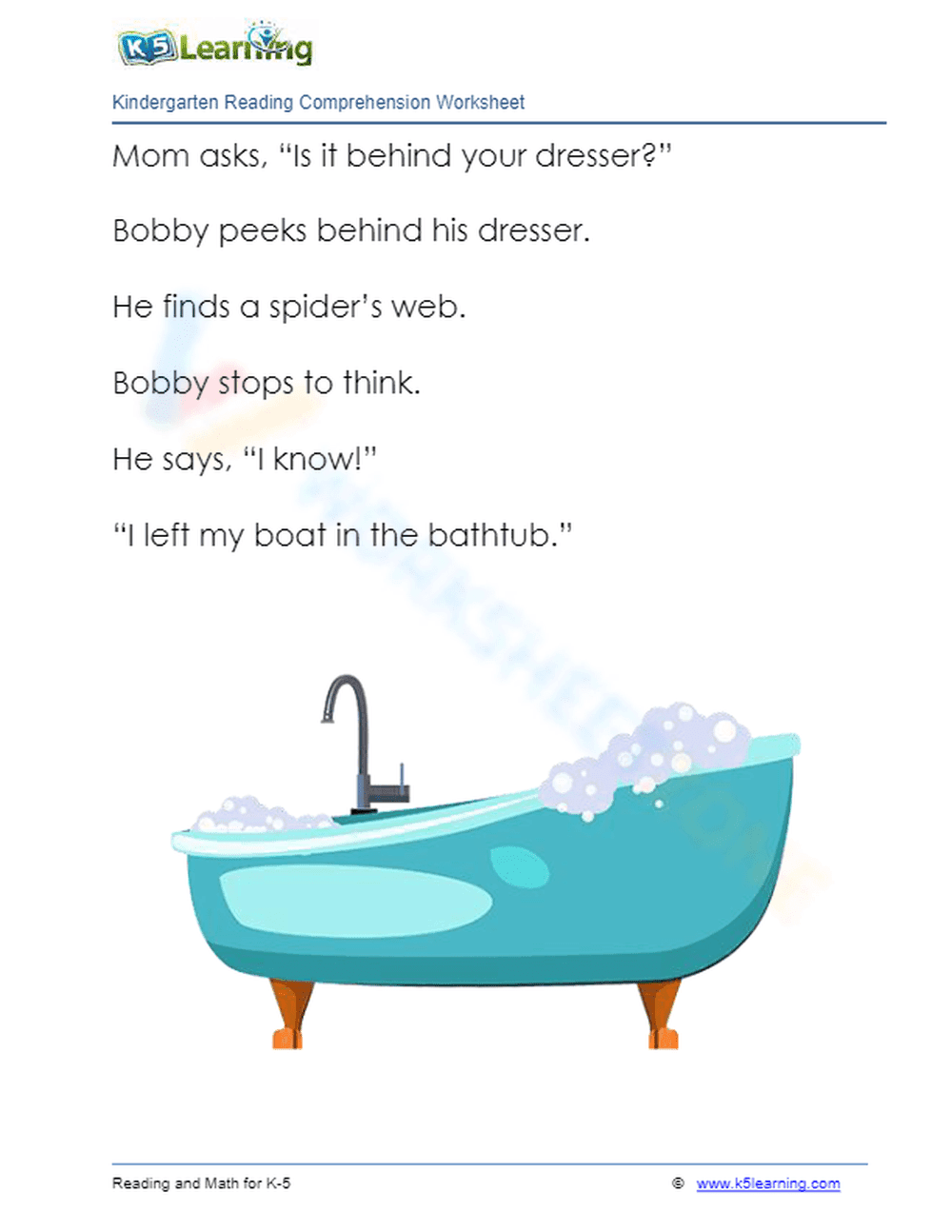
This Kindergarten reading comprehension worksheet helps young learners master literal recall through a relatable story about a lost toy. Students practice identifying key details and answering direct questions to demonstrate understanding. By engaging with the narrative of "The Missing Boat," children build the foundational literacy skills necessary for early academic success.
At a Glance
- Grade: Kindergarten · Subject: ELA
- Standard:
CCSS.ELA-LITERACY.RL.K.1— Ask and answer questions about key details in a text- Skill Focus: Literal Information Recall
- Format: 5 pages · 7 problems · Answer key included · PDF
- Best For: Independent practice or small group literacy
- Time: 15–20 minutes
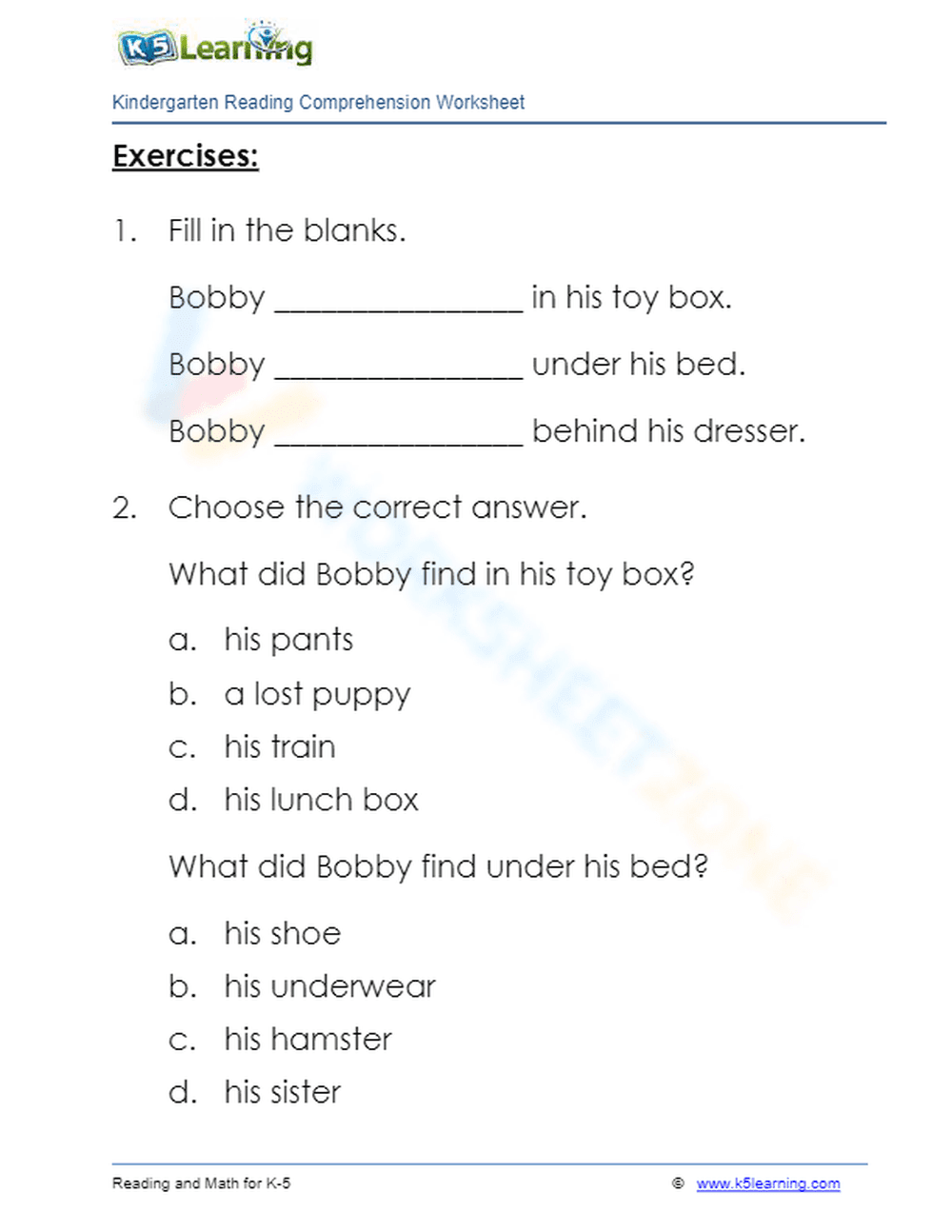
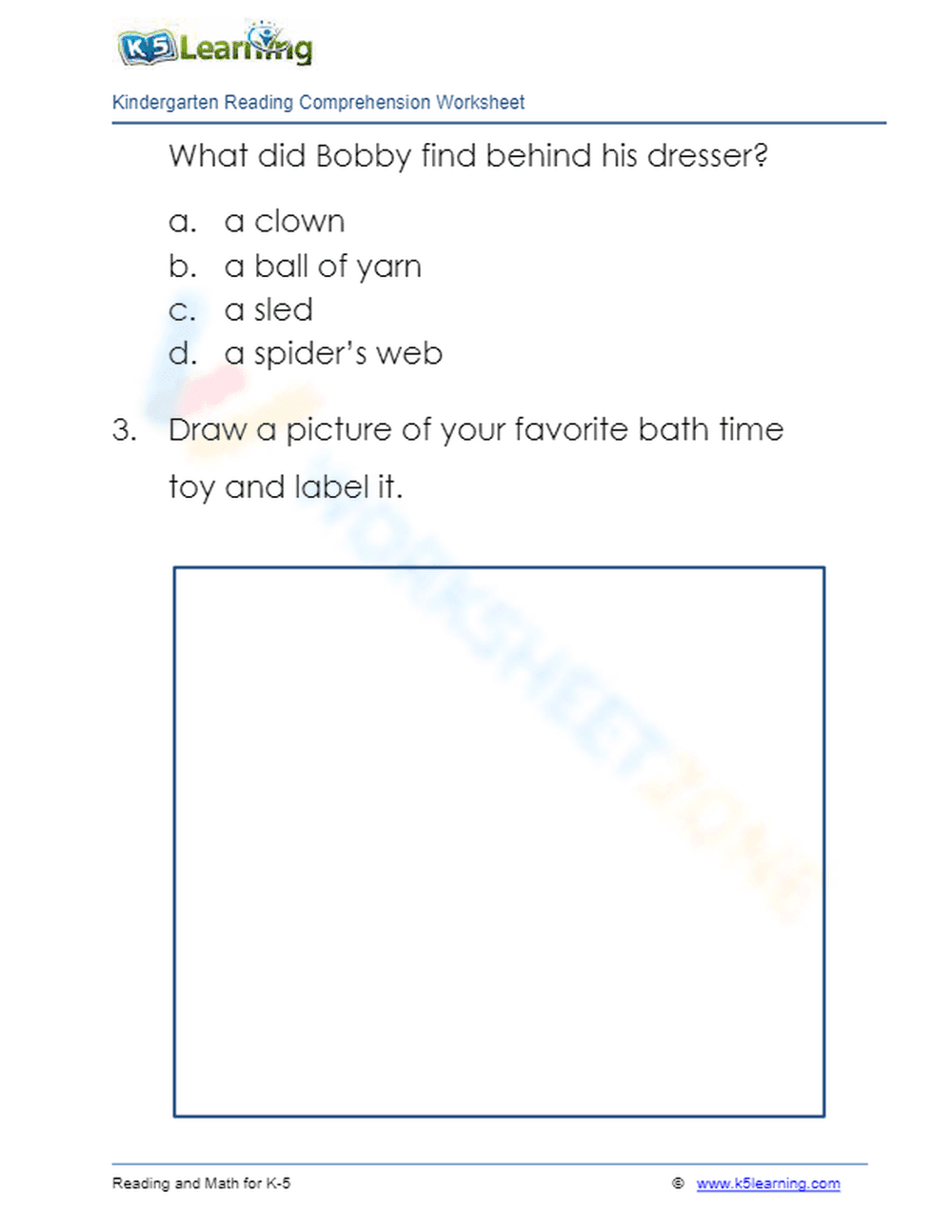
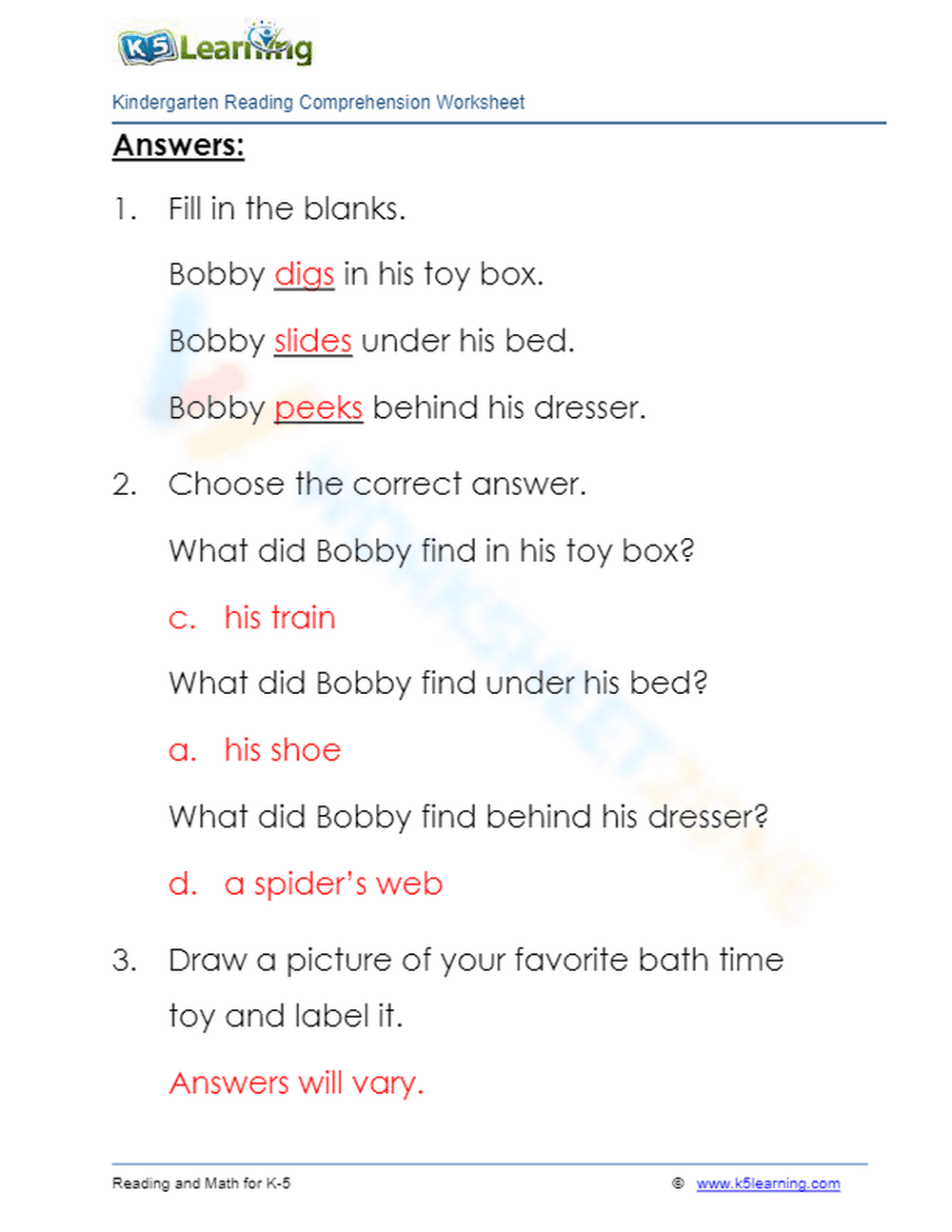
The packet contains a two-page illustrated short story followed by two pages of structured exercises. It includes three fill-in-the-blank sentences to reinforce vocabulary, three multiple-choice questions targeting specific plot points, and a creative drawing task for personal expression. A full answer key is provided to ensure quick and accurate grading.
Zero-Prep Workflow:
- Print: Select the story and exercise pages for your class (2 minutes).
- Distribute: Hand out the materials for a quiet reading block or guided literacy center (1 minute).
- Review: Use the included answer key for immediate feedback or peer-grading sessions (2 minutes).
Total teacher preparation time is under five minutes, making this an ideal resource for substitute folders or unexpected schedule changes.
Standards Alignment
The primary focus is CCSS.ELA-LITERACY.RL.K.1: "With prompting and support, ask and answer questions about key details in a text." The worksheet also supports foundational reading by encouraging students to track text from left to right and recognize high-frequency words. Both standard codes can be copied directly into lesson plans, IEP goals, or district curriculum mapping tools.
How to Use It
Use this during the independent practice phase of a gradual release model after modeling how to look back at the text for answers. It serves as an excellent formative assessment to check if students can distinguish between what happened in the story versus their own imagination. Expected completion time is 15 to 20 minutes.
Who It's For
This resource is designed for Kindergarten students but works well for first-grade intervention or English Language Learners (ELL) needing high-frequency word practice. Pair this with a physical anchor chart showing "Who, What, Where" question words to provide additional visual support during the exercise.
This Kindergarten ELA resource targets the CCSS.ELA-LITERACY.RL.K.1 standard, focusing on the essential skill of literal information recall from a narrative text. Research from Fisher & Frey (2014) emphasizes that early exposure to structured questioning helps students develop the close reading habits required for complex texts in later grades. By requiring students to identify specific locations mentioned in the story—such as the toy box, bed, and dresser—this worksheet reinforces the cognitive connection between text evidence and comprehension. The inclusion of multiple task types, including fill-in-the-blank and multiple-choice, aligns with evidence-based practices for diverse learners. According to the RAND AIRS 2024 report, high-quality printable materials that provide immediate feedback through answer keys significantly improve student engagement and retention in early childhood settings. This 5-page PDF provides a complete instructional cycle from reading to assessment, ensuring students meet foundational literacy benchmarks effectively.


