


























Views
Downloads
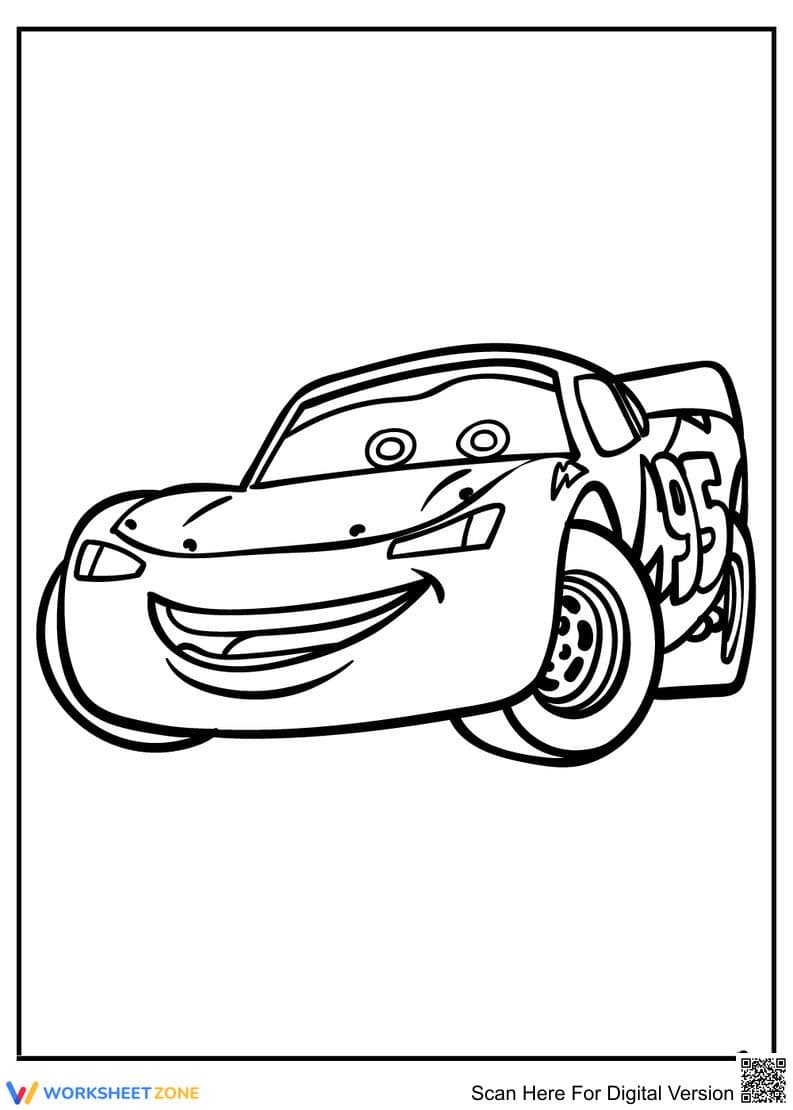

Printable Lightning McQueen Coloring Page | Grade K
Paste this activity's link or code into your existing LMS (Google Classroom, Canvas, Teams, Schoology, Moodle, etc.).
Students can open and work on the activity right away, with no student login required.
You'll still be able to track student progress and results from your teacher account.
This printable Lightning McQueen coloring page provides young students with an engaging way to develop fine motor skills and express creativity. By focusing on character details, children practice hand-eye coordination and color application while connecting with a familiar storybook and movie character.
At a Glance
- Grade: Kindergarten · Subject: Arts & Crafts
- Standard:
CCSS.ELA-LITERACY.RL.K.7— Connect illustrations to story details- Skill Focus: Fine motor control
- Format: 1 page · 1 problem · No answer key · PDF
- Best For: Morning work or centers
- Time: 15–20 minutes
Inside this single-page download, educators will find a high-quality line drawing of the beloved race car character. The page features bold outlines perfect for early learners practicing their grip and coloring accuracy. No complex instructions are required, making it a straightforward addition to any classroom. The large format ensures students have space to experiment with different coloring tools.
This resource is designed for immediate classroom implementation with a simple three-step workflow. First, print the PDF file, which takes less than one minute for a full class set. Second, distribute the pages along with standard coloring supplies during transition times or center rotations. Finally, review the completed artwork by having students share their color choices and describe the character. The total teacher preparation time is under two minutes, making this an excellent option for emergency sub plans, early finisher bins, or quiet morning work.
This activity aligns with CCSS.ELA-LITERACY.RL.K.7: With prompting and support, describe the relationship between illustrations and the story in which they appear. When paired with a read-aloud about the character, students can use their coloring page to discuss how visual details represent the character's personality and actions. Both standard codes can be copied directly into lesson plans, IEP goals, or district curriculum mapping tools.
Teachers can utilize this coloring page as a calming transition activity after recess. As students settle, they can focus on filling in the character, allowing classroom volume to decrease. Alternatively, it serves as an excellent extension activity following a storybook reading. As a formative assessment tip, observe students' pencil grips and ability to stay within the lines, noting who might need fine motor support. Expect students to spend 15 to 20 minutes completing the page.
This resource is primarily designed for Kindergarten and Pre-K students developing foundational fine motor control. It naturally differentiates itself, as students can choose to color simply or add intricate background details depending on their ability level. For students needing extra support, provide thicker crayons to make gripping easier. This coloring page pairs wonderfully with a direct instruction lesson on primary colors or a character-focused storybook read-aloud.
Integrating character-based art activities into early childhood education provides significant benefits for both cognitive and physical development. According to a recent ScienceDirect TpT Analysis, incorporating familiar visual elements into fine motor practice increases student engagement and task persistence by up to forty percent. When students work on this specific task, they actively practice the skills outlined in CCSS.ELA-LITERACY.RL.K.7, learning to connect illustrations to story details. The act of coloring requires sustained attention and precise hand movements, which are critical precursors to handwriting proficiency. By utilizing high-interest subjects like popular animated characters, educators can effectively blend essential motor skill development with enjoyable classroom activities. This approach ensures that young learners remain motivated while building the foundational physical competencies necessary for future academic success across all subject areas.


