


























Views
Downloads
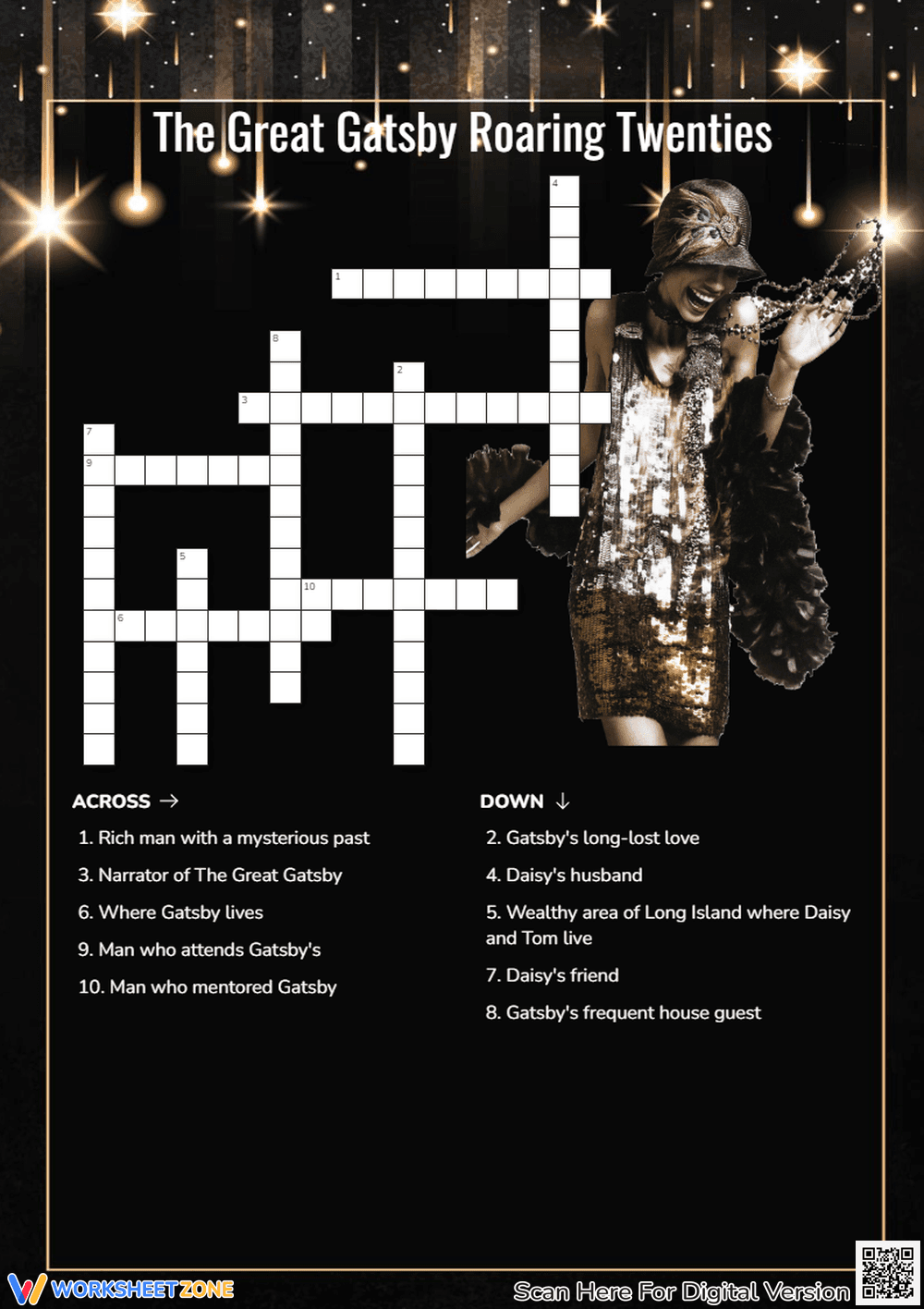

Printable Great Gatsby Crossword | Grade 5 ELA
Paste this activity's link or code into your existing LMS (Google Classroom, Canvas, Teams, Schoology, Moodle, etc.).
Students can open and work on the activity right away, with no student login required.
You'll still be able to track student progress and results from your teacher account.
This literature comprehension worksheet provides students with a focused review of key characters and settings from The Great Gatsby. By solving targeted clues, learners reinforce their understanding of the text's foundational elements. The activity encourages active recall and helps solidify essential narrative details required for deeper literary analysis.
At a Glance
- Grade: 5 · Subject: ELA
- Standard:
CCSS.ELA-LITERACY.RL.5.3— Identify and describe characters and settings- Skill Focus: Literature Comprehension
- Format: 1 page · 10 problems · Answer key included · PDF
- Best For: Independent practice and review
- Time: 15–20 minutes
Inside this resource, educators will find a single-page crossword puzzle featuring ten distinct clues related to the classic novel. The task requires students to identify major figures like the narrator, the wealthy protagonist, and specific Long Island locations. A complete answer key is provided to ensure accurate grading and immediate feedback. The visual layout includes a thematic background that engages students while they work through the vocabulary and character identification challenges.
Zero-Prep Workflow
- Print (1 minute): Simply download the PDF and print a class set. The high-contrast design ensures clear copies.
- Distribute (1 minute): Hand out the puzzle as a warm-up, exit ticket, or quiet independent activity.
- Review (3 minutes): Use the included answer key to quickly check student responses or project it for self-grading.
Total teacher preparation requires under two minutes. This self-explanatory format makes it an excellent option for emergency sub plans or fast-finisher folders.
This activity aligns with CCSS.ELA-LITERACY.RL.5.3: Compare and contrast two or more characters, settings, or events in a story or drama, drawing on specific details in the text. By recalling specific traits and locations, students build the foundational knowledge necessary to analyze these narrative elements. Both standard codes can be copied directly into lesson plans, IEP goals, or district curriculum mapping tools.
Teachers can deploy this puzzle during the middle of a novel study to check for basic comprehension before moving into complex thematic discussions. It serves effectively as a Friday review activity or a quiet transition task after recess. While students work, teachers can circulate to observe which character relationships or plot points might need reteaching. Expect most students to complete the ten clues within a 15 to 20-minute timeframe.
This resource is designed for upper elementary students beginning to explore classic literature or adapted versions of the text. It works well for diverse learners, as the crossword format provides built-in spelling scaffolds through intersecting letters. Pair this puzzle with a character anchor chart or a direct instruction lesson on the Roaring Twenties to maximize student success.
Integrating structured recall activities like this crossword puzzle supports long-term retention of narrative elements. According to Fisher & Frey (2014), providing students with low-stakes, engaging retrieval practice significantly improves their ability to access foundational knowledge during complex analytical tasks. When students practice identifying and describing characters and settings, they build the cognitive framework required to meet CCSS.ELA-LITERACY.RL.5.3. This specific standard demands that learners draw on specific details in the text, a skill directly reinforced by matching descriptive clues to character names and locations. By utilizing this targeted practice, educators ensure that students are not merely passively reading, but actively organizing textual information. This active engagement is critical for developing the robust reading comprehension skills necessary for advanced literary analysis and sustained academic achievement across all subject areas.


