


























Views
Downloads

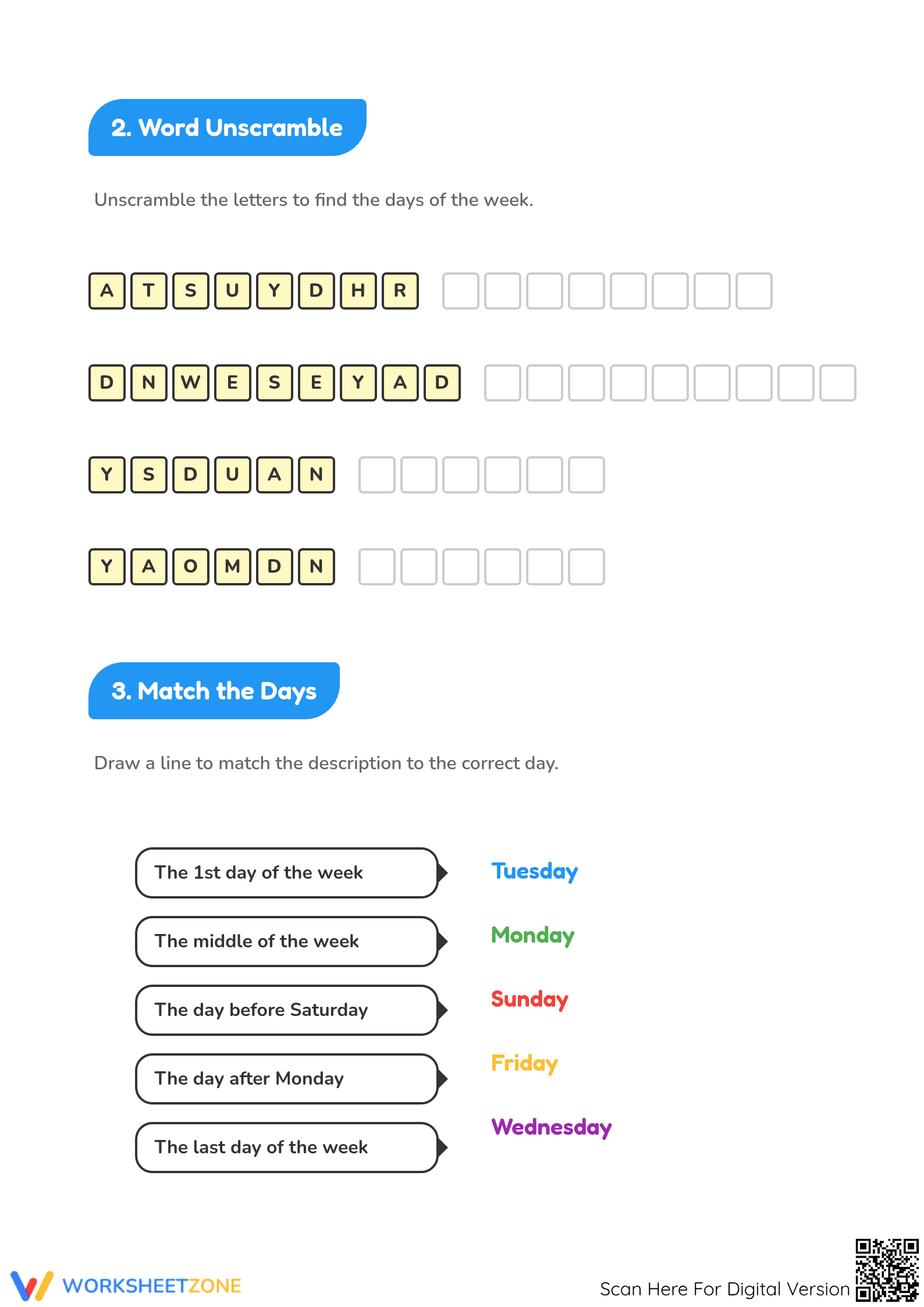
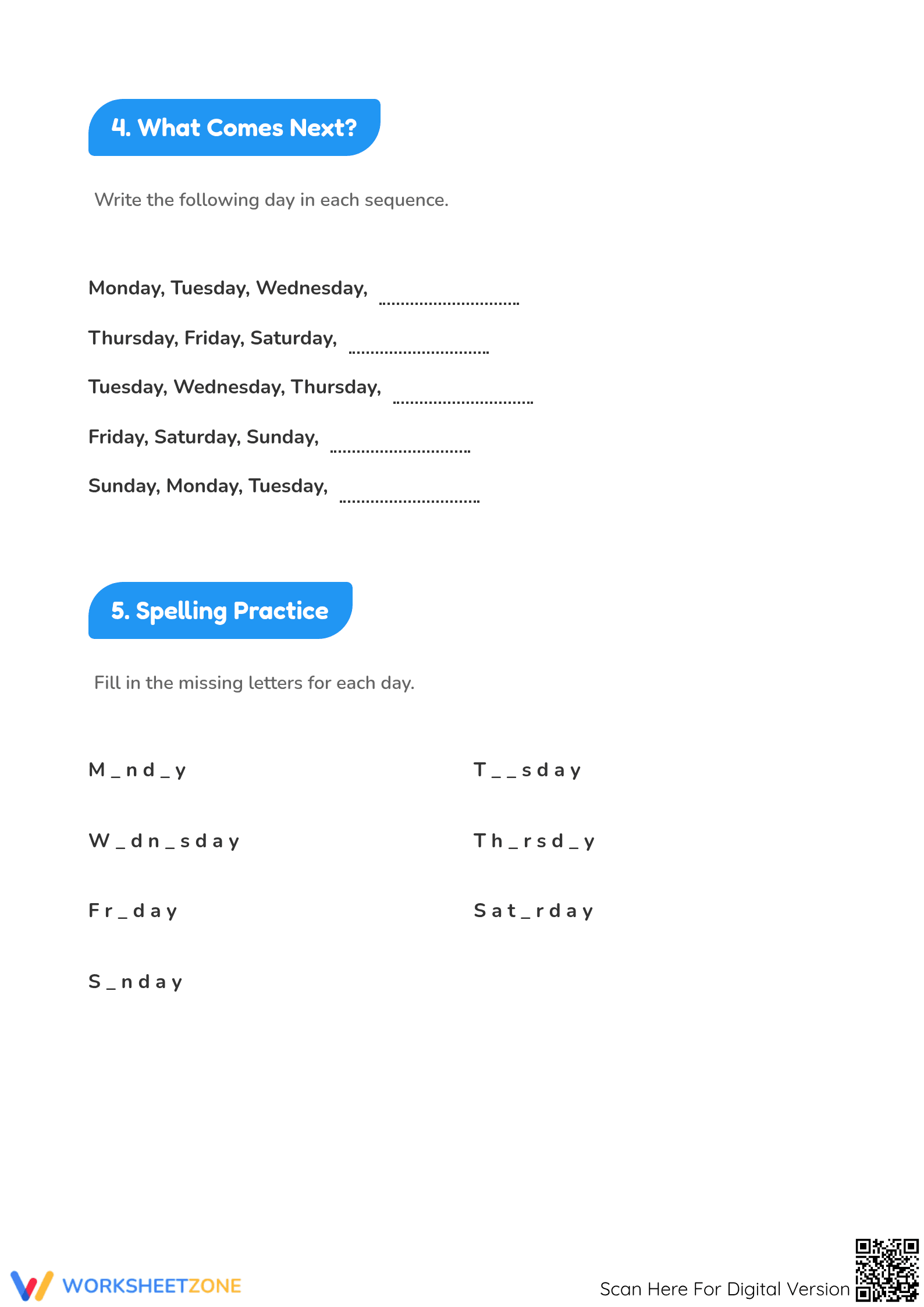

Grade 1 Days of the Week — Printable No-Prep Worksheet
Paste this activity's link or code into your existing LMS (Google Classroom, Canvas, Teams, Schoology, Moodle, etc.).
Students can open and work on the activity right away, with no student login required.
You'll still be able to track student progress and results from your teacher account.
This comprehensive days of the week worksheet helps first-grade students master calendar vocabulary, spelling, and sequencing. By engaging with multiple activity types, young learners will confidently order, spell, and identify the days of the week, building a strong foundation for daily scheduling and essential language arts skills.
At a Glance
- Grade: 1 · Subject: English
- Standard:
CCSS.ELA-LITERACY.L.1.2— Spell and capitalize calendar words correctly- Skill Focus: Days of the week
- Format: 3 pages · 28 problems · Answer key included · PDF
- Best For: Morning work or independent practice
- Time: 15–20 minutes
This three-page packet features 28 varied tasks designed to keep students engaged while reinforcing their understanding of the weekly calendar. The activities include a chronological ordering task, a word unscramble challenge, a description-matching exercise, a sequence completion section, and targeted spelling practice with missing letters. A complete, easy-to-read answer key is provided for quick grading or self-assessment.
Designed for immediate classroom use, this resource requires minimal teacher setup:
- Print (1 minute): Simply download the PDF and print the three student pages. The clean layout ensures high-quality copies.
- Distribute (1 minute): Hand out the packets during morning meeting, literacy centers, or as a reliable sub plan activity.
- Review (3 minutes): Use the included answer key to quickly check student work or project it on the board for whole-class review.
Total teacher prep time is under two minutes, making it an ideal grab-and-go solution for busy educators.
This worksheet is aligned to CCSS.ELA-LITERACY.L.1.2, requiring students to demonstrate command of the conventions of standard English capitalization, punctuation, and spelling when writing. It specifically targets the conventional spelling and proper capitalization of days of the week. Both standard codes can be copied directly into lesson plans, IEP goals, or district curriculum mapping tools.
Deploy this packet as a morning work routine to help students transition smoothly into the school day while reinforcing calendar concepts. It also serves as an excellent independent practice activity following a whole-group lesson on reading a calendar. As a formative assessment tip, observe how students tackle the "What Comes Next?" sequence section; hesitation here often indicates they have memorized the days as a song but struggle with the actual chronological logic. Expect students to complete the full packet in 15 to 20 minutes.
This resource is primarily designed for first-grade students, though it serves as excellent review for second graders or targeted intervention for third graders needing foundational calendar skills. The varied task types offer built-in scaffolding, moving from simple ordering to more complex spelling and logic puzzles. It pairs perfectly with a classroom calendar anchor chart or a daily morning meeting routine.
Mastering calendar vocabulary is a critical early literacy milestone. According to Fisher & Frey (2014), repeated exposure to high-frequency domain-specific vocabulary through varied instructional routines significantly improves long-term retention and reading fluency. This resource directly supports CCSS.ELA-LITERACY.L.1.2 by requiring students to spell and capitalize calendar words correctly across multiple cognitive contexts, from simple recall to sequential logic. By integrating unscrambling, matching, and spelling tasks, the worksheet moves beyond rote memorization, prompting students to analyze the orthographic patterns of each word. This multi-modal approach ensures that foundational concepts are firmly established, reducing cognitive load during more complex reading and writing tasks later in the academic year. Educators can rely on this structured practice to build essential life skills and language conventions simultaneously.


