


























Views
Downloads


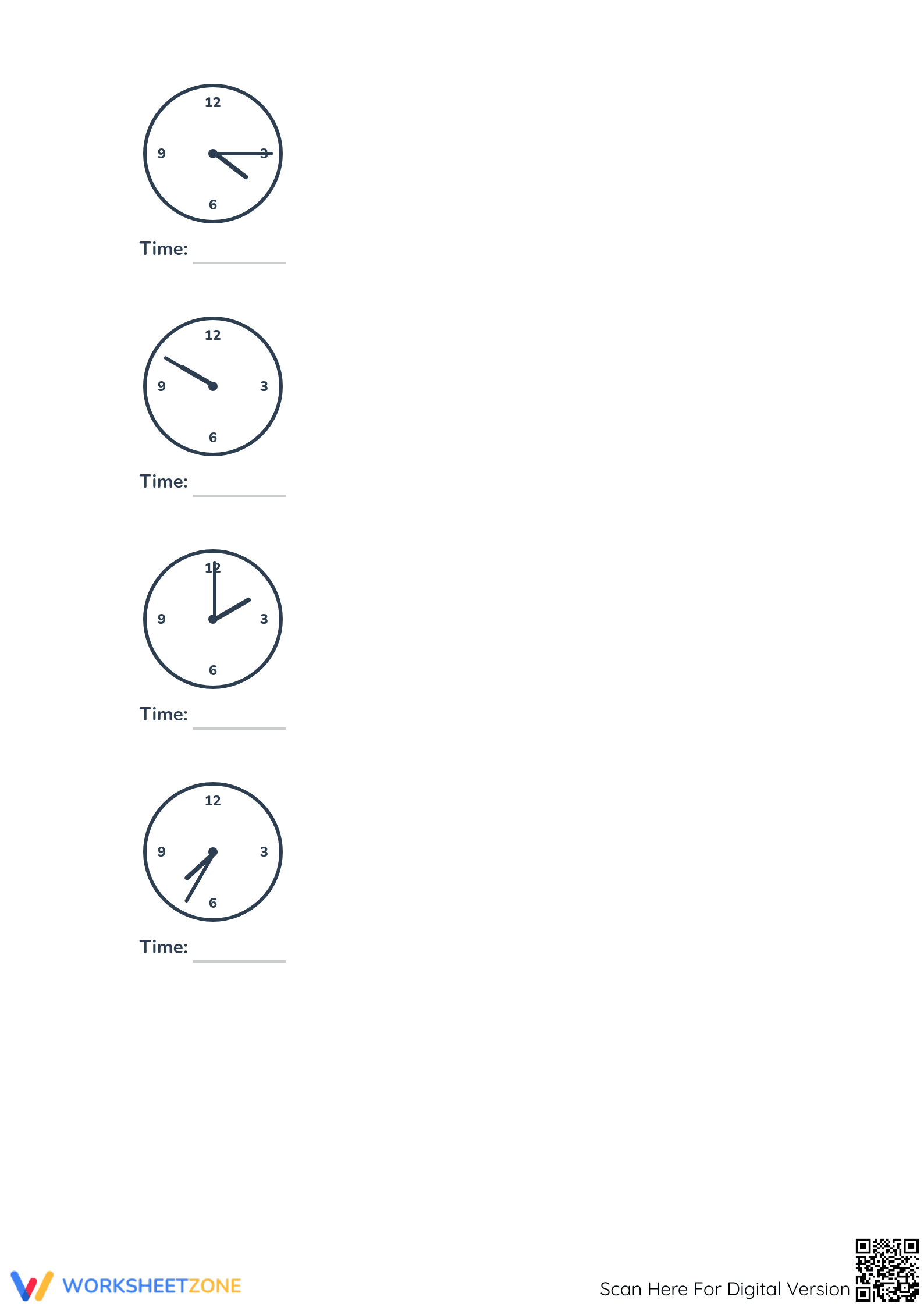


Printable Telling Time Worksheet | Grade 2 Math Essential
Paste this activity's link or code into your existing LMS (Google Classroom, Canvas, Teams, Schoology, Moodle, etc.).
Students can open and work on the activity right away, with no student login required.
You'll still be able to track student progress and results from your teacher account.
Mastering the clock is a fundamental life skill that bridges mathematical logic with daily independence. This comprehensive five-page worksheet provides students with targeted practice in both reading analog clocks and representing digital time visually. By engaging with these 18 structured tasks, learners build the fluency needed to tell time to five-minute intervals with confidence and precision.
At a Glance
- Grade: 2 · Subject: Math
- Standard:
CCSS.MATH.CONTENT.2.MD.C.7— Tell and write time from analog and digital clocks to the nearest five minutes- Skill Focus: Analog and digital time representation
- Format: 5 pages · 18 problems · Answer key included · PDF
- Best For: Independent practice and assessment
- Time: 20–30 minutes
What's Inside
This resource is divided into two clear instructional parts across five high-quality pages. Part 1 features 12 analog clocks where students must observe the hand positions and write the corresponding digital time. Part 2 shifts to "Draw the Hands," providing six digital timestamps (such as 11:15 and 09:05) where students must accurately place the hour and minute hands. A complete answer key is provided for rapid grading or student self-correction.
Zero-Prep Workflow
The zero-prep workflow for this resource is designed for maximum classroom efficiency. 1. Print: Select the "Print" command on your device for the desired number of copies (30 seconds). 2. Distribute: Hand out the five-page packets to your students as they enter the classroom or transition to math centers (1 minute). 3. Review: Use the provided answer key to provide immediate feedback or display it for a whole-class check (1 minute). Total teacher prep time is under three minutes, making it an ideal choice for sub plans or surprise schedule shifts.
Standards Alignment
This worksheet is specifically aligned to CCSS.MATH.CONTENT.2.MD.C.7, which requires students to tell and write time from analog and digital clocks to the nearest five minutes. It also supports introductory work for CCSS.MATH.CONTENT.3.MD.A.1 by establishing the base fluency needed for minute-level precision. Both standard codes can be copied directly into lesson plans, IEP goals, or district curriculum mapping tools.
How to Use It
Use this worksheet during the "You Do" phase of a gradual release lesson on time measurement. It serves as an excellent formative assessment tool; as students work through the 12 reading tasks, teachers can quickly spot common errors like confusing the hour and minute hands. For a collaborative twist, have students pair up after completion to "quiz" each other by pointing to clocks and asking for the time.
Who It's For
This resource is designed for second and third-grade students who are developing their time-telling fluency. It is particularly helpful for visual learners who benefit from seeing large, clear analog faces. To further support differentiation, pair this worksheet with a physical geared clock to allow students to manipulate the hands before drawing them on the page.
Effective math instruction balances conceptual understanding and procedural fluency. This worksheet provides 18 high-repetition opportunities to interact with analog and digital formats, reducing the cognitive load of "reading" the clock through structured practice. By requiring students to interpret analog signals (Part 1) and generate them (Part 2), the resource reinforces time literacy's bidirectional nature. This dual-approach aligns with best practices for early elementary numeracy, helping prevent the "digital-only" proficiency gap. Educators can use CCSS.MATH.CONTENT.2.MD.C.7 to document student progress. This high-utility tool facilitates the transition from counting minutes by fives to internalizing the clock face's spatial logic.


