


























Views
Downloads

Essential Vocabulary for The Chocolate Touch Chapters 7-8 Printable
Paste this activity's link or code into your existing LMS (Google Classroom, Canvas, Teams, Schoology, Moodle, etc.).
Students can open and work on the activity right away, with no student login required.
You'll still be able to track student progress and results from your teacher account.
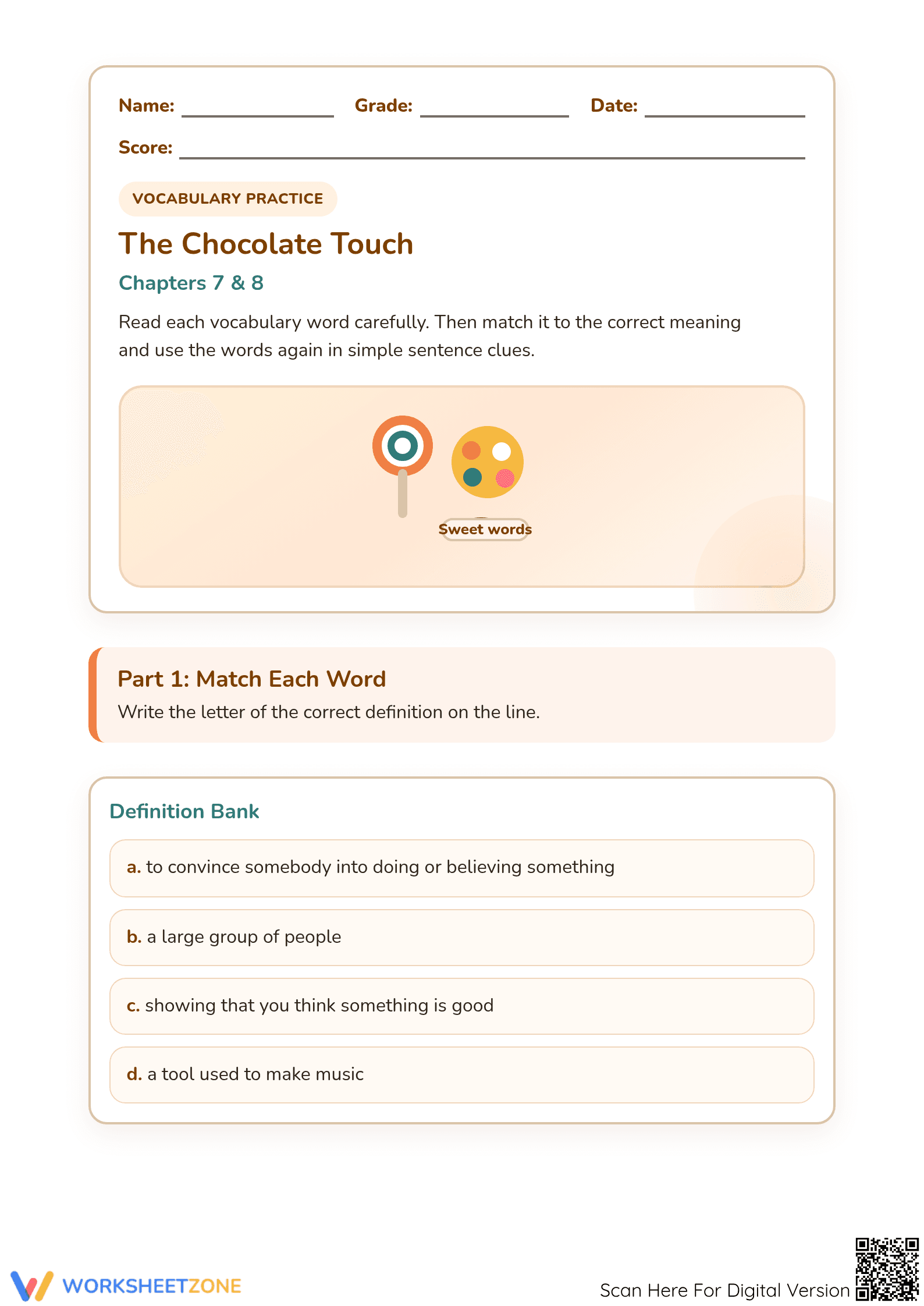
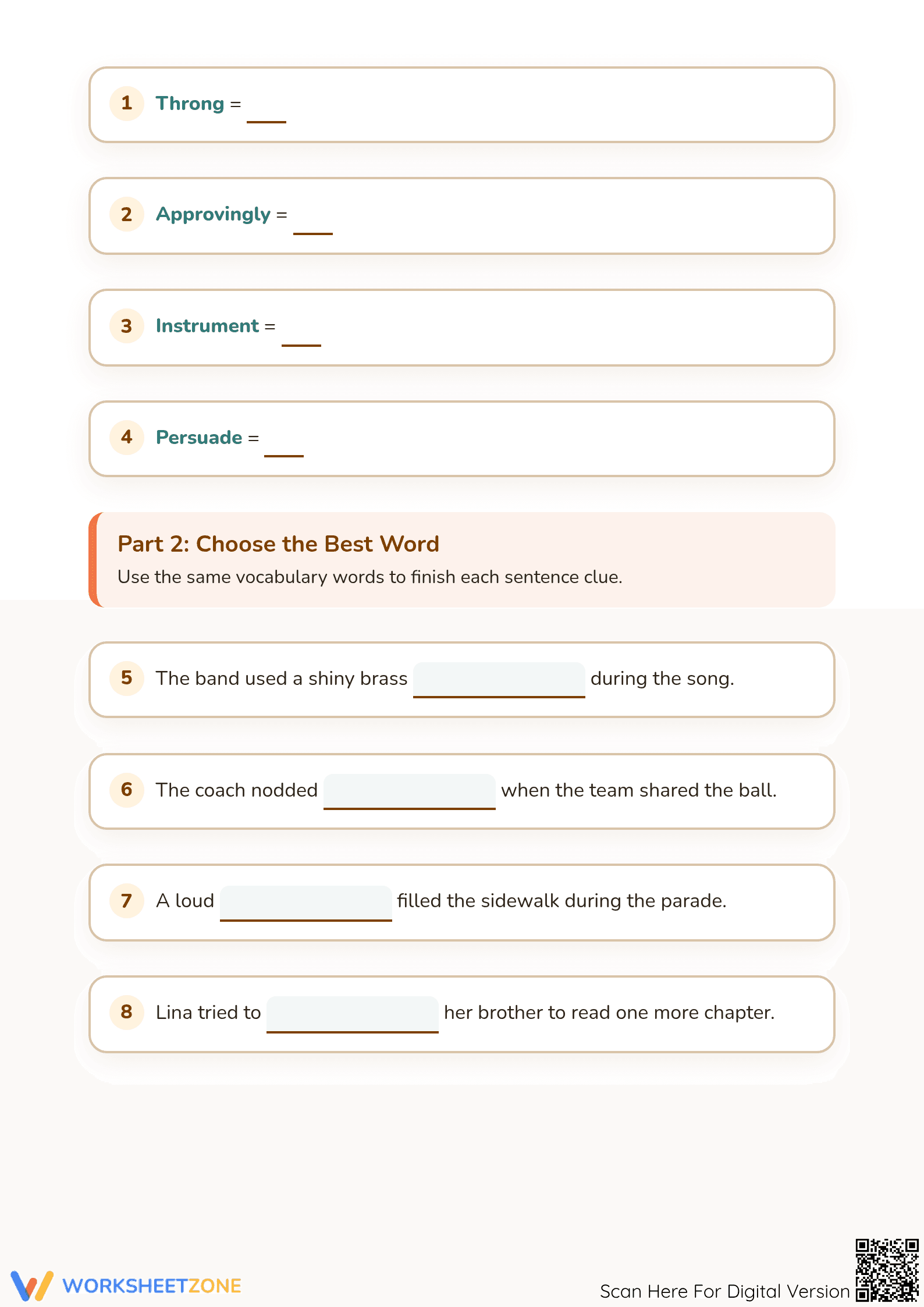
This Grade 3 ELA worksheet targets key vocabulary acquisition from chapters 7 and 8 of The Chocolate Touch. Students master tier-two words through a structured matching exercise that connects terms like "throng" and "persuade" to their precise definitions. It provides an immediate check for comprehension after reading, ensuring students possess the linguistic foundation to discuss the text.
At a Glance
- Grade: 3 · Subject: ELA
- Standard:
CCSS.ELA-LITERACY.RL.3.4— Determine the meaning of words and phrases as they are used in a text- Skill Focus: Literature-based vocabulary matching
- Format: 1 page · 4 problems · Answer key included · PDF
- Best For: Post-reading comprehension check and vocabulary review
- Time: 5–10 minutes
What's Inside
This 1-page resource features a clean, student-friendly layout designed for rapid assessment. It includes four specific vocabulary matching items corresponding to the pivotal events in chapters 7 and 8. The worksheet comes with a complete answer key for effortless grading and is provided in a high-quality PDF format suitable for both printing and digital display.
Zero-Prep Workflow
The zero-prep workflow for this resource involves three simple steps. First, print the single-page document (30 seconds). Second, distribute to students as a bell-ringer or exit ticket (1 minute). Finally, review the four definitions as a class using the included key (3 minutes). Total teacher preparation time is well under 2 minutes, making it an ideal choice for sub plans or spontaneous checks.
Standards Alignment
This worksheet is strictly aligned to CCSS.ELA-LITERACY.RL.3.4, which requires students to determine the meaning of words and phrases within a literary context. By focusing on specific terms from the narrative, it also supports L.3.4 goals regarding vocabulary acquisition. Both standard codes can be copied directly into lesson plans, IEP goals, or district curriculum mapping tools.
How to Use It
Assign this worksheet immediately after students finish reading chapter 8 to gauge their understanding of specific descriptive language. For a formative assessment tip, observe which students struggle with the term "approvingly," as this often indicates a need for further instruction on adverbs and suffixes. The activity typically requires 5 to 10 minutes for independent completion.
Who It's For
This resource is designed for third-grade students reading The Chocolate Touch, but it is also suitable for fourth-grade remedial groups or English Language Learners. It pairs naturally with a chapter-specific anchor chart or a guided reading session. The limited word count ensures that students are not overwhelmed while focusing on the core linguistic demands of the text.
Integrating targeted vocabulary practice with specific literary texts is a cornerstone of effective literacy instruction. According to Fisher & Frey (2014), the gradual release of responsibility model is most effective when students have immediate opportunities to apply their knowledge of new terms. This Grade 3 worksheet aligns with CCSS.ELA-LITERACY.RL.3.4 by requiring students to match tier-two vocabulary words—such as "throng" and "persuade"—directly to their functional definitions within the context of chapters 7 and 8. Providing structured, single-page matching tasks reduces cognitive load, allowing students to focus on the semantic nuances of the narrative. This focused approach ensures that vocabulary instruction is not isolated but rather deeply embedded in the reading process. The inclusion of a clear answer key supports rapid feedback cycles, a critical component in vocabulary retention and student confidence. Educators can reliably use this 4-task assessment to track progress toward mastery of language standards.


