


























Views
Downloads
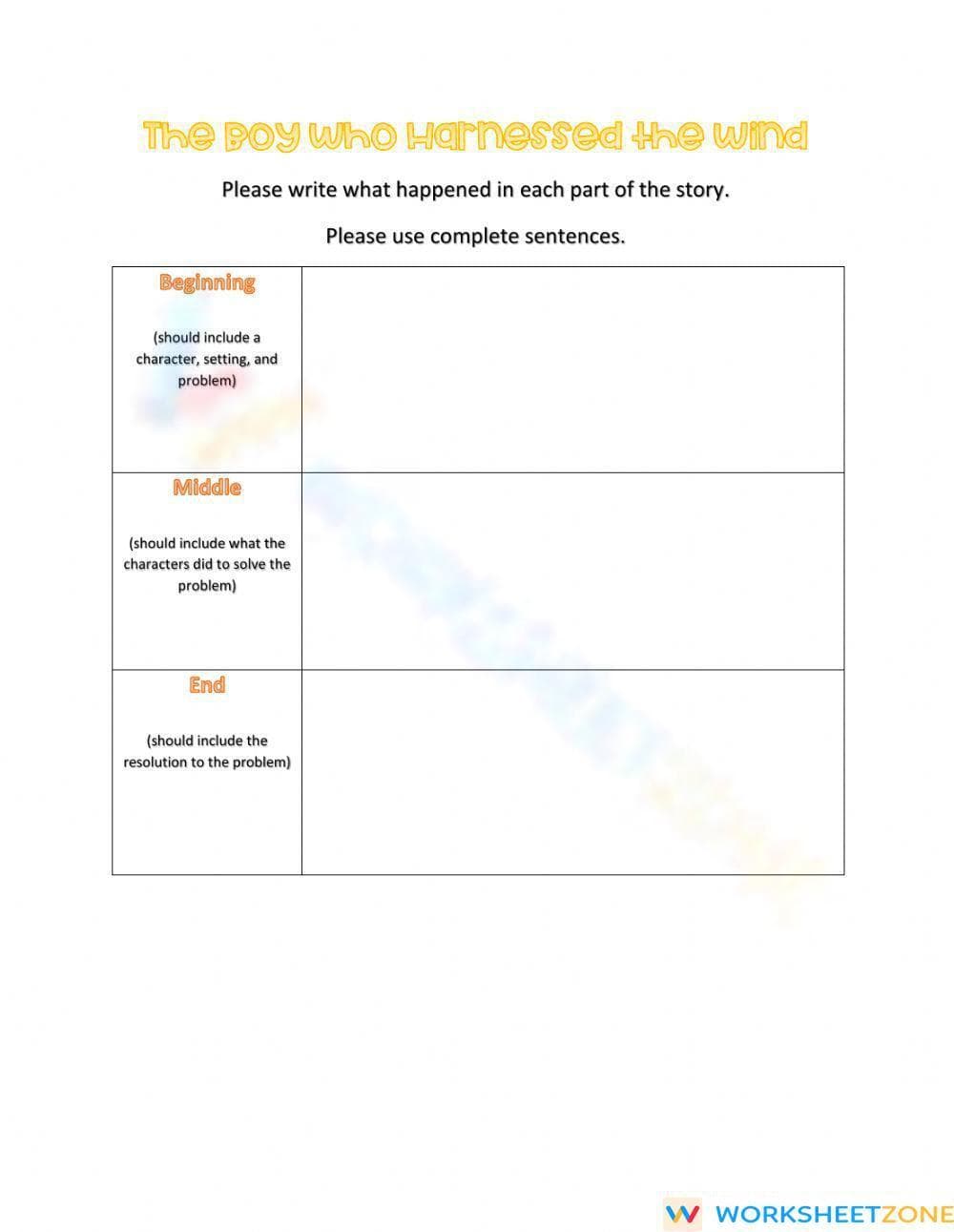

Grade 2 Story Retell — Printable No-Prep Worksheet
Paste this activity's link or code into your existing LMS (Google Classroom, Canvas, Teams, Schoology, Moodle, etc.).
Students can open and work on the activity right away, with no student login required.
You'll still be able to track student progress and results from your teacher account.
Master Story Retelling with a Simple, Powerful Tool
This worksheet provides a clear, structured graphic organizer for students to practice retelling a story. Learners will identify and write about the key events from the beginning, middle, and end of a narrative, strengthening their comprehension and sequencing skills. It's an excellent tool for assessing a student's ability to summarize a text accurately after reading.
At a Glance
- Grade: 2 · Subject: ELA / Reading
- Standard:
CCSS.ELA-LITERACY.RL.2.5— Describe the overall structure of a story, including beginning and ending.- Skill Focus: Story Retelling, Narrative Structure
- Format: 1 page · 3 prompts · PDF
- Best For: Post-reading comprehension check
- Time: 15–25 minutes
What's Inside
This single-page PDF features a graphic organizer divided into three sections: "Beginning," "Middle," and "End." Each section includes a helpful cue (e.g., "should include a character, setting, and problem") to guide writing. The layout provides ample space for students to write, and as an open-ended task, no answer key is provided.
A Seamless Addition to Your Reading Block
Designed for the busy teacher, this worksheet requires virtually no preparation. The entire workflow can be completed in under two minutes: print the PDF, distribute with a story, and the self-contained instructions are ready. Its straightforward design makes it an ideal resource for a substitute teacher's sub plan or as a last-minute independent work activity. Use the completed organizers as a quick formative assessment or for classroom discussion.
Aligned to Common Core ELA Standards
This resource directly supports CCSS.ELA-LITERACY.RL.2.5, which requires students to "describe the overall structure of a story, including describing how the beginning introduces the story and the ending concludes the action." The worksheet's three-part structure provides a concrete framework for meeting this expectation. The standard code can be copied directly into lesson plans, IEP goals, or district curriculum mapping tools.
Flexible for Any Classroom Routine
This retelling worksheet is best used immediately after a read-aloud or independent reading to capture fresh comprehension. For one use case, model filling out the "Beginning" section together, then have students complete the rest independently. As a formative assessment tip, scan for the inclusion of key details versus minor ones to check for main idea comprehension. Expect students to take between 15 and 25 minutes to complete their writing.
Built for Developing Readers and Writers
This activity is created for 1st to 3rd-grade students learning to analyze narrative texts. The clear prompts provide essential scaffolding for learners needing support in organizing their thoughts. For differentiation, provide a word bank of key vocabulary from the story. This worksheet pairs naturally with any picture book or an anchor chart that defines story elements (character, setting, problem, solution).
This graphic organizer targets a foundational literacy skill: narrative retelling. Aligned with CCSS.ELA-LITERACY.RL.2.5, it prompts students to deconstruct a story into its beginning, middle, and end, a practice central to building comprehension. According to research on reading instruction, the ability to identify and describe story structure is a key predictor of later reading success (RAND AIRS 2024). By providing a simple yet effective framework, this tool helps students move beyond simple recall to a more analytical understanding of how stories are built. The exercise of writing out the sequence of events reinforces both comprehension and written expression, giving teachers a clear artifact of student learning.


