


























Views
Plays


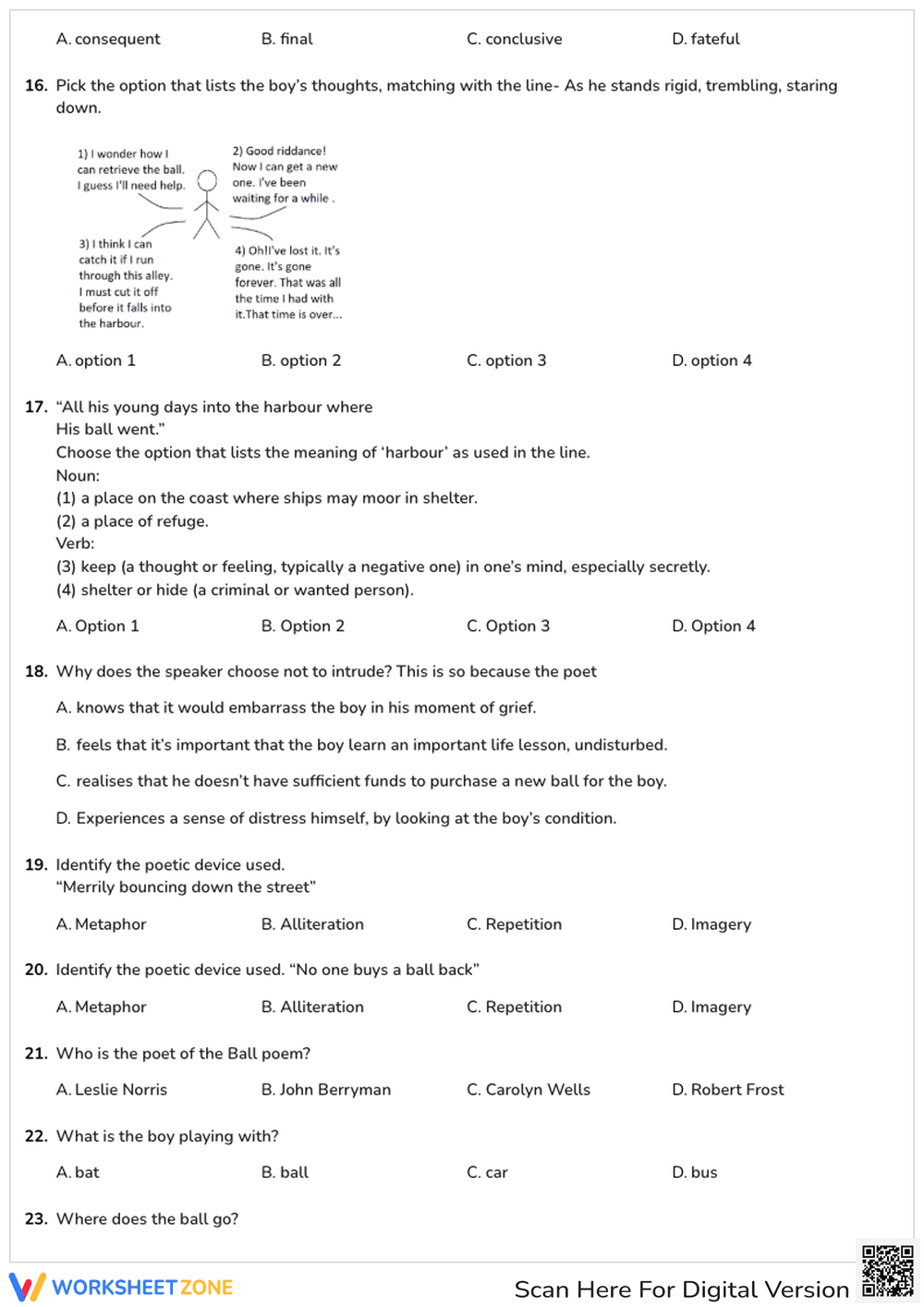


"The Ball Poem" Quiz | Grade 10 Essential Worksheet
Paste this activity's link or code into your existing LMS (Google Classroom, Canvas, Teams, Schoology, Moodle, etc.).
Students can open and work on the activity right away, with no student login required.
You'll still be able to track student progress and results from your teacher account.
This Grade 10 literary analysis worksheet provides a comprehensive assessment of John Berryman's "The Ball Poem," focusing on the student's ability to interpret complex themes of loss and responsibility. By engaging with 30 structured multiple-choice questions, learners demonstrate mastery over both the literal narrative and the deeper philosophical implications of the text. This resource ensures students can identify poetic devices while connecting the boy's emotional journey to the broader human experience.
At a Glance
- Grade: 10 · Subject: ELA / Behavioral Studies
- Standard:
CCSS.ELA-LITERACY.RL.10.2— Determine a theme and analyze its development- Skill Focus: Thematic Analysis & Poetic Devices
- Format: 4 pages · 30 problems · Answer key included · PDF
- Best For: Summative assessment or reading check
- Time: 35–45 minutes
What's Inside
This 4-page PDF contains a robust 30-question multiple-choice quiz designed to evaluate reading comprehension and critical thinking. Tasks range from basic recall to sophisticated analysis of literary techniques such as anaphora, imagery, and metaphor. The worksheet includes vocabulary checks for terms like "epistemology" and "harbour," ensuring students grasp the linguistic nuances that build the poem's somber tone. A full answer key is provided for efficient grading.
Zero-Prep Workflow
- Print: Select the 4-page PDF and print copies for your class in under 1 minute.
- Distribute: Hand out the quiz as an independent assessment following your primary reading of the poem.
- Review: Use the included answer key to grade the 30 items or facilitate a peer-review session in approximately 15 minutes.
Total teacher preparation time is less than 2 minutes, making this an ideal solution for sub plans or end-of-unit evaluations.
Standards Alignment
The primary focus of this resource is CCSS.ELA-LITERACY.RL.10.2: Determine a theme or central idea of a text and analyze in detail its development over the course of the text. Additionally, it supports RL.10.4 by requiring students to determine the meaning of words and phrases as they are used in the text, including figurative and connotative meanings. Both standard codes can be copied directly into lesson plans or district curriculum mapping tools.
How to Use It
This worksheet is best utilized as a summative assessment after students have completed a close reading of "The Ball Poem." It can also serve as a formative check during the instructional cycle to identify which students struggle with identifying poetic devices like alliteration or repetition. For a formative observation, monitor student progress on questions 5 and 6, which specifically target the poem's central philosophy of responsibility. Expected completion time ranges from 35 to 45 minutes.
Who It's For
This resource is specifically tailored for Grade 10 ELA students but is also highly effective for Grade 8 and 9 learners who are ready for advanced thematic analysis. It pairs naturally with an anchor chart on poetic devices or a direct instruction lesson on the life and works of John Berryman. Research indicates that structured assessments integrating thematic inquiry with technical literary analysis significantly improve student retention of complex poetic structures. This worksheet on "The Ball Poem" utilizes 30 targeted questions to bridge the gap between emotional intelligence and academic rigor, ensuring Grade 10 students engage with higher-order thinking skills while maintaining a manageable 40-minute completion window.


