


























Views
Downloads

Grade 4 Nervous System — Printable No-Prep Worksheet
Paste this activity's link or code into your existing LMS (Google Classroom, Canvas, Teams, Schoology, Moodle, etc.).
Students can open and work on the activity right away, with no student login required.
You'll still be able to track student progress and results from your teacher account.
This beginner-friendly science worksheet introduces students to the human nervous system and its critical functions. By reading short, accessible passages and completing targeted activities, students will understand how the brain, spinal cord, and nerves work together to process information and control the body.
At a Glance
- Grade: 4 · Subject: Science
- Standard:
4-LS1-2— Describe how animals process information in their brain and respond.- Skill Focus: Nervous system functions
- Format: 2 pages · 9 problems · Answer key included · PDF
- Best For: Independent practice or review
- Time: 15–20 minutes
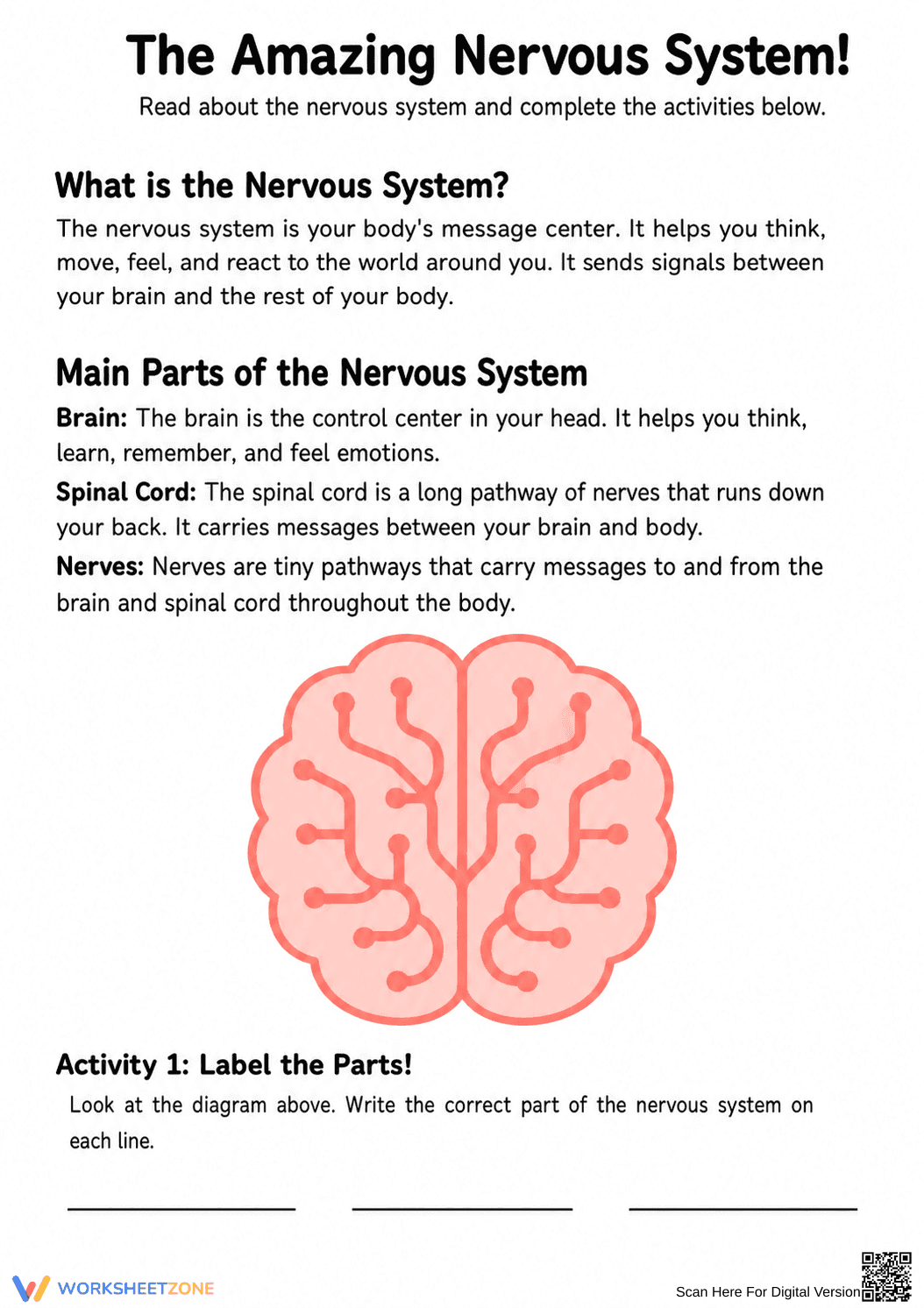
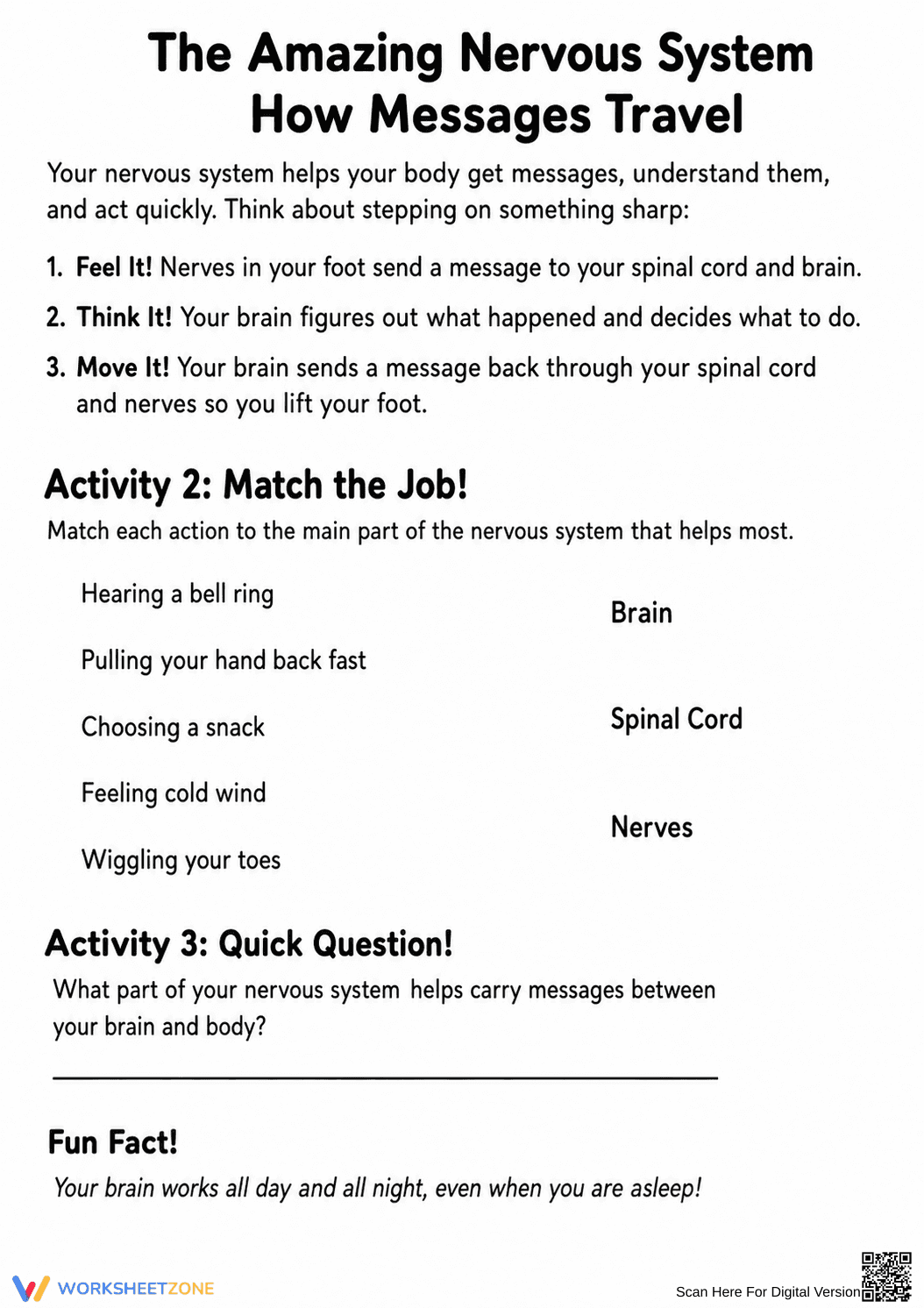
This two-page resource features a clear, simple reading passage explaining the main parts of the nervous system, followed by three distinct activities. Students will complete a diagram labeling task with three parts, a five-question matching activity connecting actions to the correct nervous system component, and a short-answer comprehension question. A complete answer key is included for easy grading.
Designed for immediate use, this requires no teacher setup:
- Print (1 minute): Simply print the two-page PDF and the accompanying answer key.
- Distribute (1 minute): Hand out the worksheets to students after a brief introduction to human body systems.
- Review (3 minutes): Go over the reading passage together or let students read independently before they tackle the questions.
With under two minutes of prep time, this is an excellent addition to any life science unit and makes a perfect substitute teacher plan.
This worksheet is directly aligned to the Next Generation Science Standard 4-LS1-2: Use a model to describe that animals receive different types of information through their senses, process the information in their brain, and respond to the information in different ways. It builds foundational knowledge of internal structures that support survival and behavior. Both standard codes can be copied directly into lesson plans, IEP goals, or district curriculum mapping tools.
Use this resource during the core instructional phase of a human body unit. It works beautifully as a guided reading activity before transitioning into independent practice. Alternatively, assign it as a formative assessment after direct instruction. While students work, observe whether they can correctly distinguish between the roles of the brain and the spinal cord during the matching activity. Expect students to complete the reading and all nine tasks within 15 to 20 minutes.
This worksheet is ideal for third through fifth-grade students developing their science vocabulary and foundational biology knowledge. The straightforward text and clear visual diagram make it highly accessible for visual learners and students who benefit from chunked information. For a comprehensive lesson, pair this printable with a hands-on demonstration of reaction times or an interactive video showing how nerves send electrical signals through the body.
Effectively teaching life science concepts requires materials that integrate reading comprehension with targeted skill application. This resource aligns with 4-LS1-2, helping students describe how animals process information in their brain and respond to external stimuli. According to a comprehensive review by EdReports 2024, science instructional materials that combine clear informational text with immediate, low-stakes assessment tasks significantly improve student retention of complex biological systems. By breaking down the nervous system into manageable components—specifically the brain, spinal cord, and peripheral nerves—this worksheet reduces cognitive load while actively reinforcing essential academic vocabulary. The inclusion of visual diagrams alongside matching and labeling exercises ensures that multiple learning modalities are engaged simultaneously. This structured approach not only builds foundational knowledge of human anatomy but also supports broader scientific literacy, preparing students for more advanced physiological concepts in middle school.


