


























Views
Downloads

Printable Grade 4 Math Worksheet: Addition and Decimals
Paste this activity's link or code into your existing LMS (Google Classroom, Canvas, Teams, Schoology, Moodle, etc.).
Students can open and work on the activity right away, with no student login required.
You'll still be able to track student progress and results from your teacher account.
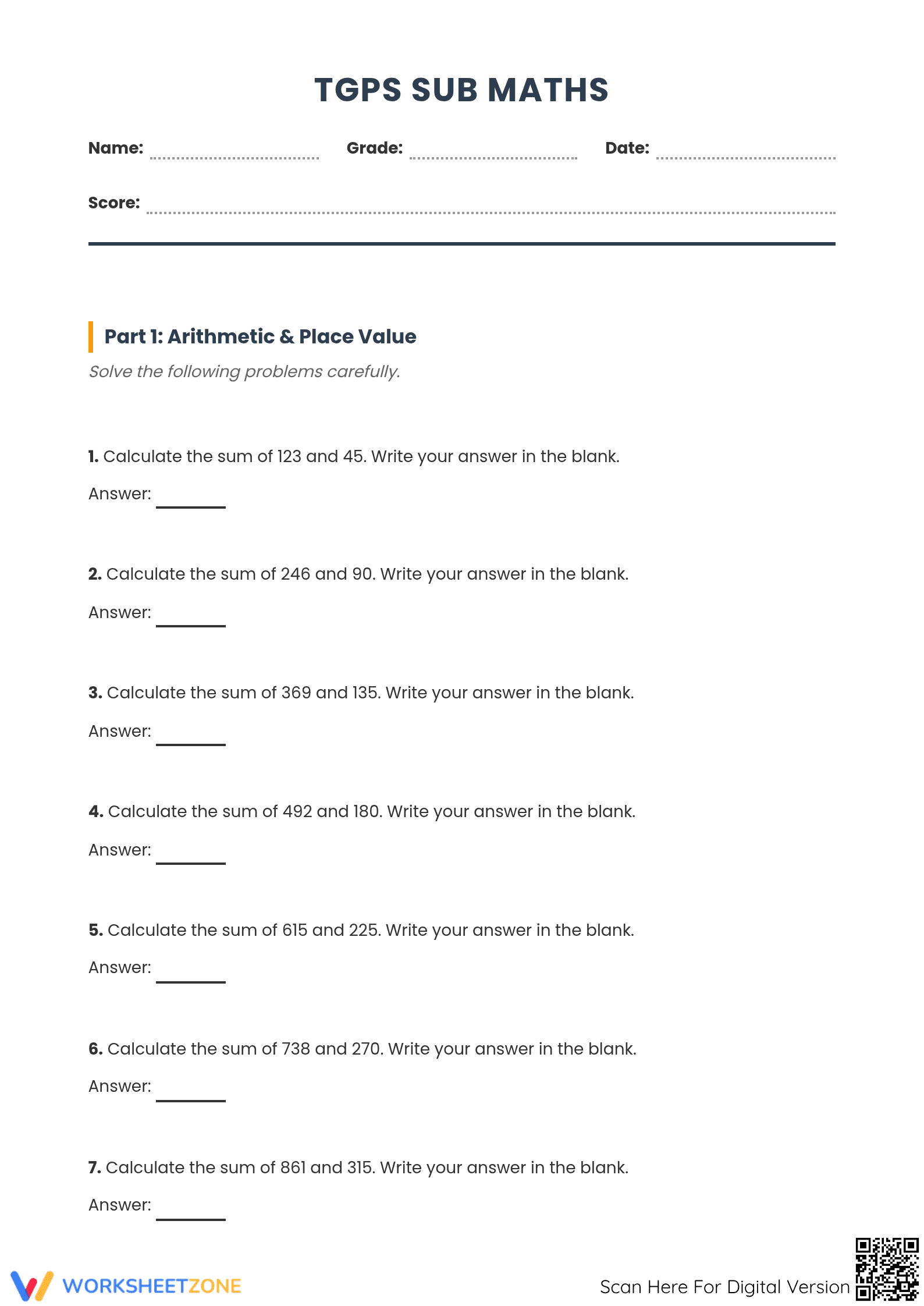
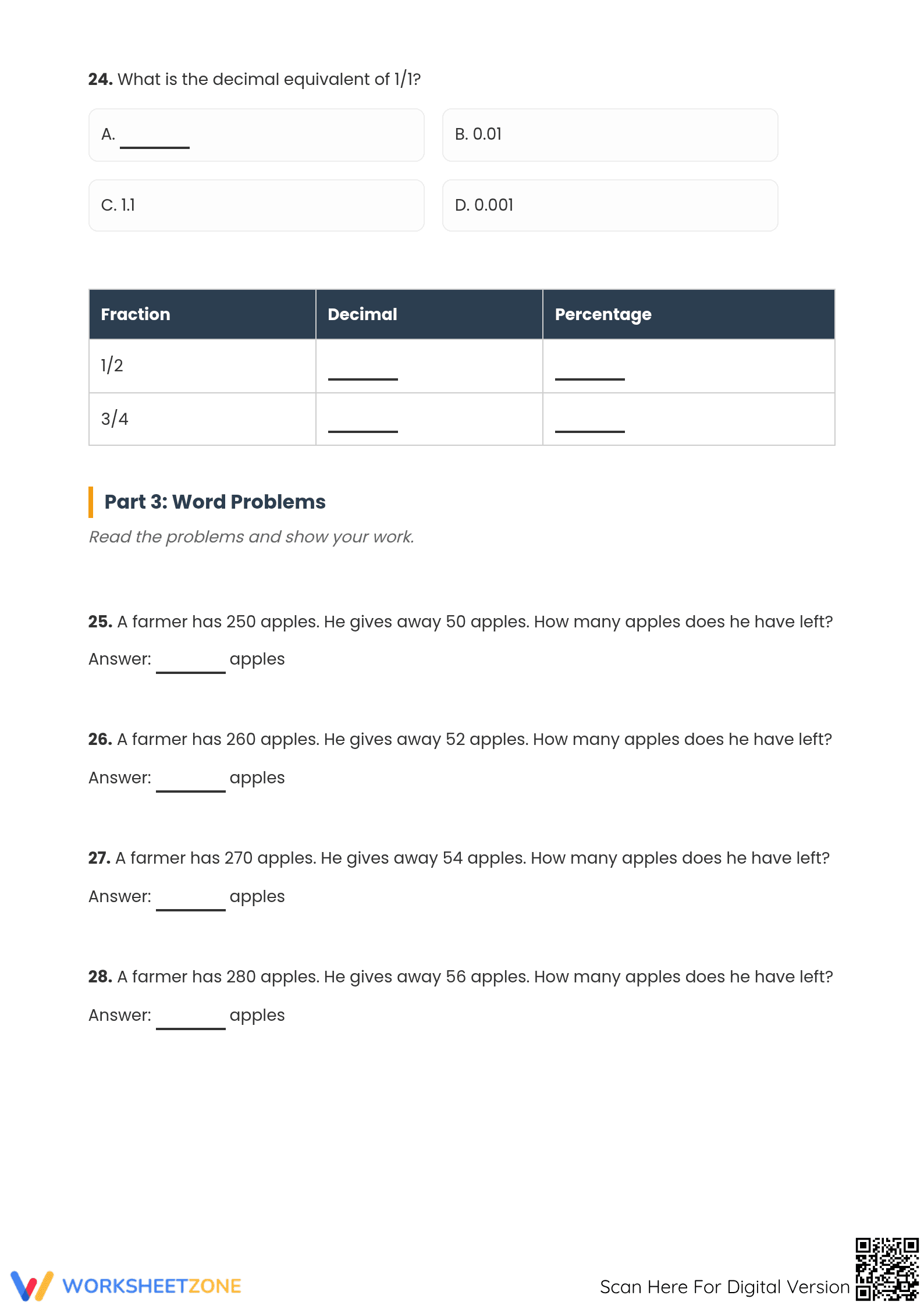
This Grade 4 math worksheet provides a comprehensive review of fundamental arithmetic and decimal concepts. Students will practice three-digit addition, convert common fractions to decimal form, and solve multi-step subtraction word problems. Designed to bridge the gap between abstract number operations and real-world applications, this resource ensures mastery of key curriculum standards.
At a Glance
- Grade: 4 · Subject: Math
- Standard:
CCSS.MATH.CONTENT.4.NF.C.6— Use decimal notation for fractions with denominators 10 or 100- Skill Focus: Multi-digit addition, decimals, and subtraction
- Format: 5 pages · 28 problems · Answer key included · PDF
- Best For: Classroom practice, homework, or formative assessment
- Time: 45–60 minutes
What's Inside
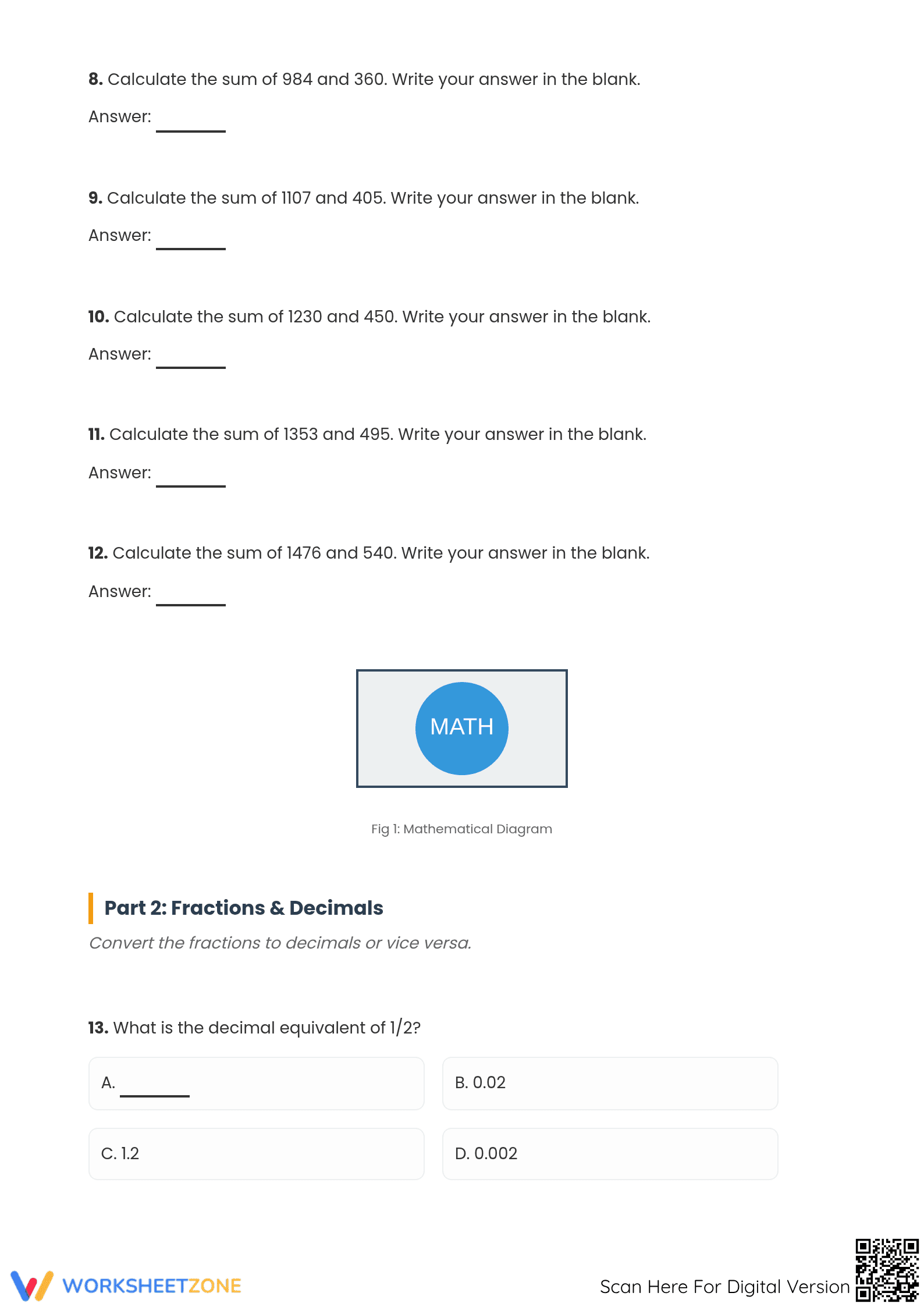
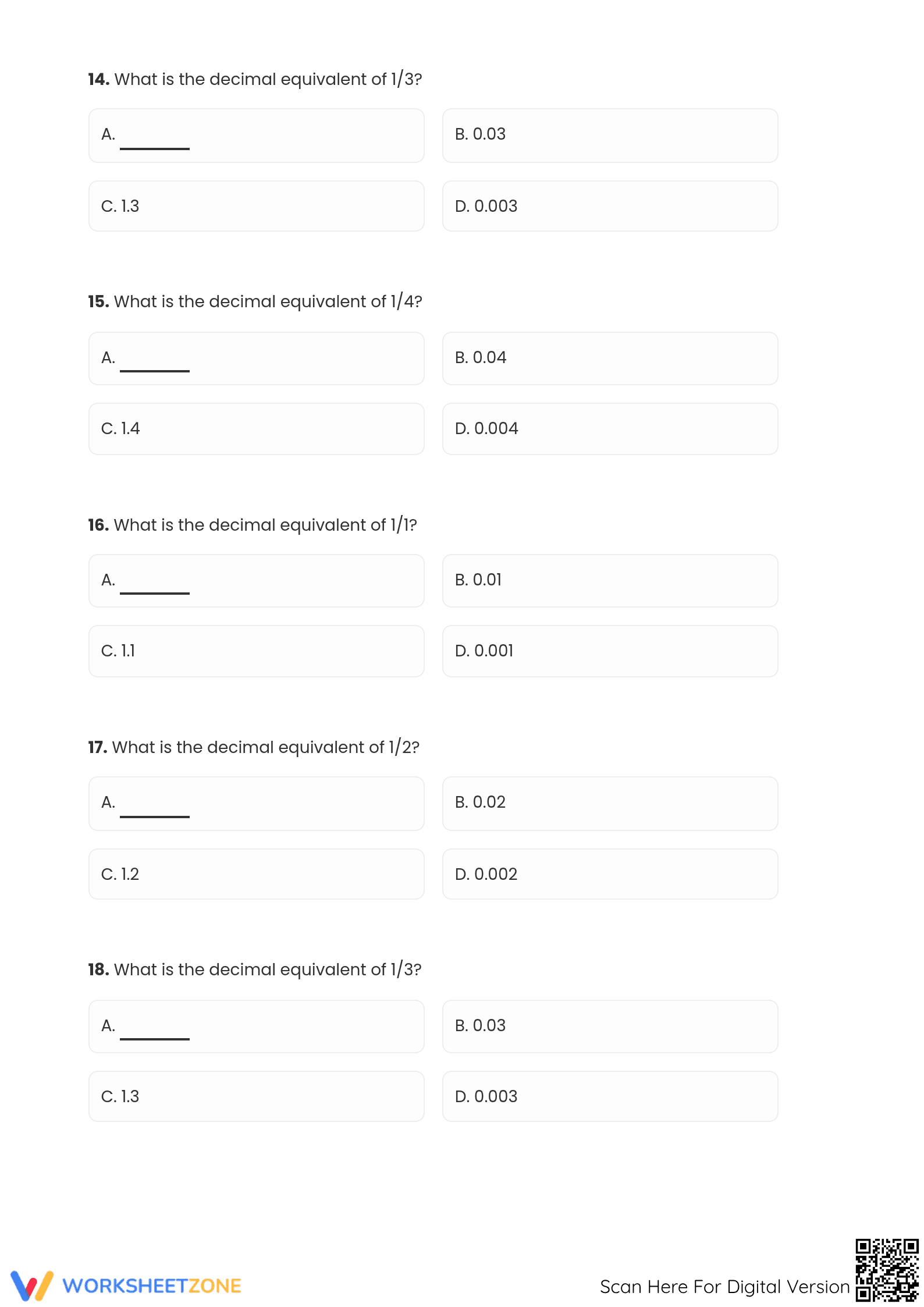
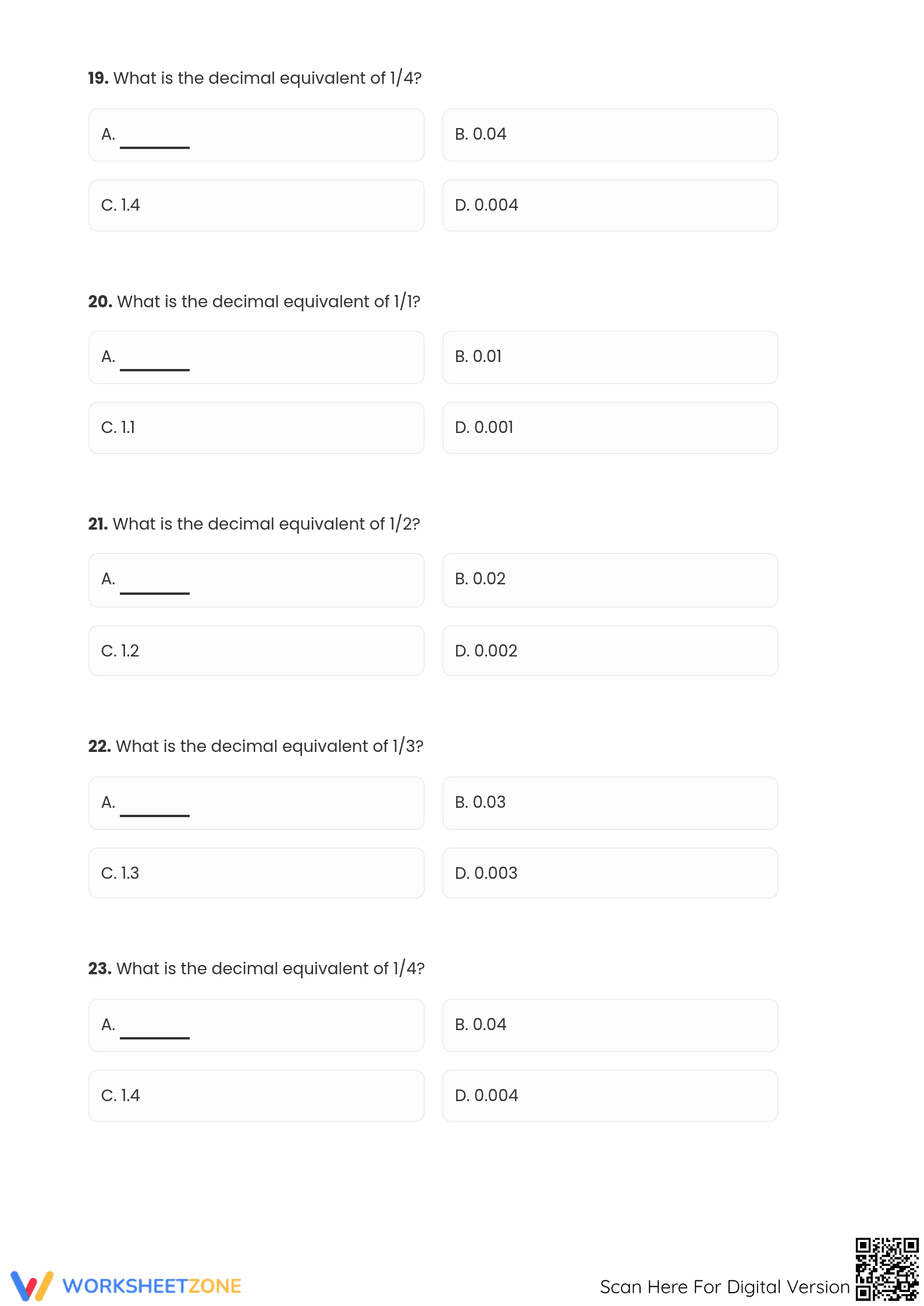
The worksheet is organized into three sections across five pages. Part 1 features 12 addition problems focusing on three-digit numbers. Part 2 contains 12 conversion tasks for common fractions and decimals. Part 3 concludes with 4 subtraction word problems. A full answer key is included to facilitate quick grading and immediate student feedback.
Skill Progression
- Guided Practice: The first section uses clear prompts to help students apply the standard algorithm for three-digit addition in a structured environment.
- Supported Practice: The decimal conversion tasks introduce multiple-choice distractors to challenge common misconceptions and reinforce place value understanding.
- Independent Practice: The final word problems require students to extract relevant data and perform operations without scaffolds, promoting higher-order thinking.
This I Do, We Do, You Do structure supports the gradual release of responsibility model, ensuring students build confidence as they move from simple calculations to complex application.
Standards Alignment
This resource is meticulously aligned to CCSS.MATH.CONTENT.4.NF.C.6, which requires students to use decimal notation for fractions. It also supports CCSS.MATH.CONTENT.4.NBT.B.4 by providing rigorous practice with the standard algorithm for multi-digit addition and subtraction. Both standard codes can be copied directly into lesson plans, IEP goals, or district curriculum mapping tools.
How to Use It
Introduce this worksheet as a post-lesson practice after teaching decimal place value. For formative assessment, observe student strategies in the word problem section to identify whether errors stem from reading comprehension or calculation gaps. The expected completion time is 50 minutes, making it suitable for a class period or homework.
Who It's For
This material is designed for Grade 4 and 5 students who are developing fluency with fractions and large numbers. It is particularly beneficial for students who require extra practice with the transition from fractions to decimals. Pair this worksheet with a decimal place value anchor chart for students who need additional visual scaffolding during independent work time.
Research from RAND AIRS 2024 emphasizes that varied problem sets—combining pure calculation with contextual word problems—significantly improve long-term retention of mathematical concepts in upper elementary grades. By integrating fraction-to-decimal conversion (CCSS.MATH.CONTENT.4.NF.C.6) alongside traditional arithmetic, this resource forces students to activate multiple cognitive pathways simultaneously. This dual-focus approach aligns with the findings of Fisher & Frey (2014) regarding the effectiveness of purposeful practice in developing mathematical fluency. Educators can trust that the 28 structured tasks provide the necessary repetition for mastery while maintaining high levels of engagement through varied task formats. Furthermore, the inclusion of multi-digit addition (CCSS.MATH.CONTENT.4.NBT.B.4) ensures that students maintain computational speed while tackling new conceptual hurdles. This alignment with evidence-based instructional design makes the worksheet a reliable tool for both tiered intervention and general classroom instruction.


