


























Views
Downloads



Printable Telling Time to 15 Minutes Worksheet | Grade 2-4
Paste this activity's link or code into your existing LMS (Google Classroom, Canvas, Teams, Schoology, Moodle, etc.).
Students can open and work on the activity right away, with no student login required.
You'll still be able to track student progress and results from your teacher account.
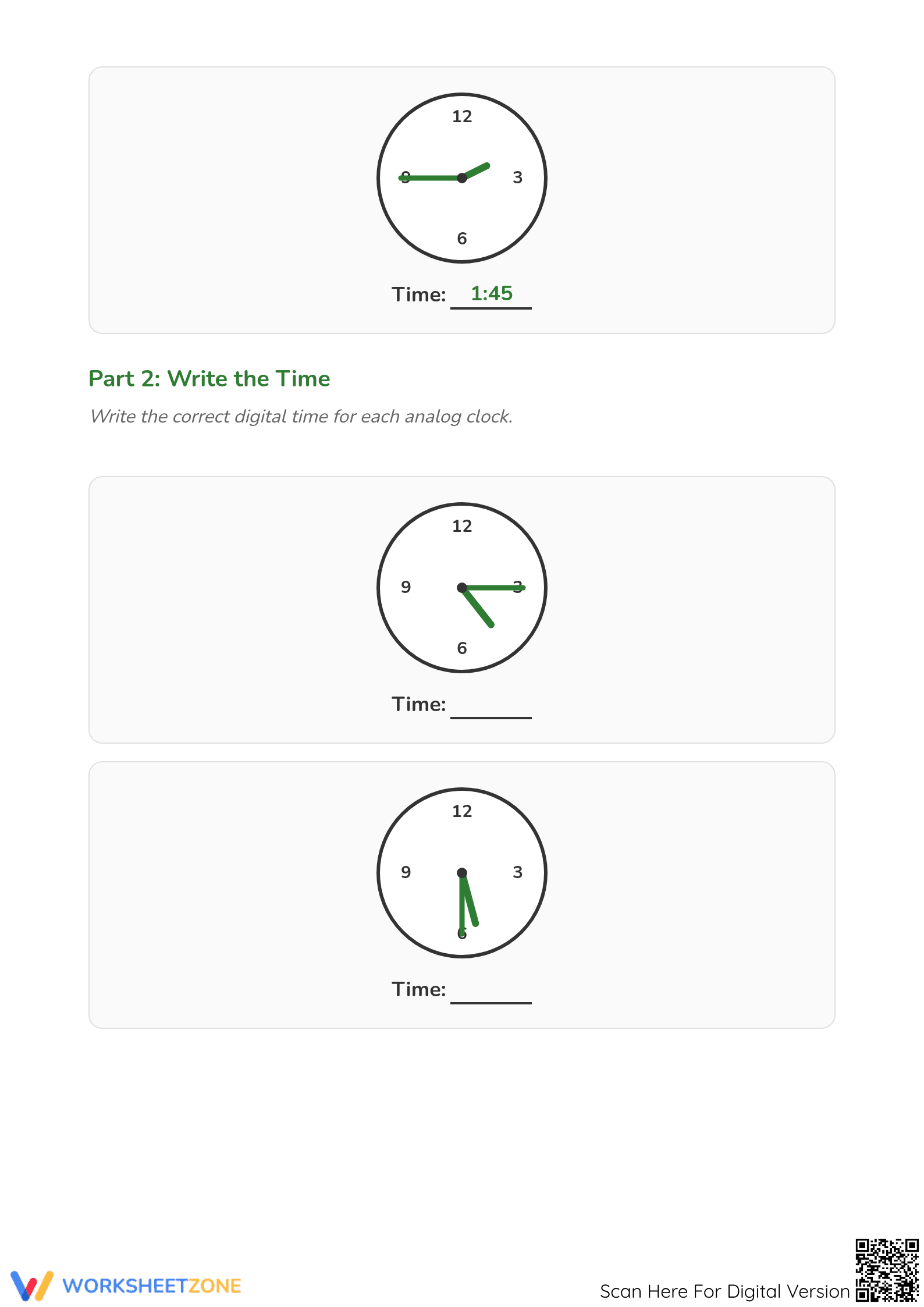
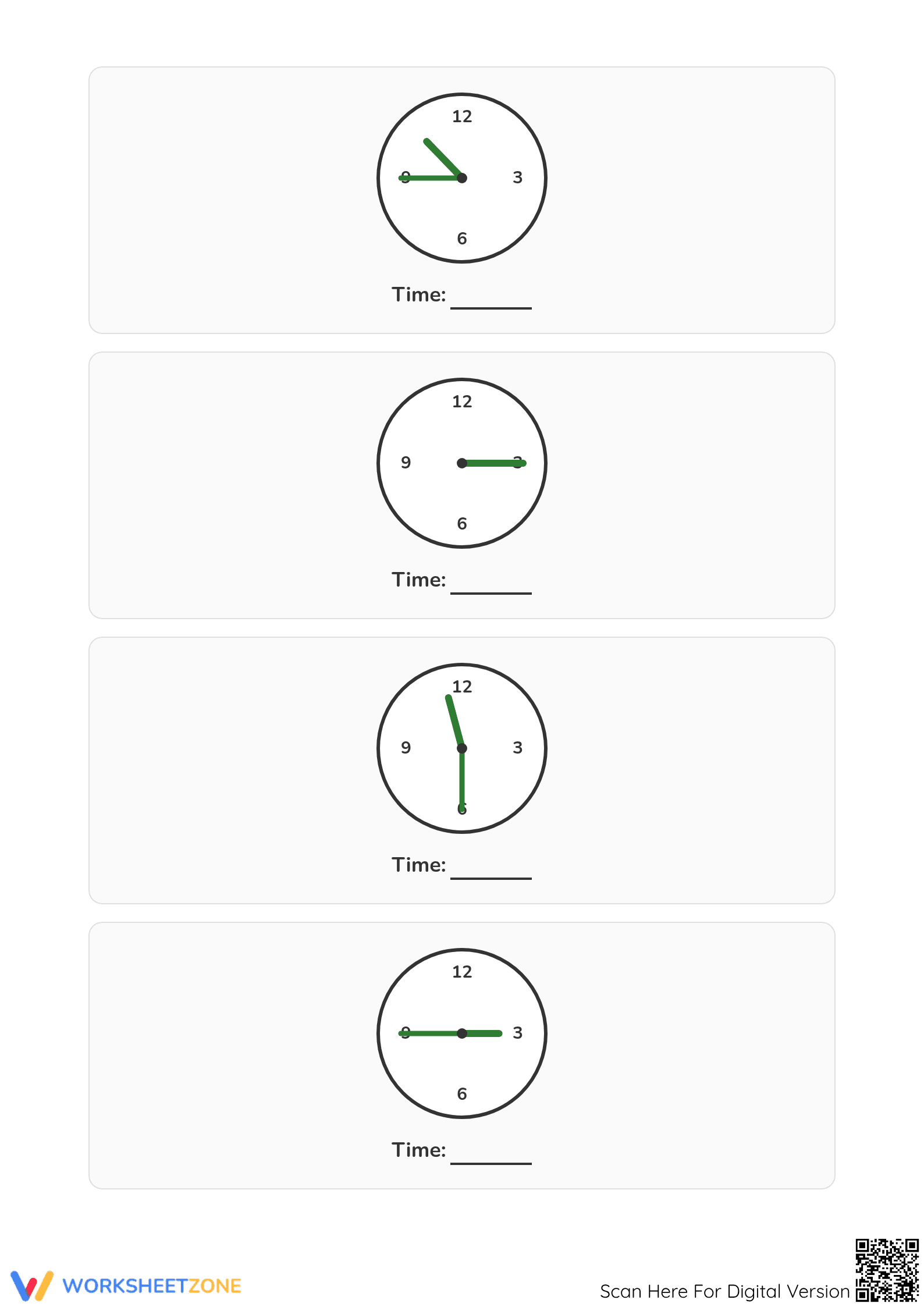
This Grade 2-4 Math worksheet provides structured practice for students to master telling time to the nearest 15 minutes on analog clocks. Students move from observing worked examples to independently identifying and writing digital times for thirteen different clock faces. This progression ensures students confidently recognize quarter-hour intervals and translate visual cues into numeric values.
At a Glance
- Grade: 2-4 · Subject: Math
- Standard:
CCSS.MATH.CONTENT.2.MD.C.7— Tell and write time from analog and digital clocks to the nearest five minutes- Skill Focus: Telling time to the nearest 15 minutes
- Format: 5 pages · 13 problems · Answer key included · PDF
- Best For: Independent practice and quick formative assessment
- Time: 20–30 minutes
What's Inside
The comprehensive five-page set features three clear introductory examples showing the movement of the minute hand at 15-minute intervals. Following the "I Do" phase, students encounter 13 diverse practice clocks. The layout is clean and spacious, providing dedicated lines for writing digital times. A full answer key is included to facilitate self-correction or rapid teacher review.
Zero-Prep Workflow
This resource is designed for immediate classroom integration with zero teacher setup. Step 1: Print the five-page PDF (30 seconds). Step 2: Distribute to students for a morning work session or as a targeted sub plan (1 minute). Step 3: Review student answers using the included answer key (2 minutes). Total preparation time is under two minutes, making it ideal for busy instructional blocks.
Standards Alignment
The worksheet is explicitly aligned to CCSS.MATH.CONTENT.2.MD.C.7, which requires students to "Tell and write time from analog and digital clocks to the nearest five minutes, using a.m. and p.m." By focusing on the quarter-hour intervals, it provides a foundational step toward full five-minute mastery. This standard code can be copied directly into lesson plans, IEP goals, or district curriculum mapping tools.
How to Use It
Use this resource as a post-instructional practice set after introducing the concept of "quarter past" and "quarter til." It serves as an excellent formative assessment tool; teachers should observe if students are correctly identifying the hour hand's slight movement between numbers. Expect students to complete the full sequence in 20 to 30 minutes during independent work time.
Who It's For
This worksheet is designed for second-grade students beginning their time-telling journey, as well as third and fourth graders requiring remediation or fluency practice. It pairs naturally with physical Judy clocks or interactive digital clock passages to reinforce the connection between physical hand movement and the written digital format.
Effective mathematics instruction requires a gradual release of responsibility, moving from worked examples to independent application. According to NAEP research on elementary numeracy, frequent visual practice with analog clocks is critical for developing an internal "number line" for time measurement. This CCSS.MATH.CONTENT.2.MD.C.7 resource supports this by providing thirteen distinct opportunities for students to translate visual spatial data from analog faces into precise digital notations for quarter-hour intervals. By isolating the 15-minute increments, the worksheet reduces cognitive load and allows students to focus on the relationship between the minute hand's position and its digital equivalent. This evidence-based approach aligns with Fisher & Frey (2014) recommendations for scaffolded independent practice. The inclusion of a clear answer key further supports immediate feedback, a key driver in student mastery.


