


























Views
Downloads
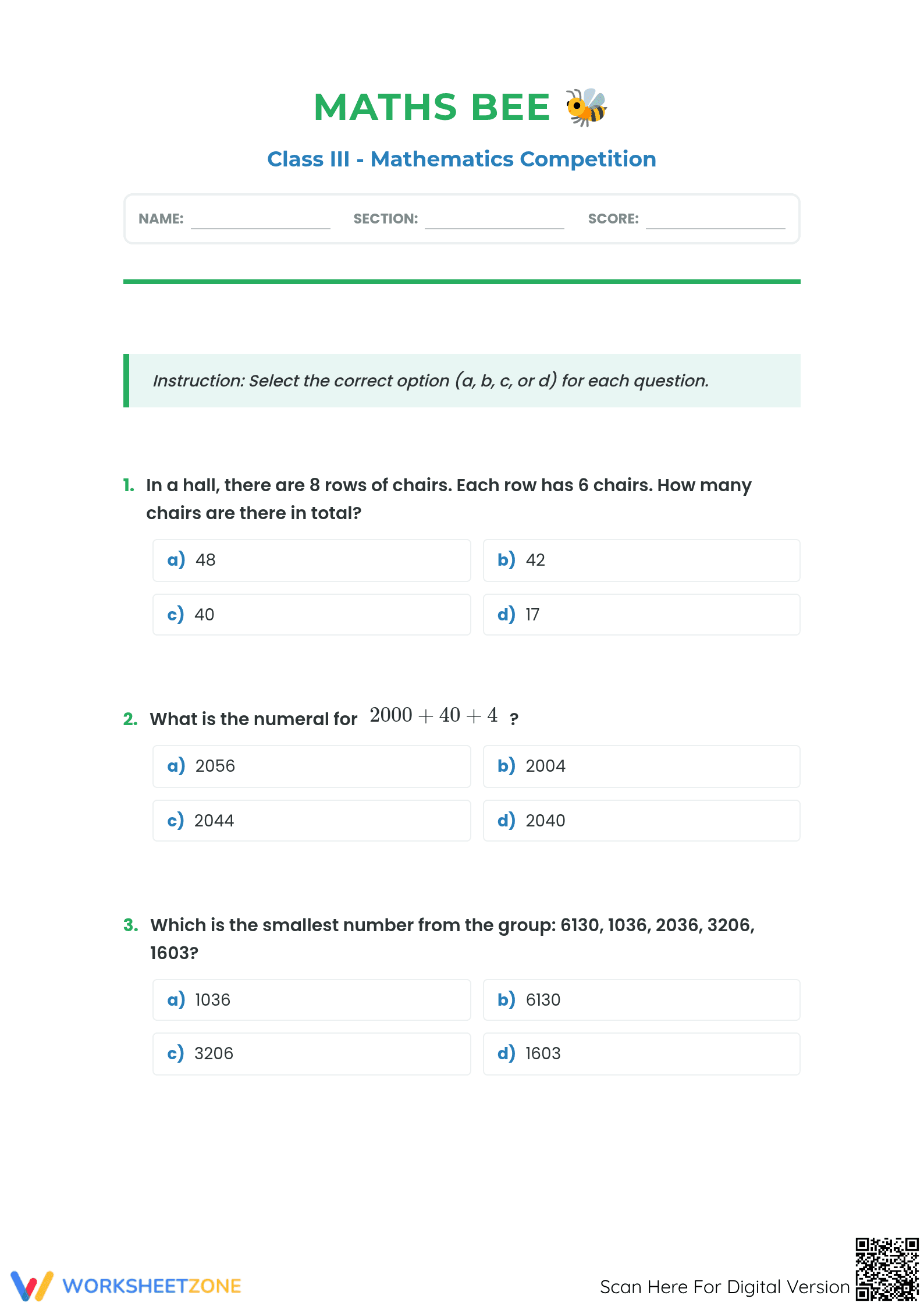
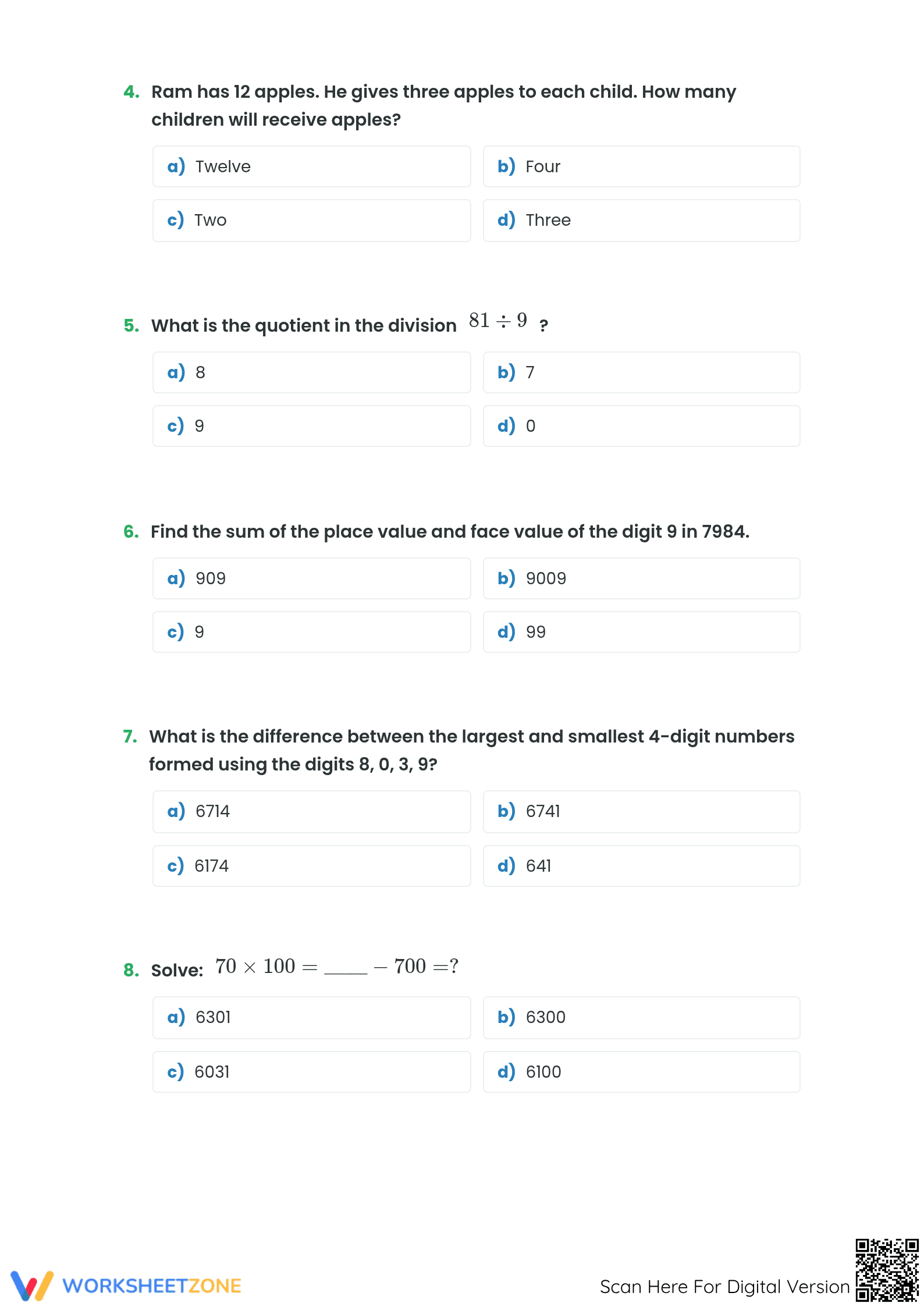
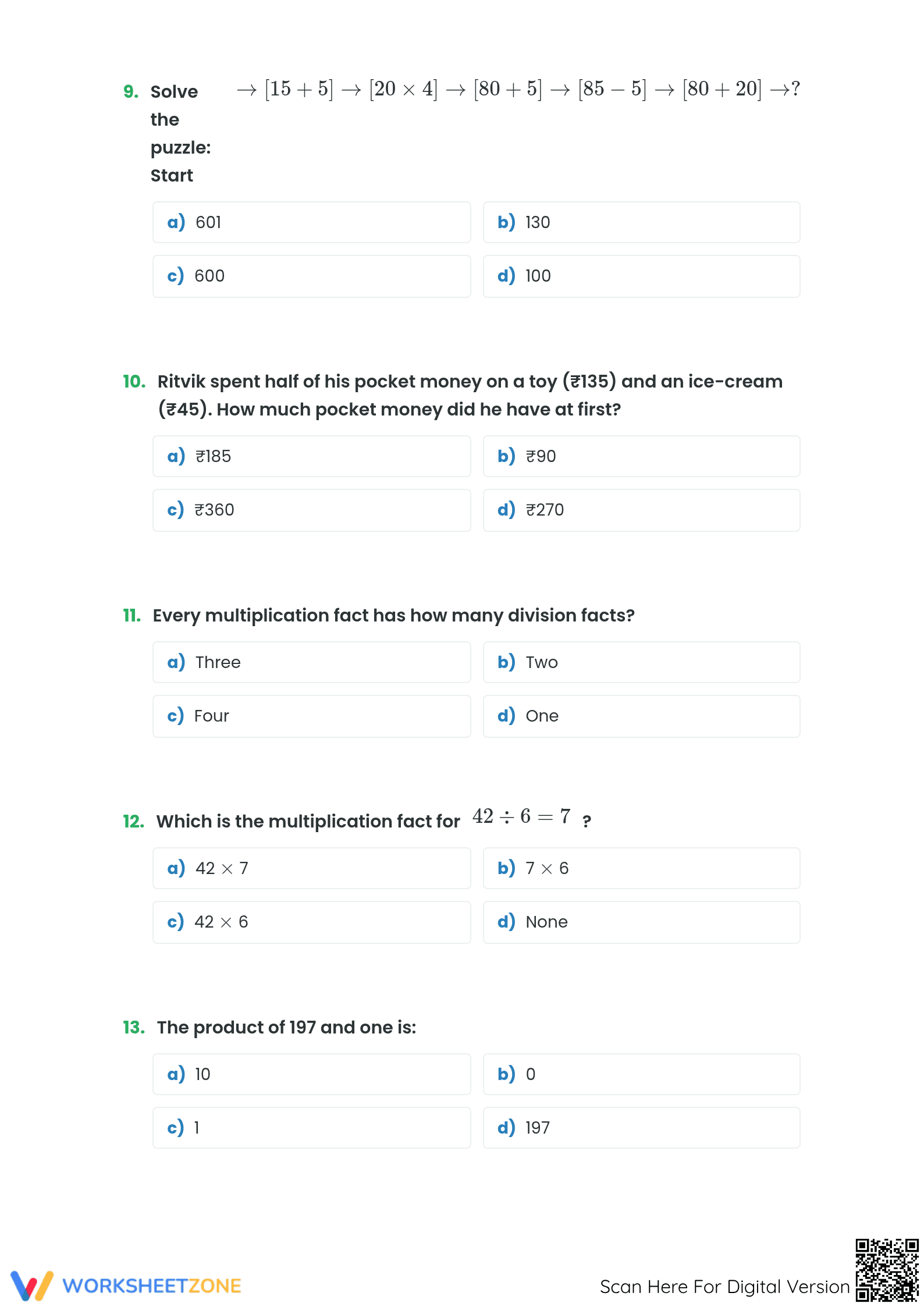
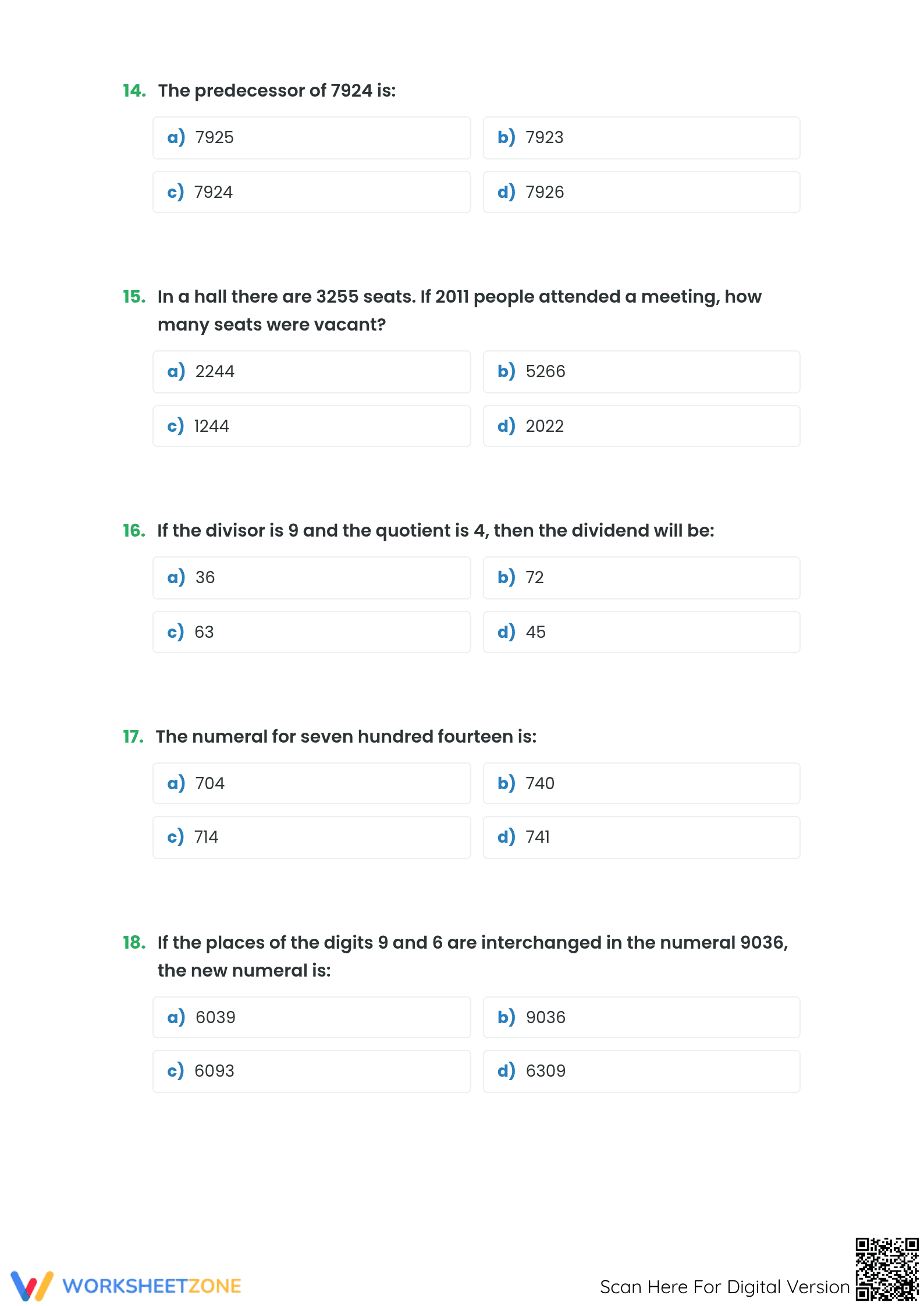

Grade 3 Math Bee Competition | Essential Review Worksheet
Paste this activity's link or code into your existing LMS (Google Classroom, Canvas, Teams, Schoology, Moodle, etc.).
Students can open and work on the activity right away, with no student login required.
You'll still be able to track student progress and results from your teacher account.
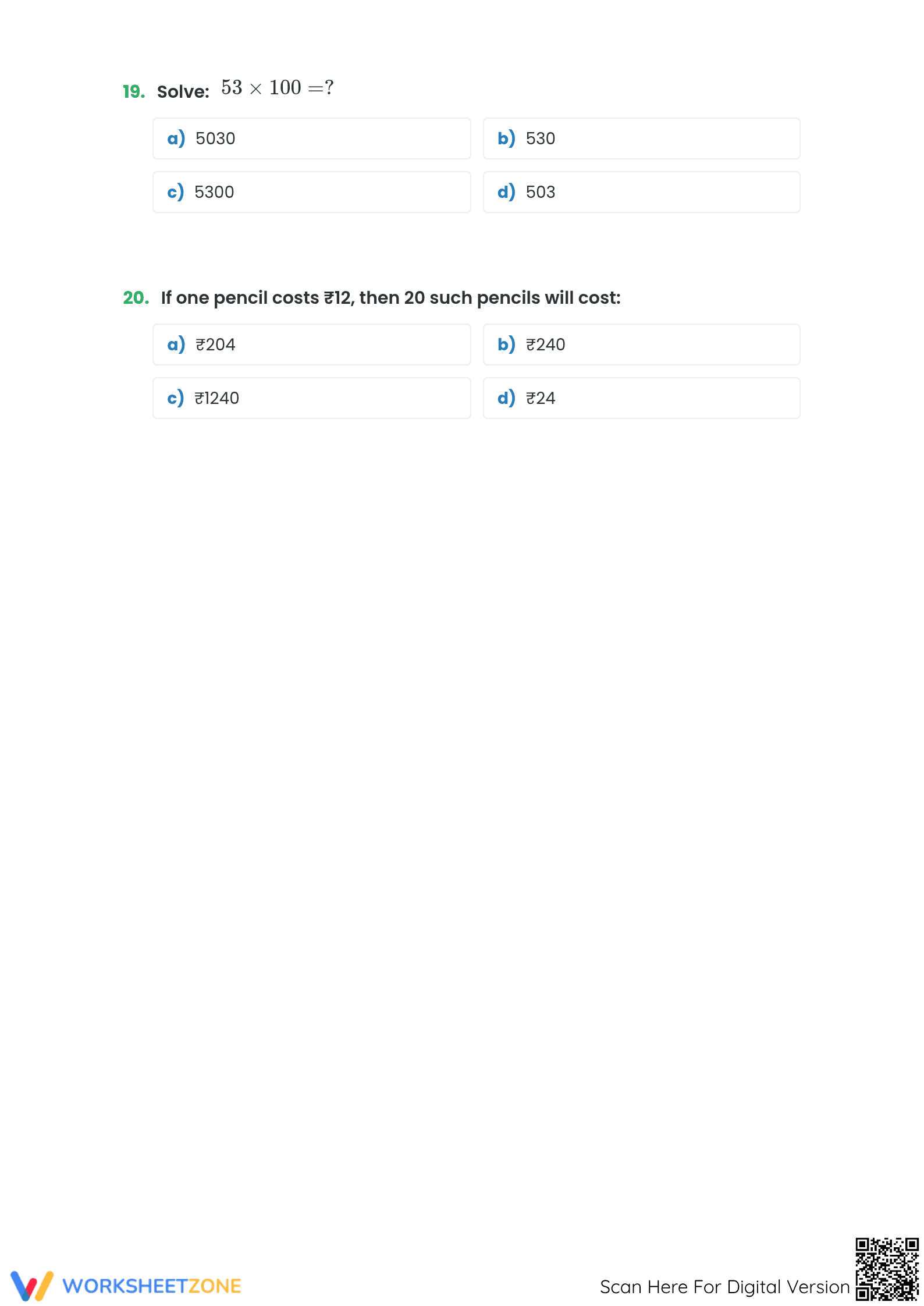
This Grade 3 math competition worksheet provides a comprehensive review of core elementary arithmetic and logic. Students solve 20 diverse problems ranging from place value identification to multi-step word problems. By engaging with this "Maths Bee" format, learners demonstrate mastery across multiple domains while building confidence in standardized testing environments.
At a Glance
- Grade: 3 · Subject: Math
- Standard:
CCSS.MATH.CONTENT.3.OA.D.8— Solve two-step word problems using the four operations- Skill Focus: Mixed Operations & Place Value
- Format: 5 pages · 20 problems · Answer key included · PDF
- Best For: Classroom competitions and end-of-unit review
- Time: 30–45 minutes
The packet contains five structured pages featuring 20 multiple-choice questions. Each question is designed with clear distractors to identify common misconceptions in multiplication, division, and number sense. The layout includes a dedicated header for student names, sections, and scores, making it ideal for formal assessment. A full answer key is provided to facilitate rapid grading.
Zero-Prep Workflow
- Print: Select the 5-page PDF and print enough copies for your cohort (1 minute).
- Distribute: Hand out the "Maths Bee" packets as a timed competition or independent practice (1 minute).
- Review: Use the included answer key to grade or have students self-correct to identify areas for growth (5 minutes).
Total teacher prep time is under two minutes, making this an ideal emergency sub plan or Friday activity.
Standards Alignment
This resource aligns with CCSS.MATH.CONTENT.3.OA.D.8, which requires students to solve two-step word problems using the four operations and represent these problems using equations. It also supports standards regarding place value and rounding. Both standard codes can be copied directly into lesson plans, IEP goals, or district curriculum mapping tools.
How to Use It
Use this as a "Maths Bee" event to increase engagement. Set a timer for 30 minutes and award points for accuracy. Alternatively, use it as a formative assessment after a unit on operations. Observe how students handle the multi-step puzzle in question 9 to gauge their logical reasoning and operational fluency. Expected completion time ranges from 30 to 45 minutes.
Who It's For
This worksheet is designed for Grade 3 students but serves as an excellent challenge for advanced Grade 2 learners or a necessary review for Grade 4 students. It pairs naturally with an anchor chart on place value or a direct instruction lesson on interpreting word problem keywords like "quotient" and "product."
According to the RAND AIRS 2024 report on elementary mathematics, frequent exposure to mixed-skill assessments significantly improves long-term retention compared to isolated skill practice. This worksheet implements that research by interleaving multiplication, division, and place value tasks within a single 20-question set. By requiring students to switch between operational mindsets, the resource strengthens cognitive flexibility and prepares learners for the rigors of state-level testing. The inclusion of the CCSS.MATH.CONTENT.3.OA.D.8 standard ensures that the word problems are calibrated to the appropriate depth of knowledge for eight-year-old learners. Furthermore, the multiple-choice format allows educators to pinpoint specific procedural errors through distractor analysis. This structured approach to mathematical fluency is a cornerstone of evidence-based instruction, providing the necessary scaffolding for students to transition from basic computation to complex problem-solving.


