


























Views
Downloads


Grade 4 Book Quiz — Printable No-Prep Worksheet
Paste this activity's link or code into your existing LMS (Google Classroom, Canvas, Teams, Schoology, Moodle, etc.).
Students can open and work on the activity right away, with no student login required.
You'll still be able to track student progress and results from your teacher account.
A Reading Comprehension Check for Chapters 3 & 4
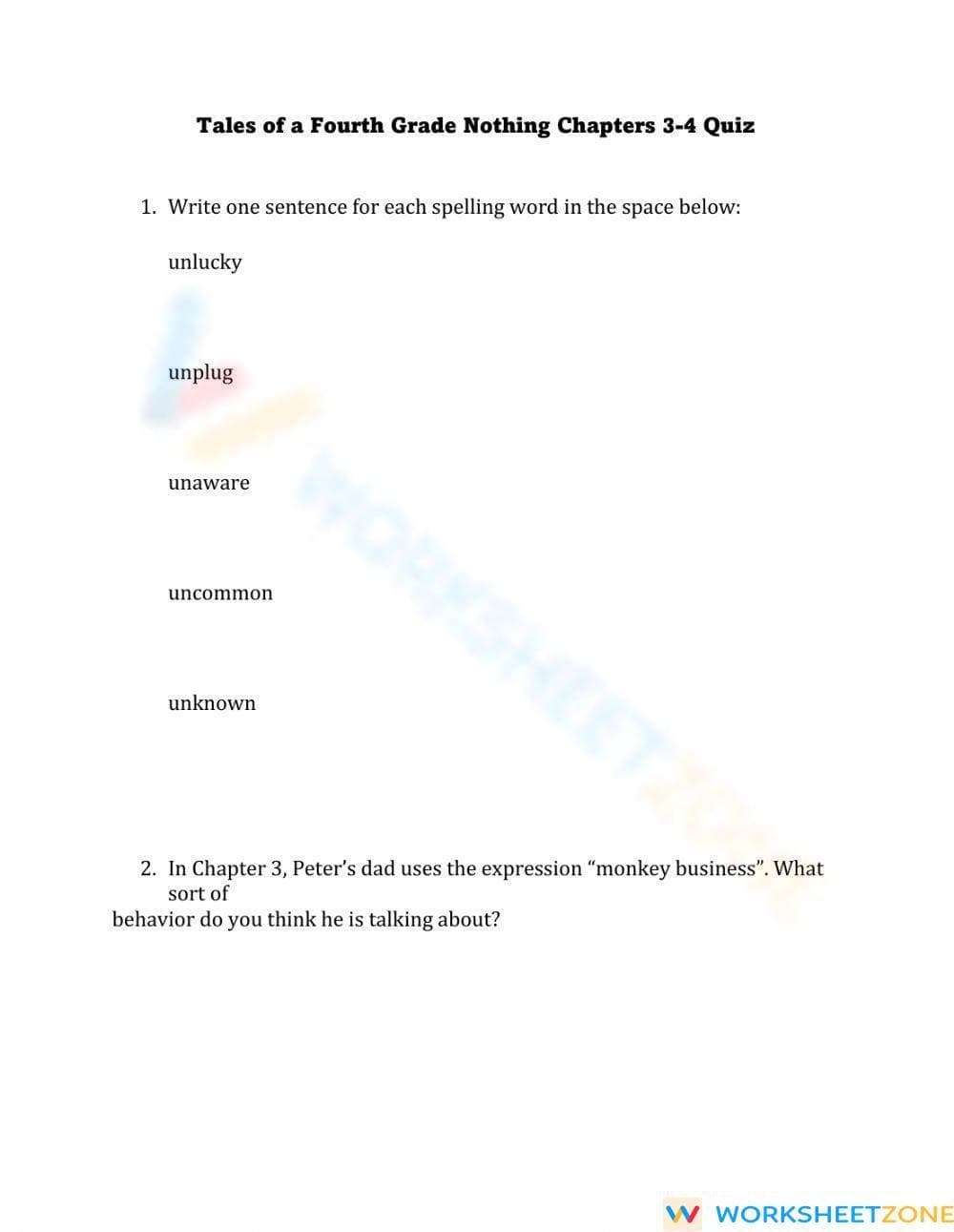
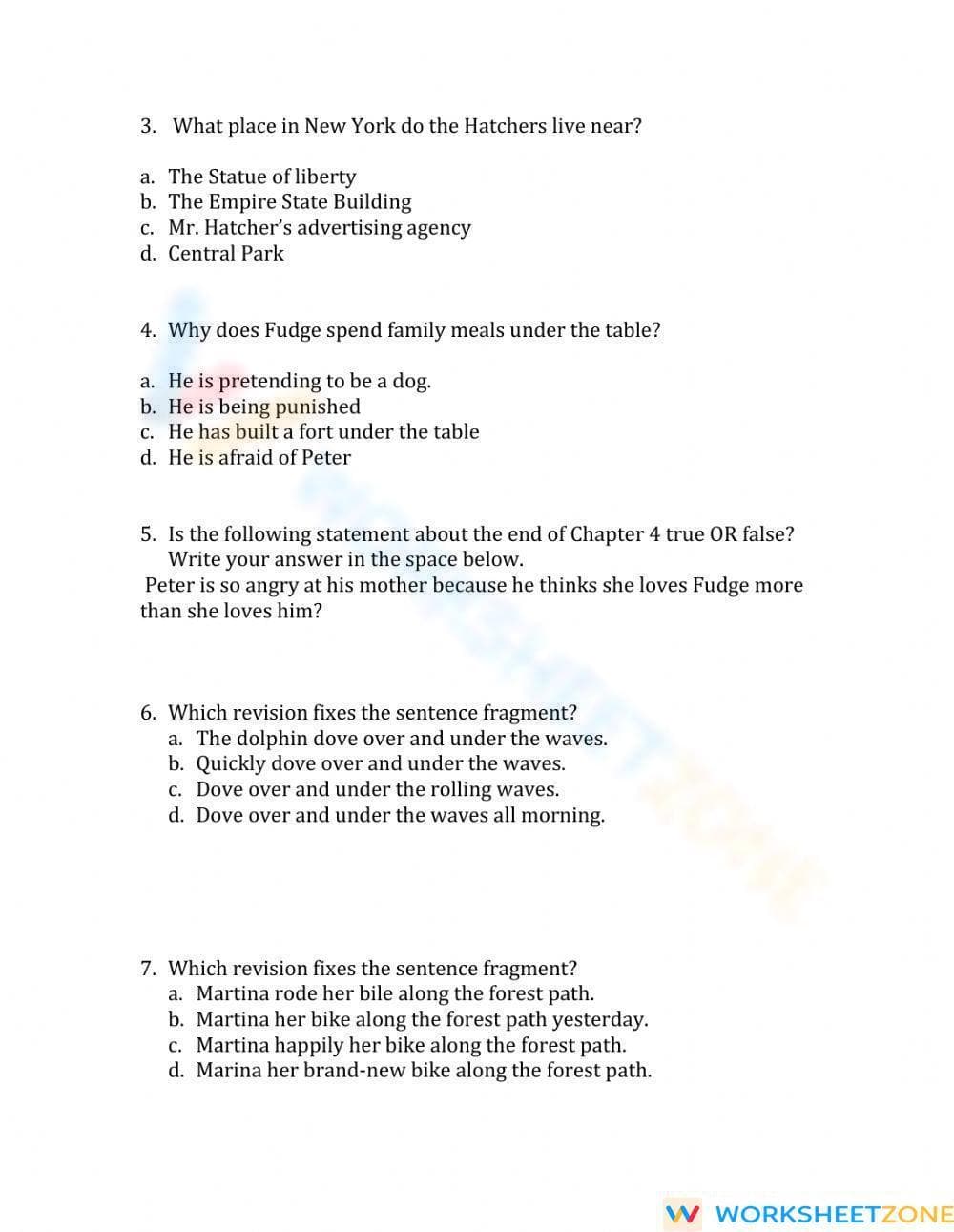
This Grade 4 worksheet provides a straightforward reading comprehension quiz for chapters 3 and 4 of Judy Blume's "Tales of a Fourth Grade Nothing." Students will answer 11 questions, including multiple-choice and short-answer items, to demonstrate their understanding of key events, character details, and plot points from the text.
At a Glance
- Grade: 4 · Subject: ELA
- Standard:
CCSS.ELA-LITERACY.RL.4.1— Refer to details and examples when explaining what a text says.- Skill Focus: Reading Comprehension, Story Recall
- Format: 3 pages · 11 problems · Answer key included · PDF
- Best For: Comprehension check, chapter quiz, substitute plan
- Time: 15–25 minutes
What's Inside
This resource includes a two-page quiz and a one-page answer key. The worksheet has seven multiple-choice and four short-answer questions about chapters 3 and 4. The clean layout ensures students can focus, and the provided answer key allows for quick and efficient grading by the teacher.
A Simple, Zero-Prep Workflow
This resource is designed for immediate classroom use with minimal teacher effort, making it ideal for busy educators or substitutes. The process is streamlined for efficiency.
- Print (1 minute): The PDF is formatted for standard paper. Print the two-page quiz for each student.
- Distribute (1 minute): Hand out the worksheets. Instructions are self-contained.
- Review (5 minutes): Use the included answer key to grade student responses quickly.
Total prep and grading time is under 10 minutes, perfect for a sub plan.
Standards Alignment
This worksheet directly aligns with Common Core standard CCSS.ELA-LITERACY.RL.4.1, requiring students to "Refer to details and examples in a text when explaining what the text says explicitly." The questions also support skills in CCSS.ELA-LITERACY.RL.4.3 (describing characters). Both codes can be copied directly into lesson plans or curriculum maps.
How to Use This Worksheet
This quiz is best used immediately after students finish reading chapters 3 and 4 of "Tales of a Fourth Grade Nothing" to check comprehension. Use it as a bell-ringer the next day or as an open-book quiz to practice locating textual evidence. As a formative assessment, note the detail in the short-answer responses to gauge understanding beyond simple recall. Expected completion time is 15-25 minutes.
Who It's For
This worksheet is for fourth-grade students reading "Tales of a Fourth Grade Nothing" in any classroom setting. The question format is accessible for on-grade-level readers. For students needing support, consider allowing partner work or letting them use the book. The quiz pairs well with a class discussion or a read-aloud of the next chapter.
Assessing reading comprehension through targeted chapter quizzes provides a reliable measure of student understanding and evidence-gathering skills. This Grade 4 quiz on chapters 3 and 4 of "Tales of a Fourth Grade Nothing" aligns with CCSS.ELA-LITERACY.RL.4.1, which requires students to refer to details and examples in a text. Research consistently shows that frequent, low-stakes assessments improve retention and help teachers identify learning gaps early. According to Fisher & Frey (2014), such formative checks are crucial components of a responsive literacy classroom. By asking students to recall specific plot points and character actions through 11 focused questions, this worksheet offers a practical application of these research-backed principles. It provides educators with concrete data on whether students are processing what they read, a foundational skill for all future literary analysis.


