


























Views
Downloads

Synthetics Scramble: Essential Grade 1 Science Worksheet
Paste this activity's link or code into your existing LMS (Google Classroom, Canvas, Teams, Schoology, Moodle, etc.).
Students can open and work on the activity right away, with no student login required.
You'll still be able to track student progress and results from your teacher account.
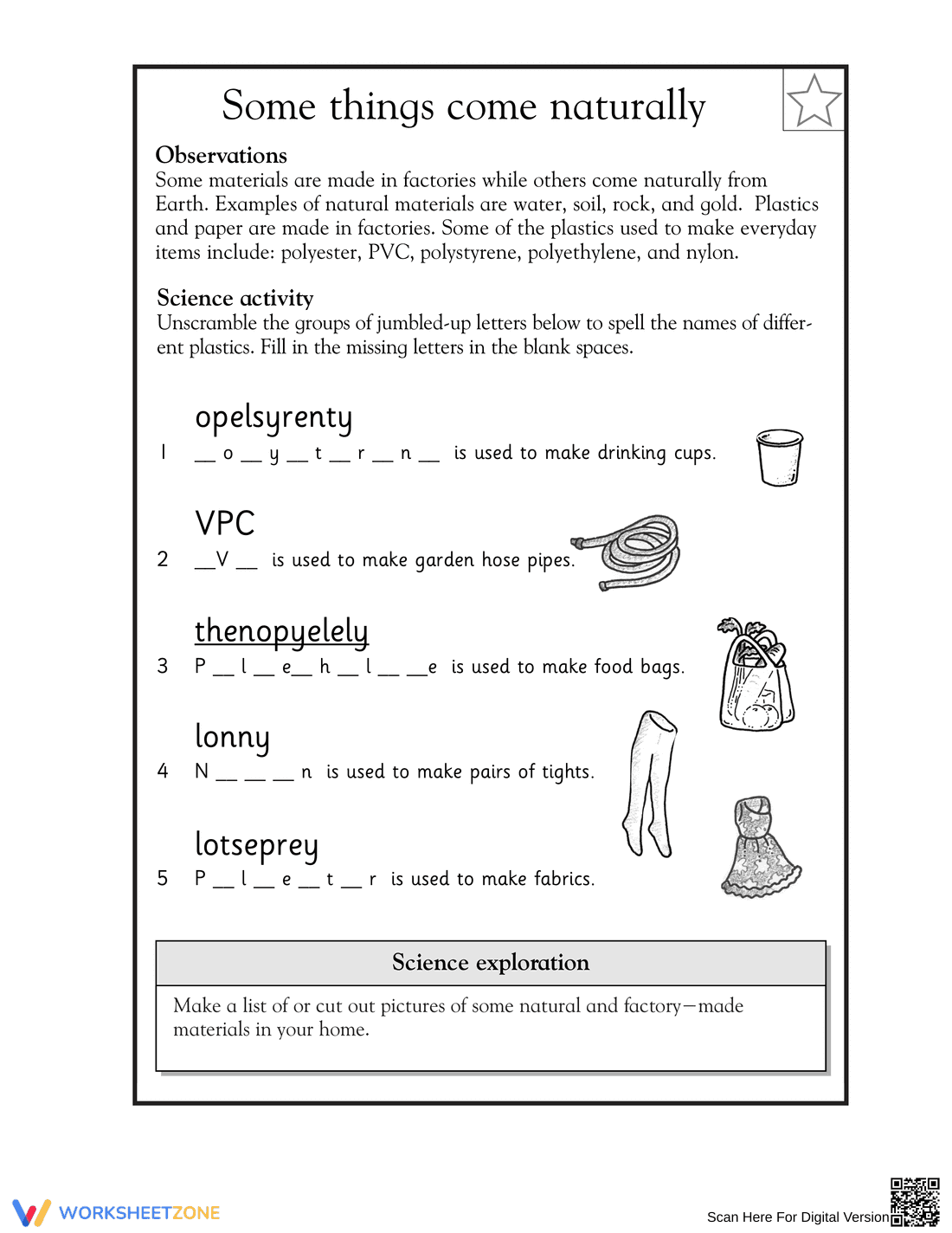
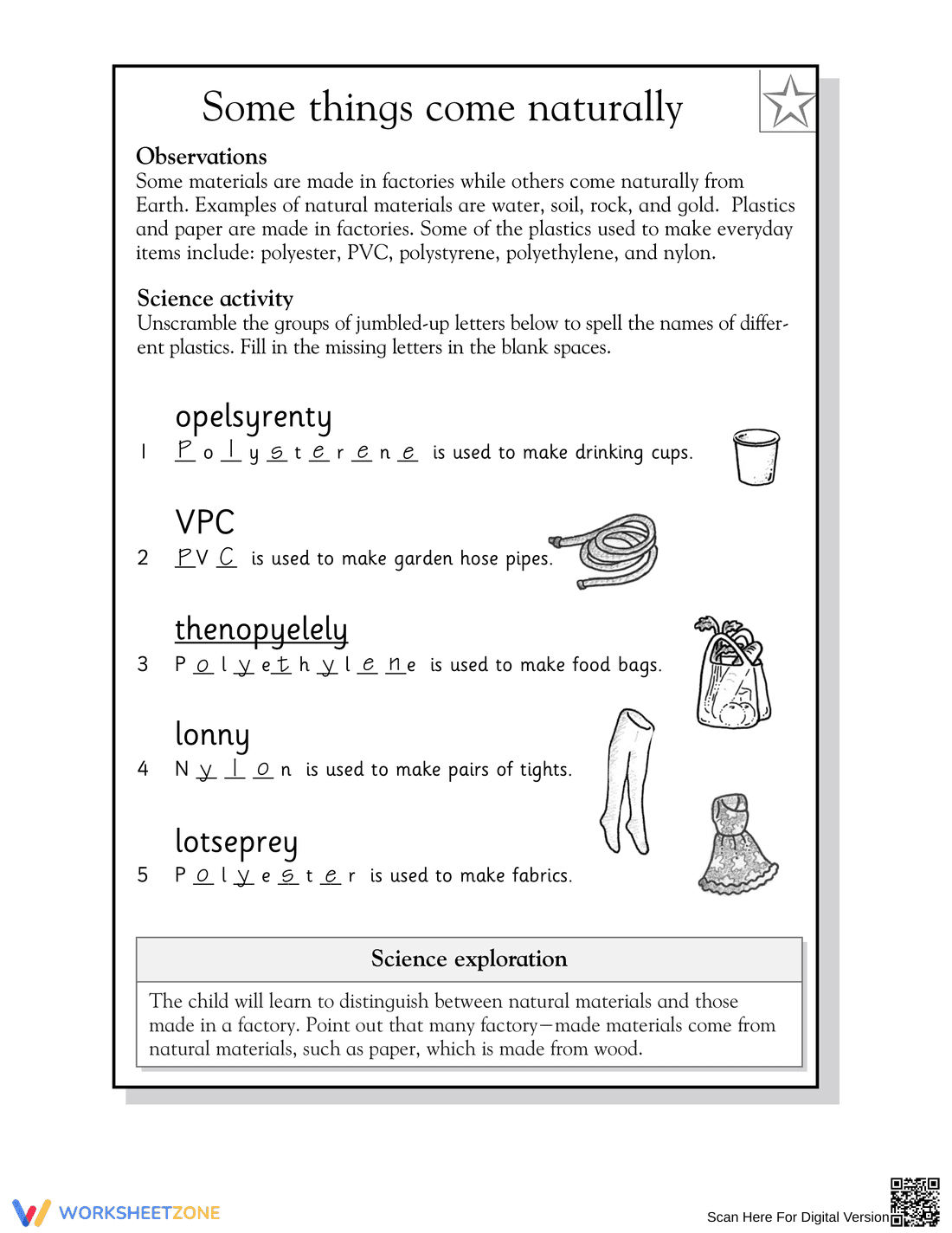
This Grade 1 science worksheet helps students distinguish between natural and synthetic materials through a focused word-unscramble activity. By identifying common factory-made substances like nylon and polyester, learners develop a foundational understanding of how humans process Earth's resources to create everyday items. This resource provides immediate clarity on material origins and vocabulary.
At a Glance
- Grade: 1 · Subject: Science
- Standard:
2-PS1-1— Classify different kinds of materials by their observable properties and origins- Skill Focus: Natural vs. Synthetic Materials
- Format: 1 page · 6 problems · Answer key included · PDF
- Best For: Introductory physical science lessons and homework
- Time: 10–15 minutes
The worksheet features a concise "Observations" section that defines natural materials versus factory-made ones. Students engage with 5 specific unscrambling tasks, each paired with a visual representation of a common object, such as a garden hose or drinking cup. A "Science Exploration" extension at the bottom encourages students to apply their knowledge by auditing materials found within their own homes, fostering real-world connections.
This resource is designed for a zero-prep classroom experience. Teachers can print the single-page PDF in less than 30 seconds. Distribution takes approximately 1 minute, and the structured layout allows students to work independently. Reviewing the answers as a whole group takes about 5 minutes, making the total instructional footprint highly efficient for busy schedules or substitute plans.
Aligned to primary standard 2-PS1-1, which requires students to "Plan and conduct an investigation to describe and classify different kinds of materials by their observable properties." While categorized for Grade 1, it serves as an excellent introductory tool for this K-2 physical science anchor. Both standard codes can be copied directly into lesson plans, IEP goals, or district curriculum mapping tools.
Use this as a formative assessment after a lesson on natural resources. It works well as a "check for understanding" to see if students can recognize that plastics are human-made. Alternatively, assign it as a homework task to bridge the gap between school concepts and home environments. The expected completion time range is 10 to 15 minutes depending on student writing speed.
This is ideal for first-grade students beginning their physical science journey. The inclusion of letter scaffolds (missing blanks) makes it accessible for early writers and English Language Learners. It pairs naturally with a classroom "touch and feel" box containing samples of rock, wood, plastic, and fabric to provide a multi-sensory learning experience.
According to the NAEP science framework, early exposure to the distinction between natural and human-made materials is critical for developing scientific literacy and understanding human impact on the environment. Research from Fisher & Frey (2014) emphasizes that combining visual cues with vocabulary tasks, such as the unscrambling exercises found here, supports the gradual release of responsibility. By engaging with the 2-PS1-1 standard through these 6 targeted tasks, students build the cognitive schema necessary to classify complex materials later in their academic careers. This worksheet provides a structured pathway for Grade 1 learners to master the vocabulary of synthetic materials, ensuring they can accurately describe the world around them. The inclusion of an answer key and a home-based exploration task further reinforces the learning cycle, making it a robust addition to any primary science curriculum.


