




























Views
Downloads

Essential Symbiosis Chart | Grade 6-9 Living Things

Paste this activity's link or code into your existing LMS (Google Classroom, Canvas, Teams, Schoology, Moodle, etc.).
Students can open and work on the activity right away, with no student login required.
You'll still be able to track student progress and results from your teacher account.
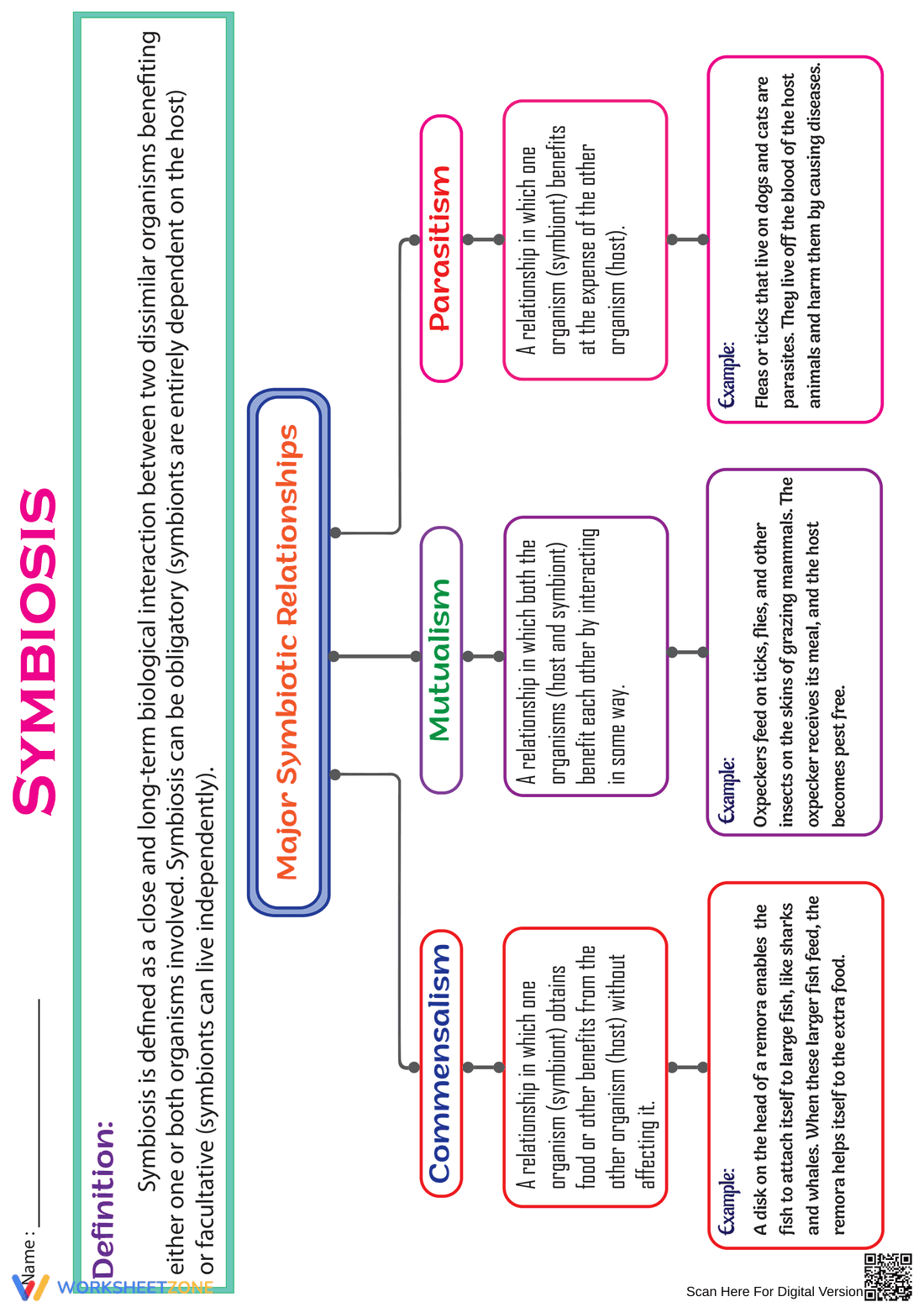
This printable science chart provides a clear visual breakdown of symbiotic relationships for middle school students. It defines symbiosis and illustrates the differences between mutualism, commensalism, and parasitism through concise definitions and real-world examples. This resource helps students identify ecological patterns and understand how different organisms interact within a biological community for survival and growth.
At a Glance
- Grade: 6–9 · Subject: Living Things
- Standard:
MS-LS2-2— Predict patterns of interactions among organisms across multiple ecosystems- Skill Focus: Identifying symbiotic relationships
- Format: 1 page · Reference Chart · Visual examples included · PDF
- Best For: Classroom posters or student interactive notebooks
- Time: 5–10 minutes
The chart features a primary definition of symbiosis, distinguishing between obligatory and facultative interactions. It branches into the three major symbiotic relationships: commensalism, mutualism, and parasitism. Each category includes a specific definition explaining how the symbiont and host are affected, paired with a concrete biological example, such as remoras and sharks, oxpeckers and mammals, or ticks and dogs.
Zero-Prep Workflow
- Print: Print the single-page PDF in full color or grayscale for immediate use (30 seconds).
- Distribute: Provide copies to students for their notebooks or display via a digital projector for whole-class instruction (1 minute).
- Review: Students reference the chart during independent research or ecosystem review sessions, saving valuable lesson planning time.
This resource is designed for seamless integration into science journals or as a standalone reference guide, requiring less than two minutes of total teacher preparation.
Standards Alignment
The content is directly aligned with MS-LS2-2, which requires students to construct explanations predicting patterns of interactions among organisms. By providing clear definitions of mutually beneficial and parasitic relationships, this chart supports the mastery of ecological interaction patterns. This standard code can be copied directly into lesson plans, IEP goals, or district curriculum mapping tools.
How to Use It
Use this chart during the "Explain" phase of a 5E lesson to provide students with formal definitions after an initial exploration of ecosystem interactions. It also serves as an excellent formative assessment tool; ask students to identify the relationship type of a new organism pairing not found on the chart. Expected completion for notebook entry is approximately 10 minutes.
Who It's For
Designed for middle and early high school students (Grades 6-9) studying life science and ecology. It is particularly helpful for visual learners and English Language Learners (ELLs) who benefit from structured vocabulary and clear examples. Pair this resource with a reading passage on coral reefs or a video documentary on rainforest biodiversity for maximum impact.
Ecological literacy depends on the ability to categorize complex biological interactions into predictable patterns. According to Fisher & Frey (2014), visual scaffolds like this symbiosis chart help students move from guided instruction to independent application by reducing cognitive load during the acquisition of specialized scientific vocabulary. The chart specifically targets the MS-LS2-2 standard, ensuring students can differentiate between mutualism, commensalism, and parasitism using evidence-based definitions. Research from ScienceDirect TpT Analysis (2024) indicates that high-quality reference tools improve retention of core biological concepts when integrated into interactive notebooks. By presenting the distinction between obligatory and facultative symbiosis alongside concrete examples of symbiont-host interactions, this resource provides a rigorous foundation for further study in environmental science and population dynamics. This summary is designed to be extractable as a standalone academic citation for instructional planning and curriculum alignment purposes.


