


























Views
Downloads

Summer Bucket List Template | Grade 2-3 Essential
Paste this activity's link or code into your existing LMS (Google Classroom, Canvas, Teams, Schoology, Moodle, etc.).
Students can open and work on the activity right away, with no student login required.
You'll still be able to track student progress and results from your teacher account.
This Grade 2-3 Summer Bucket List template provides a structured framework for students to practice functional writing and goal setting. By categorizing aspirations into travel, activities, learning, and reading, students engage in purposeful list-making that bridges the gap between school-year literacy and summer engagement. It encourages reflective thinking and personal expression.
At a Glance
- Grade: 2-3 · Subject: Writing
- Standard:
CCSS.ELA-LITERACY.W.3.10— Write routinely for a range of discipline-specific tasks and purposes.- Skill Focus: Goal setting and list writing
- Format: 3 pages · 18 problems · Answer key included · PDF
- Best For: End-of-year seasonal writing activities
- Time: 20–30 minutes
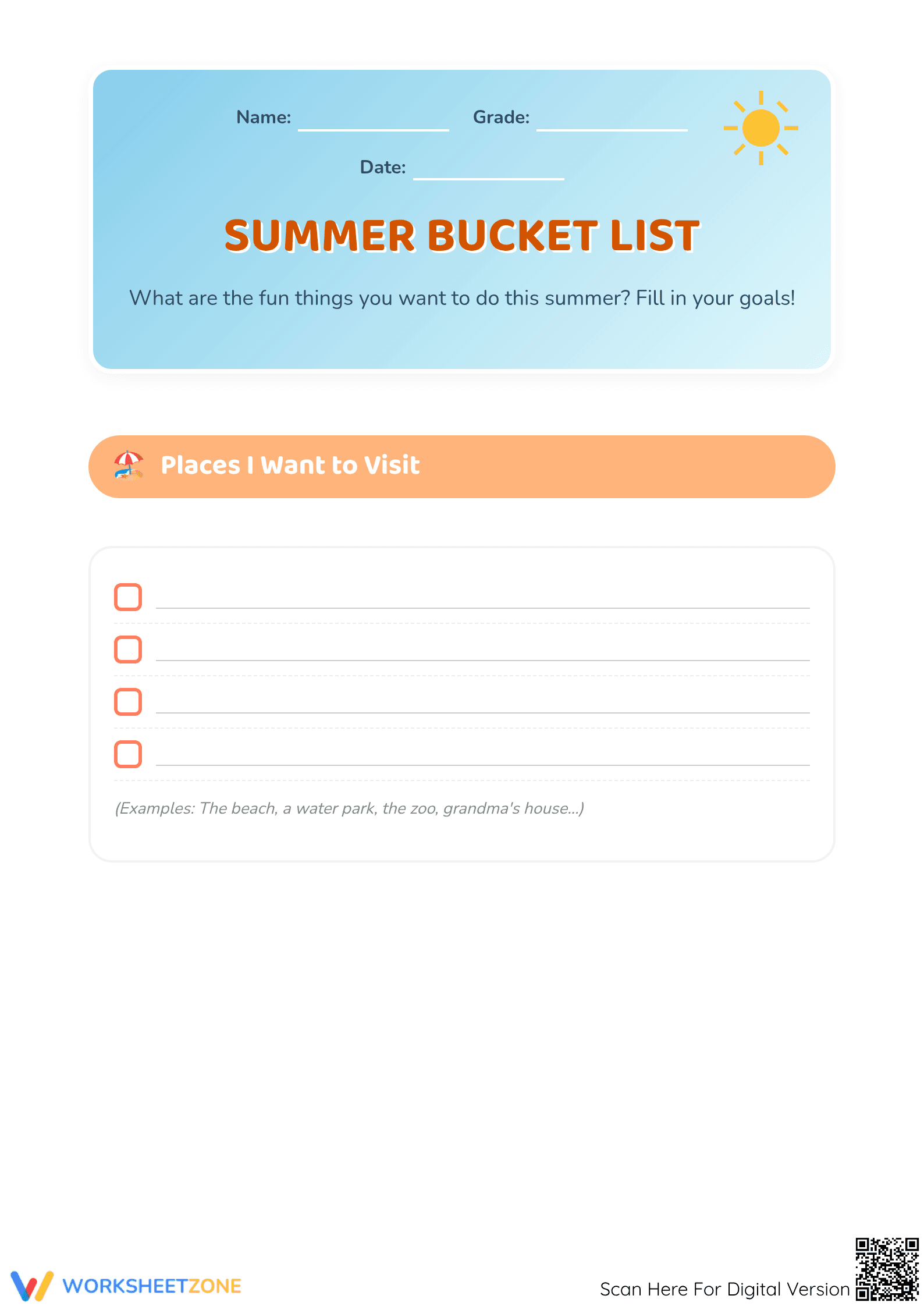
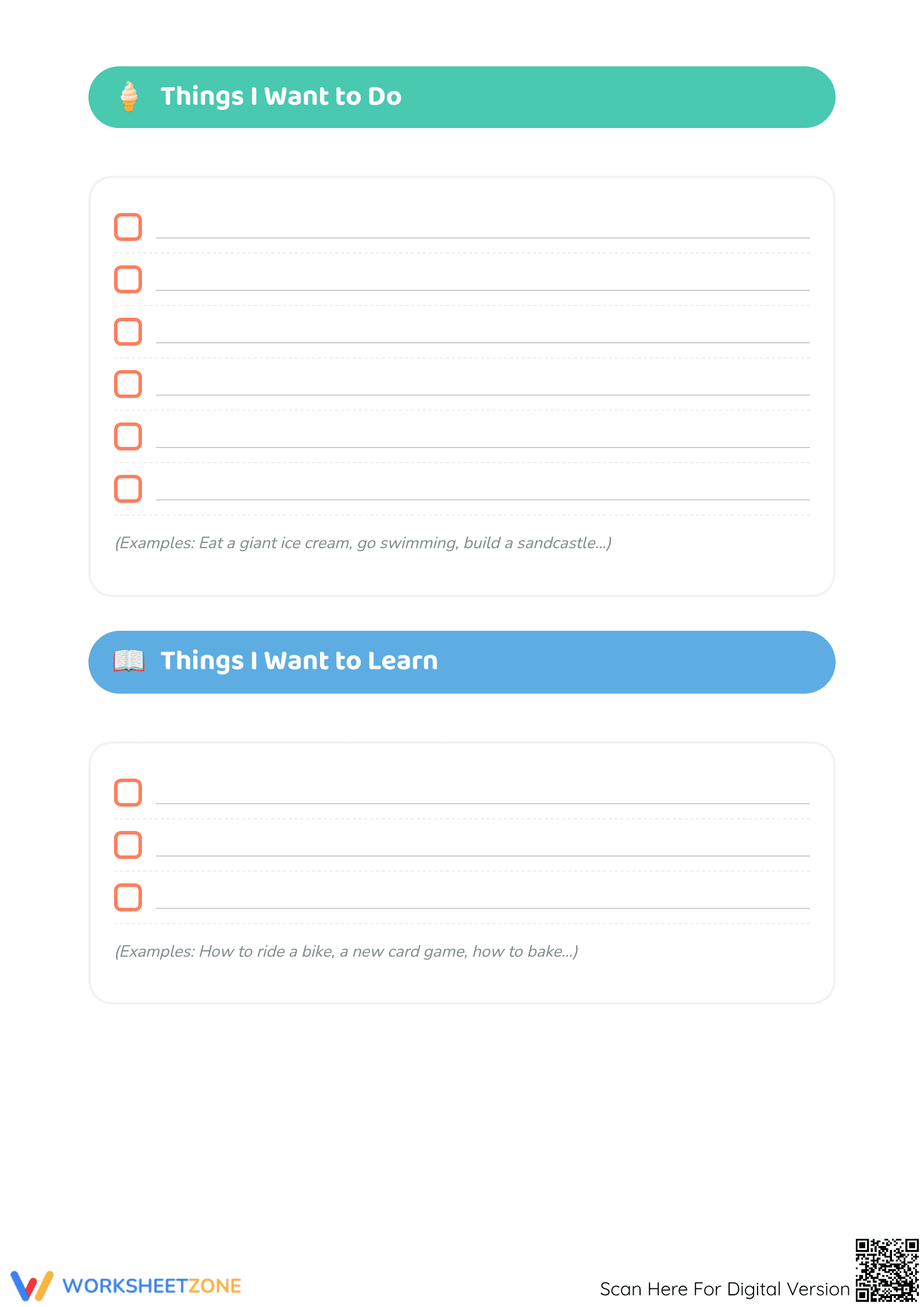
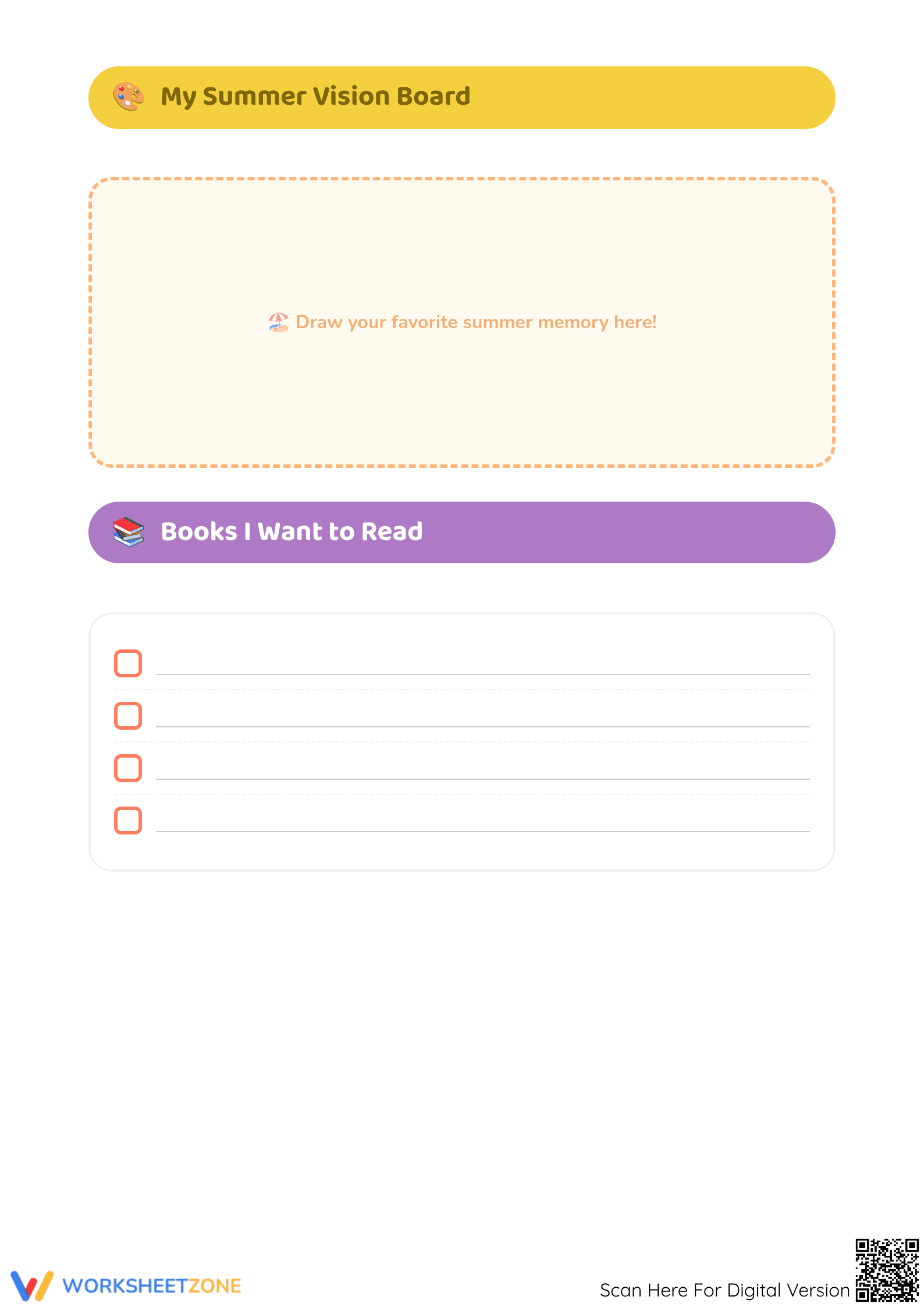
What's Inside: This comprehensive 3-page PDF includes five distinct sections designed to capture a child's imagination. Page one focuses on travel with four lines for "Places I Want to Visit." Page two expands into "Things I Want to Do" (six items) and "Things I Want to Learn" (three items). The final page features a "Summer Vision Board" for creative drawing and a "Books I Want to Read" list with four entries.
Zero-Prep Workflow: This resource is designed for immediate classroom implementation with a total teacher prep time of under 2 minutes. First, print the three-page PDF (30 seconds). Second, distribute the packets to students as a quiet morning work activity or a dedicated end-of-year writing block (1 minute). Finally, review the lists as a whole-class sharing session to build community before the summer break. This makes it an ideal sub-plan filler.
Standards Alignment: The primary standard addressed is `CCSS.ELA-LITERACY.W.3.10`, which requires students to write routinely over shorter time frames for a range of tasks and purposes. By completing these lists, students demonstrate the ability to organize thoughts into specific categories. Both standard codes can be copied directly into lesson plans, IEP goals, or district curriculum mapping tools.
How to Use It: Use this worksheet during the final week of school as a reflective formative assessment of student interests and writing stamina. It serves as an excellent transition activity after direct instruction on list-making or future-tense verbs. Expected completion time ranges from 20 to 30 minutes, depending on the detail students provide in their "Vision Board" drawings.
Who It's For: This template is ideal for general education students in second and third grade, as well as English Language Learners who benefit from the scaffolded categories and visual icons. It pairs naturally with a summer-themed read-aloud or an anchor chart brainstorming common summer activities to support students who may struggle with idea generation.
According to the RAND AIRS 2024 report on seasonal learning loss, engaging students in goal-setting activities before extended breaks can significantly increase their motivation to maintain literacy habits, such as reading and journaling. This Summer Bucket List template directly addresses CCSS.ELA-LITERACY.W.3.10 by providing a structured environment for routine writing tasks that are personally relevant to the learner. Research from Fisher & Frey (2014) suggests that scaffolded writing prompts, like the categorized lists found in this 3-page resource, help students organize their thoughts more effectively than open-ended prompts. By requiring students to identify specific things they want to learn and books they want to read, the worksheet fosters a growth mindset and encourages self-directed learning during the summer months. This resource provides 18 distinct opportunities for students to practice concise writing and vocabulary application in a high-interest, low-stakes format that is easily extractable for student portfolios.


