


























Views
Downloads

Printable Spelling Worksheet | Grade 1 ELA
Paste this activity's link or code into your existing LMS (Google Classroom, Canvas, Teams, Schoology, Moodle, etc.).
Students can open and work on the activity right away, with no student login required.
You'll still be able to track student progress and results from your teacher account.
Master Basic Spelling with an Engaging Animal Theme
This worksheet provides targeted practice for first-grade students learning to spell simple, phonetically regular words. Through a clear and engaging format, learners will build confidence in their spelling abilities by correctly arranging letters to form the names of six common animals, reinforcing foundational literacy skills.
At a Glance
- Grade: 1 · Subject: English Language Arts (ELA)
- Standard:
CCSS.ELA-LITERACY.L.1.2— Use conventional spelling for words with common patterns.- Skill Focus: Spelling CVC Words (Animal Names)
- Format: 2 pages · 6 problems · PDF
- Best For: Phonics centers, independent practice, or homework
- Time: 10–15 minutes
What's Inside
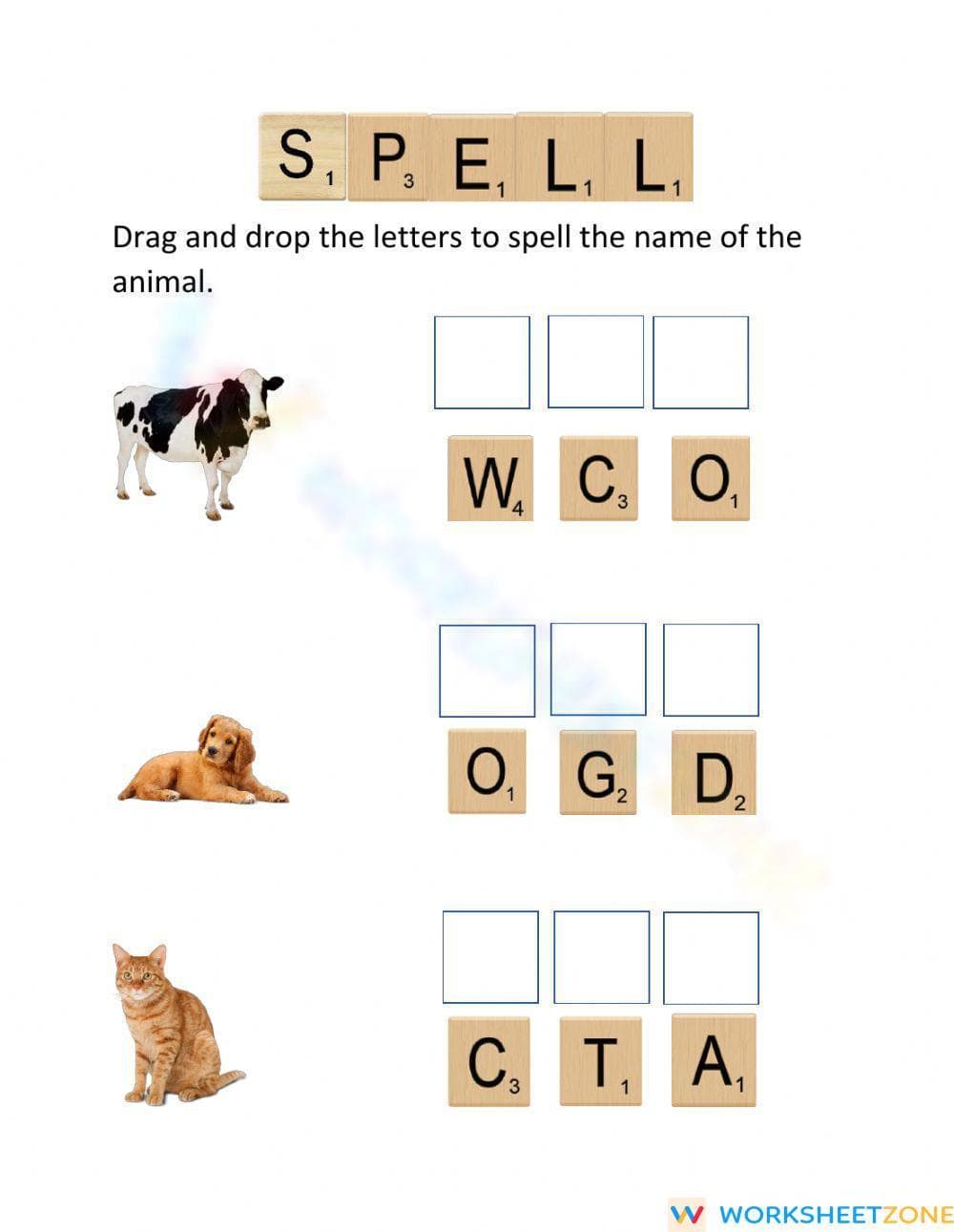
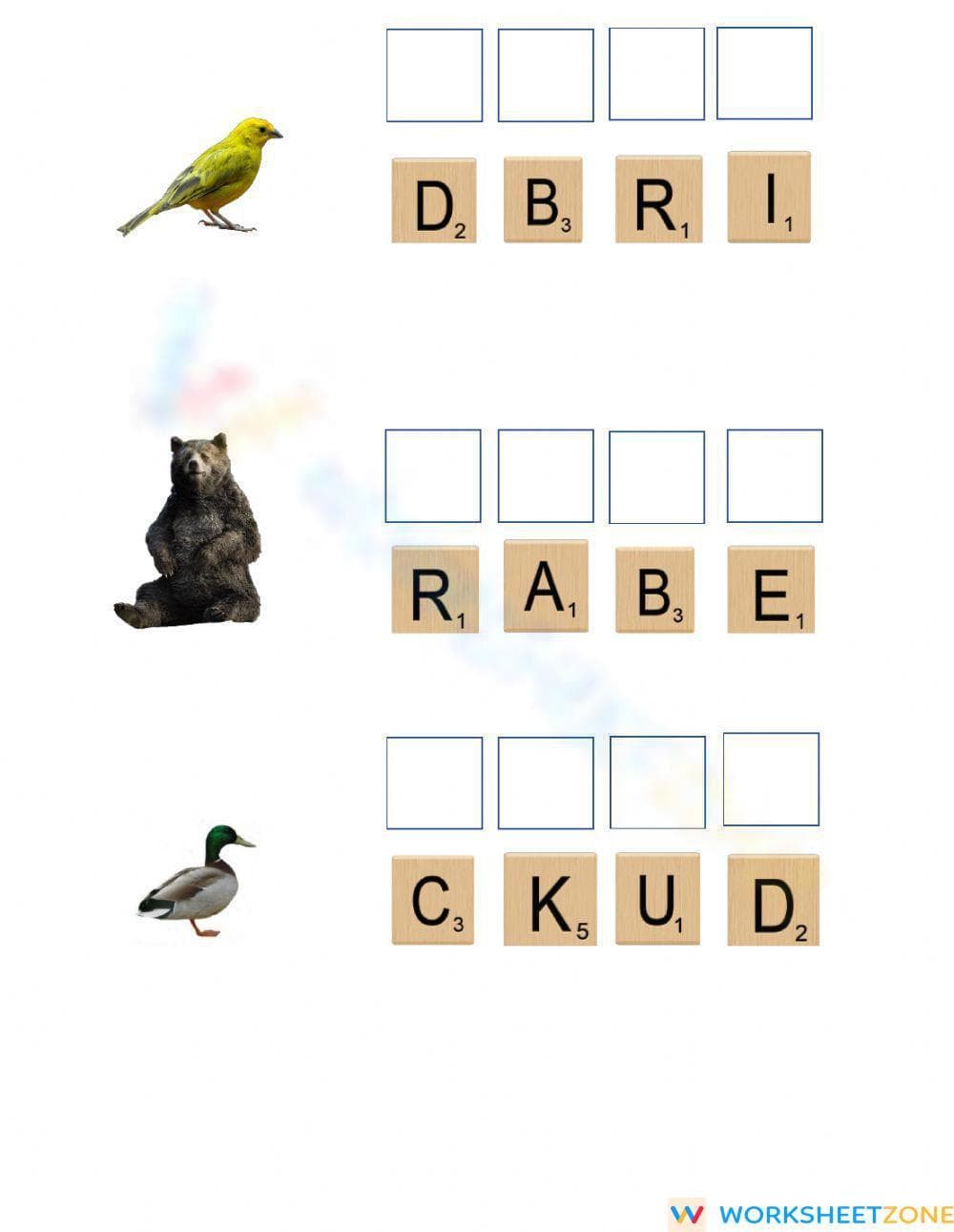
This two-page resource features six spelling challenges where students arrange scrambled letter tiles to spell the name of a pictured animal. The simple, clean layout minimizes distractions, focusing the learner's attention on the spelling task itself and the connection between letters and sounds.
A Progression to Independence
This activity supports a gradual-release model for skill acquisition.
- Guided Practice: A teacher can begin by modeling the first problem, sounding out the word "cow" while pointing to the letters C, O, and W to demonstrate the process.
- Supported Practice: Students can then work on the next few items with a partner or with adult supervision available to provide phonetic cues if they get stuck.
- Independent Practice: The final problems on the second page allow students to apply their understanding independently, demonstrating their ability to spell simple CVC and four-letter words without support.
This "I Do, We Do, You Do" progression ensures students build mastery and confidence.
Standards Alignment
This worksheet aligns with Common Core standard CCSS.ELA-LITERACY.L.1.2, which requires students to demonstrate command of conventional spelling. The tasks specifically support sub-standard L.1.2d by focusing on words with common spelling patterns. The standard code can be copied directly into lesson plans, IEP goals, or district curriculum maps.
How to Use It
Use this worksheet for independent practice after a direct instruction lesson on CVC words or animal vocabulary. It serves as an excellent 10-15 minute phonics center rotation. For a quick formative assessment, observe where students hesitate to identify which letter-sound correspondences need reinforcement, such as the digraph 'ck' in "duck."
Who It's For
Designed for first-grade students, this resource also supports advanced kindergarteners ready for spelling or second graders needing intervention on CVC words. The clear visual cues (pictures of animals) make it accessible for English Language Learners. Pair this worksheet with a picture book read-aloud about farm or zoo animals to build vocabulary context.
Foundational spelling skills are a critical predictor of later reading comprehension and writing fluency. This worksheet provides focused practice aligned to CCSS.ELA-LITERACY.L.1.2, helping students master conventional spelling for words with common patterns. By connecting images to words, the activity reinforces orthographic mapping, the process of bonding spelling, pronunciation, and meaning in memory. Research from Fisher & Frey (2014) emphasizes the importance of meaningful, independent practice following direct instruction to solidify learning. This resource offers exactly that: a structured, engaging task that allows students to apply their phonetic knowledge independently. Its focus on high-frequency animal names makes the practice relevant and accessible, supporting the development of automaticity required for students to become proficient readers and writers. This approach is consistent with findings on effective early literacy instruction.


