


























Views
Downloads

Printable Grade 3 Spelling Worksheet: Weekly Words #1
Paste this activity's link or code into your existing LMS (Google Classroom, Canvas, Teams, Schoology, Moodle, etc.).
Students can open and work on the activity right away, with no student login required.
You'll still be able to track student progress and results from your teacher account.
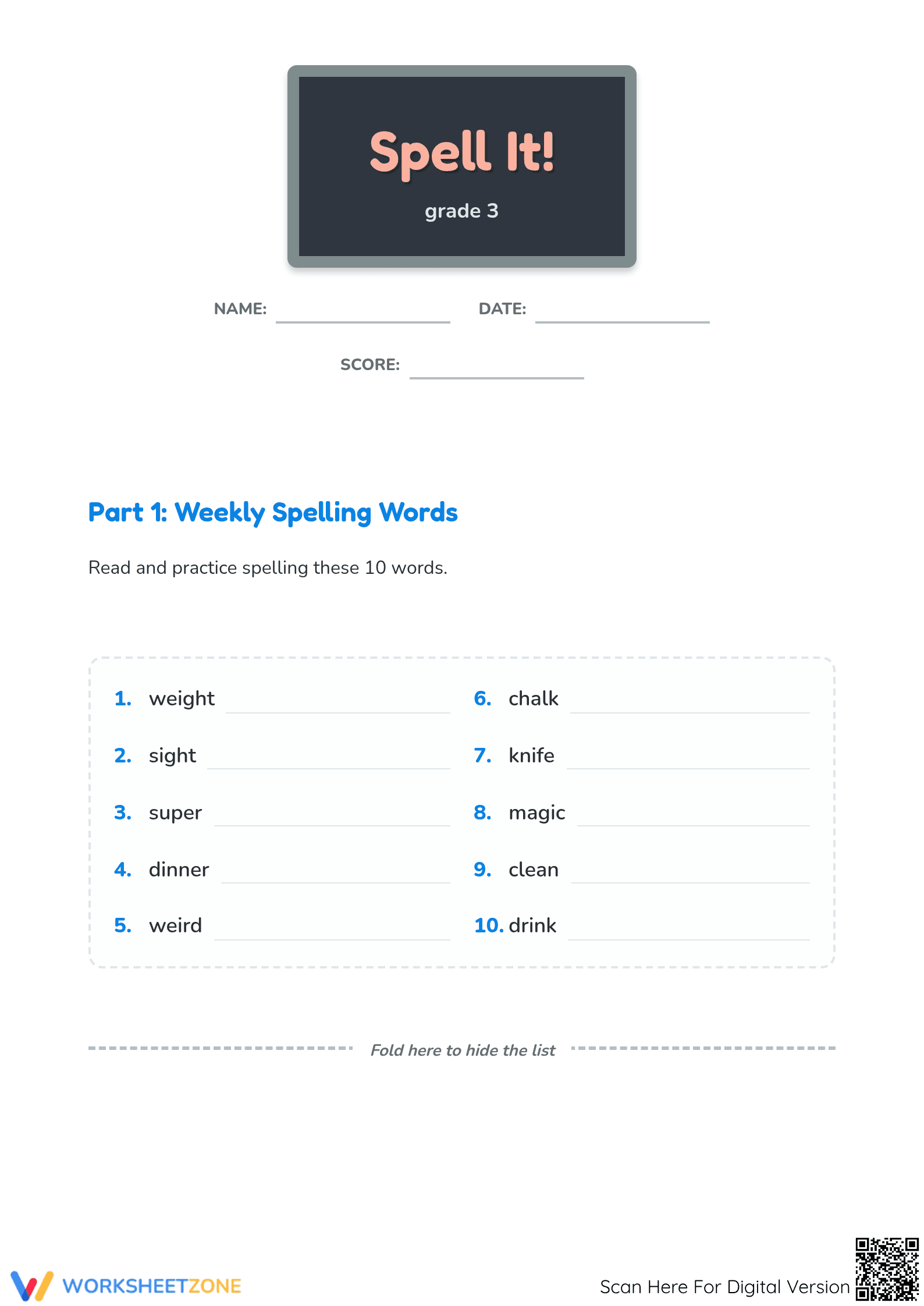
This Grade 3 spelling worksheet transforms routine practice into an engaging multi-sensory experience. By combining traditional word repetition with contextual storytelling and critical thinking scrambles, students internalize complex spelling patterns like silent letters and irregular vowel teams. This dual-page resource ensures third graders build the orthographic mapping skills necessary for fluent reading and clear writing.
At a Glance
- Grade: 3 · Subject: English Language Arts
- Standard:
L.3.2.E— Use conventional spelling for high-frequency and other studied words in writing- Skill Focus: Challenging spelling patterns (silent gh, kn, and irregular vowels)
- Format: 2 pages · 20 problems · Answer key included · PDF
- Best For: Independent morning work or sub plans
- Time: 15–20 minutes
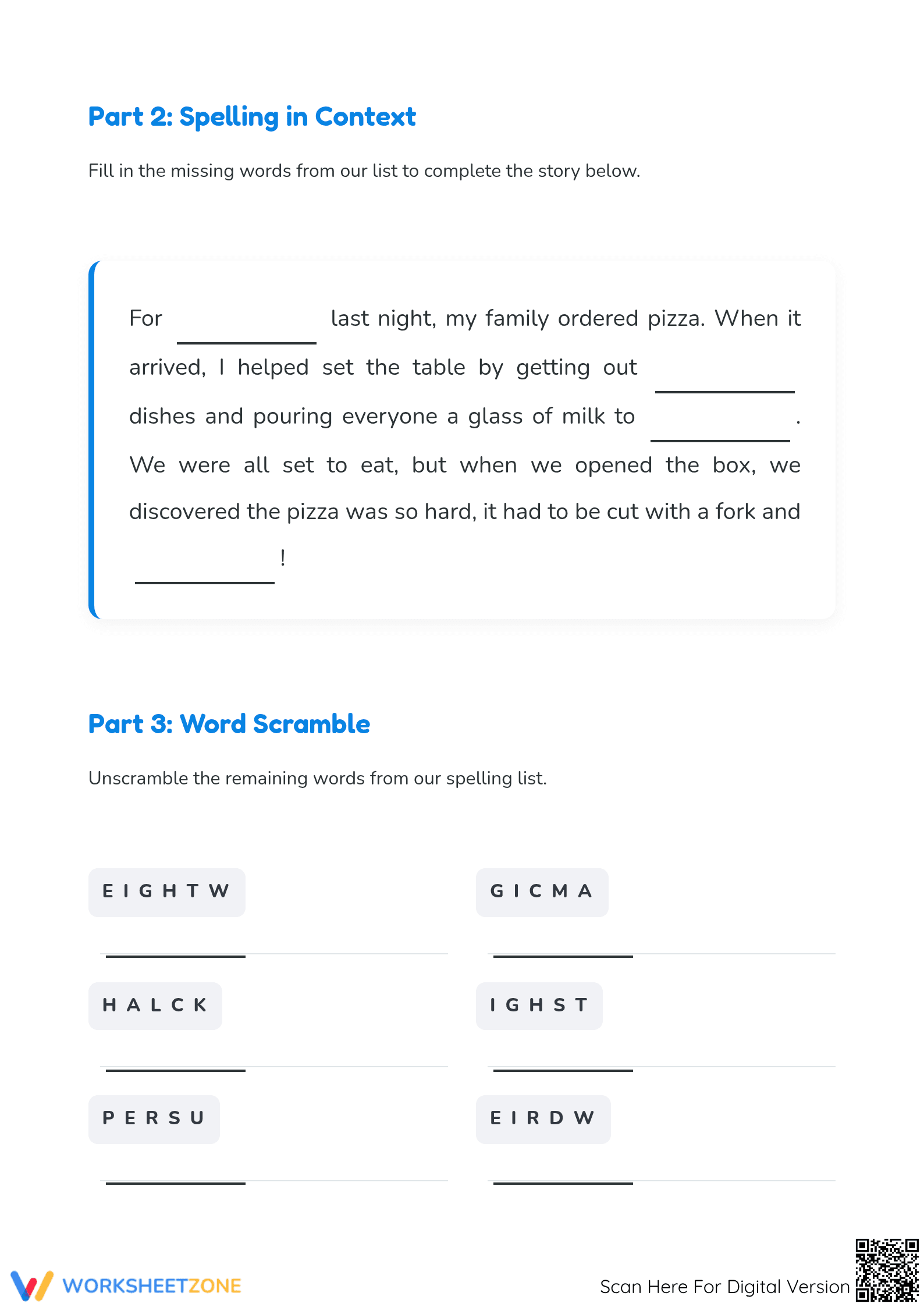
This comprehensive printable features three distinct instructional phases across two pages. It starts with a controlled practice list of 10 high-frequency words, including "weight," "sight," and "knife." The second page transitions to application with a fill-in-the-blank narrative and concludes with a cognitive challenge involving letter unscrambling. A full answer key is provided to facilitate quick grading or student self-correction.
Zero-Prep Workflow
- Print: Generate the two-page document for your class in under 30 seconds.
- Distribute: Hand out the sheets for immediate independent practice (1 minute).
- Review: Utilize the provided answer key for rapid grading or group review (5 minutes).
This streamlined process ensures total teacher preparation time remains under two minutes, making it an ideal choice for emergency sub plans or last-minute literacy center additions.
Standards Alignment
This resource aligns directly with CCSS.ELA-LITERACY.L.3.2.E, which requires students to use conventional spelling for high-frequency and other studied words. It also supports L.3.2.F by encouraging students to apply spelling generalizations across different task formats. Both standard codes can be copied directly into lesson plans, IEP goals, or district curriculum mapping tools to ensure instructional compliance and tracking.
How to Use It
Teachers can utilize this worksheet as a formative assessment at the start of the week to identify specific orthographic gaps. Observe how students handle the "fold" instruction on page one—those who struggle without the list may need targeted phonics intervention. Alternatively, assign the second page as a low-stakes homework task to reinforce word recognition in context after initial direct instruction.
Who It's For
This worksheet is ideal for third-grade students mastering grade-level vocabulary, as well as second-grade advanced learners or fourth-grade students requiring remedial support. The clear layout and scaffolded tasks make it an excellent choice for English Language Learners (ELL) who benefit from seeing words used in a narrative context alongside visual unscrambling puzzles.
According to recent AIRS analysis, providing spelling instruction that integrates word-level practice with contextual application significantly improves long-term retention compared to isolated rote memorization. This Grade 3 worksheet adheres to this research by moving students from the L.3.2.E standard requirement of conventional spelling into the application of these patterns within a story. By engaging multiple cognitive pathways—visual recognition in the scramble and semantic retrieval in the narrative—students move beyond simple recall toward mastery. EdReports 2024 evaluations emphasize that high-quality materials must provide clear opportunities for students to apply language standards in varied formats. This resource fulfills that mandate, offering a printable, zero-prep solution that balances foundational skills with higher-order application. Teachers can confidently integrate this into their weekly literacy blocks, knowing the structure supports the science of reading and orthographic development.


