


























Views
Downloads


Short O Sound Printable Worksheet | Grade K ELA
Paste this activity's link or code into your existing LMS (Google Classroom, Canvas, Teams, Schoology, Moodle, etc.).
Students can open and work on the activity right away, with no student login required.
You'll still be able to track student progress and results from your teacher account.
This phonics worksheet helps kindergarten students master the short O sound through targeted activities. By identifying, tracing, and hunting for words with the short O vowel, early readers build the phonemic awareness required to decode simple CVC words and improve reading fluency.
At a Glance
- Grade: K · Subject: ELA
- Standard:
CCSS.ELA-LITERACY.RF.K.3.B— Associate short sounds with common vowel spellings- Skill Focus: Short O sound recognition
- Format: 3 pages · 21 problems · Answer key included · PDF
- Best For: Independent practice or centers
- Time: 15–20 minutes
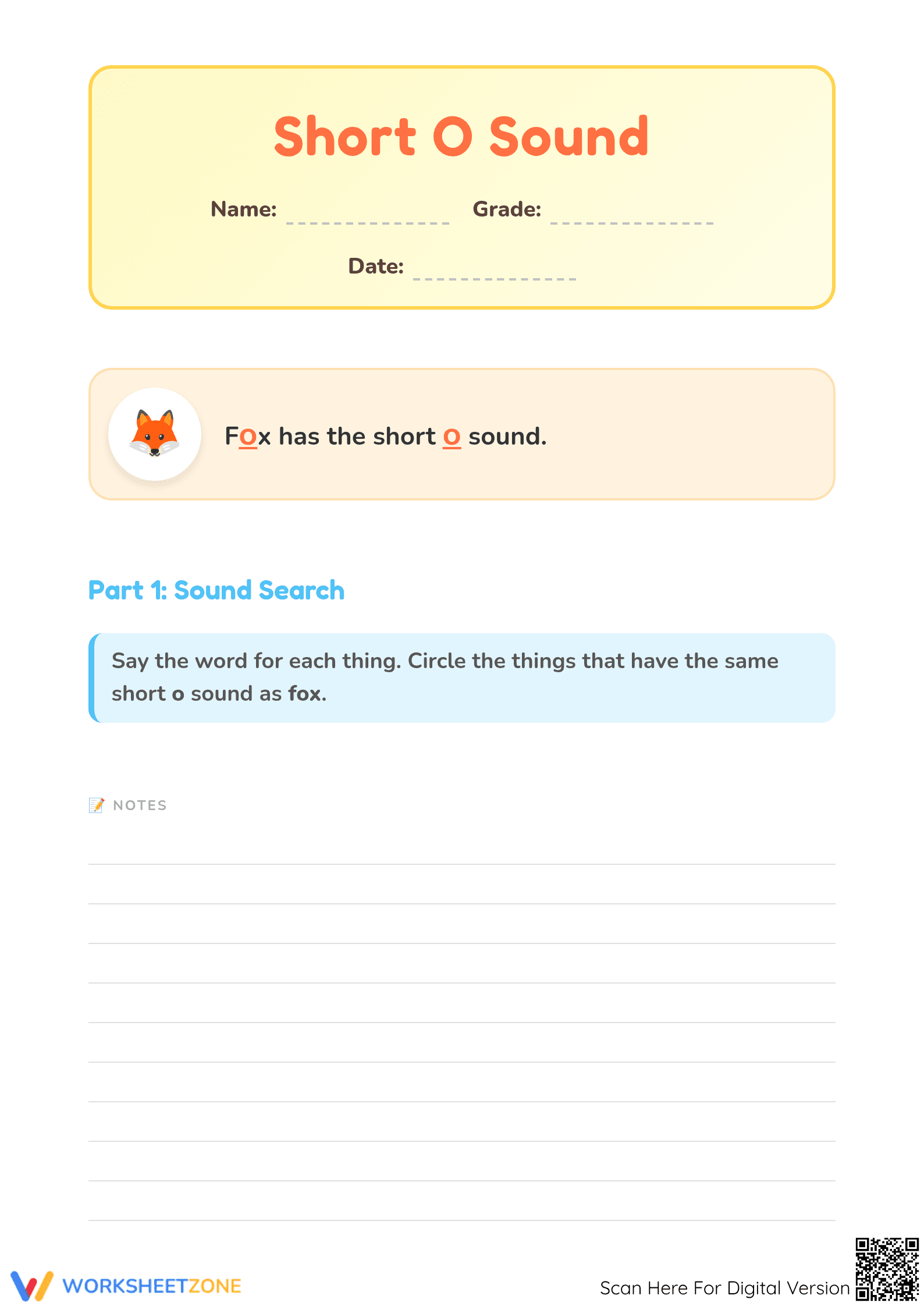
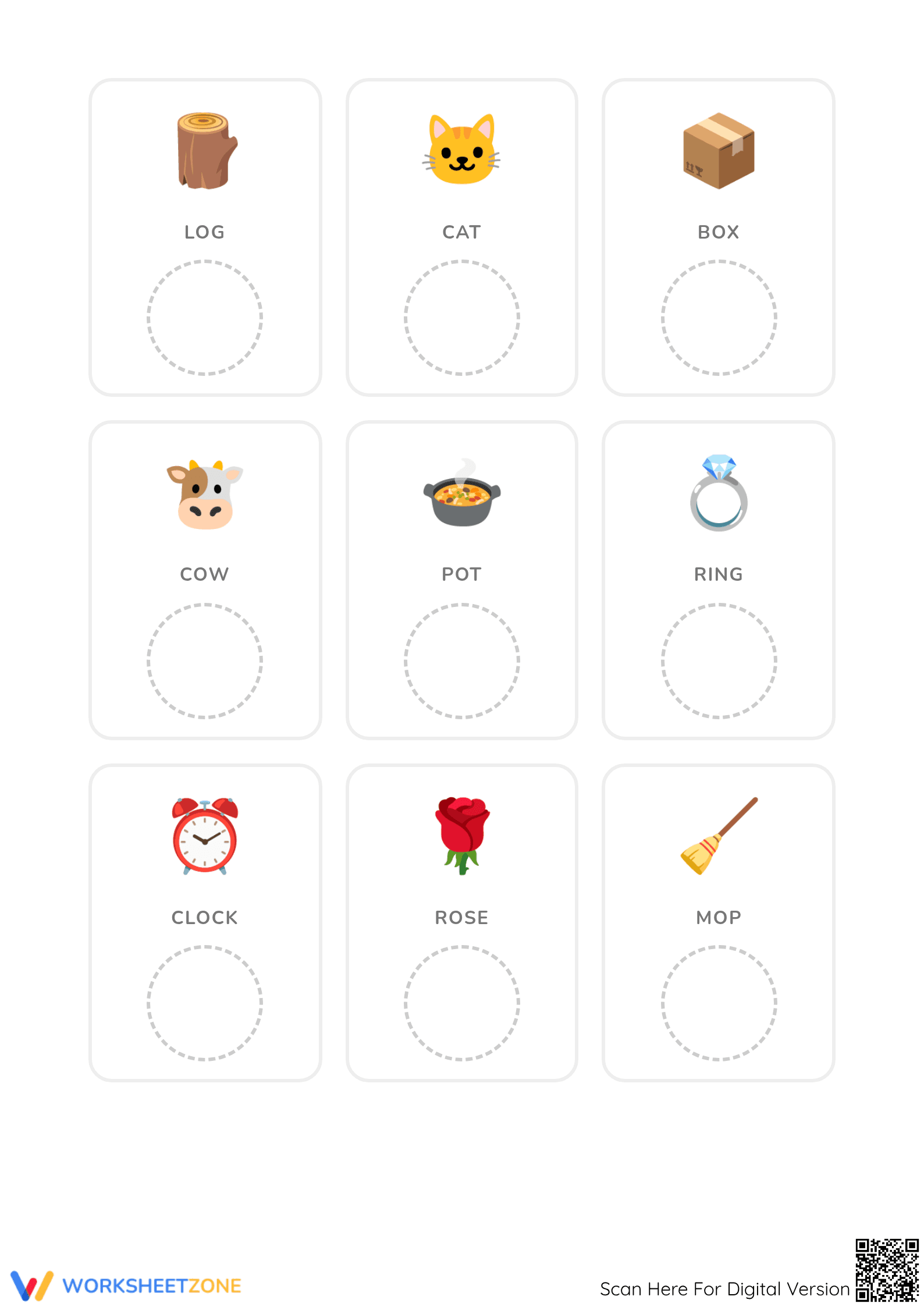
This three-page packet includes three activity types. Part one features a visual sound search where students name nine pictures and circle those containing the target vowel. Part two provides tracing practice for four short O words. Finally, part three challenges students with a word hunt, requiring them to read and identify correct words from a bank of eight options. An answer key is provided.
- Guided practice: The first page introduces the short O sound using a clear visual example, allowing teachers to model the target sound.
- Supported practice: The tracing section provides scaffolding, letting students physically write the letters while saying sounds aloud.
- Independent practice: The final word hunt removes picture cues, requiring students to independently decode the medial vowel sound.
This gradual-release approach ensures students transition from teacher-led instruction to independent mastery using the I Do, We Do, You Do model.
This resource is directly aligned to CCSS.ELA-LITERACY.RF.K.3.B, requiring students to associate short sounds with common vowel spellings. It supports early decoding by having students isolate the medial vowel in three-phoneme words. Both standard codes can be copied directly into lesson plans, IEP goals, or district curriculum mapping tools.
Deploy this worksheet during your literacy block after a whole-group phonics lesson. It works well as an independent center activity while the teacher pulls small groups. For a quick formative assessment, observe students during the visual sound search; if a child struggles to identify the medial sound in spoken words, they may need phonemic awareness intervention before moving to the text-based word hunt.
Designed for kindergarten students developing early reading skills, this resource also serves as an excellent review for first graders. The clear visuals make it accessible for English Language Learners building vocabulary. Pair this worksheet with a short vowel anchor chart or a decodable reader to maximize retention.
Mastering medial vowel sounds is a critical milestone in early literacy development. This resource specifically targets CCSS.ELA-LITERACY.RF.K.3.B, helping students associate short sounds with common vowel spellings. According to a comprehensive review by EdReports 2024, explicit and systematic phonics instruction that includes both encoding and decoding practice significantly improves early reading outcomes for young learners. By combining auditory identification, physical letter tracing, and visual word recognition, this worksheet provides the multi-modal repetition necessary for long-term phoneme retention. When young learners can confidently isolate and identify the short O sound in both spoken and written formats, they build the automaticity required for fluent reading. This targeted practice ensures students move beyond simple letter recognition into active decoding, laying a strong, evidence-based foundation for future literacy success and advanced reading comprehension.


