




























Views
Downloads

Printable Comparative Adjectives Worksheet | Grade 4 ELA

Paste this activity's link or code into your existing LMS (Google Classroom, Canvas, Teams, Schoology, Moodle, etc.).
Students can open and work on the activity right away, with no student login required.
You'll still be able to track student progress and results from your teacher account.
This worksheet offers focused practice for Grade 4 students learning to correctly form and use comparative and superlative adjectives. Through a series of structured tasks, students will move from identifying adjectives in context to independently constructing sentences, reinforcing their understanding of fundamental grammar rules for making comparisons.
At a Glance
- Grade: 4 · Subject: ELA
- Standard:
CCSS.ELA-LITERACY.L.4.1— Demonstrate command of standard English grammar and usage.- Skill Focus: Comparative and Superlative Adjectives
- Format: 2 pages · 14 problems · Answer key included · PDF
- Best For: Grammar skill review, independent practice, homework
- Time: 15–20 minutes
What's Inside
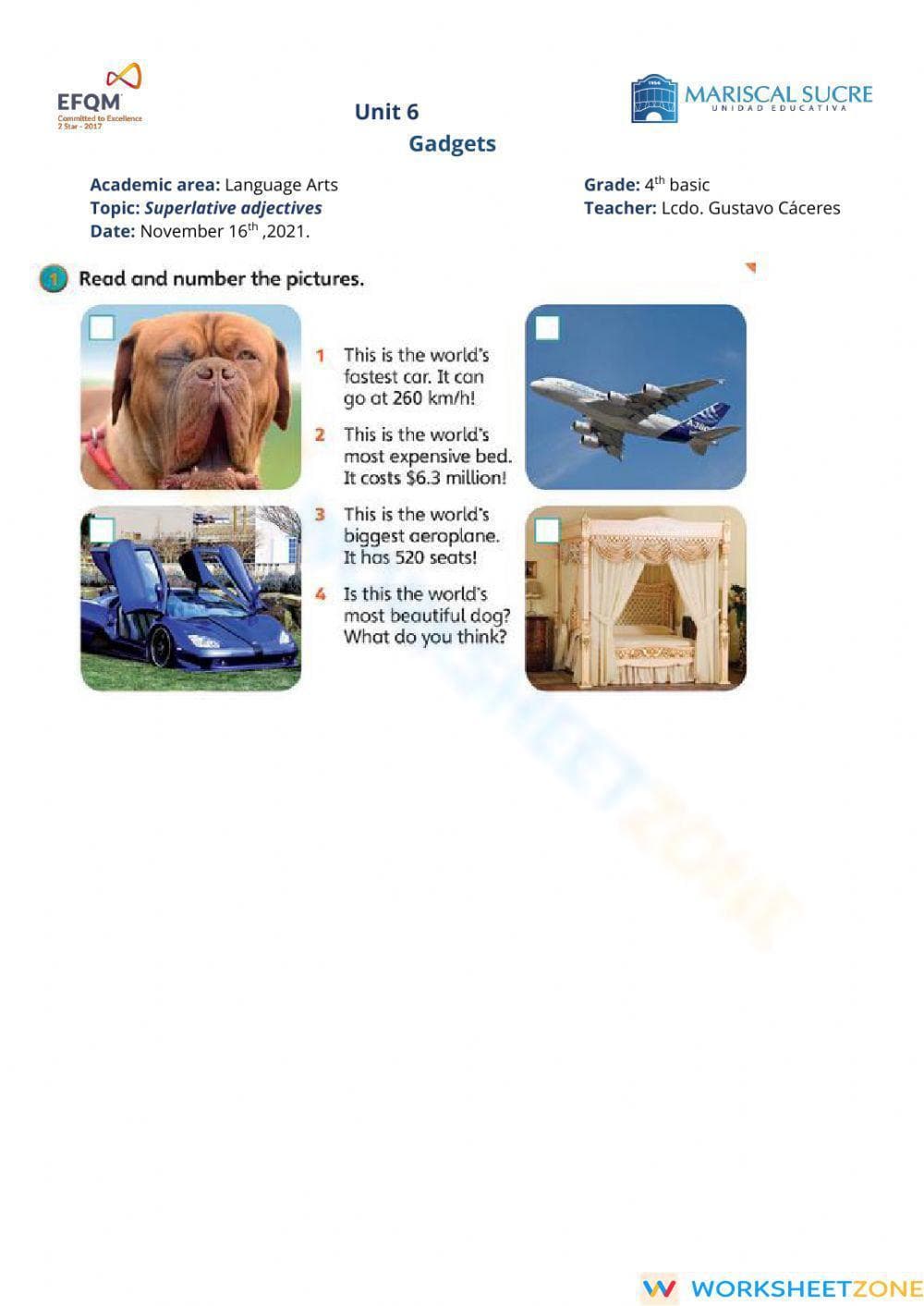
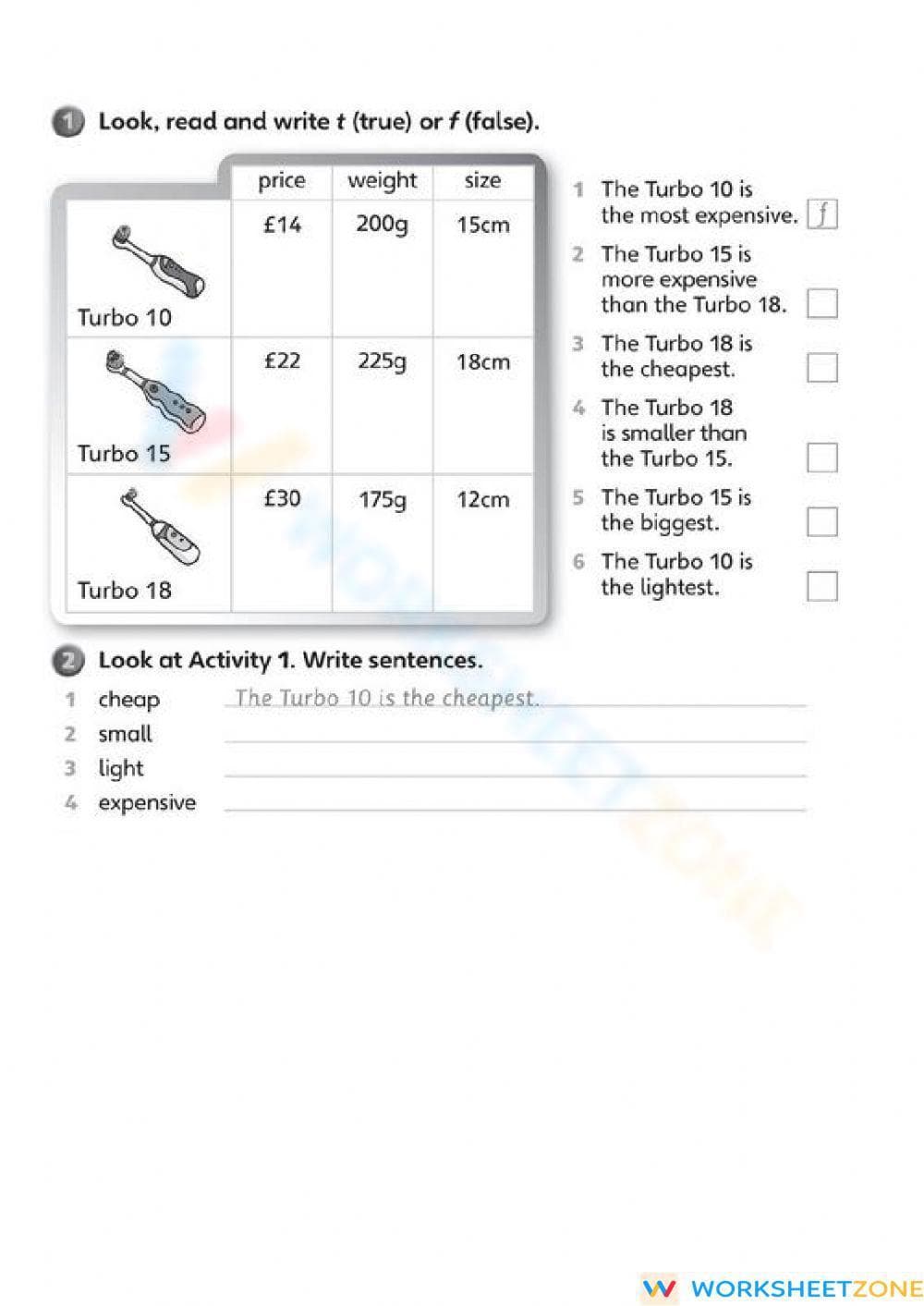
This two-page resource contains two activities. The first page asks students to match superlative adjectives to images. The second page uses a data table for a true/false exercise and a sentence-writing task, requiring students to form their own superlative sentences. A complete answer key is provided for easy grading.
Skill Progression
The worksheet follows a clear gradual-release model to support student learning.
- Guided practice: Students begin by reading sentences with superlative adjectives and matching them to corresponding images, reinforcing vocabulary and context.
- Supported practice: Next, students analyze a data table to evaluate the accuracy of sentences using both comparative and superlative forms, a task that bridges recognition and application.
- Independent practice: Finally, students apply their knowledge by writing four complete sentences using superlative adjectives based on prompts, demonstrating mastery of the skill.
Standards Alignment
This worksheet aligns with CCSS.ELA-LITERACY.L.4.1, which covers command of standard English grammar. The activities specifically target forming and using adjectives to make comparisons, a key skill reviewed in fourth grade for fluency. Both standard codes can be copied directly into lesson plans, IEP goals, or district curriculum mapping tools.
How to Use It
Use this after a lesson on comparatives as an independent practice activity, homework, or station task. For formative assessment, circulate as students complete the final writing task and note any common errors in forming superlatives. The worksheet can typically be completed in 15 to 20 minutes.
Who It's For
This resource is designed for fourth-grade students who need targeted practice with comparative and superlative adjectives. The clear instructions and concrete examples also make it suitable for English Language Learners or students in need of Tier 2 grammar intervention. To extend the lesson, pair this worksheet with a descriptive writing prompt where students must use at least three comparative and three superlative adjectives to describe two different animals or places.
Reinforcing grammatical conventions like the use of comparative and superlative adjectives is critical for developing clear and precise written communication. This worksheet supports the foundational skills outlined in CCSS.ELA-LITERACY.L.4.1 by providing students with structured, repetitive practice. Research consistently shows that explicit grammar instruction combined with contextual application improves student writing proficiency. A report by Fisher & Frey (2014) emphasizes that isolated grammar drills are less effective than activities that connect grammatical concepts to reading and writing. This resource bridges that gap by having students analyze data and read descriptive sentences before applying the rules in their own writing. By mastering these conventions, students are better equipped to articulate complex comparisons, a skill essential for analytical and persuasive writing across all subject areas. This practice is a key component in building the writing fluency expected at the upper elementary level.


