


























1 / 3
0
Views
0
Downloads

0.0
0
Save
0 Likes
Share
Skills for Regulating Emotions: An Updated Worksheet
0 Views
0 Downloads
Paste this activity's link or code into your existing LMS (Google Classroom, Canvas, Teams, Schoology, Moodle, etc.).
Students can open and work on the activity right away, with no student login required.
You'll still be able to track student progress and results from your teacher account.
Information
Description
What It Is:
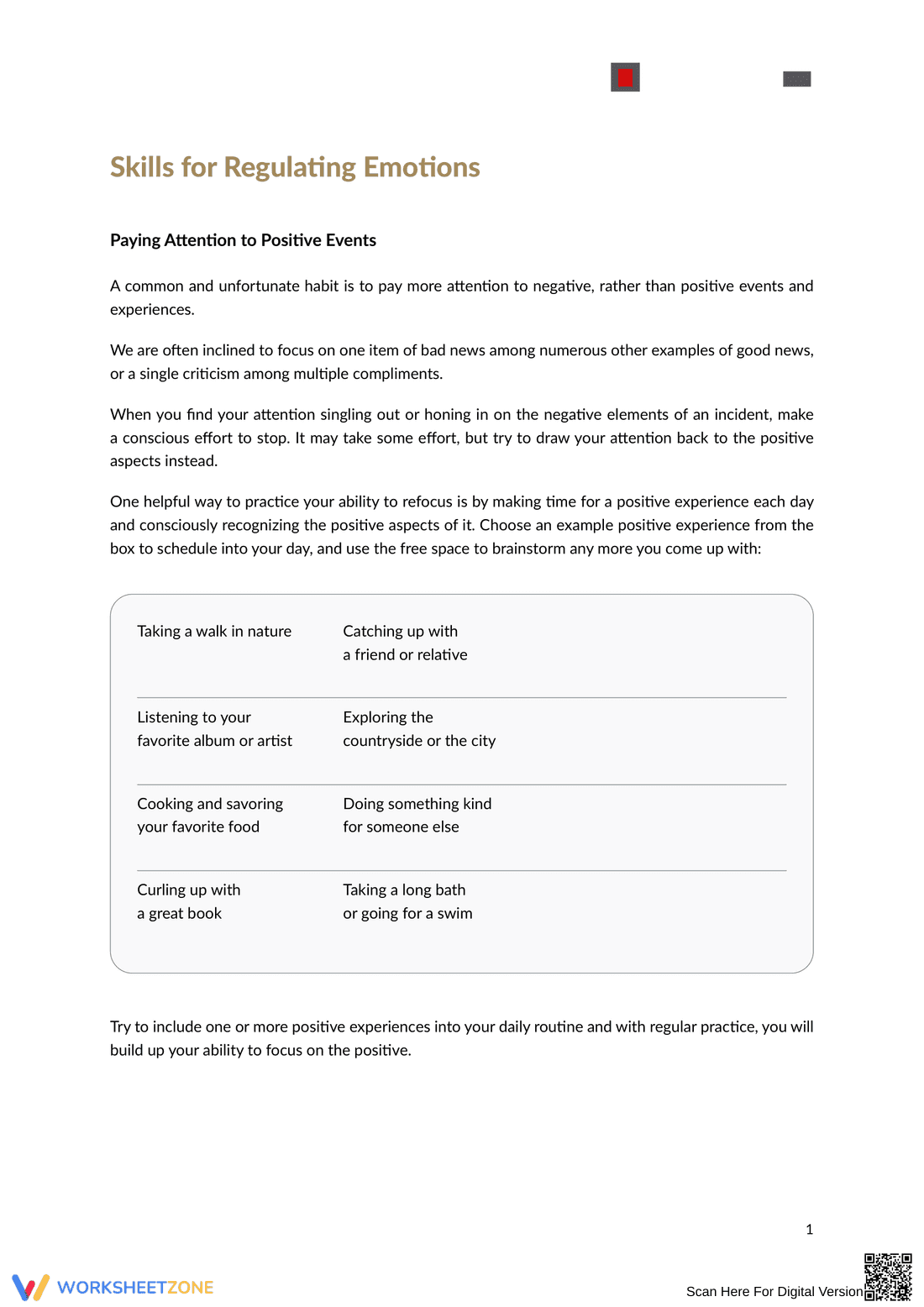
This is a worksheet titled 'Skills for Regulating Emotions' focusing on 'Paying Attention to Positive Events.' It explains the tendency to focus on negative events and provides strategies to consciously refocus on positive aspects. The worksheet includes a list of positive experiences such as 'Taking a walk in nature,' 'Catching up with a friend or relative,' 'Listening to your favorite album or artist,' 'Exploring the countryside or the city,' 'Cooking and savoring your favorite food,' 'Doing something kind for someone else,' 'Curling up with a great book,' and 'Taking a long bath or going for a swim.' The worksheet encourages including positive experiences into daily routines.
Grade Level Suitability:
This worksheet is suitable for late middle school (Grades 7-8) through high school (Grades 9-12) and even adults. The concepts are relatively simple, but require a level of self-awareness and cognitive ability to understand and implement the strategies.
Why Use It:
This worksheet helps improve emotional regulation skills by encouraging individuals to shift their focus from negative to positive experiences. It promotes mindfulness, positive thinking, and building a routine that incorporates positive activities. It can improve overall well-being and resilience.
How to Use It:
Read the introduction and understand the concept of focusing on positive events. Choose one or more positive experiences from the list (or brainstorm your own) and schedule them into your daily routine. Practice consciously recognizing the positive aspects of these experiences. Use the worksheet as a guide to build a habit of focusing on the positive.
Target Users:
This worksheet is ideal for teenagers and adults who want to improve their emotional well-being, manage stress, and develop a more positive outlook. It is also useful for counselors, therapists, and educators working with individuals on emotional regulation skills.
This is a worksheet titled 'Skills for Regulating Emotions' focusing on 'Paying Attention to Positive Events.' It explains the tendency to focus on negative events and provides strategies to consciously refocus on positive aspects. The worksheet includes a list of positive experiences such as 'Taking a walk in nature,' 'Catching up with a friend or relative,' 'Listening to your favorite album or artist,' 'Exploring the countryside or the city,' 'Cooking and savoring your favorite food,' 'Doing something kind for someone else,' 'Curling up with a great book,' and 'Taking a long bath or going for a swim.' The worksheet encourages including positive experiences into daily routines.
Grade Level Suitability:
This worksheet is suitable for late middle school (Grades 7-8) through high school (Grades 9-12) and even adults. The concepts are relatively simple, but require a level of self-awareness and cognitive ability to understand and implement the strategies.
Why Use It:
This worksheet helps improve emotional regulation skills by encouraging individuals to shift their focus from negative to positive experiences. It promotes mindfulness, positive thinking, and building a routine that incorporates positive activities. It can improve overall well-being and resilience.
How to Use It:
Read the introduction and understand the concept of focusing on positive events. Choose one or more positive experiences from the list (or brainstorm your own) and schedule them into your daily routine. Practice consciously recognizing the positive aspects of these experiences. Use the worksheet as a guide to build a habit of focusing on the positive.
Target Users:
This worksheet is ideal for teenagers and adults who want to improve their emotional well-being, manage stress, and develop a more positive outlook. It is also useful for counselors, therapists, and educators working with individuals on emotional regulation skills.


