


























Views
Downloads
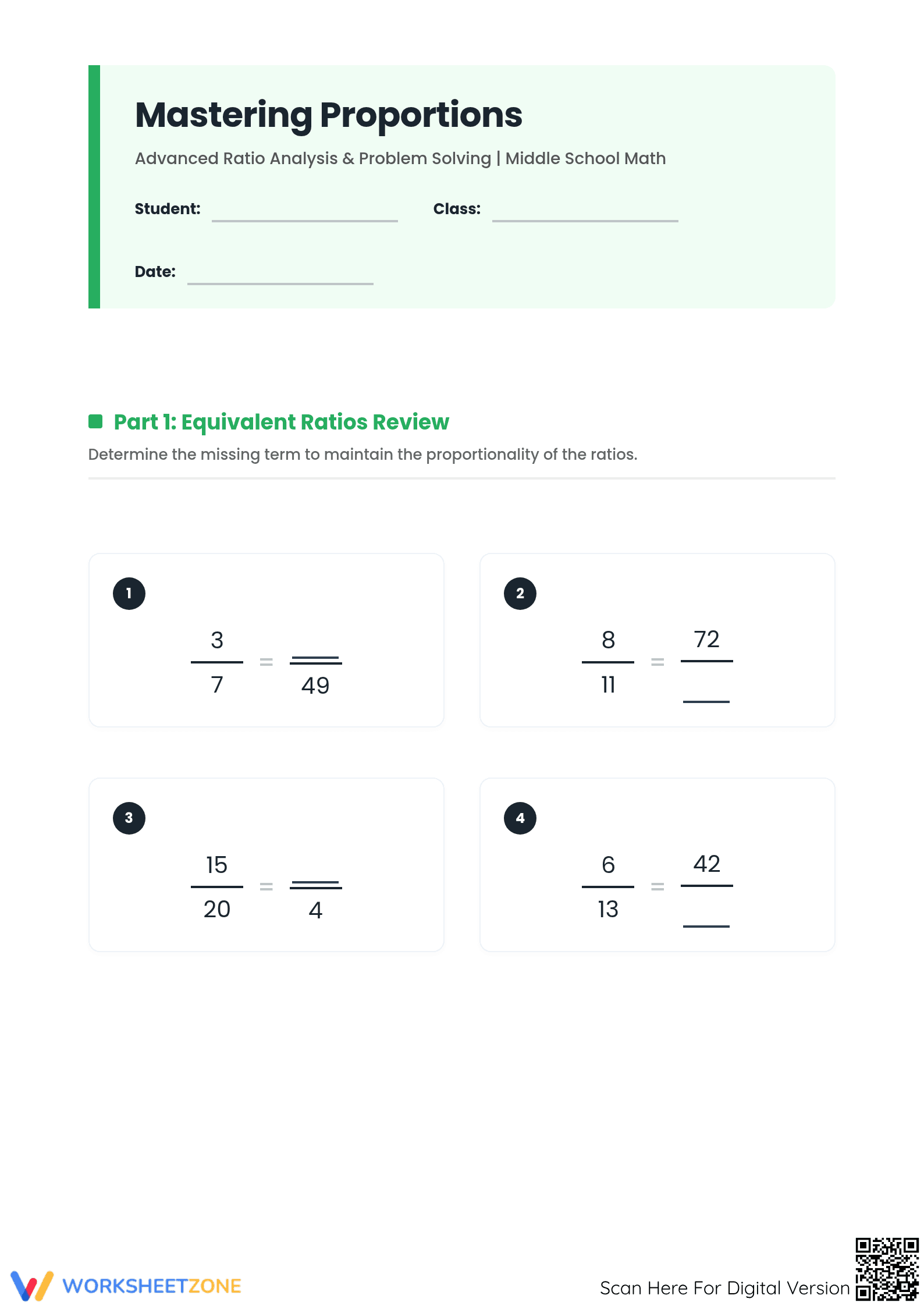
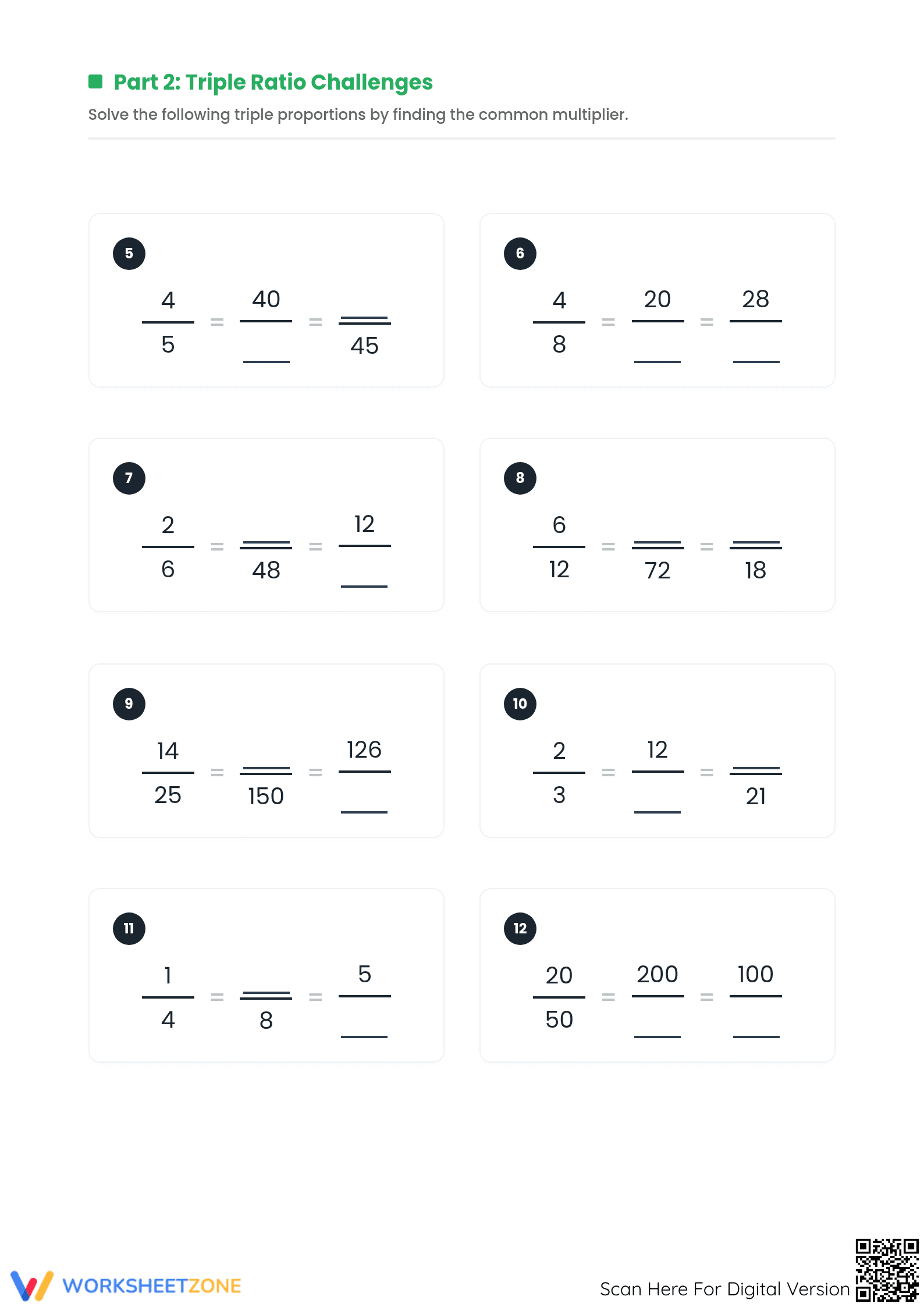
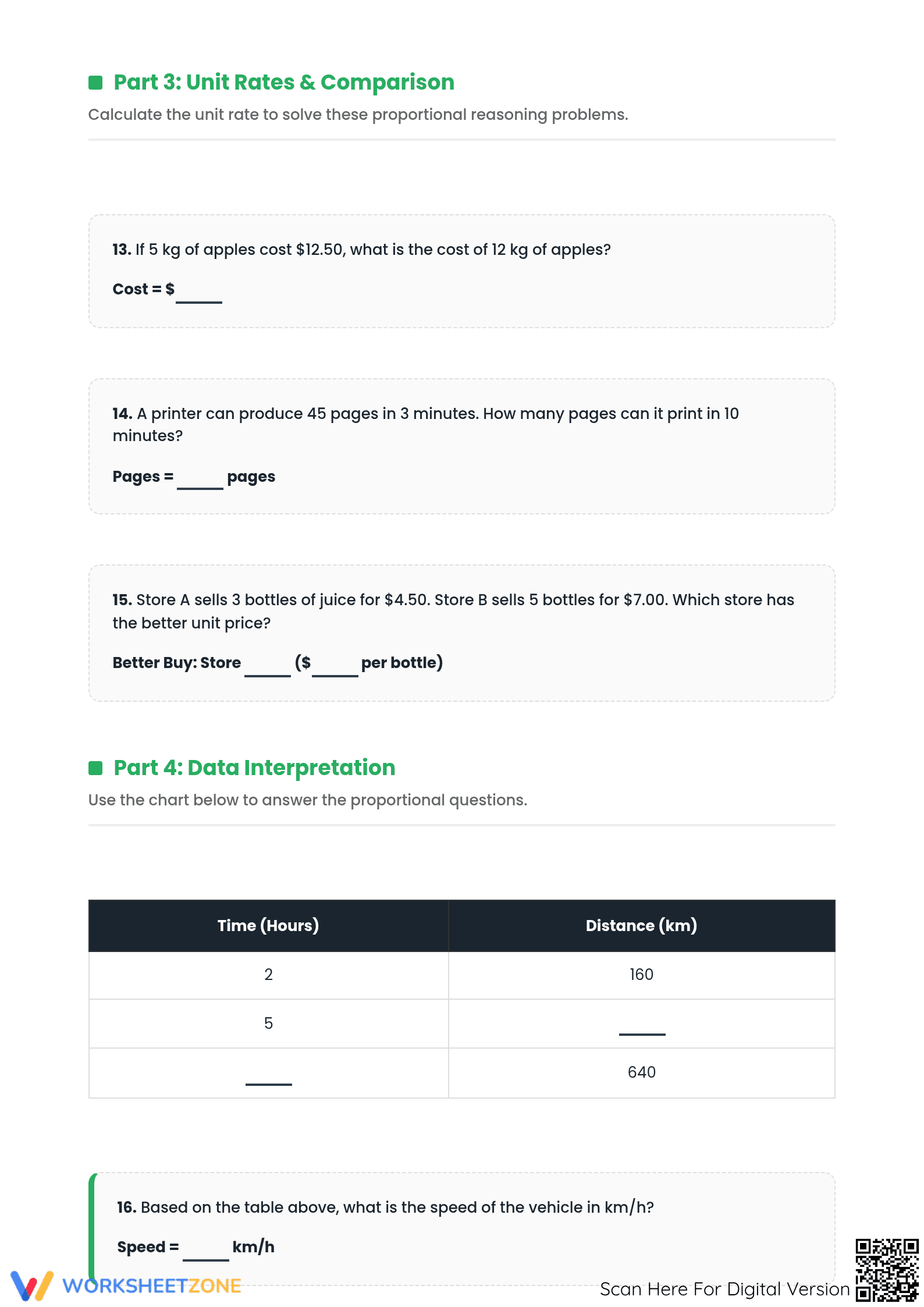
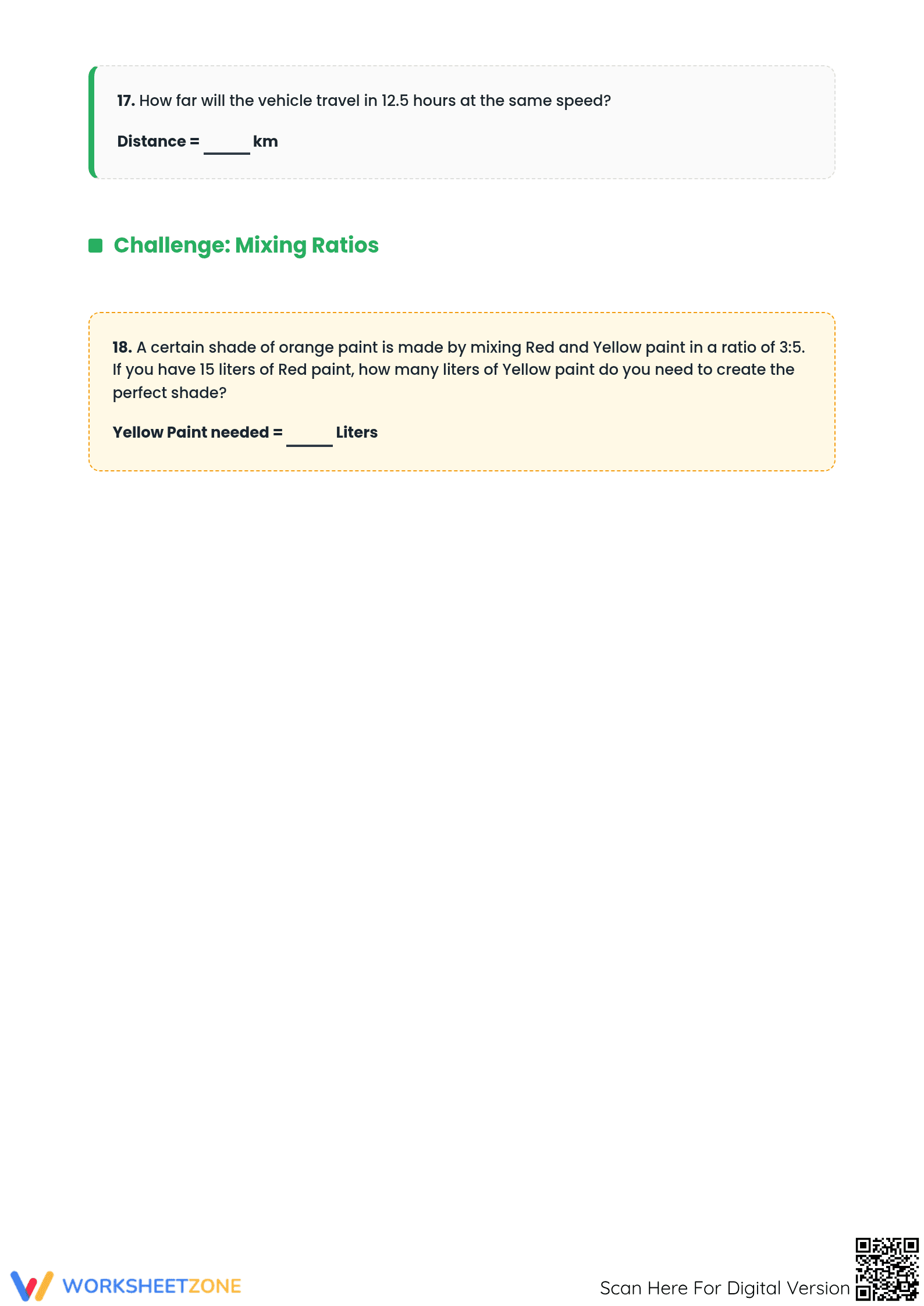

Essential Proportions Practice Worksheet | Grade 7-9 Math
Paste this activity's link or code into your existing LMS (Google Classroom, Canvas, Teams, Schoology, Moodle, etc.).
Students can open and work on the activity right away, with no student login required.
You'll still be able to track student progress and results from your teacher account.
This Mastering Proportions worksheet provides a comprehensive set of practice problems designed to solidify students' understanding of ratio relationships and proportional reasoning. By working through structured exercises, learners develop the fluency required to solve complex algebraic equations and real-world math scenarios. This resource ensures mastery of cross-multiplication and unit rate calculations.
At a Glance
- Grade: 7–9 · Subject: Math
- Standard:
CCSS.MATH.CONTENT.7.RP.A.2— Recognize and represent proportional relationships between quantities through multiple representations- Skill Focus: Cross-multiplication, unit rates, and triple ratio analysis
- Format: 4 pages · 18 problems · Answer key included · PDF
- Best For: Middle school math skill reinforcement and assessment
- Time: 45–60 minutes
What's Inside
This four-page instructional packet contains eighteen targeted problems divided into distinct sections. Students begin with an equivalent ratios review, progress to triple ratio challenges, and move into unit rate word problems. The final section includes a data interpretation table and a "Mixing Ratios" challenge problem. A complete answer key is provided for immediate grading.
Zero-Prep Workflow
This resource is designed for immediate classroom implementation with minimal teacher oversight. First, print the four-page PDF (approximately 30 seconds). Second, distribute the packets to students for independent or small-group work (under 1 minute). Third, review the results using the provided answer key during the final ten minutes of class. Total preparation time is less than two minutes.
Standards Alignment
The primary alignment for this resource is CCSS.MATH.CONTENT.7.RP.A.2, which requires students to recognize and represent proportional relationships between quantities. It also supports CCSS.MATH.CONTENT.6.RP.A.3 by using ratio and rate reasoning to solve real-world and mathematical problems. Both standard codes can be copied directly into lesson plans, IEP goals, or district curriculum mapping tools.
How to Use It
Use this worksheet as a summative assessment after a unit on ratios and proportions to gauge individual student mastery. Alternatively, assign specific pages as a "station rotation" activity where students collaborate on the word problems in Part 3 and the data table in Part 4. During the session, observe how students handle the triple ratios in Part 2 to identify those needing additional scaffolding.
Who It's For
This collection is tailored for middle school students in grades 7 through 9 who are building foundational algebraic skills. It serves as an excellent remediation tool for students struggling with basic proportions or as an enrichment packet for advanced 6th graders. The inclusion of the "Challenge" section provides necessary depth for high-achieving students, while structured review sections support all learners.
Proportional reasoning is identified as a critical milestone in middle school mathematics, serving as the gateway to higher-level algebra and functional analysis. According to RAND AIRS 2024, consistent practice with multiple representations of ratios—including tables, equations, and verbal descriptions—is essential for long-term retention of mathematical concepts. This worksheet employs a scaffolded approach that aligns with the gradual release of responsibility model, moving students from guided equivalent ratio identification to independent multi-step problem solving. Research from Fisher & Frey (2014) emphasizes that "check for understanding" moments, such as the unit rate comparisons included here, allow educators to pivot instruction based on real-time student performance. By integrating triple ratios and data interpretation, this resource addresses the rigor required by modern standards while providing the procedural fluency necessary for success in secondary mathematics courses.


