


























Views
Downloads

Printable Similes Worksheet | Grade 3 Essential ELA
Paste this activity's link or code into your existing LMS (Google Classroom, Canvas, Teams, Schoology, Moodle, etc.).
Students can open and work on the activity right away, with no student login required.
You'll still be able to track student progress and results from your teacher account.
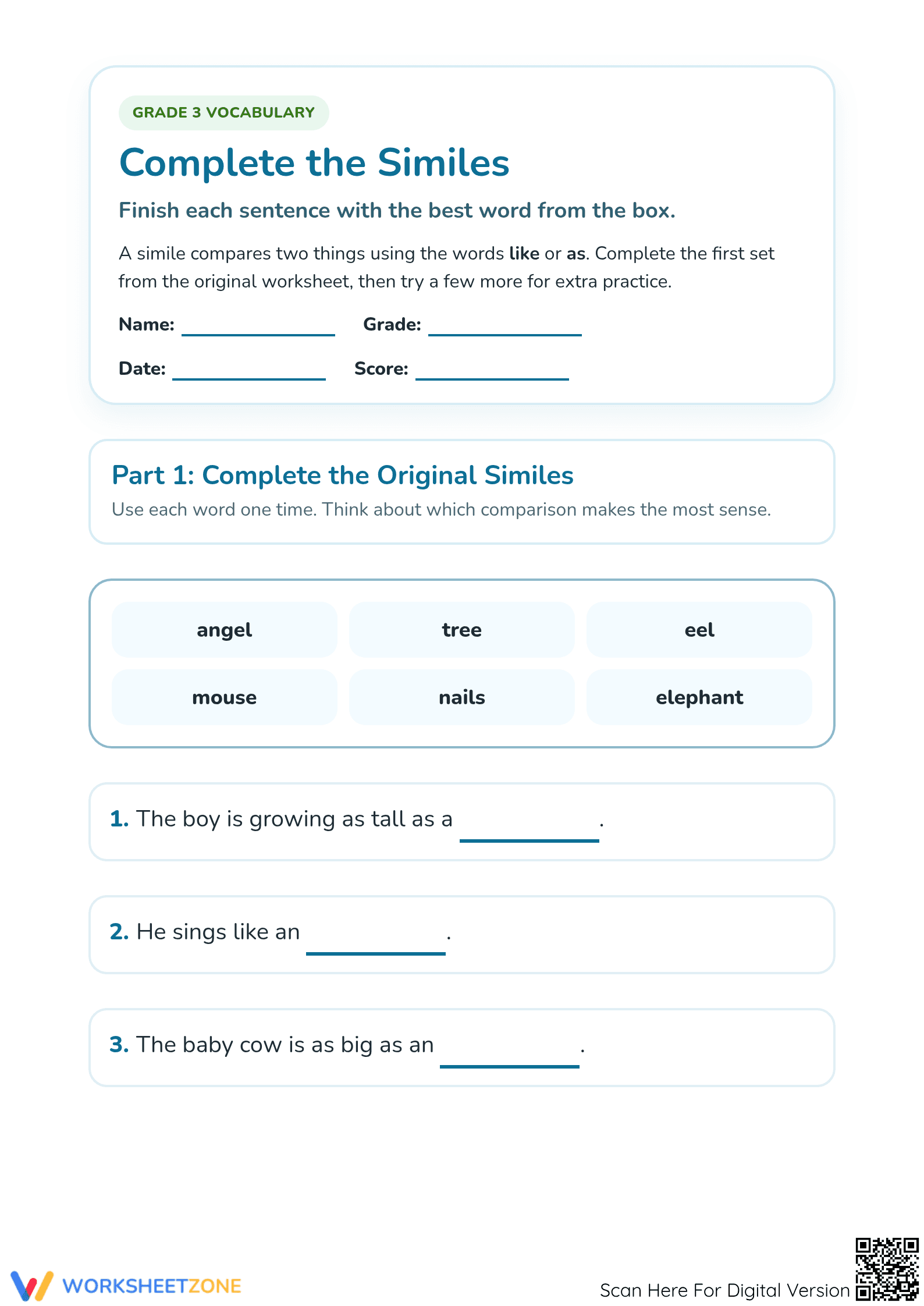
This Grade 3 similes worksheet helps students master figurative language by completing comparisons using the words like or as. By connecting descriptive adjectives to common objects, learners strengthen their reading comprehension and descriptive writing skills. This essential resource provides 10 structured practice problems to ensure students can identify and construct meaningful comparisons in their daily work.
At a Glance
- Grade: 3 · Subject: ELA Literature
- Standard:
CCSS.ELA-LITERACY.L.3.5.A— Distinguish literal and non-literal meanings of words and phrases in context.- Skill Focus: Simile Identification & Completion
- Format: 3 pages · 10 problems · Answer key included · PDF
- Best For: Independent vocabulary practice or morning work
- Time: 15–20 minutes
What's Inside
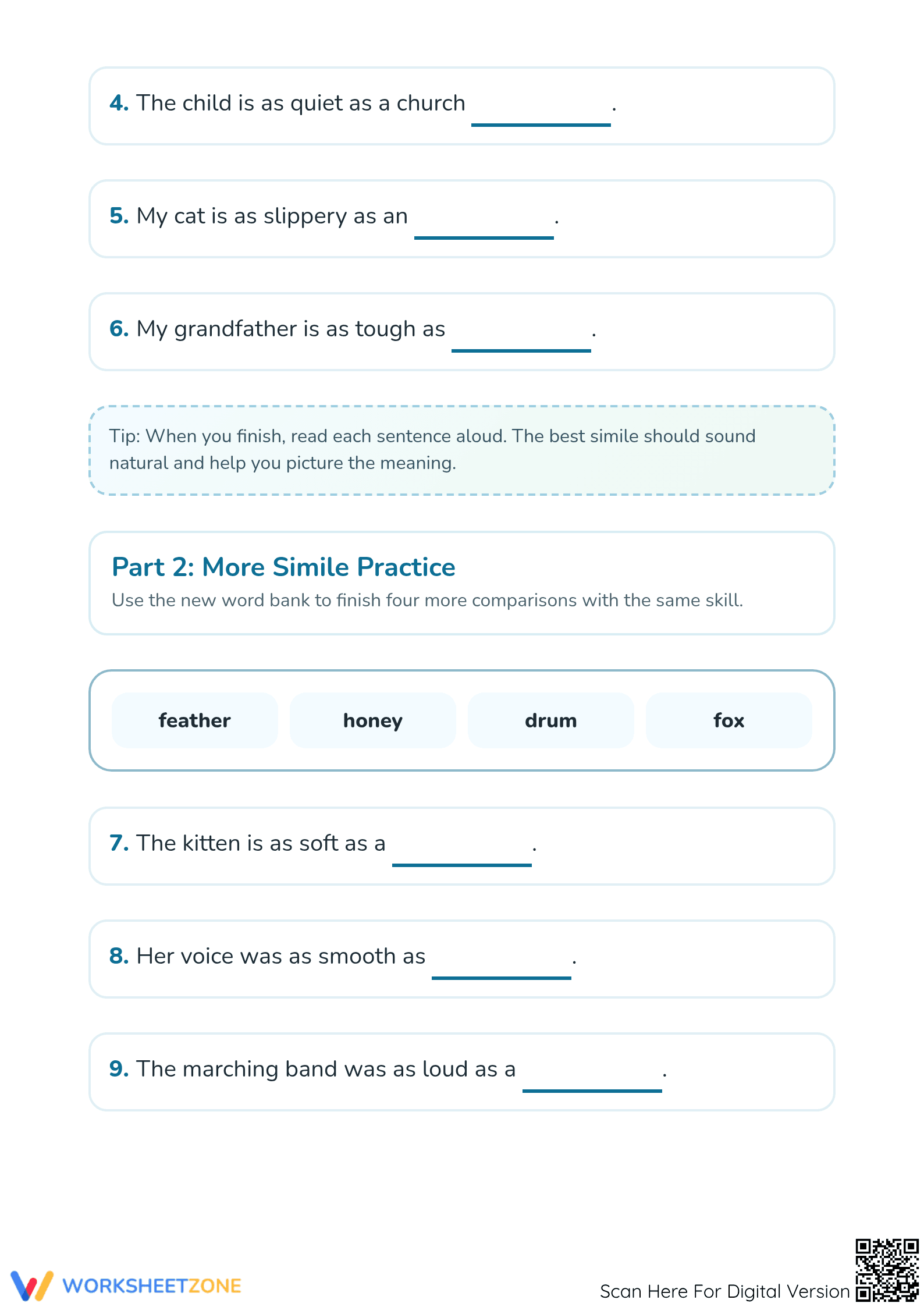
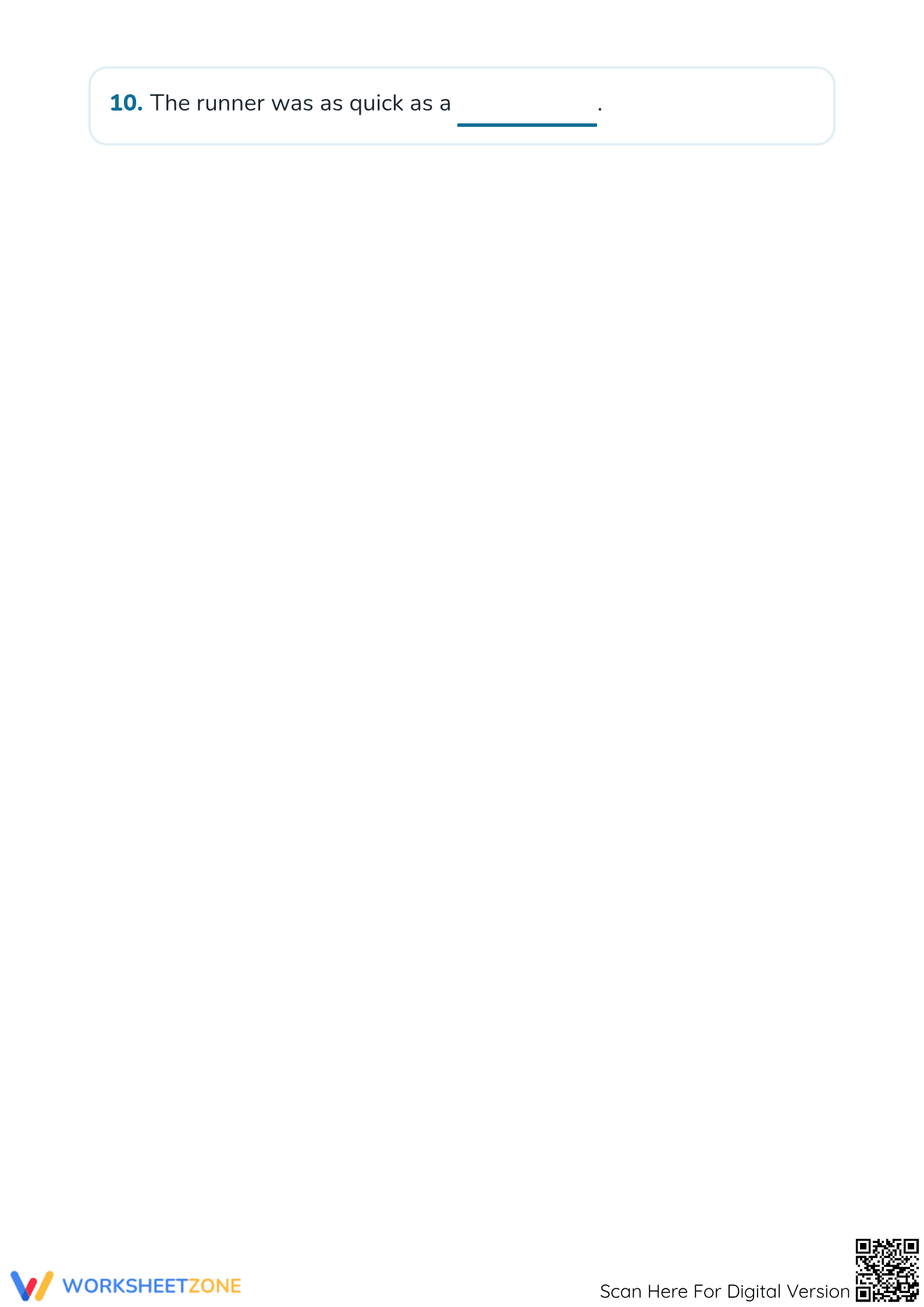
Inside this 3-page PDF, you will find two distinct sections of figurative language practice. Part 1 features six foundational similes with a dedicated word bank, while Part 2 offers four additional challenges to reinforce mastery. The layout is clean and spacious, providing ample room for Grade 3 handwriting. A full answer key is provided to facilitate quick grading or student self-correction.
Skill Progression
- Guided Practice: Six initial problems use a clear word bank to introduce foundational comparisons like 'tall as a tree' and 'quiet as a church.'
- Supported Practice: Four additional tasks in Part 2 provide a second word bank, requiring students to apply their skills to more varied adjectives.
- Independent Review: The concluding self-check tip directs students to read their work aloud to confirm semantic logic and natural phrasing.
This structured sequence follows a gradual release model, moving students from recognizing common similes to evaluating the effectiveness of descriptive comparisons within a sentence frame.
Standards Alignment
This resource is directly aligned to `CCSS.ELA-LITERACY.L.3.5.A`, which requires students to distinguish between literal and non-literal meanings of words. By working with similes, students learn how words can be used for effect rather than just basic information. This standard code can be copied directly into lesson plans, IEP goals, or district curriculum mapping tools.
How to Use It
Use this worksheet during your direct instruction on figurative language or as a follow-up formative assessment. It is perfect for a literacy center rotation where students can work independently. Teachers should observe whether students can explain the connection between the adjective and the object, such as why a runner might be as quick as a fox, ensuring deep comprehension.
Who It's For
This printable is designed for Grade 3 students but works exceptionally well for Grade 4 review or for English Language Learners (ELLs) who are developing an understanding of American idioms. It pairs naturally with any mentor text that features rich descriptive language or during a poetry unit where similes are frequently identified.
This Grade 3 worksheet is meticulously aligned to CCSS.ELA-LITERACY.L.3.5.A, focusing on the ability of students to distinguish literal and non-literal meanings through the use of similes. Research from Fisher & Frey (2014) emphasizes that figurative language instruction is a cornerstone of vocabulary development, as it requires students to move beyond surface-level definitions to understand the nuances of comparative relationships. By providing 10 specific instances of 'like' and 'as' comparisons, this tool scaffolds the transition from concrete observation to abstract linguistic reasoning. Educators can utilize these tasks to observe whether students can map semantic features—such as the height of a tree or the softness of a feather—onto the subjects of each sentence. This practice not only prepares students for standardized assessments but also enriches their own creative writing by providing a repertoire of expressive phrases that they can apply in their own narrative compositions.


