


























Views
Downloads

Printable Similes Practice Worksheet — Grade 3 ELA
Paste this activity's link or code into your existing LMS (Google Classroom, Canvas, Teams, Schoology, Moodle, etc.).
Students can open and work on the activity right away, with no student login required.
You'll still be able to track student progress and results from your teacher account.
Master the art of figurative language with this comprehensive similes packet. This 3-page Grade 3 ELA resource helps students identify, match, and construct comparisons using "like" and "as" to enhance their descriptive writing. By connecting literal objects to nonliteral meanings, learners develop the essential linguistic depth required for narrative mastery and reading comprehension success.
At a Glance
- Grade: 3 · Subject: English Language Arts
- Standard:
L.3.5.A— Distinguish literal and nonliteral meanings of words and phrases in context like similes- Skill Focus: Figurative Language and Similes
- Format: 3 pages · 21 problems · Answer key included · PDF
- Best For: Literacy centers and independent skill practice
- Time: 20–30 minutes
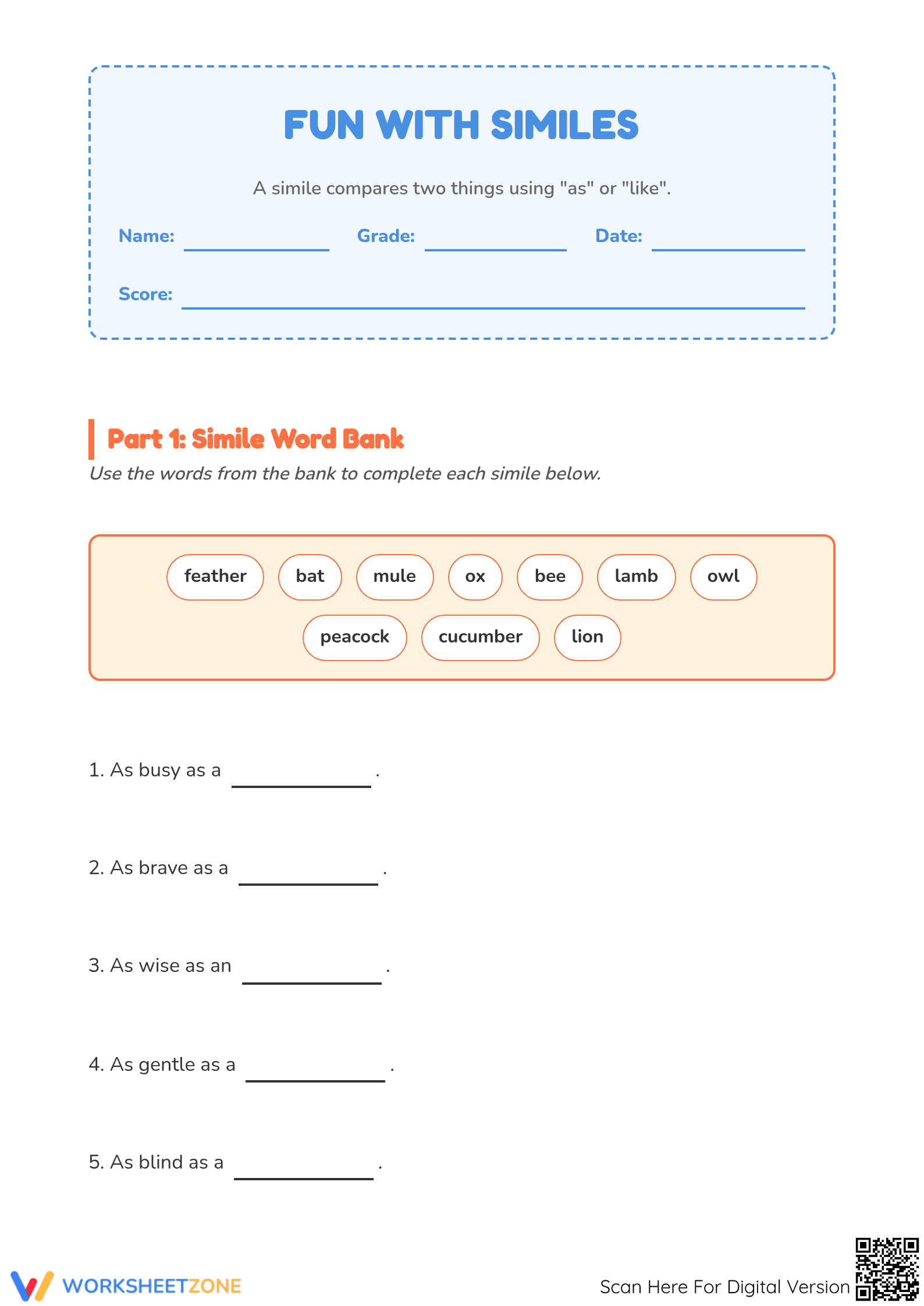
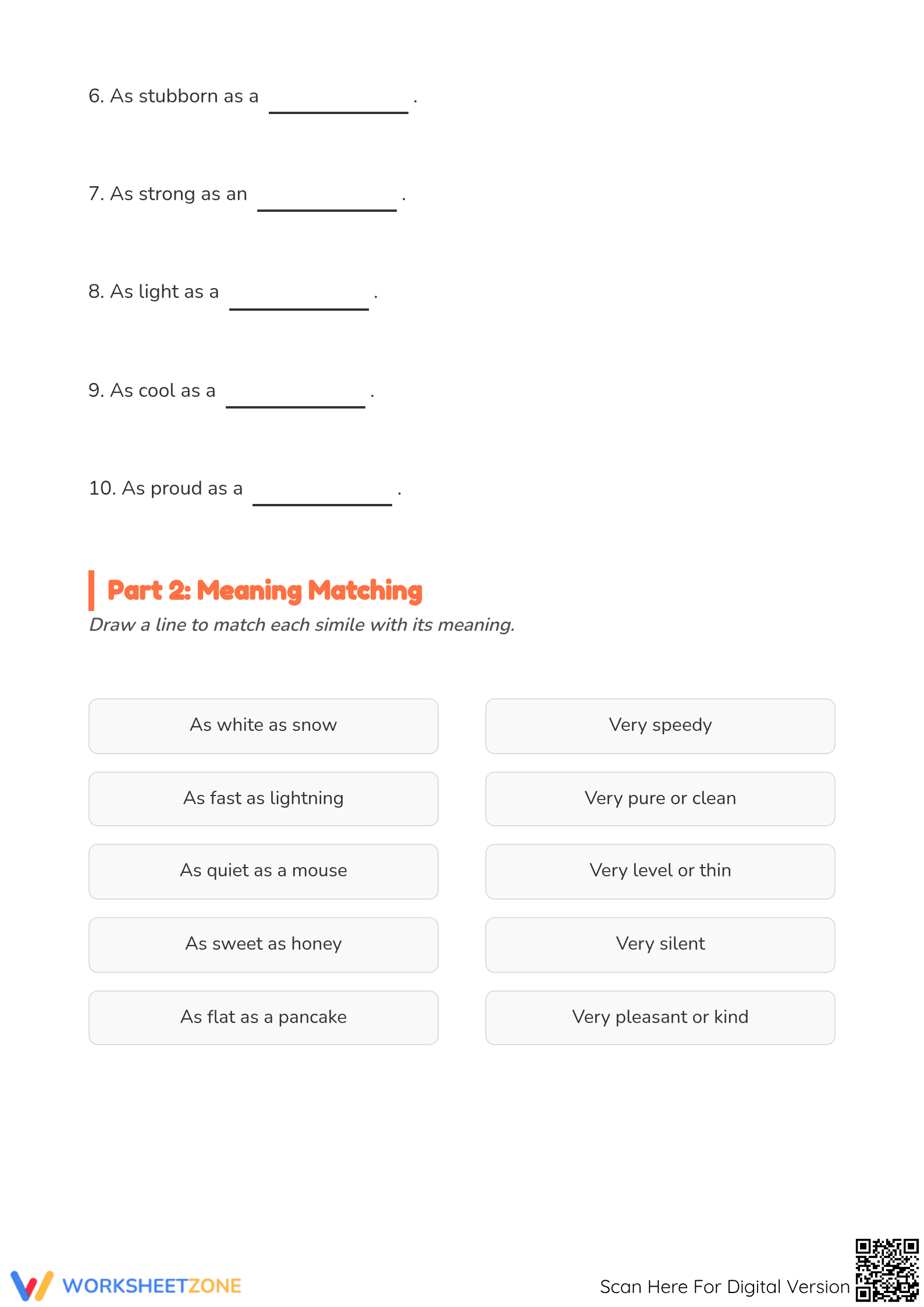
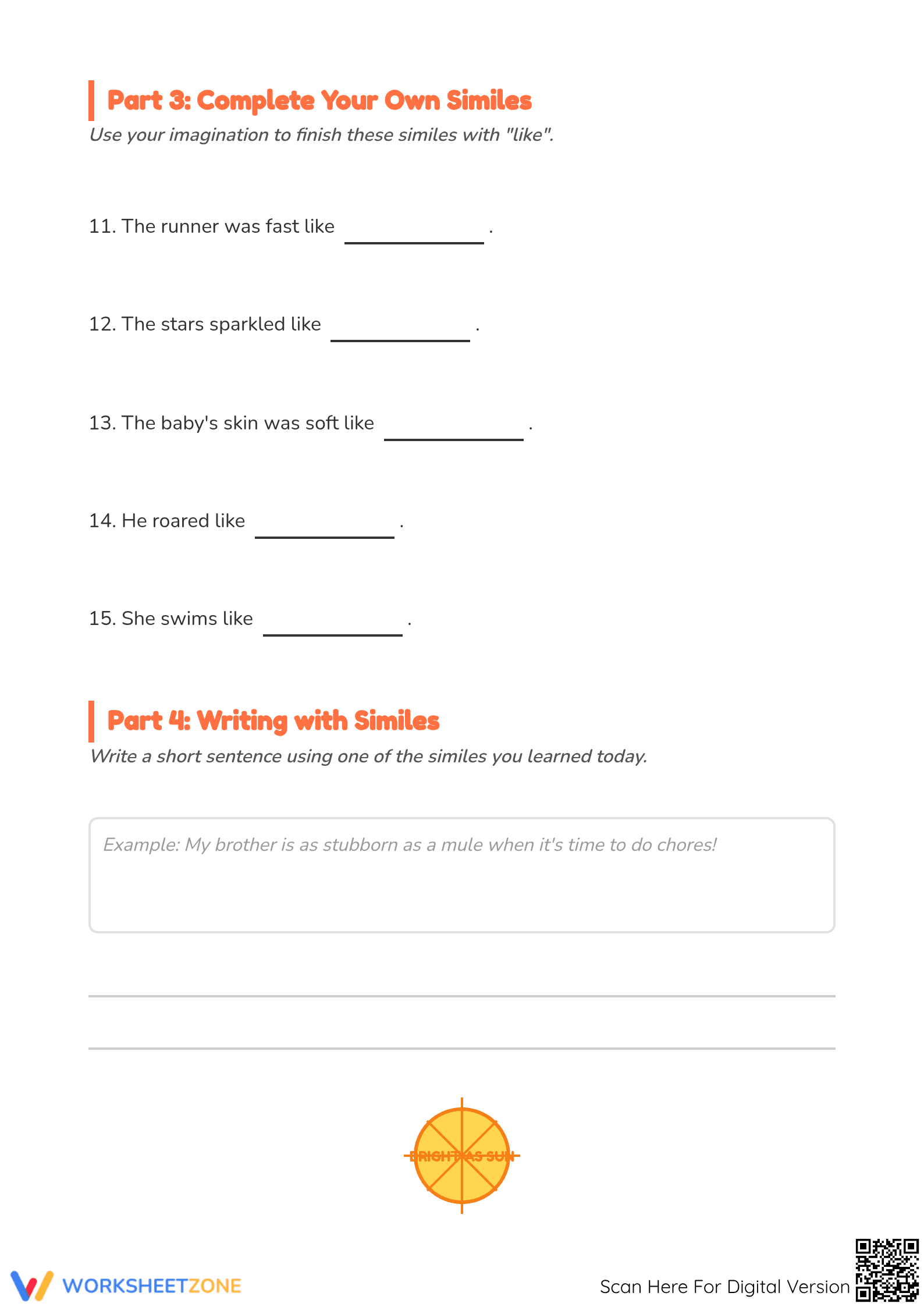
Inside this packet, you will find a structured progression of tasks designed to build confidence with similes. The first page features a "Simile Word Bank" focusing on common animal-based comparisons. Page two transitions into "Meaning Matching" to ensure students grasp the underlying intent of each phrase. Finally, the third page challenges students to use their imagination for creative sentence construction and original figurative writing.
This resource is designed for an immediate, zero-prep workflow. First, print the three-page packet (30 seconds). Second, distribute it to students during independent work time or as a literacy center activity (1 minute). Finally, use the included answer key to review results or allow students to self-correct their work (1 minute). This streamlined process provides high-impact learning with less than three minutes of total teacher preparation.
This worksheet is explicitly aligned with CCSS.ELA-LITERACY.L.3.5.A, focusing on the student's ability to distinguish literal and nonliteral meanings of words and phrases in context. Students move beyond simple identification to application, demonstrating a functional understanding of how similes function within English grammar and literature. This standard code can be copied directly into lesson plans, IEP goals, or district curriculum mapping tools.
For the best results, use this packet as a bridge between direct instruction and independent narrative writing. It serves as an excellent formative assessment tool; observe if students rely on the word bank or can generate their own unique comparisons on the final page. Expected completion time is roughly 25 minutes, making it a perfect fit for a standard ELA block or a focused sub-plan activity.
This resource is tailored for Grade 3 students but provides valuable support for Grade 4 learners who need a refresher on figurative language. It is particularly effective for English Language Learners (ELL) because it provides concrete word bank scaffolds and matching visuals to help bridge the gap between literal and figurative concepts. Pair this with a descriptive reading passage to see these similes in action.
The development of figurative language skills, specifically the mastery of standard L.3.5.A, is a critical milestone in elementary literacy development. Research from Fisher & Frey (2014) confirms that the gradual release of responsibility—moving from scaffolded word banks to independent sentence construction—is the most effective method for cementing nonliteral meaning comprehension. This similes worksheet provides 21 targeted tasks that move students through this cognitive progression. By comparing objects using "like" or "as," students develop the mental flexibility required to navigate complex texts and expressive writing. NAEP data consistently shows that students who can successfully interpret and use figurative language perform significantly better on standardized reading assessments. This printable PDF ensures that Grade 3 learners receive the structured practice necessary to transform their literal understanding into imagery-rich communication, providing a proven foundation for future literary analysis.


