


























Views
Plays




Printable Sight Words Quiz with Pictures | Grade 1 ELA
Paste this activity's link or code into your existing LMS (Google Classroom, Canvas, Teams, Schoology, Moodle, etc.).
Students can open and work on the activity right away, with no student login required.
You'll still be able to track student progress and results from your teacher account.
This Grade 1 sight words worksheet provides a structured way for early learners to demonstrate their reading fluency through visual association. By matching simple sentences to descriptive illustrations, students build the confidence needed to recognize high-frequency words without relying solely on phonetic decoding. This resource ensures that foundational literacy skills are reinforced through engaging, image-based assessment.
At a Glance
- Grade: 1 · Subject: English Language Arts
- Standard:
CCSS.ELA-LITERACY.RF.1.3.G— Recognize and read grade-appropriate irregularly spelled words in context- Skill Focus: Sight Word Recognition
- Format: 4 pages · 7 problems · Answer key included · PDF
- Best For: Quick formative assessment or morning work
- Time: 10–15 minutes
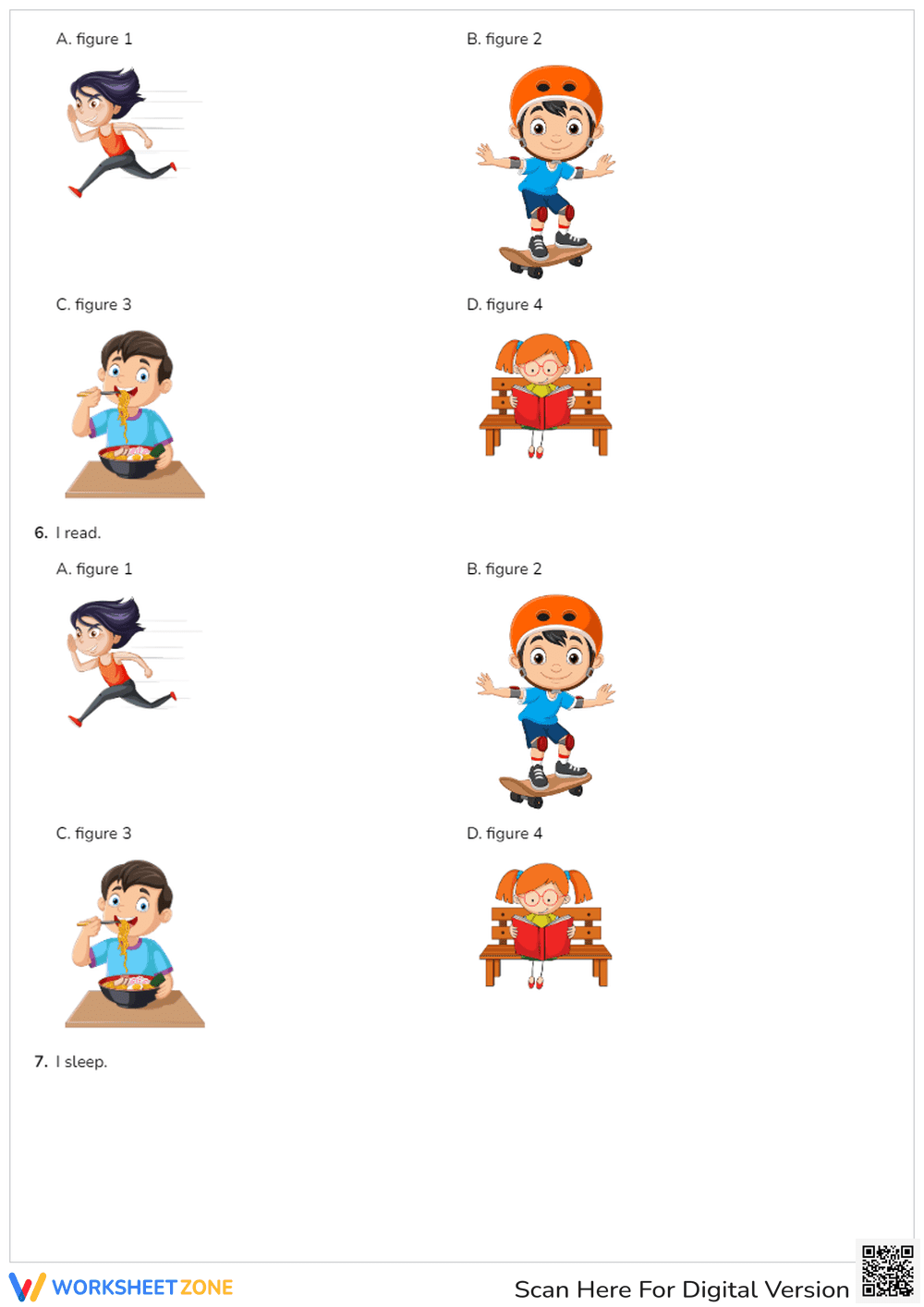
This comprehensive four-page PDF contains seven distinct multiple-choice questions. Each task presents a short, first-person sentence using common sight words and verbs. Below the text, students choose from four distinct "figure" images that represent different actions like reading, swimming, or eating. The clear layout and large font size are specifically designed for young readers, and a full answer key is provided for rapid grading.
The zero-prep design of this resource allows for immediate implementation in any classroom setting. First, print the four-page PDF (30 seconds). Second, distribute the quiz to students as a "bell-ringer" or transition activity (30 seconds). Third, review the seven multiple-choice questions using the included answer key to identify common misconceptions (1 minute). Total teacher preparation time is under two minutes, making this an ideal solution for substitute folders or unexpected schedule changes.
This resource is primarily aligned with CCSS.ELA-LITERACY.RF.1.3.G, which requires students to recognize and read grade-appropriate irregularly spelled words. By placing these words within the context of simple sentences, the worksheet also supports CCSS.ELA-LITERACY.RF.1.4, focusing on reading with sufficient accuracy and fluency to support comprehension. Both standard codes can be copied directly into lesson plans, IEP goals, or district curriculum mapping tools.
Use this worksheet as a formative assessment after a week of direct instruction on high-frequency verbs. It serves as an excellent "exit ticket" to gauge whether students can translate their word-wall knowledge into independent reading. Teachers should observe whether students are reading the entire sentence or merely identifying the verb; this observation helps distinguish between holistic word recognition and context-clue usage. Completion typically takes 10 to 15 minutes.
This resource is designed for Grade 1 and Grade 2 students who are developing their foundational reading skills. It is particularly effective for English Language Learners (ELL) who benefit from the heavy visual scaffolding provided by the illustrations. Pair this worksheet with a classroom anchor chart of common action verbs or a shared reading passage to create a cohesive literacy block.
According to research by Fisher & Frey (2014), the gradual release of responsibility model is most effective when students are provided with clear visual scaffolds during the initial stages of word acquisition. This worksheet leverages that principle by pairing high-frequency sight words with illustrative graphics, reducing the cognitive load required for decoding while maximizing the focus on word recognition. By requiring students to select the correct image for sentences like "I paint" or "I swim," the resource reinforces the semantic connection between text and meaning. This alignment with CCSS.ELA-LITERACY.RF.1.3.G ensures that Grade 1 students are practicing the specific irregularly spelled words necessary for foundational literacy. Data from the NAEP suggests that early mastery of these high-frequency "anchor" words is a primary predictor of third-grade reading proficiency. This 7-task assessment provides the necessary data points for teachers to identify which students require additional intervention in their sight word development.


