


























Views
Downloads

Printable Separate Compound Words Worksheet | Grade 1 ELA
Paste this activity's link or code into your existing LMS (Google Classroom, Canvas, Teams, Schoology, Moodle, etc.).
Students can open and work on the activity right away, with no student login required.
You'll still be able to track student progress and results from your teacher account.
This Grade 1 English Language Arts worksheet focuses on the essential skill of word decomposition. By breaking compound words into their base components, students strengthen their phonological awareness and morphological understanding. This activity helps young readers recognize that larger, unfamiliar words are often composed of smaller, known words.
At a Glance
- Grade: 1 · Subject: ELA
- Standard:
CCSS.ELA-LITERACY.L.1.4— Determine or clarify the meaning of unknown and multiple-meaning words and phrases- Skill Focus: Decomposing compound words
- Format: 2 pages · 6 problems · Answer key included · PDF
- Best For: Independent practice or literacy center activity
- Time: 10–15 minutes
What's Inside
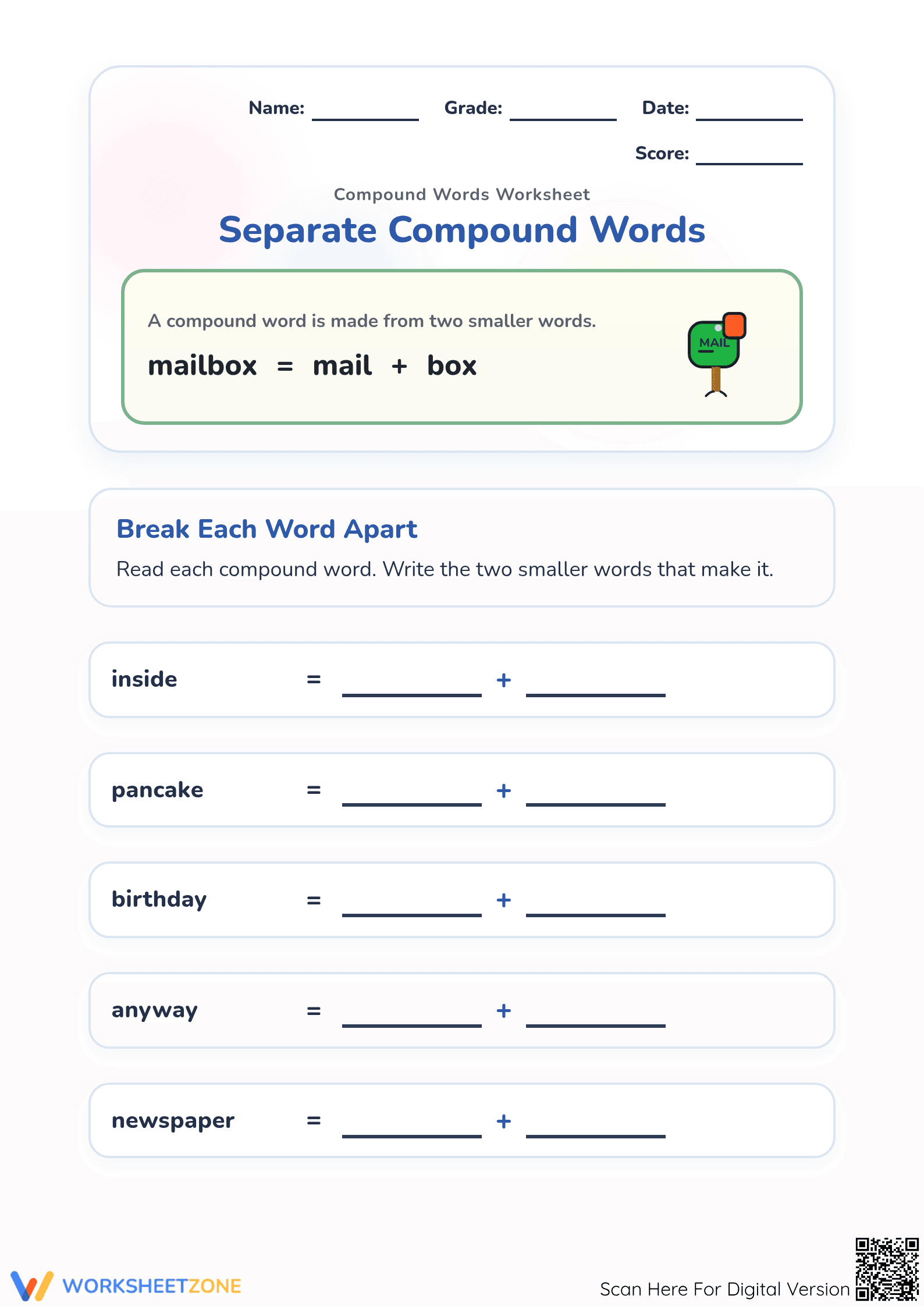
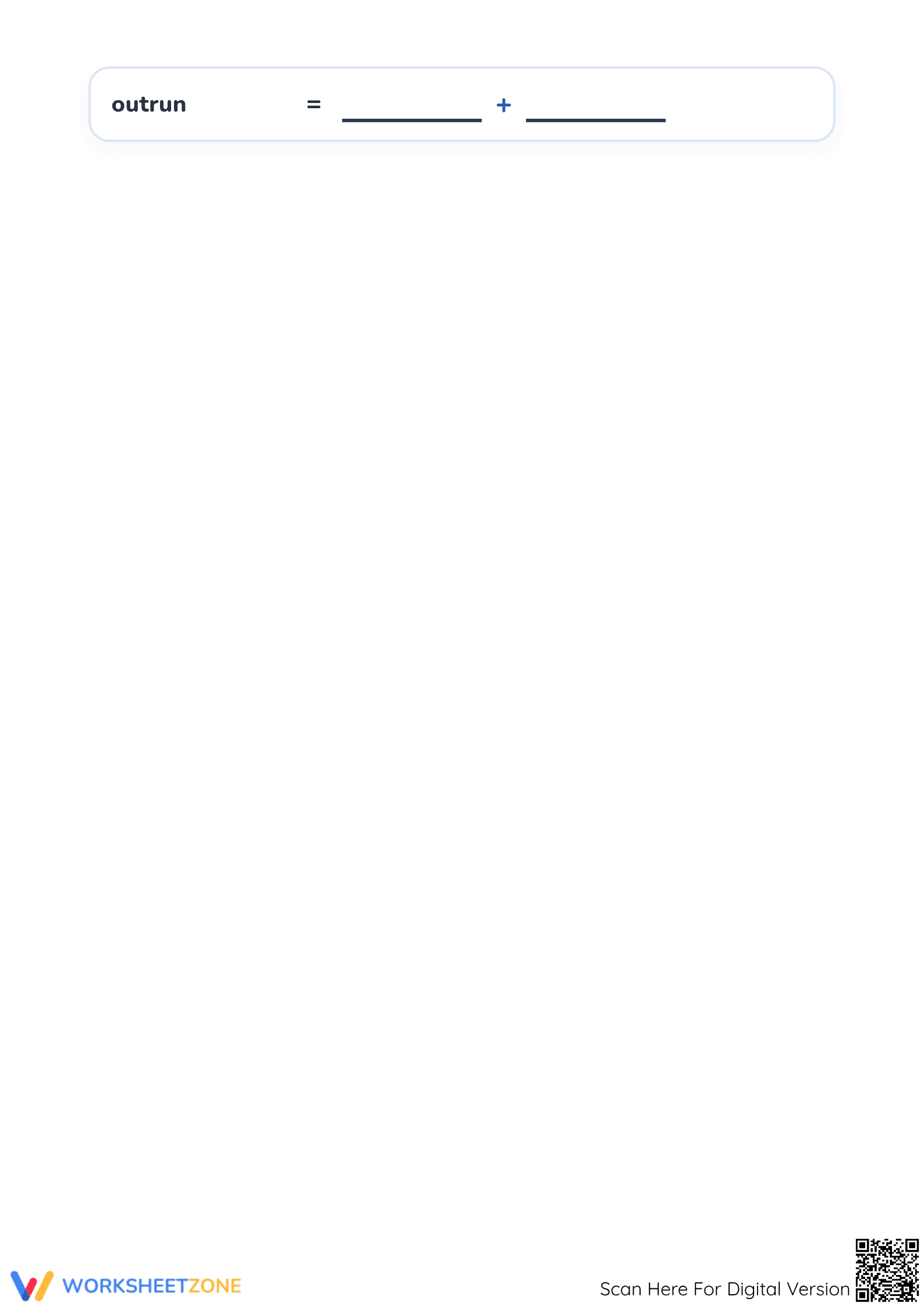
The package contains two pages designed with a clean, student-friendly layout. Page one features a clear visual example using the word "mailbox" to model the task. It includes five practice items: inside, pancake, birthday, anyway, and newspaper. Page two provides an additional challenge with the word "outrun." Every problem includes designated writing lines to reinforce the additive nature of compound words. A full answer key is provided.
Zero-Prep Workflow
This resource is designed for immediate classroom implementation with a three-step process. First, print the two pages in roughly 30 seconds. Second, distribute them to your students during morning work or a dedicated literacy block. Finally, review the completed worksheets using the included answer key. This streamlined approach makes it an ideal choice for emergency sub plans or busy transition periods between subjects.
Standards Alignment
This worksheet is primarily aligned with `CCSS.ELA-LITERACY.L.1.4`, which requires students to determine or clarify the meaning of unknown words using various strategies. It specifically supports the foundational understanding of how words are formed, a precursor to more advanced root word analysis. This standard code can be copied directly into lesson plans, IEP goals, or district curriculum mapping tools.
How to Use It
Incorporate this worksheet during the independent practice phase of a lesson. After modeling how to split words like "sunflower" on the board, assign this task to verify student understanding. It also serves as an effective formative-assessment tool; observe if students struggle to find the break point in words like "anyway" versus "pancake" to identify those needing additional phonemic support.
Who It's For
This activity is perfect for first-grade students or second-grade learners requiring remedial support in word recognition. It is particularly helpful for English Language Learners who are beginning to decode multi-syllabic English vocabulary. Pair this resource with a compound word anchor chart to provide a helpful visual reference during the writing process.
Effective word analysis instruction is a cornerstone of early literacy development. This worksheet aligns with research by Fisher & Frey (2014) regarding the importance of gradual release and explicit morphological instruction. By requiring students to physically write the constituent parts of words like "newspaper," the activity reinforces the structural logic of English orthography. Research indicates that morphological awareness is a significant predictor of reading comprehension, as students who can decompose words are better equipped to handle the increasing lexical demands of higher grade levels. This Grade 1 resource targets `CCSS.ELA-LITERACY.L.1.4` by providing structured practice in decomposing compound words into manageable units. It ensures that students move beyond simple whole-word recognition toward a more robust, analytical approach to reading. Such targeted practice is essential for bridging the gap between basic decoding and fluent, meaningful reading across various text types.


