


























Views
Downloads
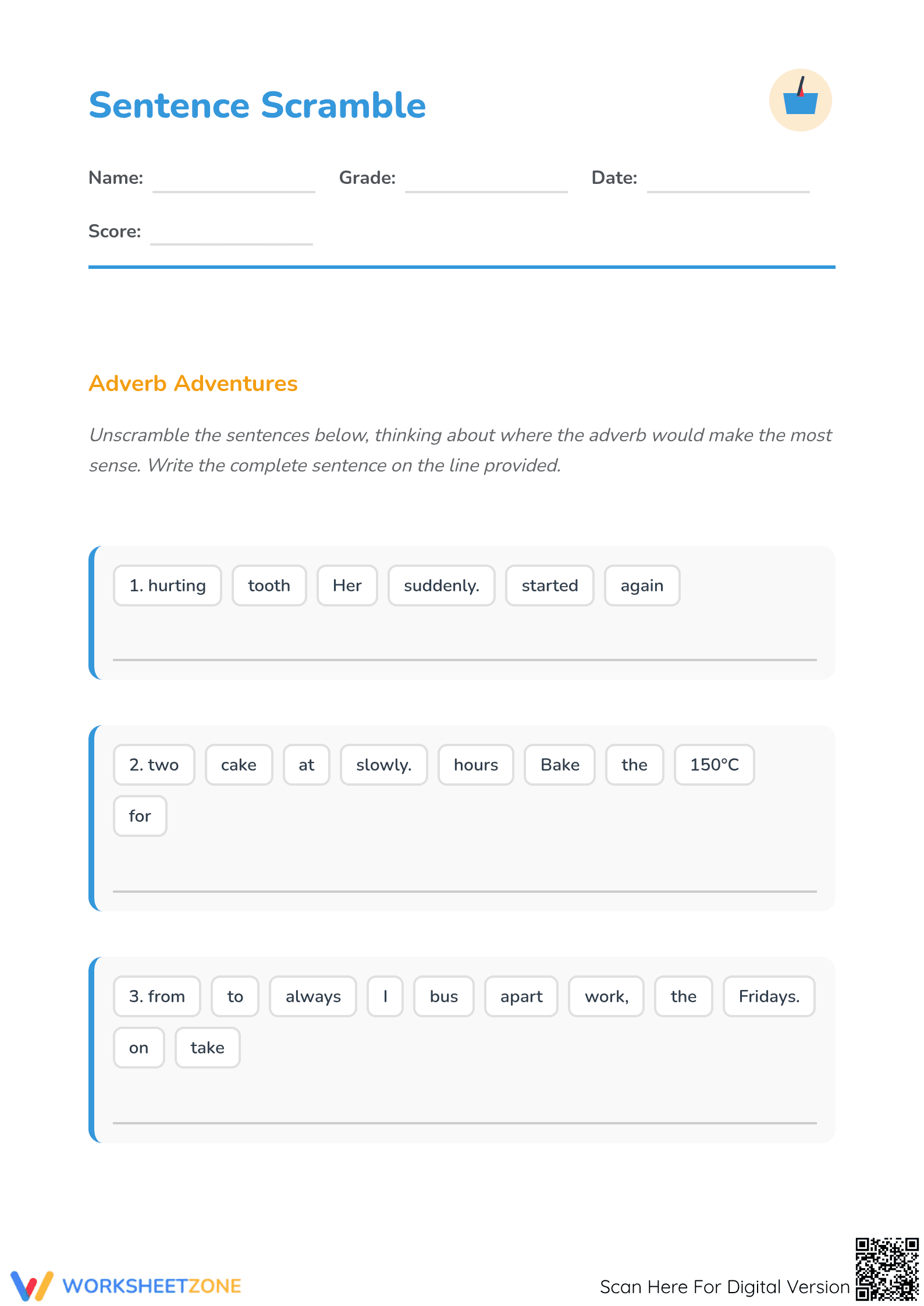

Adverbs Sentence Scramble | Grade 3 Printable Worksheet
Paste this activity's link or code into your existing LMS (Google Classroom, Canvas, Teams, Schoology, Moodle, etc.).
Students can open and work on the activity right away, with no student login required.
You'll still be able to track student progress and results from your teacher account.
This Grade 3 grammar worksheet helps students master adverbs and sentence structure by unscrambling words to form complete thoughts. By placing adverbs correctly within a sentence, learners develop a stronger grasp of syntax and parts of speech, improving their reading comprehension and writing fluency.
At a Glance
- Grade: 3 · Subject: ELA
- Standard:
CCSS.ELA-LITERACY.L.3.1.A— Explain the function of adverbs in particular sentences- Skill Focus: Adverbs and sentence structure
- Format: 3 pages · 10 problems · Answer key included · PDF
- Best For: Independent practice and grammar review
- Time: 15–20 minutes
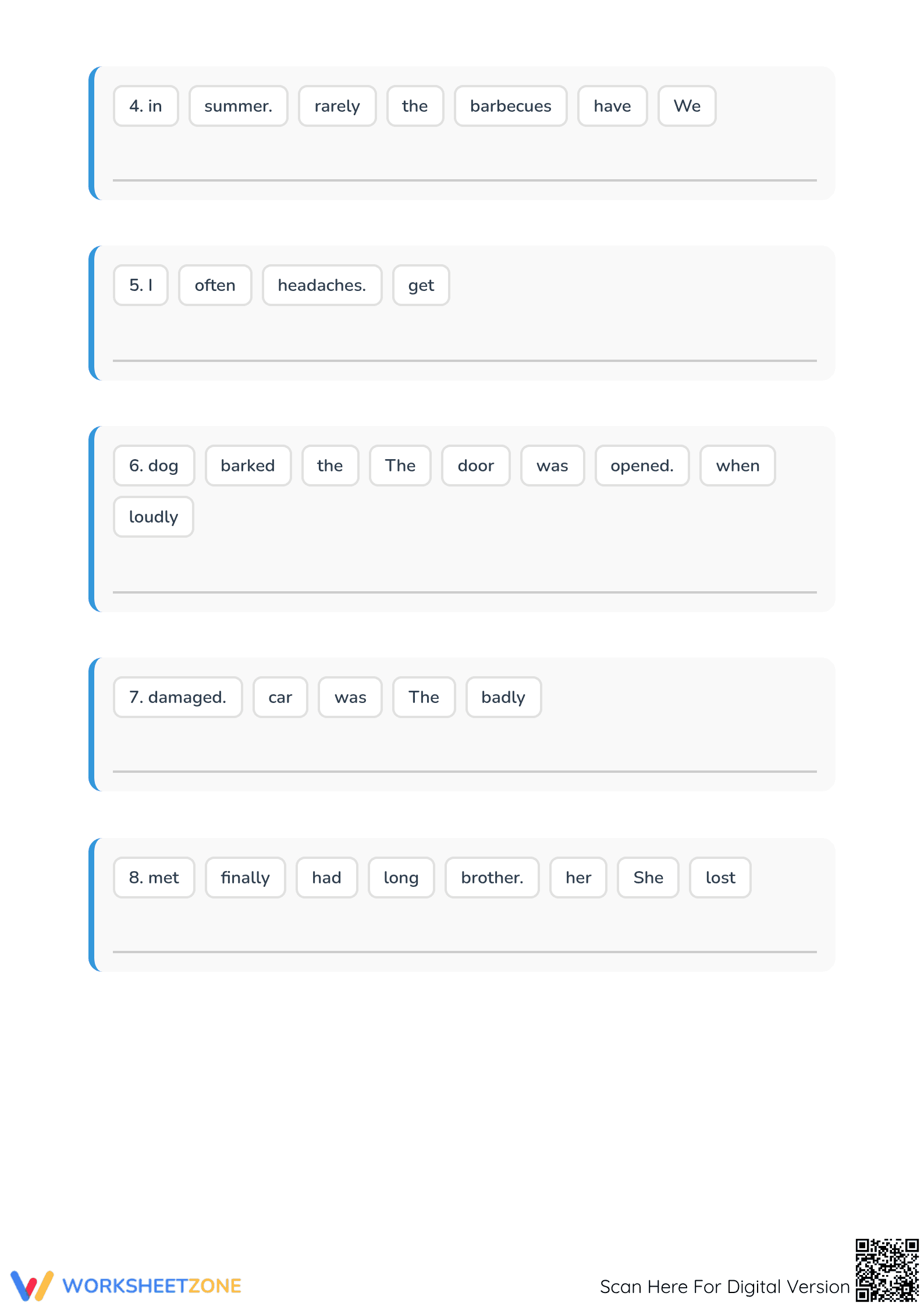
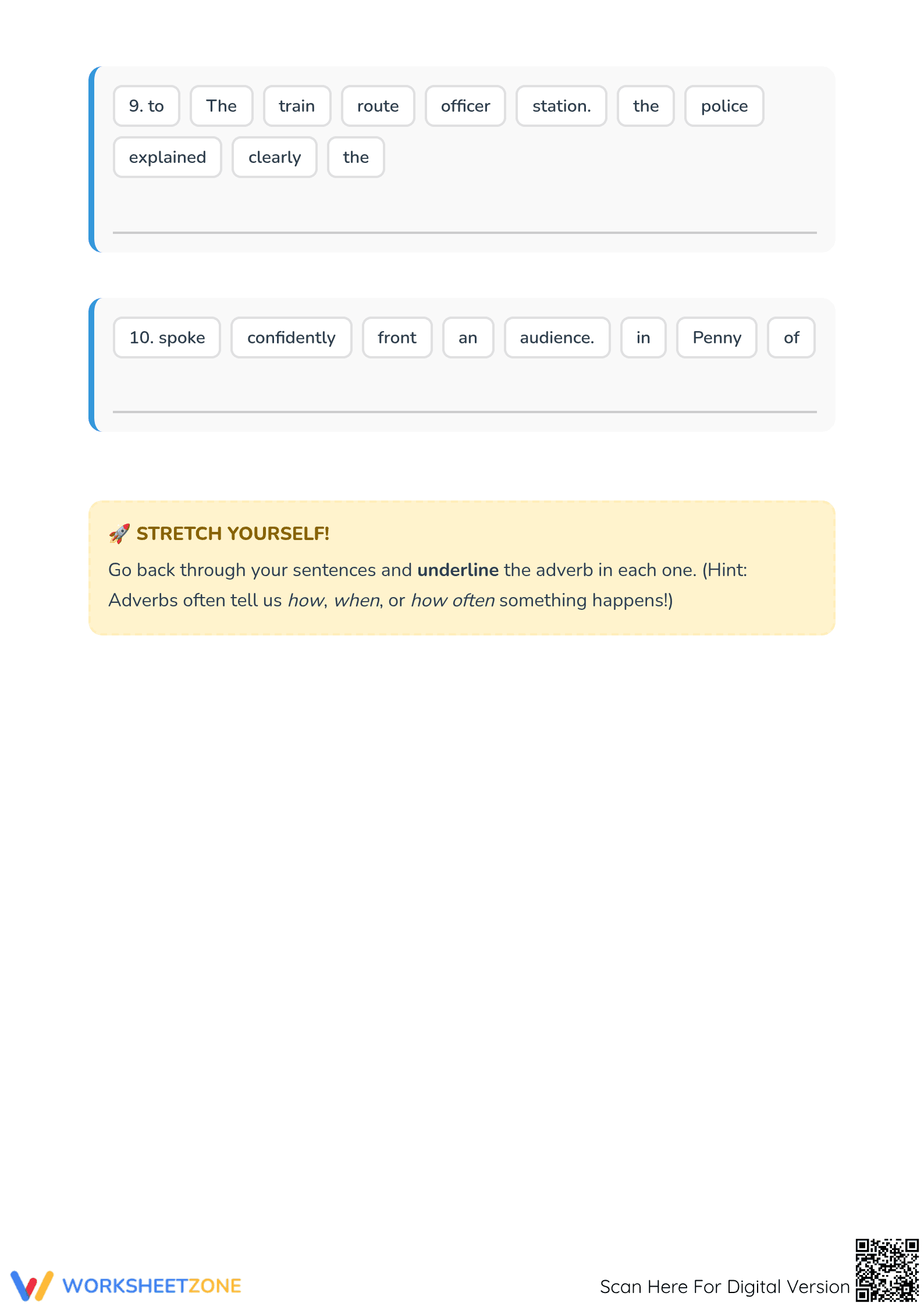
This three-page printable includes 10 sentence scramble tasks where students must rearrange word tiles to create grammatically correct sentences containing adverbs. The layout provides clear, distinct word boxes for each problem and ample writing space on the provided lines. A "Stretch Yourself!" extension activity at the end challenges students to go back and underline the adverb in each completed sentence, reinforcing their understanding of how, when, or how often something happens. A complete answer key is provided for quick grading.
- Guided practice: The first few sentences feature familiar vocabulary and straightforward subject-verb-adverb structures, allowing students to build confidence as they arrange the word tiles.
- Supported practice: As students progress through the 10 problems, sentence complexity increases slightly, requiring them to think critically about where the adverb makes the most sense contextually.
- Independent practice: The final stretch activity requires learners to independently identify and underline the adverbs they just used, cementing their conceptual understanding.
This gradual-release approach ensures students move smoothly from basic unscrambling to active part-of-speech identification.
This resource is aligned to CCSS.ELA-LITERACY.L.3.1.A: Explain the function of nouns, pronouns, verbs, adjectives, and adverbs in general and their functions in particular sentences. It also supports foundational skills in sentence formation and capitalization rules. Both standard codes can be copied directly into lesson plans, IEP goals, or district curriculum mapping tools.
Use this worksheet during your literacy block as a follow-up to direct instruction on adverbs. It works perfectly as an independent center activity or a quiet morning work assignment. As a formative assessment tip, observe where students attempt to place the adverbs during the scramble process; this will reveal their intuitive understanding of syntax. Most third graders will complete the 10 sentences and the extension activity in 15 to 20 minutes.
This activity is designed for third-grade students needing focused practice with parts of speech and sentence construction. It is easily differentiated for English Language Learners by having them work with a peer to read the scrambled words aloud before writing. Pair this worksheet with a classroom anchor chart detailing the differences between adjectives and adverbs for maximum instructional impact.
Mastering parts of speech is a critical component of early elementary literacy. This worksheet targets CCSS.ELA-LITERACY.L.3.1.A, helping students explain the function of adverbs in particular sentences through hands-on sentence construction. According to Fisher & Frey (2014), providing students with structured tasks like sentence unscrambling significantly improves their ability to internalize grammar rules and apply them to independent writing. When learners actively manipulate word order, they develop a deeper cognitive map of syntax compared to passive reading exercises. By combining the physical arrangement of words with the targeted identification of adverbs, this resource ensures that students are not just memorizing definitions, but actively applying grammatical concepts in context. This evidence-based approach builds the foundational writing fluency required for success in upper elementary grades and beyond.


