


























Views
Downloads

Sea Animals Reading Comprehension | Grade 1 Essential
Paste this activity's link or code into your existing LMS (Google Classroom, Canvas, Teams, Schoology, Moodle, etc.).
Students can open and work on the activity right away, with no student login required.
You'll still be able to track student progress and results from your teacher account.
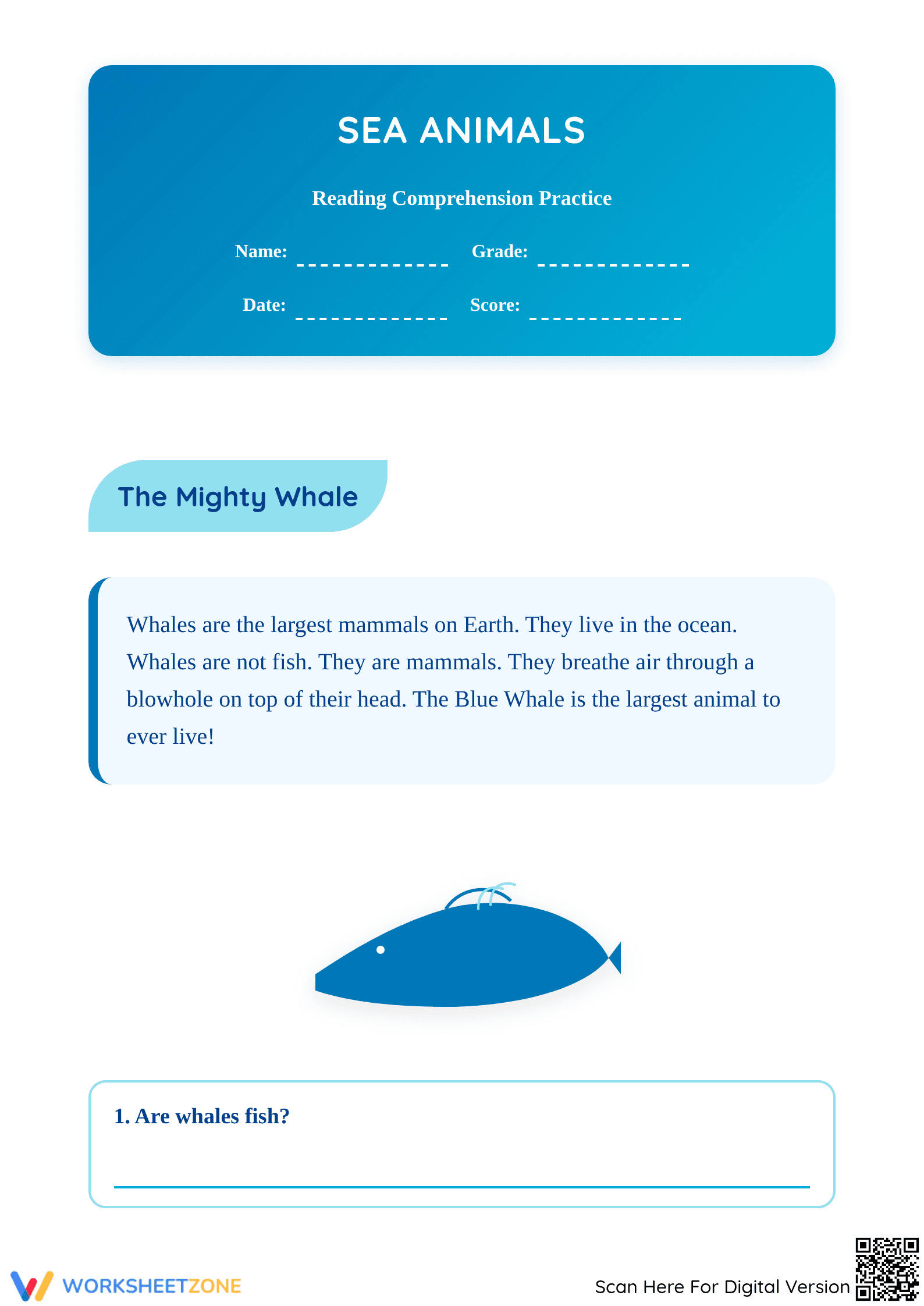
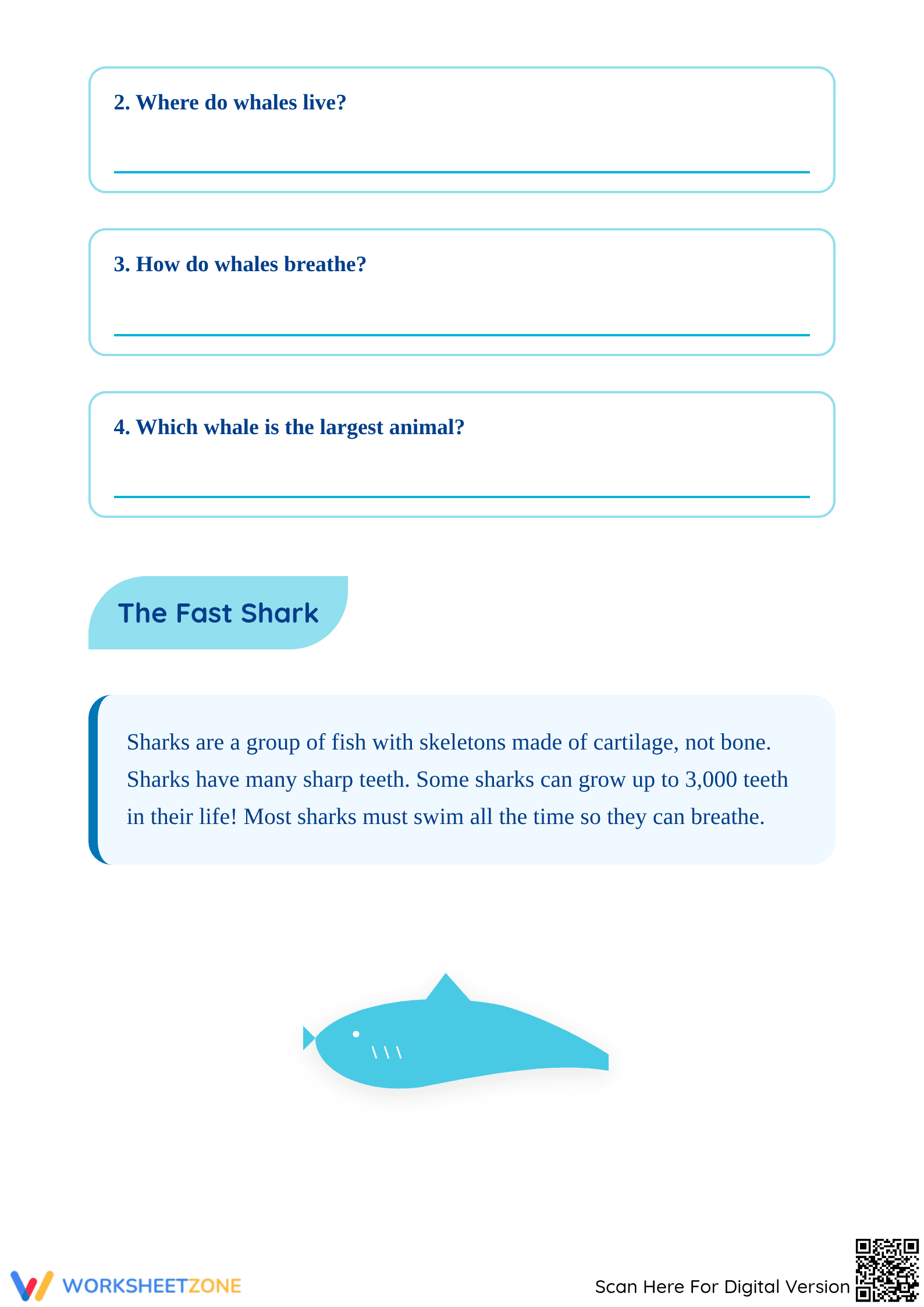
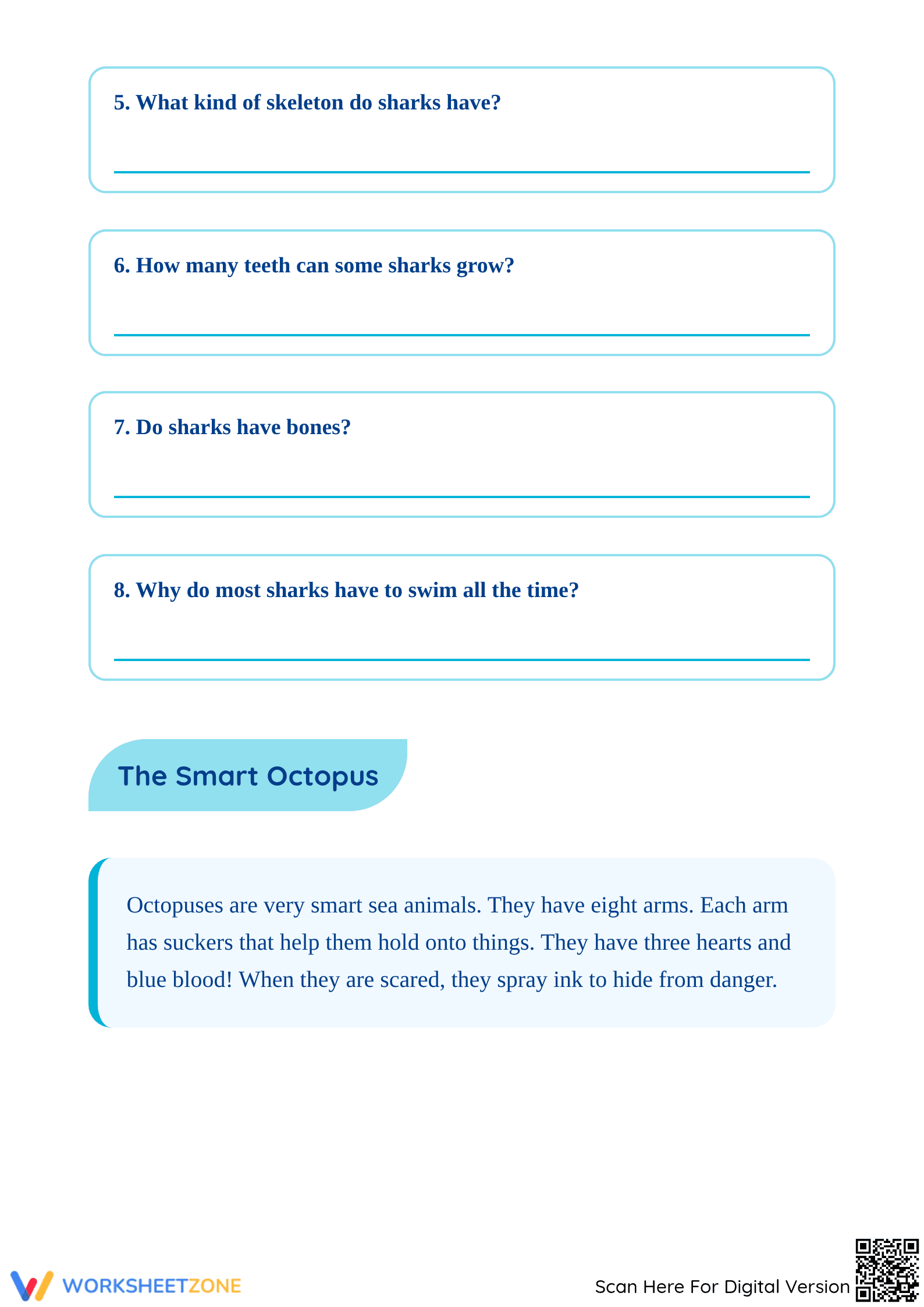
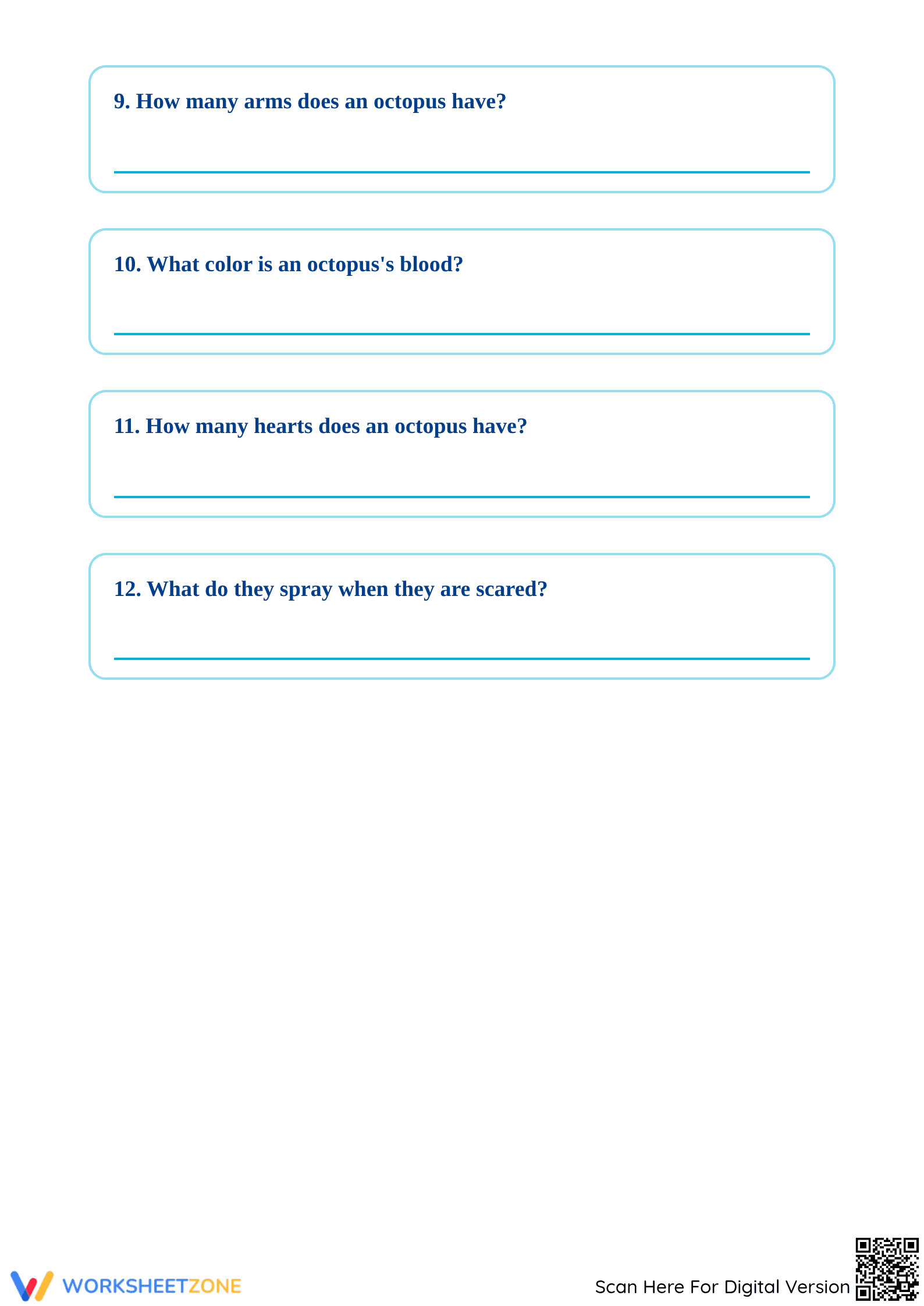
This Grade 1 reading comprehension worksheet helps students master informational text analysis through engaging sea animal facts. Students read short passages about whales, sharks, and octopuses to identify key details and answer text-dependent questions. It provides a structured way to build early literacy skills while exploring marine biology and scientific vocabulary.
At a Glance
- Grade: 1 · Subject: ELA
- Standard:
CCSS.ELA-LITERACY.RI.1.1— Ask and answer questions about key details in a text- Skill Focus: Informational Text Comprehension
- Format: 4 pages · 12 problems · Answer key included · PDF
- Best For: Independent practice or small group literacy
- Time: 20–30 minutes
The packet contains four high-quality pages featuring three distinct reading passages: "The Mighty Whale," "The Fast Shark," and "The Smart Octopus." Each section includes a clear, large-print paragraph followed by four open-ended response boxes. A full answer key is provided to facilitate quick grading or student self-correction, ensuring that learners receive immediate feedback on their comprehension accuracy.
This resource is designed for immediate classroom implementation. Teachers can print the four-page PDF in less than 60 seconds, distribute it to students without additional explanation, and use the included answer key for a 2-minute review session. It serves as an ideal emergency sub plan or a quiet morning work activity that requires zero teacher preparation while maintaining high instructional standards.
Primary alignment is to `CCSS.ELA-LITERACY.RI.1.1`: "Ask and answer questions about key details in a text." The worksheet also supports RI.1.2 by focusing on main topics within the animal descriptions. Both standard codes can be copied directly into lesson plans, IEP goals, or district curriculum mapping tools to ensure compliance with state and national frameworks.
Use this during your "Animals" science unit to integrate literacy across the curriculum. It works best after a direct instruction lesson on identifying facts versus opinions. For formative assessment, observe if students refer back to the text to find specific numbers, such as the octopus's three hearts or the shark's 3,000 teeth. Expected completion time ranges from 20 to 30 minutes depending on writing speed.
This is tailored for first-grade students but is also suitable for advanced Kindergarteners or second graders needing remedial support. It pairs naturally with a classroom anchor chart about sea life or a non-fiction picture book about the ocean. The clear layout is particularly helpful for students who benefit from visual spacing between tasks.
This Grade 1 reading resource targets CCSS.ELA-LITERACY.RI.1.1 by requiring students to extract specific informational details from non-fiction passages. By focusing on high-interest topics like marine life, the worksheet leverages the interest effect in early literacy, which has been shown to improve reading stamina and comprehension accuracy in primary grades. According to Fisher & Frey (2014), providing students with structured opportunities to answer text-dependent questions is a critical component of the gradual release of responsibility model. This 12-task set ensures that students practice evidence-based writing in a scaffolded environment. The inclusion of clear headers and focused questions aligns with best practices for informational text instruction, helping young learners distinguish between different subjects within a single thematic unit. This resource provides the repetition necessary for mastery of foundational reading standards while keeping engagement high through biological facts.


