


























Views
Downloads
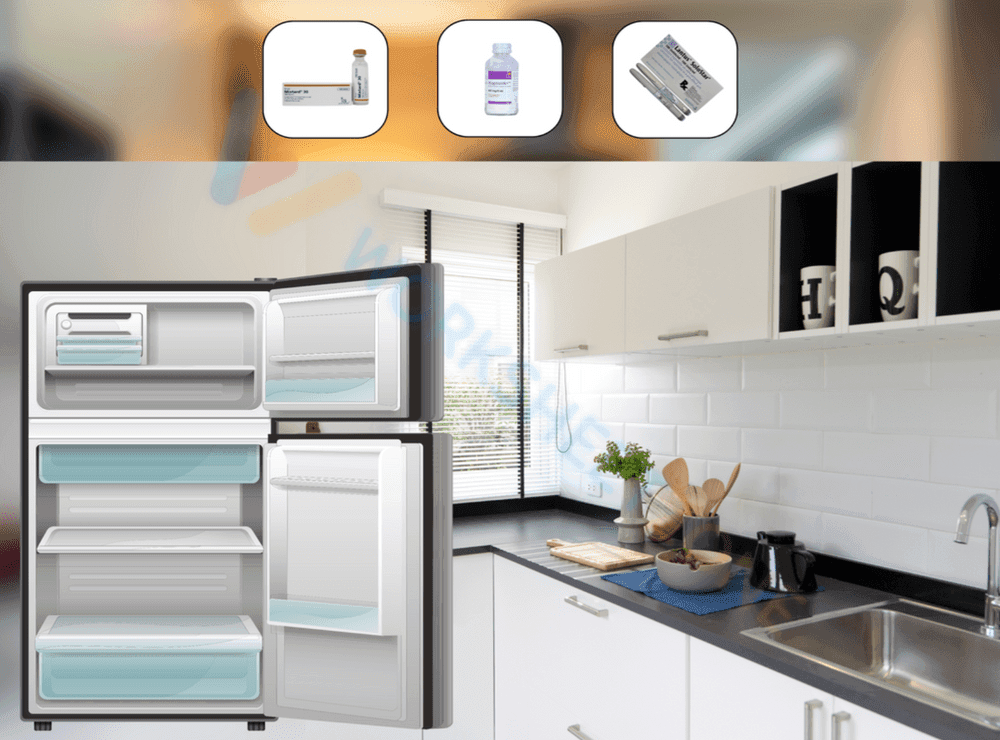

Medicine Storage Safety Worksheet | Grade 2 Essential
Paste this activity's link or code into your existing LMS (Google Classroom, Canvas, Teams, Schoology, Moodle, etc.).
Students can open and work on the activity right away, with no student login required.
You'll still be able to track student progress and results from your teacher account.
This Grade 2 health worksheet focuses on the critical life skill of medicine storage safety. Students learn to distinguish between medications that require refrigeration and those that stay at room temperature. By correctly placing items in a kitchen setting, learners develop foundational safety habits that prevent medication errors and ensure product efficacy.
At a Glance
- Grade: 2 · Subject: Health & Life Skills
- Standard:
NHES.7.2.1— Demonstrate healthy practices and behaviors to maintain or improve personal health.- Skill Focus: Medicine Storage Safety
- Format: 1 page · 3 problems · Answer key included · PDF
- Best For: Health safety lessons and life skills
- Time: 5–10 minutes
This single-page resource features a high-quality visual of a modern kitchen, including an open refrigerator and countertop space. At the top, students find 3 distinct medication items, such as insulin vials and liquid prescriptions. The worksheet is designed for either digital interaction or as a cut-and-paste activity. A clear answer key is provided to help teachers or parents verify correct placement quickly.
Zero-Prep Workflow
- Print: Select the single-page PDF and print in color to ensure students can read the labels on the medicine bottles (30 seconds).
- Distribute: Hand out the sheets along with scissors and glue if using as a physical sorting task (1 minute).
- Review: Use the included answer key to facilitate a quick class discussion about why certain medicines need the cold (1 minute).
Standards Alignment
The primary standard addressed is `NHES.7.2.1`, which requires students to demonstrate healthy practices and behaviors to maintain or improve personal health. By identifying the correct storage environment for different medications, students apply safety knowledge to a real-world scenario. This standard code can be copied directly into lesson plans, IEP goals, or district curriculum mapping tools.
How to Use It
Use this worksheet during a unit on home safety or community health. It works best after a brief direct instruction session explaining that some medicines are sensitive to heat. As a formative assessment, observe whether students recognize the refrigerator icon as the designated spot for the insulin-style vials. Expected completion time is 5 to 10 minutes.
Who It's For
This resource is tailored for second-grade students but is highly effective for Special Education (SPED) life skills classrooms. It provides a concrete, visual way to practice daily living tasks. Pair this with a classroom discussion about never touching medicine without an adult's supervision to reinforce comprehensive safety.
According to research by Fisher & Frey (2014) on the gradual release of responsibility, visual scaffolds like this sorting task are essential for moving students from conceptual understanding to practical application. The `NHES.7.2.1` standard emphasizes that health literacy begins with the ability to perform health-enhancing behaviors. This worksheet provides 3 specific opportunities for students to practice the plain-English skill of identifying safe storage locations for household items. By simulating a kitchen environment, the activity reduces the cognitive load required to translate classroom theory into home-based safety habits. This resource serves as a reliable tool for documenting student progress toward health-related IEP goals or state-mandated safety benchmarks. It ensures that students can demonstrate mastery of environmental safety protocols in a controlled, academic setting before applying them in real-world contexts.


