


























Views
Downloads
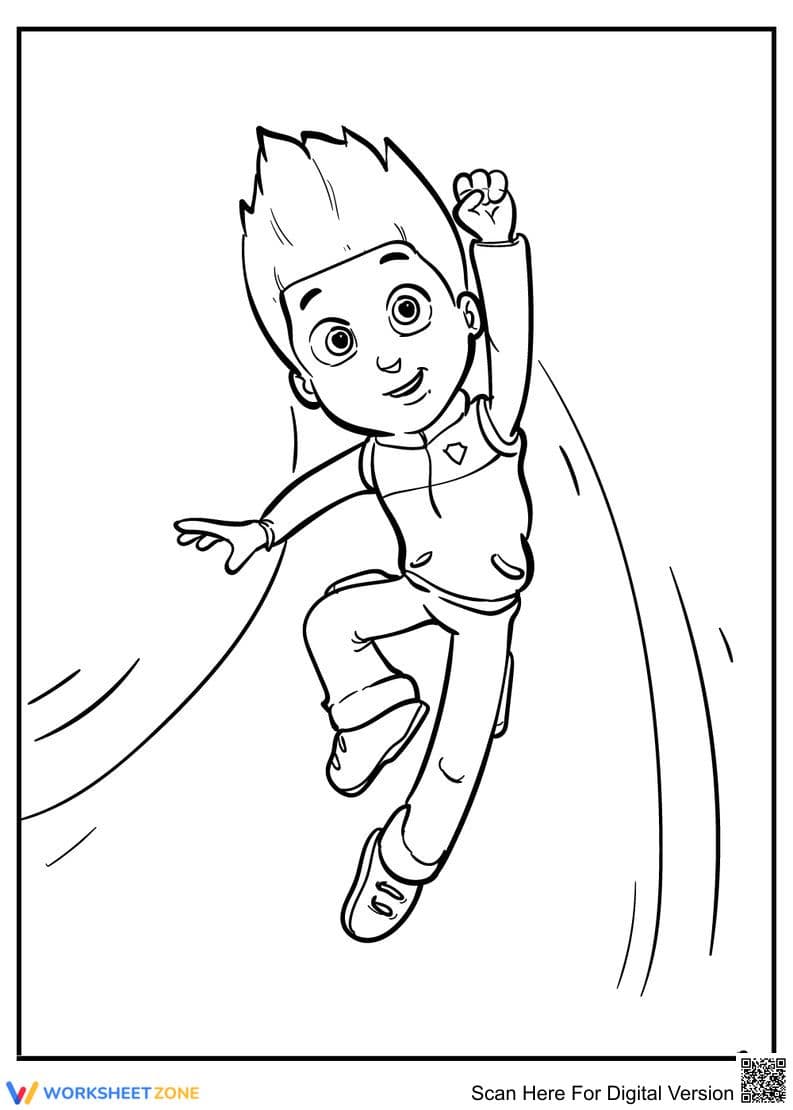

Ryder Paw Patrol Coloring Page | Essential Printable
Paste this activity's link or code into your existing LMS (Google Classroom, Canvas, Teams, Schoology, Moodle, etc.).
Students can open and work on the activity right away, with no student login required.
You'll still be able to track student progress and results from your teacher account.
This Ryder Paw Patrol coloring page provides Kindergarten students with a high-interest activity to develop essential fine motor control and hand-eye coordination. By focusing on the leader of the Paw Patrol, children remain engaged while practicing the precise movements required for future writing success. It offers a creative outlet that bridges the gap between play and foundational academic skills.
At a Glance
- Grade: Kindergarten · Subject: Arts & Crafts
- Standard:
VA:Cr1.1.Ka— Engage in self-directed, creative art-making and exploration of materials- Skill Focus: Fine motor development
- Format: 1 page · 1 task · Answer key not applicable · PDF
- Best For: Morning work or early finishers
- Time: 15–20 minutes
The download features a single-page, high-resolution line drawing of Ryder in an action pose. The bold outlines are specifically designed for young learners who are still mastering spatial awareness and boundary control. There are no complex backgrounds, allowing the student to focus entirely on the central character. This clean layout ensures that the printing process is efficient and uses minimal ink while providing a professional-grade resource for the classroom.
The zero-prep workflow for this resource is designed for maximum efficiency in a busy classroom environment. First, print the single PDF page (30 seconds). Second, distribute the sheets along with crayons or colored pencils to your students (1 minute). Third, review the completed work to observe grip strength and color choice (30 seconds). Total teacher preparation time is under two minutes, making this an ideal solution for unexpected schedule changes or as a reliable sub-plan component.
This resource aligns with VA:Cr1.1.Ka, which emphasizes the importance of self-directed art-making in early childhood. While primarily an artistic endeavor, the activity also supports CCSS.ELA-LITERACY.L.K.1.A by strengthening the small muscle groups in the hand necessary for printing letters. Both standard codes can be copied directly into lesson plans, IEP goals, or district curriculum mapping tools to justify the inclusion of creative coloring within the instructional day.
Use this worksheet during the "settling in" period at the start of the school day to help students transition into a focused mindset. It also serves as an excellent formative assessment tool; observe how students hold their coloring implements to identify those who may need additional occupational therapy support or pencil grips. Expect most Kindergarten students to spend approximately 15 to 20 minutes completing the page with full color.
This printable is designed for Kindergarten students but is appropriate for any early childhood setting, including Pre-K and Grade 1. It is particularly effective for students who respond well to character-based motivation. Pair this worksheet with a Paw Patrol read-aloud or a short lesson on leadership and community helpers to create a more comprehensive thematic unit.
Research by Fisher & Frey (2014) highlights the importance of purposeful play and creative expression in developing the foundational skills necessary for literacy. Activities like this Ryder coloring page are not merely "filler" but serve as critical opportunities for students to practice the tripod grip and spatial reasoning. According to the NAEP, students who engage in regular fine motor practice show higher readiness for formal writing instruction in later primary grades. This worksheet provides a structured environment for that practice, utilizing a high-interest character to maintain student stamina. By integrating standard VA:Cr1.1.Ka, educators ensure that creative exploration is recognized as a valid instructional component. The 1-page format ensures that the cognitive load remains focused on the physical task of coloring rather than navigating complex instructions, which is essential for the Kindergarten developmental stage.


