


























Views
Downloads

Printable Rote Counting Worksheet | Grade K Math
Paste this activity's link or code into your existing LMS (Google Classroom, Canvas, Teams, Schoology, Moodle, etc.).
Students can open and work on the activity right away, with no student login required.
You'll still be able to track student progress and results from your teacher account.
This rote counting worksheet provides a clear and engaging pathway for early learners to build foundational numeracy skills. By focusing on the numbers one through five, the packet helps students transition from rote memorization to meaningful object-counting and sequence completion. It is designed to foster confidence in Kindergarten students as they begin their mathematical journey.
At a Glance
- Grade: Kindergarten · Subject: Math
- Standard:
CCSS.MATH.CONTENT.K.CC.B.4— Understand the relationship between numbers and quantities; connect counting to cardinality.- Skill Focus: Rote counting and object-to-number correspondence (1-5)
- Format: 4 pages · 8 problems · Answer key included · PDF
- Best For: Daily morning work or small-group instruction
- Time: 15–20 minutes
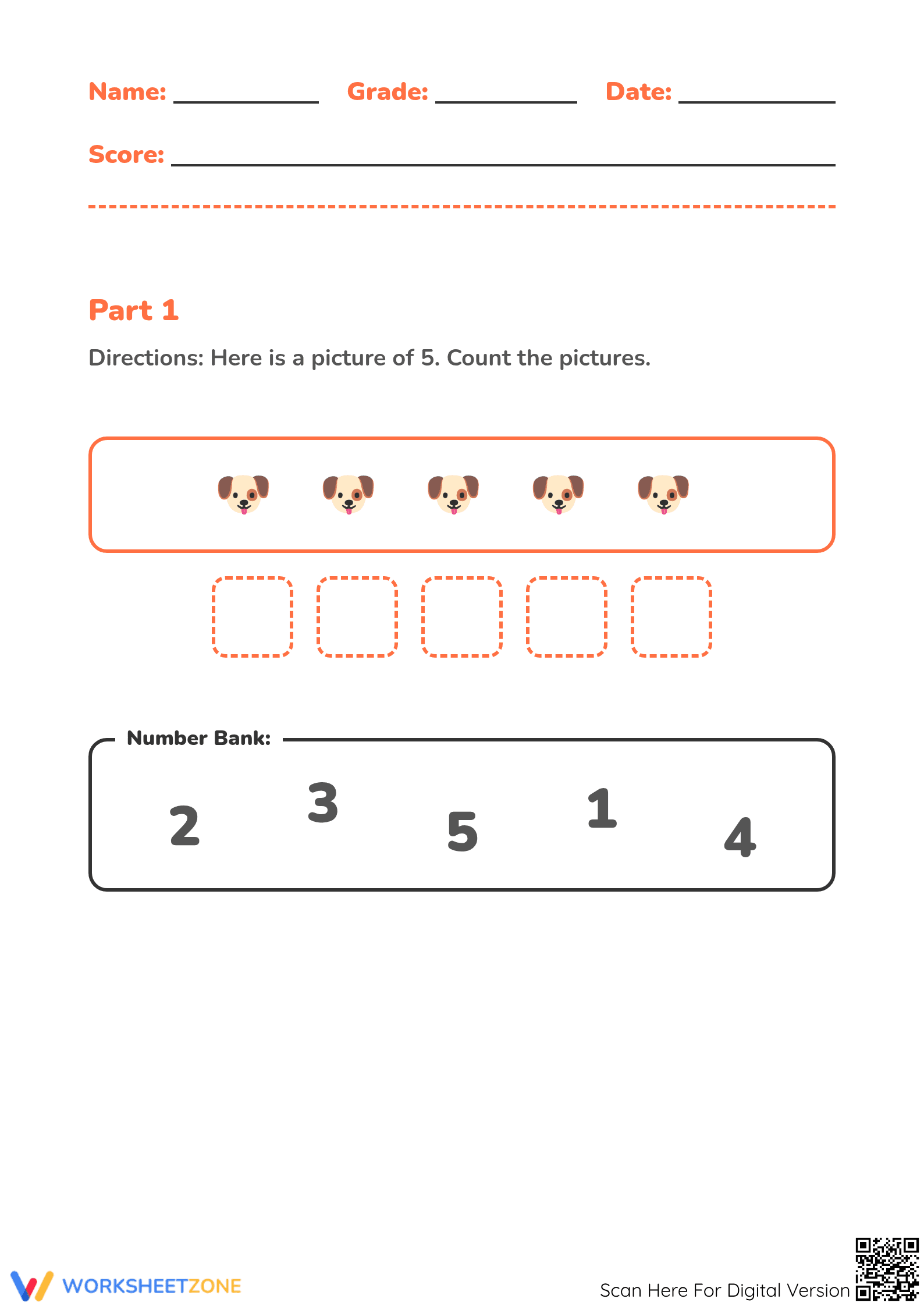
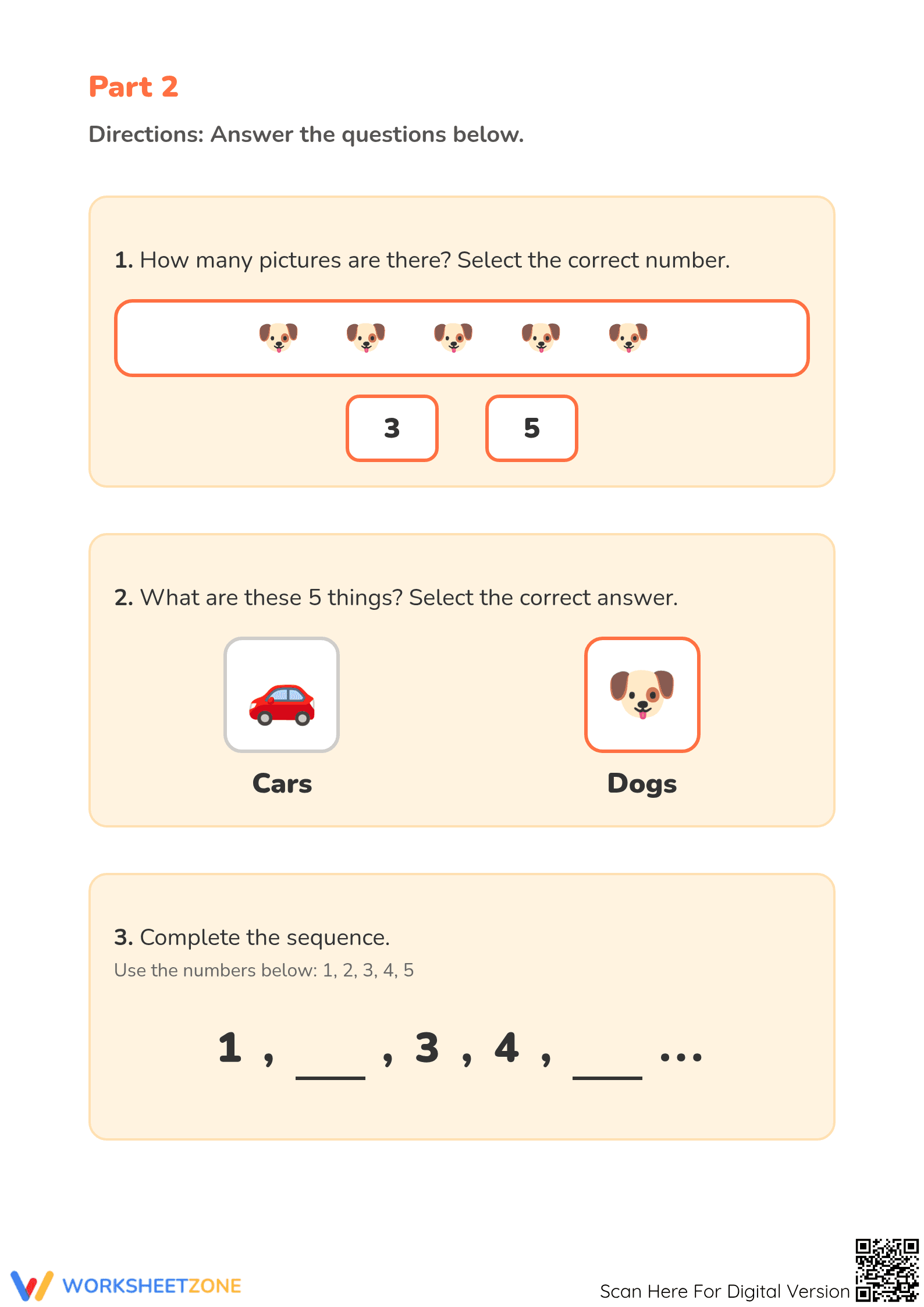
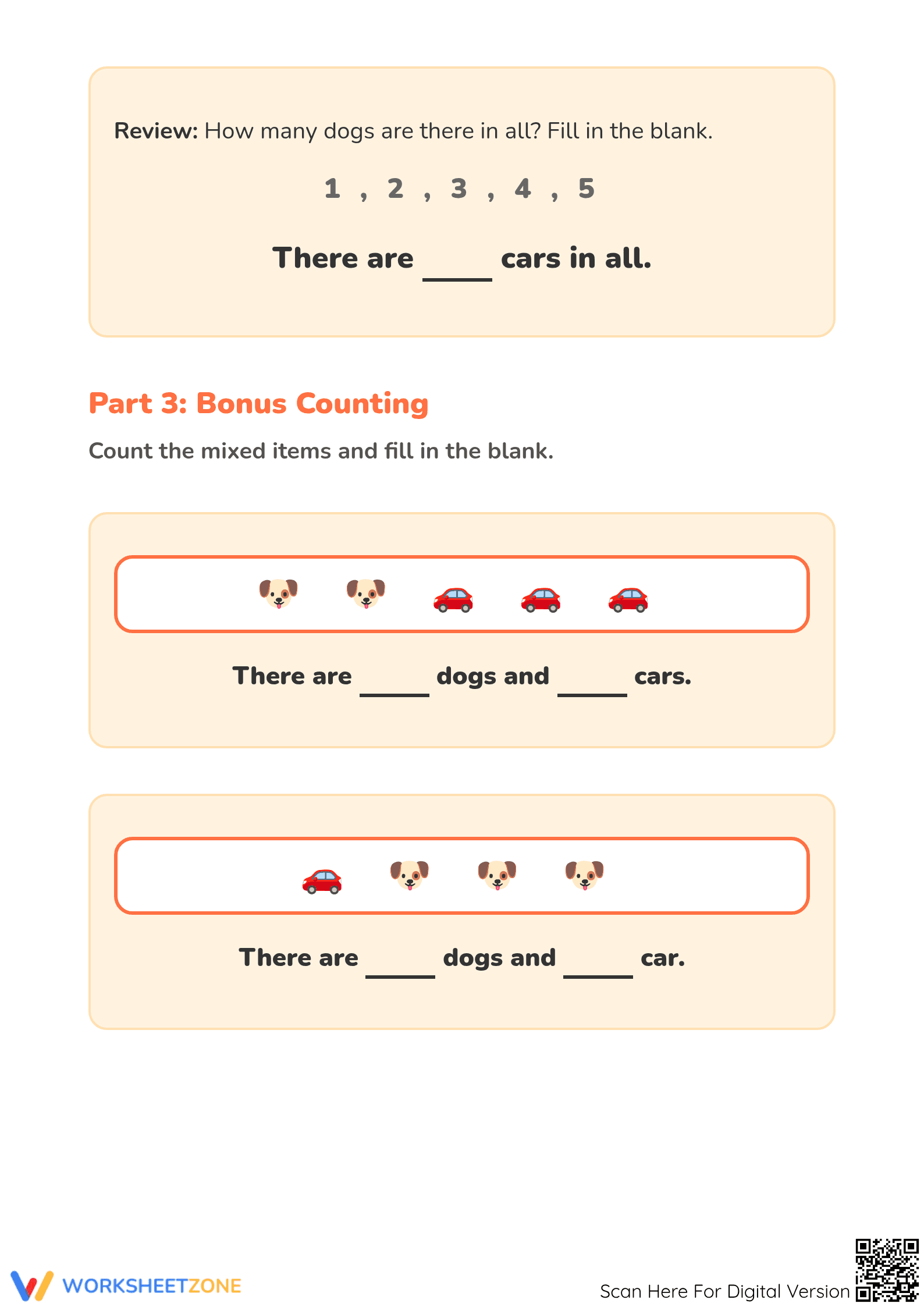
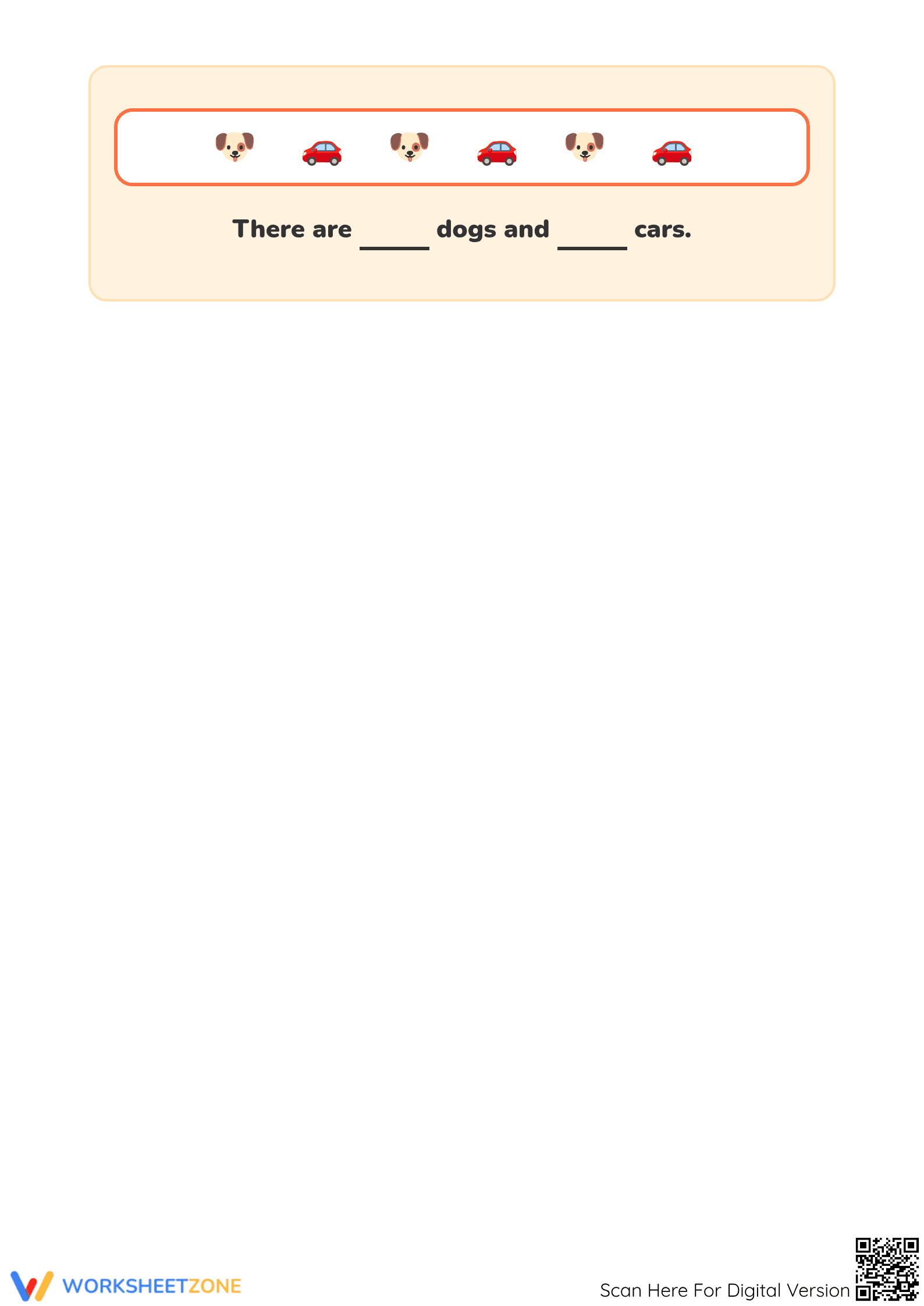
This comprehensive four-page packet includes a variety of task types to keep students engaged. Part one introduces basic counting with a number bank for support. Part two moves into multiple-choice identification and sequence completion. The final two pages provide Bonus Counting tasks where students must differentiate between two different objects, dogs and cars, within a group to reinforce one-to-one correspondence and categorization skills.
Zero-Prep Workflow
Teachers can implement this resource in under two minutes. First, print the four-page PDF for your class (60 seconds). Second, distribute the worksheets to students for independent or guided practice during your math block (30 seconds). Third, review the completed work using the included visual answer keys to provide immediate feedback (30 seconds). This workflow is perfect for substitute plans or quick formative assessments during the first weeks of school.
Standards Alignment
The standard `CCSS.MATH.CONTENT.K.CC.B.4` requires students to understand that each object has one and only one number name. This worksheet reinforces this concept by having students count distinct icons and write or select the corresponding numeral. Both standard codes can be copied directly into lesson plans, IEP goals, or district curriculum mapping tools to ensure instructional compliance with state frameworks.
How to Use It
Use this worksheet immediately after a direct instruction lesson on numbers 1-5 to reinforce the concepts taught. As a formative assessment tip, observe whether students are physically touching each image as they count; this indicates they are successfully developing the one-to-one correspondence skill. Most Kindergarten students will complete the entire packet within a standard 20-minute math block or as part of a rotation station.
Who It's For
This resource is ideal for Kindergarten students or Preschool learners who are ready for early numeracy challenges. It is also a valuable tool for ESL students who are learning English number names while practicing visual counting. Consider pairing it with physical manipulatives like counting bears for a multi-sensory experience that supports learners who require additional tactile feedback during their math practice.
Research from RAND AIRS 2024 emphasizes that early mastery of one-to-one correspondence is a primary predictor of future mathematical success. When students can accurately count objects and relate them to symbolic numerals, they build the cognitive architecture necessary for addition and subtraction. This worksheet aligns with the Fisher & Frey (2014) model of gradual release, providing scaffolded support through number banks before requiring more independent object-counting. By targeting CCSS.MATH.CONTENT.K.CC.B.4, this resource ensures that learners are not just memorizing a sequence of sounds but are genuinely understanding the magnitude and value of numbers. Educators can use these eight structured tasks to identify students who may need additional intervention with number recognition or sequential order. This evidence-based approach to early numeracy provides a robust foundation for all subsequent K-1 math standards, ensuring students meet their developmental milestones with confidence and accuracy.


