


























Views
Downloads

Essential Root Words & Suffixes Worksheet | Grade 1 ELA
Paste this activity's link or code into your existing LMS (Google Classroom, Canvas, Teams, Schoology, Moodle, etc.).
Students can open and work on the activity right away, with no student login required.
You'll still be able to track student progress and results from your teacher account.
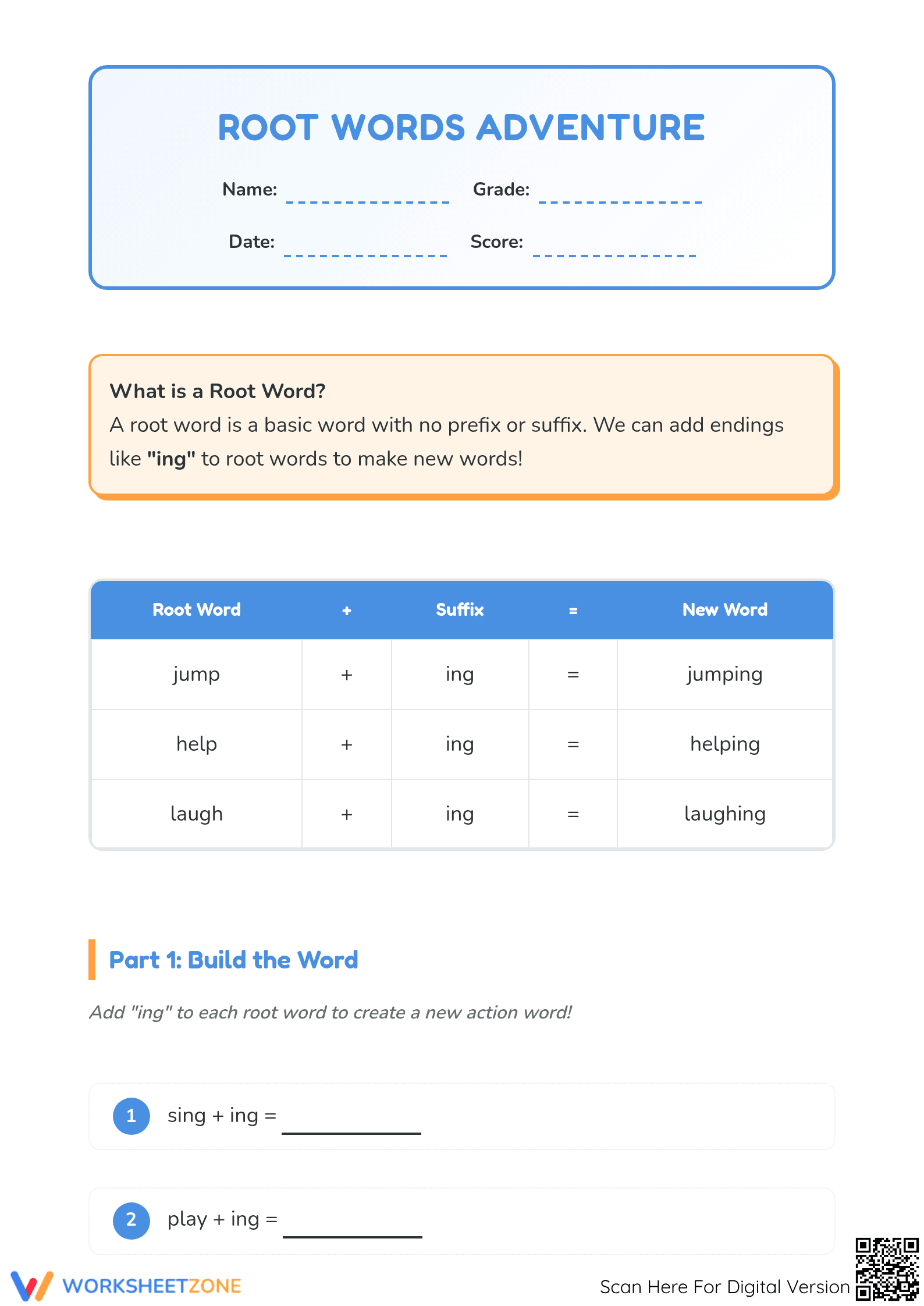
Students master the fundamentals of morphology with this Grade 1 English Language Arts resource. This printable packet focuses on identifying root words and applying the inflectional suffix "-ing" to create action words. By breaking down words into base components, learners build the linguistic foundations necessary for reading fluency and vocabulary acquisition.
At a Glance
- Grade: 1 · Subject: ELA
- Standard:
L.1.4.C— Identify frequently occurring root words and their inflectional forms such as looking- Skill Focus: Root Words and Suffixes (-ing)
- Format: 4 pages · 21 problems · Answer key included · PDF
- Best For: Independent practice and phonics reinforcement
- Time: 15–25 minutes
This comprehensive 4-page PDF contains three distinct learning segments designed to reinforce lexical patterns. It begins with an instructional header defining root words, followed by an illustrative table showing how "jump," "help," and "laugh" transform. The packet includes a complete answer key for rapid grading or student self-correction, ensuring immediate feedback during the learning process.
Skill Progression
- Guided Practice (Example Table): Students review three pre-completed examples to understand the structural logic of combining a base word with an ending.
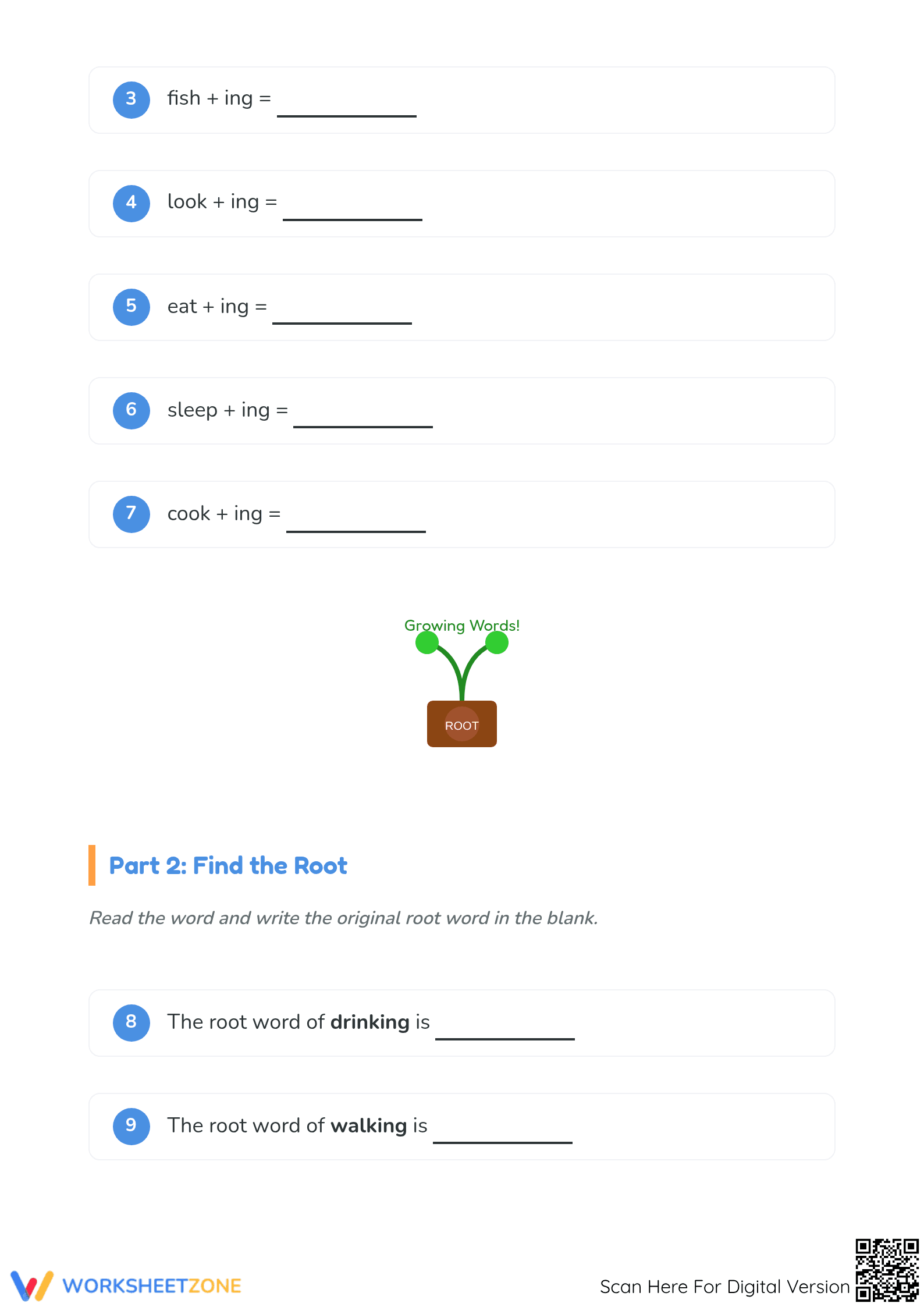
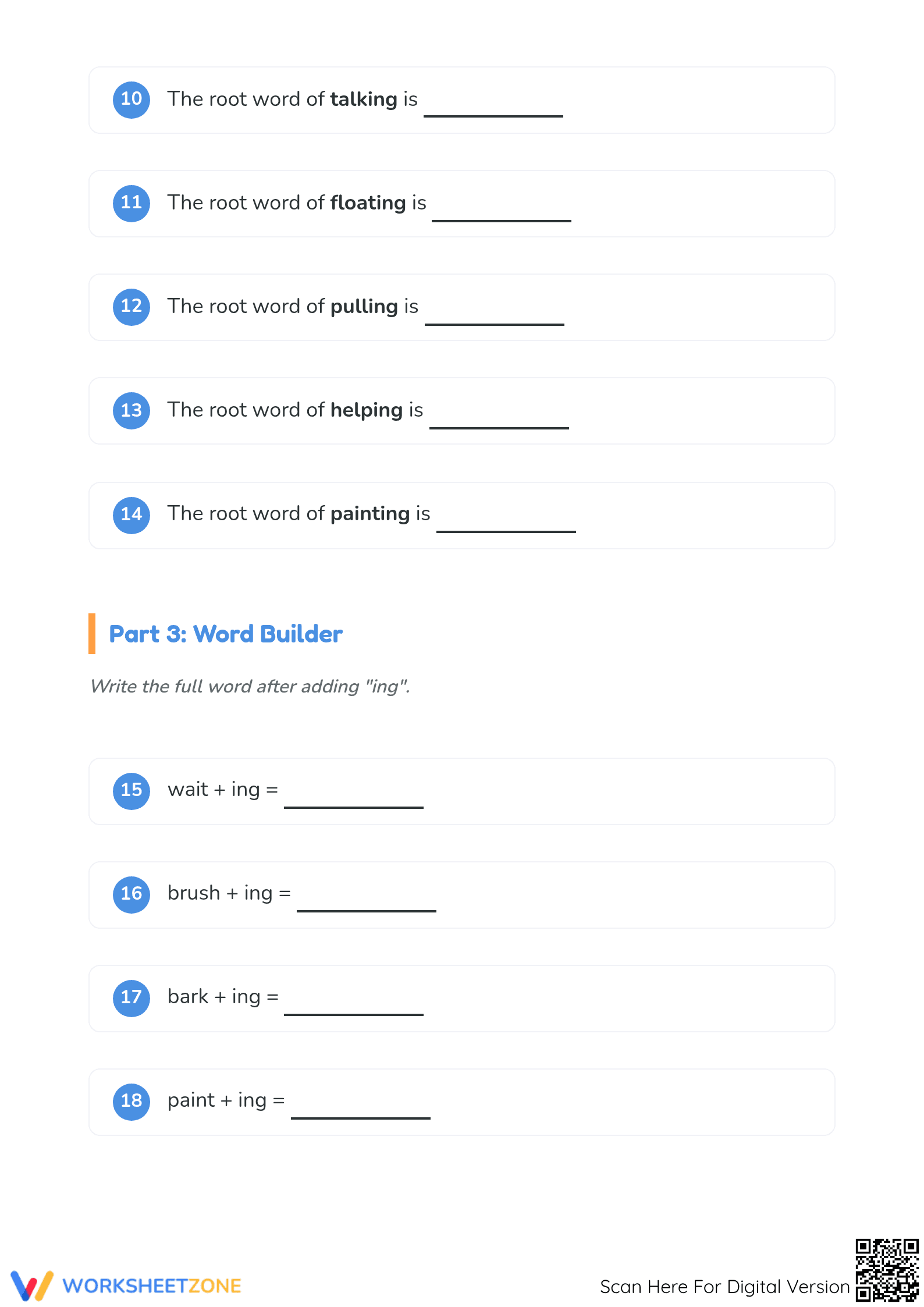
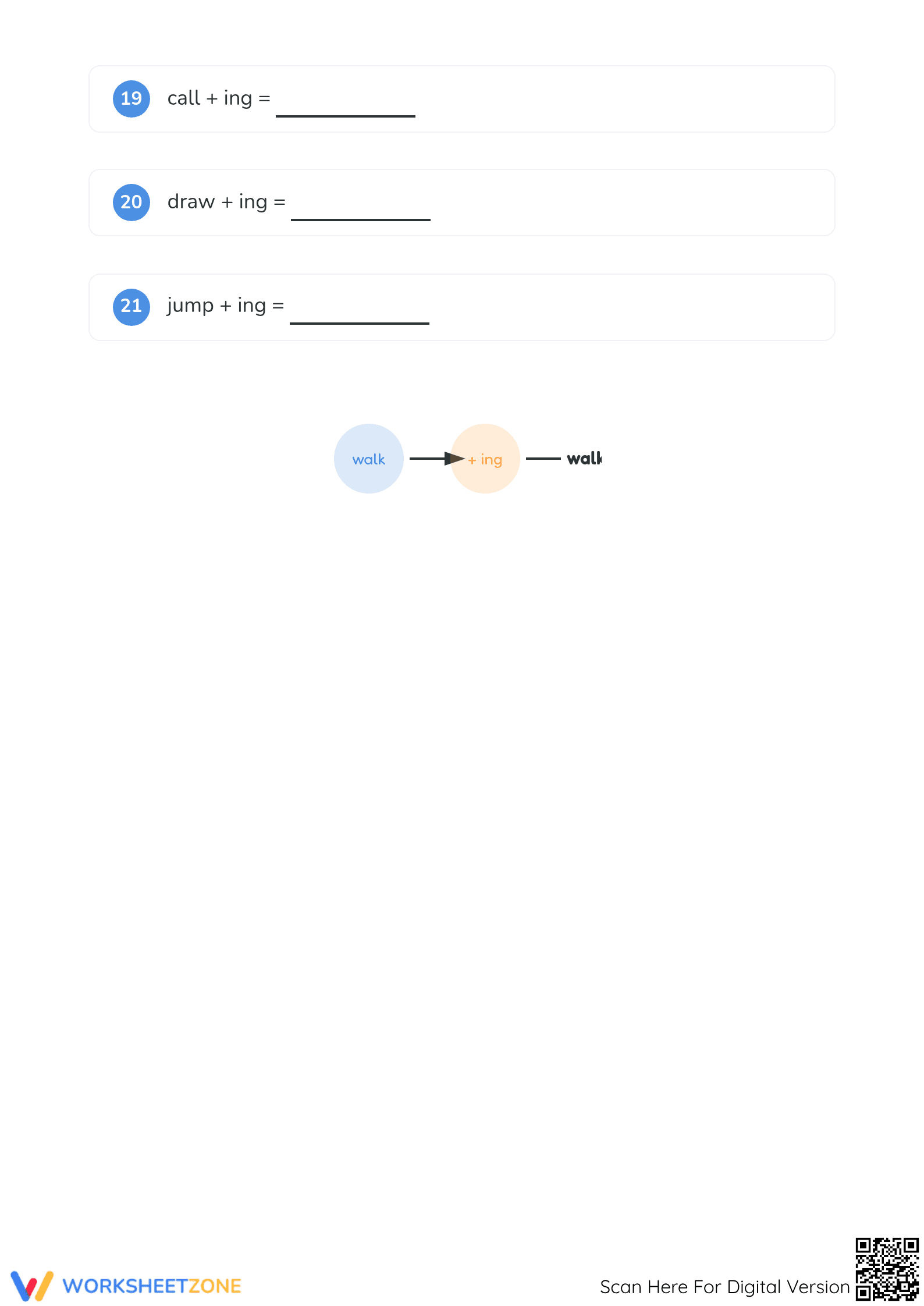
- Supported Practice (Part 1 & 3): Learners complete 14 word-building tasks where the root and suffix are provided, requiring them to synthesize the new action word correctly.
- Independent Practice (Part 2): Students encounter 7 challenges where they must isolate the original root word from a given inflected form like "drinking" or "talking."
This sequence follows a gradual-release model, moving from explicit modeling to independent analysis of word parts.
Standards Alignment
The activities are precisely aligned to `CCSS.ELA-LITERACY.L.1.4.C`, which requires students to identify frequently occurring root words and their inflectional forms. By practicing both the construction and deconstruction of words, students satisfy the standard's demand for morphological awareness. This standard code can be copied directly into lesson plans, IEP goals, or district curriculum mapping tools.
How to Use It
Use this worksheet during the "independent practice" phase of a grammar lesson after introducing suffixes. It serves as an excellent formative assessment; teachers should observe if students are correctly identifying the root word in Part 2, as this indicates a deep understanding of word structure. The expected completion time for all 21 tasks is approximately 20 minutes.
Who It's For
This resource is tailored for first-grade students but serves as a vital intervention tool for second graders needing phonics support. It pairs naturally with a short reading passage containing action verbs or a classroom anchor chart detailing common suffixes. The clear layout is particularly beneficial for students who require structured visual cues.
According to the RAND AIRS 2024 analysis, systematic instruction in morphology during the early elementary years significantly predicts later reading comprehension success. This worksheet targets the L.1.4.C standard by providing 21 high-quality repetitions of root word identification and suffix application. Research from Fisher & Frey (2014) emphasizes that "word solving" strategies, such as breaking words into meaningful parts, allow students to access more complex texts independently. By focusing on the "-ing" suffix, this resource helps Grade 1 students recognize inflectional changes that alter a word's function in a sentence. The transition from building words like "singing" to identifying the root "drink" from "drinking" ensures that learners are not merely memorizing spelling patterns but are developing a flexible understanding of how English words are constructed. This morphological awareness is a key pillar of the Science of Reading, facilitating smoother decoding and enriched vocabulary development across the primary curriculum.


