


























Views
Downloads

Essential Summarizing Worksheet | Grade 4 ELA Literature
Paste this activity's link or code into your existing LMS (Google Classroom, Canvas, Teams, Schoology, Moodle, etc.).
Students can open and work on the activity right away, with no student login required.
You'll still be able to track student progress and results from your teacher account.
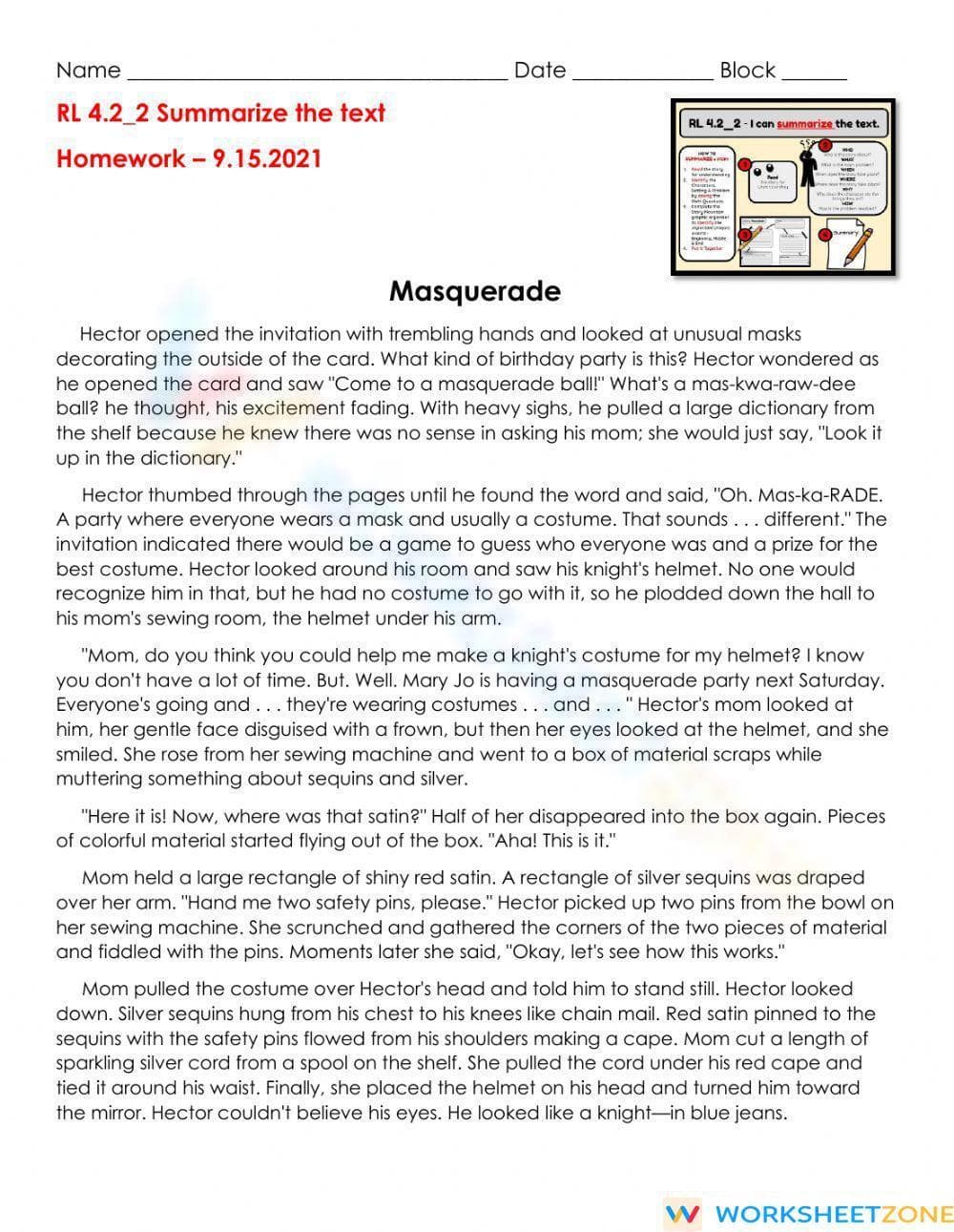
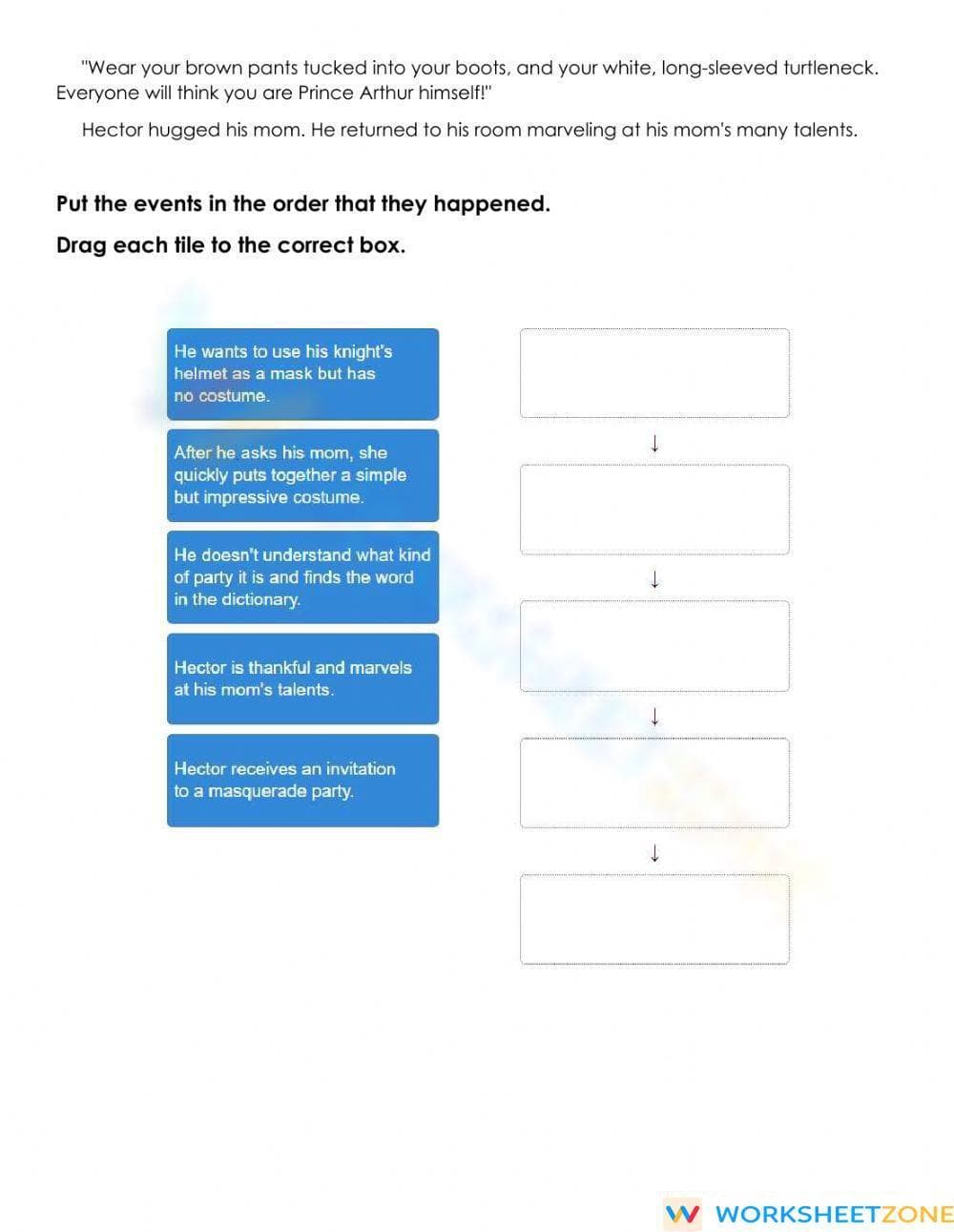
This Grade 4 literature worksheet helps students summarize a narrative by sequencing key plot points. By reading the short story "Masquerade" and identifying the chronological order of events, learners demonstrate their understanding of story structure. It is an essential tool for achieving mastery in reading comprehension skills.
At a Glance
- Grade: 4 · Subject: English Language Arts
- Standard:
CCSS.ELA-LITERACY.RL.4.2— Summarize a narrative story by sequencing five major plot events- Skill Focus: Summarizing and Sequencing
- Format: 2 pages · 5 problems · Answer key included · PDF
- Best For: Homework or independent reading comprehension practice
- Time: 15–20 minutes
What's Inside
This two-page resource includes a complete narrative titled "Masquerade," centered on a character named Hector preparing for a party. The second page features a sequencing activity with five specific event tiles. The layout includes a clear "I can" statement, a vocabulary-rich passage, and a dedicated workspace for organizing events in chronological order. A full answer key is provided to facilitate quick grading or student self-correction.
Skill Progression
- Guided Practice: The narrative provides structured exposure to the plot, allowing students to read and identify themes across the 10-paragraph story.
- Supported Practice: Students analyze 5 individual tiles that represent pivotal moments, using the text as a scaffold for verification.
- Independent Practice: Learners determine the final chronological sequence of all 5 events, demonstrating mastery of narrative structure.
This approach follows the gradual-release model of instruction, providing a clear path from shared reading to independent synthesis.
Standards Alignment
The primary focus of this resource is `CCSS.ELA-LITERACY.RL.4.2`: "Determine a theme of a story, drama, or poem from details in the text; summarize the text." By requiring students to identify and order the most important events, this worksheet directly addresses the summarizing component of the standard. This standard code can be copied directly into lesson plans, IEP goals, or district curriculum mapping tools to ensure instructional alignment.
How to Use It
Use this worksheet after direct instruction on plot structure or summarizing. It is ideal for the independent practice portion of a lesson. Teachers can also use the sequencing task as a formative assessment to observe how well students distinguish between main events and minor details. Expect most students to complete the reading and sequencing activity within 20 minutes.
Who It's For
This resource is designed for Grade 4 students, though it is highly appropriate for Grade 3 students ready for more complex text or Grade 5 students needing a summary review. It pairs naturally with an anchor chart on story elements or a direct instruction lesson on summarizing strategies.
The development of summarizing skills is a critical milestone in upper elementary education, as it requires students to move beyond literal recall toward synthesis. This worksheet aligns with `CCSS.ELA-LITERACY.RL.4.2` by focusing on the plain-English skill of identifying and ordering significant plot points to create a coherent summary. Research from `Fisher & Frey (2014)` highlights the importance of scaffolding complex tasks like summarization through structured practice and clear success criteria. By providing five distinct events to sequence, this resource reduces cognitive load while maintaining rigorous alignment with standard demands. Students who master this skill are better prepared for the analytical requirements of middle school literature. The inclusion of a narrative like "Masquerade" ensures that the skill is practiced in a meaningful context, supporting long-term retention of comprehension strategies. This evidence-based approach to literacy instruction ensures that Grade 4 students build a solid foundation for academic success.


