


























Views
Downloads
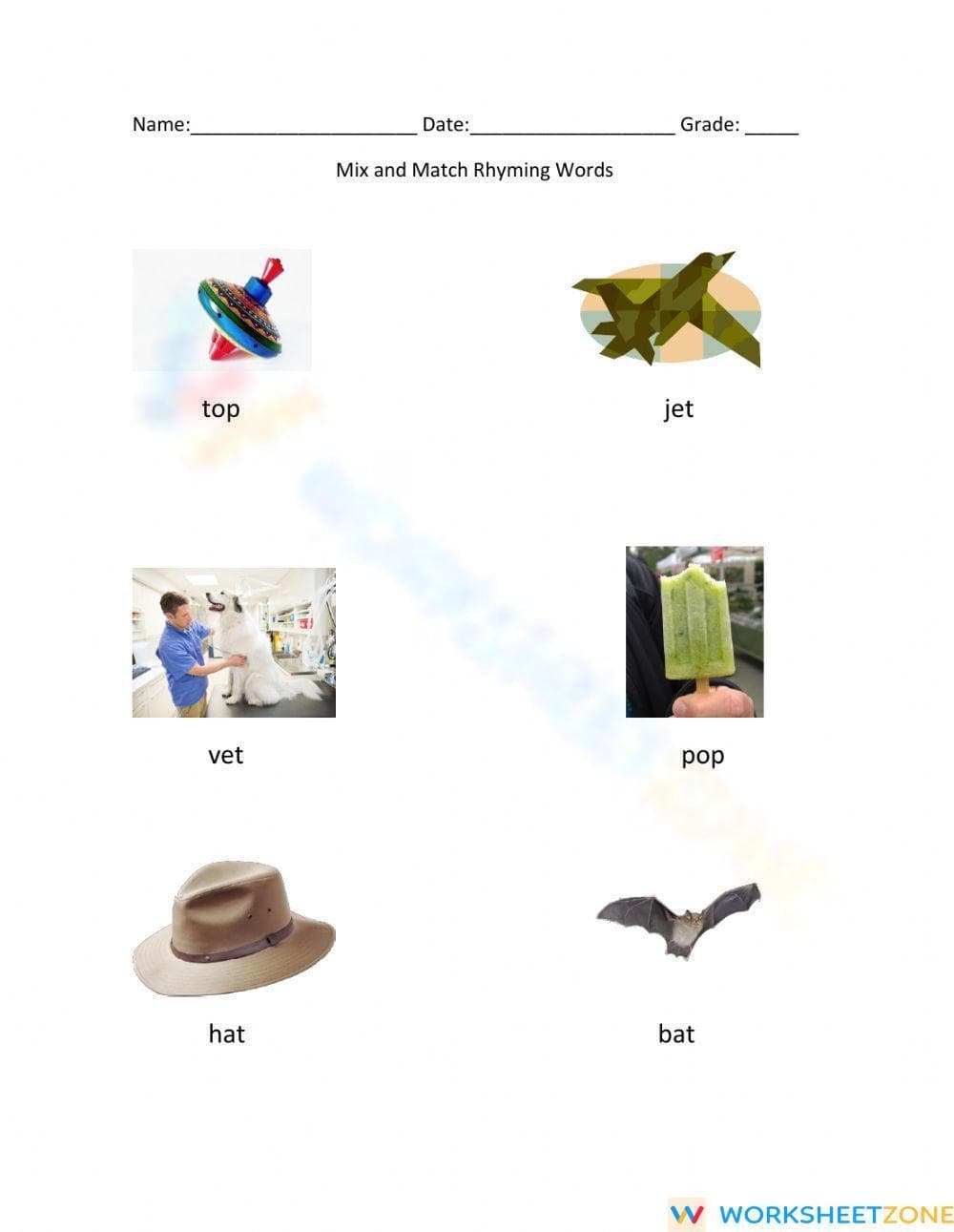
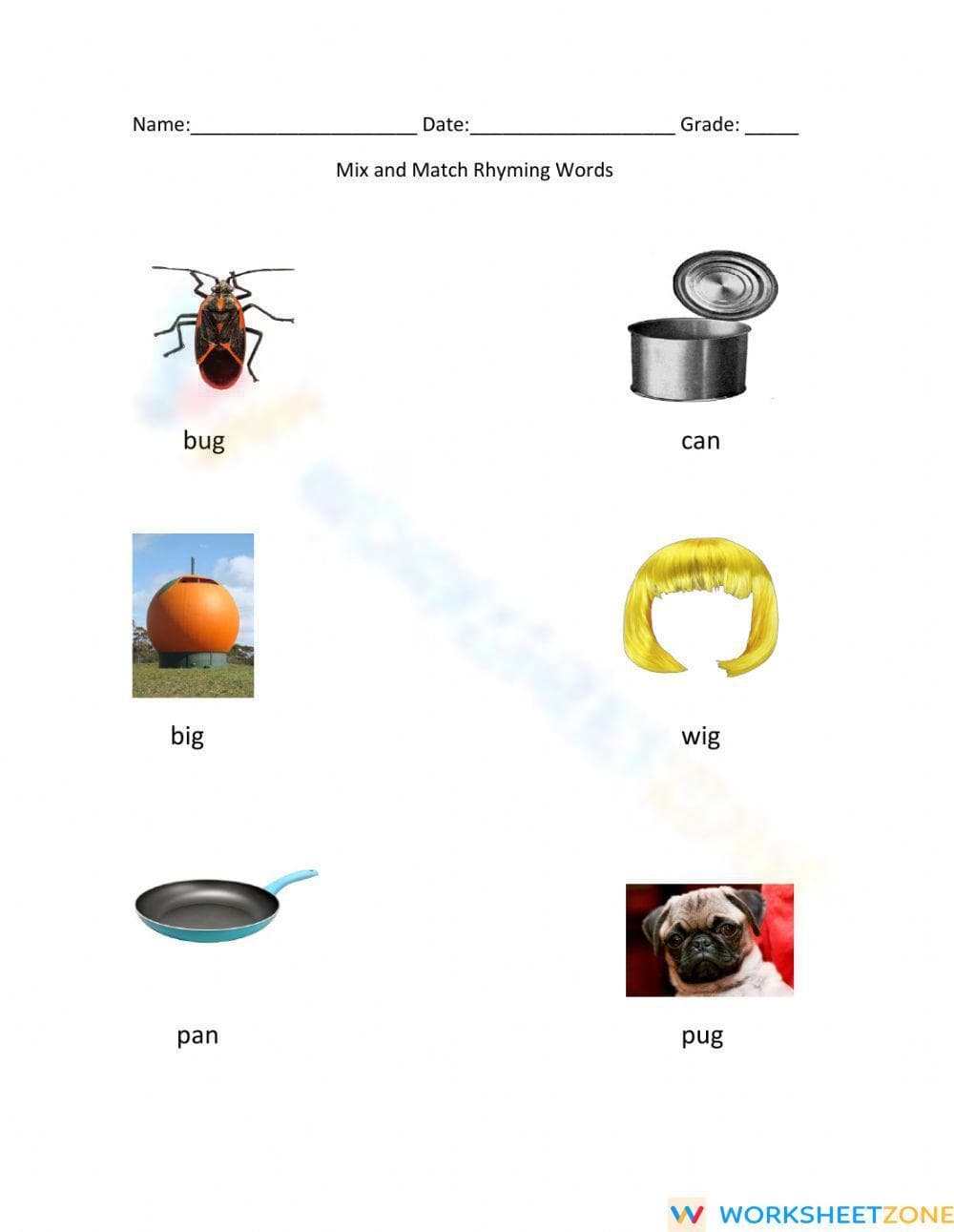

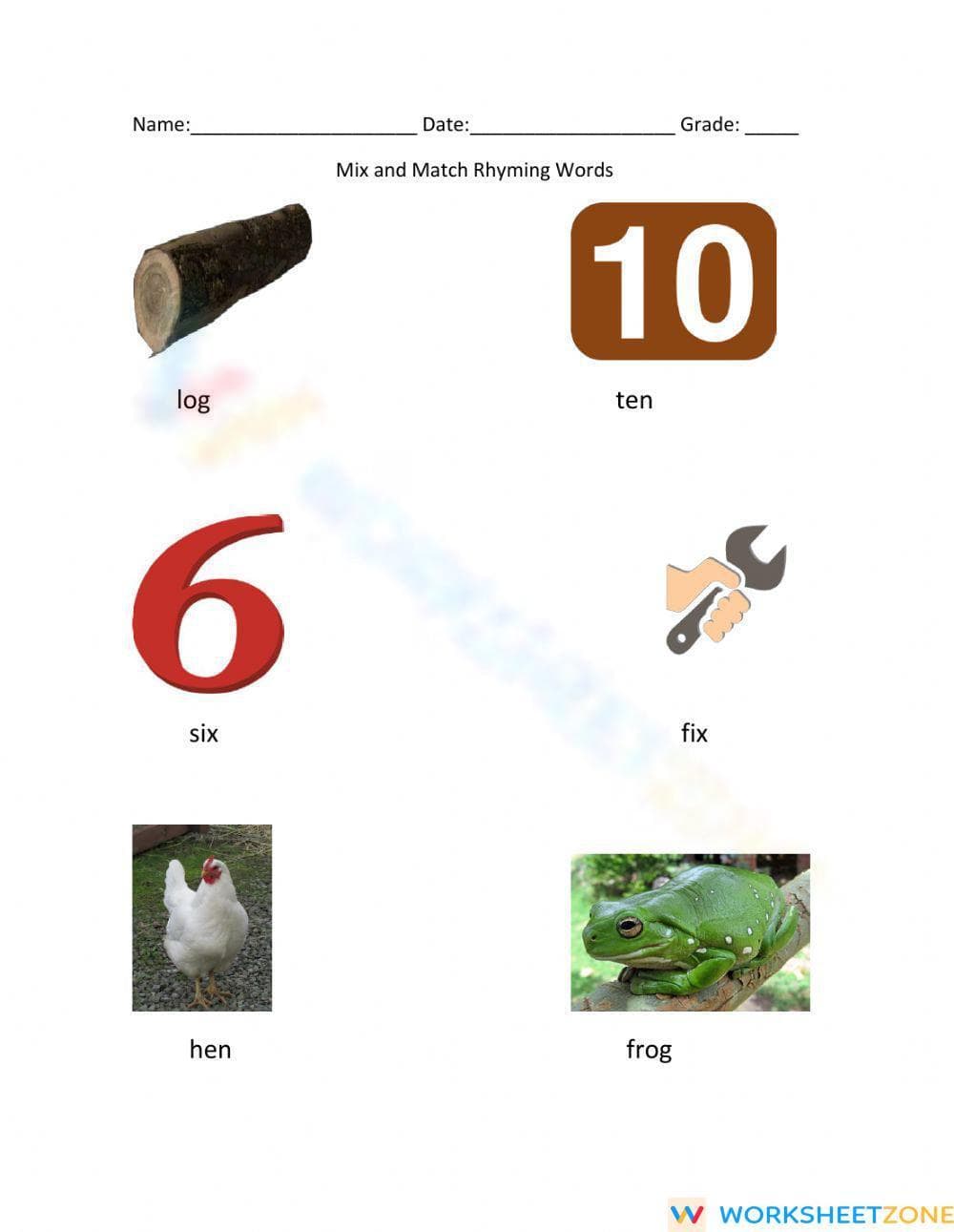
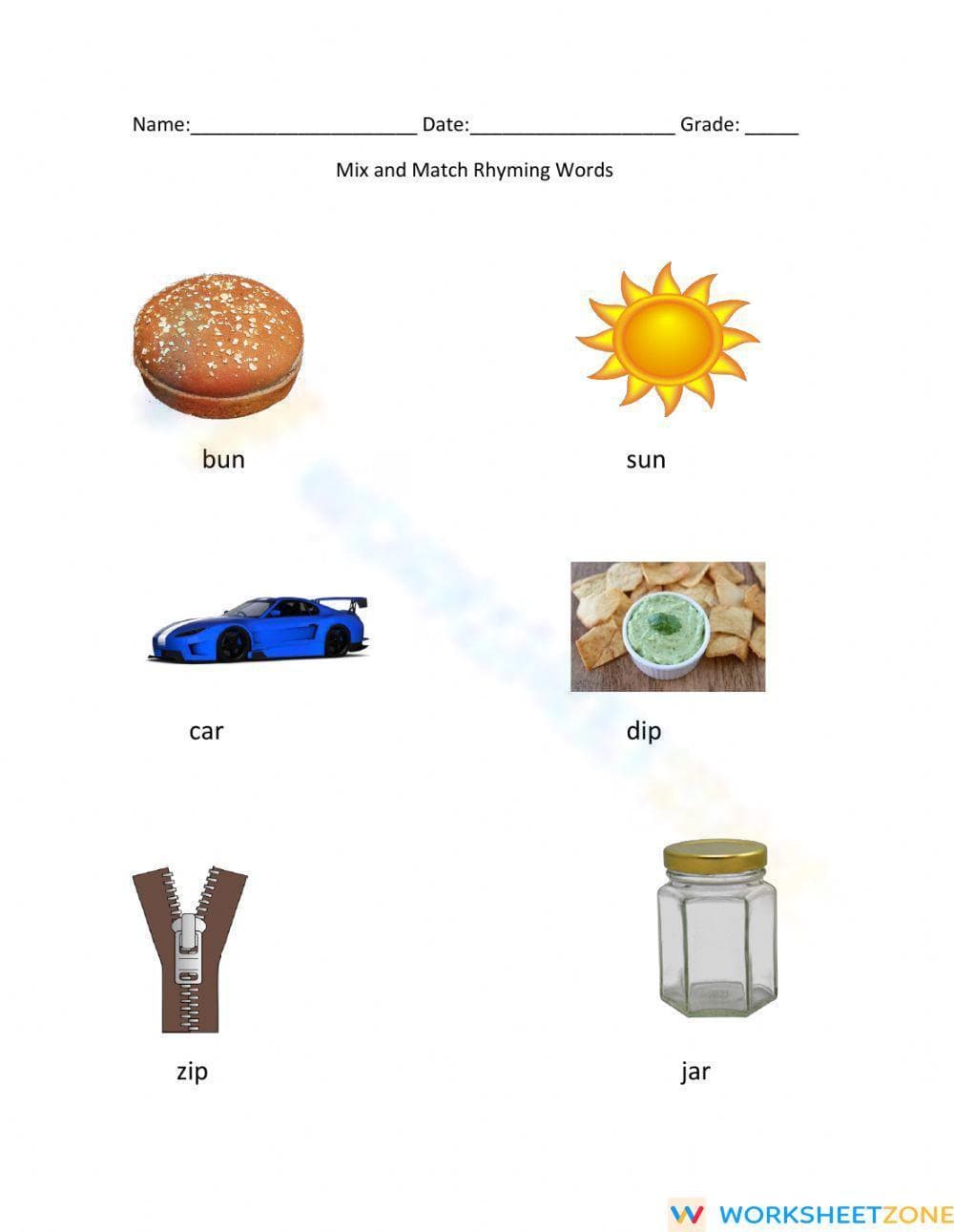

Essential Rhyming Words Matching Worksheet | K ELA
Paste this activity's link or code into your existing LMS (Google Classroom, Canvas, Teams, Schoology, Moodle, etc.).
Students can open and work on the activity right away, with no student login required.
You'll still be able to track student progress and results from your teacher account.
This rhyming words matching worksheet helps early learners master the fundamental skill of auditory discrimination. By identifying pairs like "top" and "pop," students strengthen their phonemic awareness, a critical precursor to reading success. The activities focus on simple CVC patterns to ensure students can successfully isolate ending sounds and recognize consistent word families.
At a Glance
- Grade: Kindergarten · Subject: ELA
- Standard:
CCSS.ELA-LITERACY.RF.K.2.A— Recognize and produce rhyming words in spoken language effectively.- Skill Focus: Phonemic Awareness
- Format: 5 pages · 15 problems · Answer key included · PDF
- Best For: Small group literacy centers or independent work
- Time: 25–30 minutes
Inside this 5-page printable PDF, you will find 15 distinct matching tasks designed for young learners. Each page features three pairs of colorful, engaging images with corresponding word labels. The structural layout uses clear, high-contrast visuals to support students as they draw lines to connect rhyming pairs such as "bed" and "red" or "log" and "frog." A full answer key is included for quick teacher verification.
Skill Progression
- Guided Practice: Students begin by matching high-frequency CVC words with strong visual support to build initial confidence.
- Supported Practice: Middle sections introduce varied word families, requiring students to isolate final phonemes more precisely across six matching pairs.
- Independent Practice: The final pages challenge students to confirm rhymes with minimal teacher assistance, completing the final three pairs independently.
This "I Do, We Do, You Do" approach ensures that students receive the scaffolding needed to internalize the concept of rhyming sounds.
Standards Alignment
This resource is strictly aligned to CCSS.ELA-LITERACY.RF.K.2.A, which requires students to recognize and produce rhyming words. By focusing on auditory patterns and visual word associations, the worksheet addresses the core components of phonological awareness. Both standard codes can be copied directly into lesson plans, IEP goals, or district curriculum mapping tools to streamline your documentation process.
How to Use It
To use this worksheet effectively, introduce it after a whole-group lesson on word families. During independent practice, circulate and observe students as they say the words aloud; a student struggling to find a match may need a scaffolded prompt focusing on the "stretch" of the vowel sound. These 15 tasks generally take 25 to 30 minutes to complete, making them an ideal formative assessment for tracking weekly progress.
Who It's For
This resource is designed for Kindergarten students but serves as an excellent intervention tool for Grade 1 and Grade 2 learners who require additional support with phonemic awareness. It pairs naturally with rhyming picture books or word family anchor charts. The clear labels and bright images make it accessible for English Language Learners who are building their foundational English vocabulary alongside literacy skills.
Research by Fisher & Frey (2014) emphasizes the importance of explicit phonological awareness instruction in the early grades to prevent future reading difficulties. This matching worksheet addresses those findings by providing targeted practice in recognizing rhyming words, a skill that correlates strongly with later decoding proficiency. Each of the 15 problems is designed to isolate the rhyming phoneme, allowing teachers to identify specific gaps in a student's auditory processing. This standard-aligned CCSS.ELA-LITERACY.RF.K.2.A tool provides a scalable solution for classrooms needing high-quality, evidence-based literacy support that can be implemented with minimal preparation.


