


























Views
Downloads


Printable Contractions Worksheet | Grade 2 ELA
Paste this activity's link or code into your existing LMS (Google Classroom, Canvas, Teams, Schoology, Moodle, etc.).
Students can open and work on the activity right away, with no student login required.
You'll still be able to track student progress and results from your teacher account.
Master Contractions with a Hands-On Sort
This worksheet provides targeted practice for Grade 2 students learning to form and use contractions. Through a hands-on sorting activity, learners will match common contractions like "can't" and "it's" with the two words that create them. It's an effective way to reinforce the use of apostrophes in standard English grammar.
At a Glance
- Grade: 2 · Subject: English Language Arts (ELA)
- Standard:
CCSS.ELA-LITERACY.L.2.2.C— Use apostrophes to form contractions and possessives.- Skill Focus: Contractions
- Format: 2 pages · 1 sorting task · Answer key not included · PDF
- Best For: Literacy centers or independent practice
- Time: 15–20 minutes
What's Inside
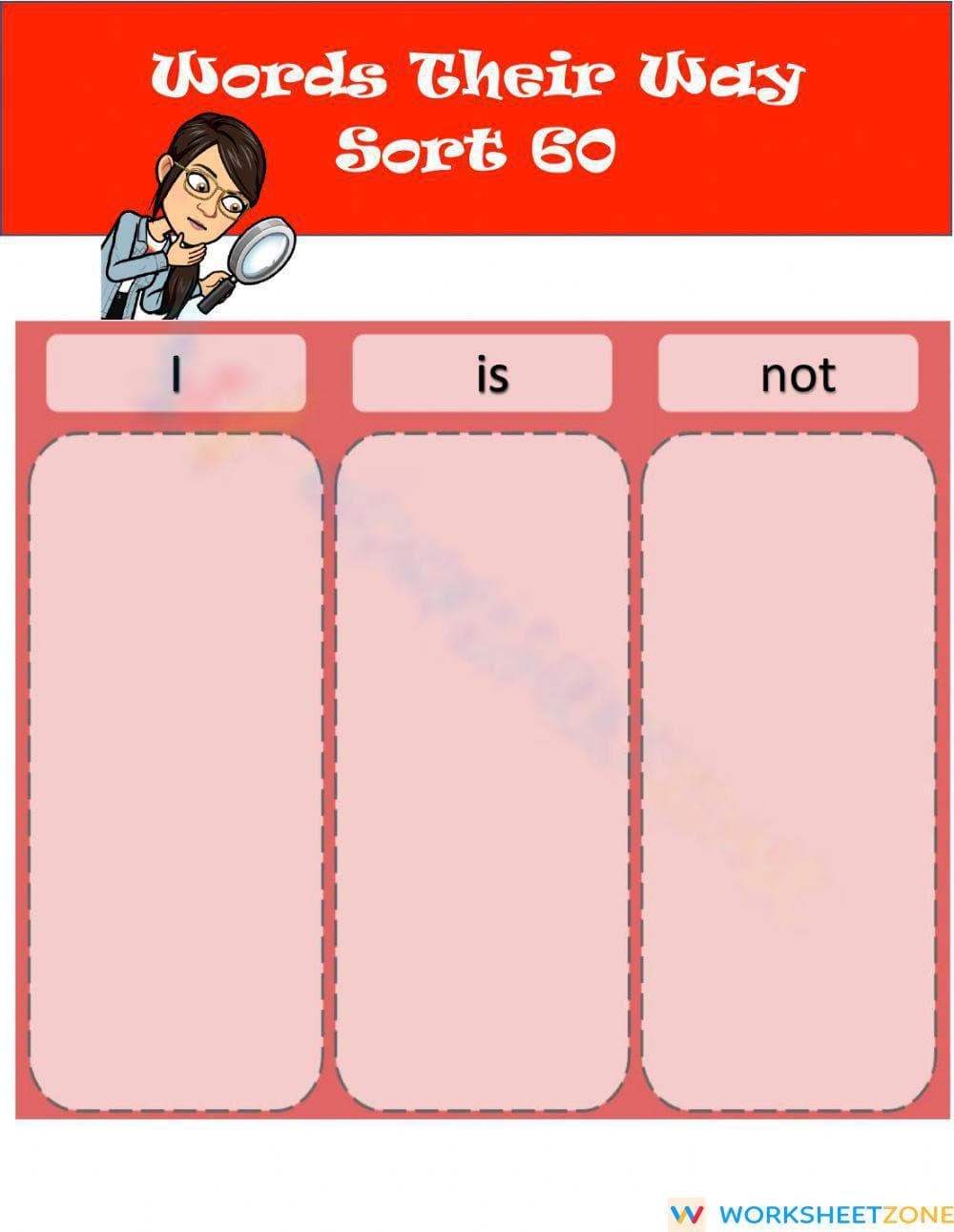
This two-page resource includes a primary sorting mat and a second page with 18 word cards for students to cut out. The sorting mat features three columns for organizing words into categories. The design is straightforward, requiring only printing, cutting, and pasting to complete the single, focused activity. This makes it a perfect, low-prep addition to any lesson plan.
A Clear Path to Skill Mastery
This activity supports skill acquisition through a clear progression:
- Guided Practice: A teacher can begin by modeling how to sort a few cards, such as "do not" and its contraction "don't," thinking aloud about the apostrophe's role.
- Supported Practice: Students can then work in pairs to sort the remaining cards, discussing their choices and checking each other's understanding of the word pairs.
- Independent Practice: Finally, students can complete the sort on their own as a formative assessment, demonstrating their mastery of the concept.
This model ensures students build confidence and competence.
Standards Alignment
This worksheet is directly aligned with the Common Core State Standard CCSS.ELA-LITERACY.L.2.2.C, which requires students to "Use an apostrophe to form contractions and frequently occurring possessives." By completing the sorting task, students demonstrate their understanding of how two words are combined to form a contraction. Standard codes can be copied into lesson plans, IEP goals, or curriculum mapping tools.
How to Use It
This resource is versatile, usable at various points in an instructional cycle. As a pre-assessment, it can reveal which students already grasp the concept of contractions. Used during a unit, it serves as an excellent independent practice activity for a literacy center or station rotation, taking approximately 15-20 minutes to complete. Observe specific contractions students struggle with for targeted re-teaching or small group instruction.
Who It's For
Designed for first and second-grade students learning contractions. Its clear, hands-on format suits English language learners or older students needing review. For differentiation, provide a pre-made anchor chart showing examples of common contractions to support struggling learners. This activity pairs well with a direct instruction lesson on apostrophe usage.
This contraction sorting activity provides focused practice aligned with CCSS.ELA-LITERACY.L.2.2.C, a key component of early literacy development. The ability to recognize and use contractions correctly is fundamental for fluent reading and writing. Research shows explicit instruction in grammatical conventions with hands-on practice improves writing. Fisher & Frey (2014) found purposeful, task-oriented activities more effective than grammar drills. This worksheet applies that finding, asking students to manipulate and categorize words rather than passively filling blanks. Engaging with 18 examples builds automaticity for applying contraction understanding in reading and writing, crucial for grade-level expectations.


