


























Views
Downloads
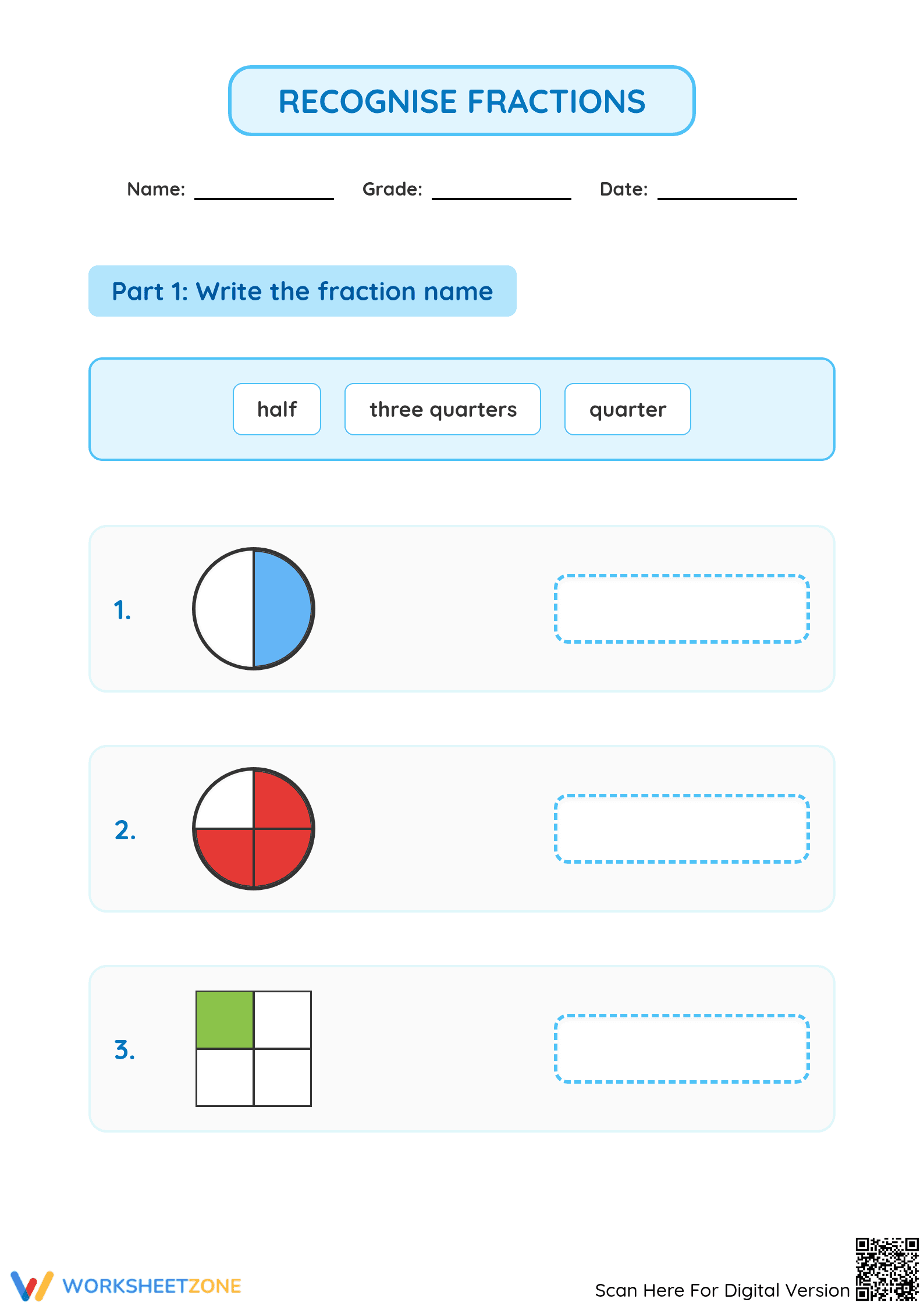
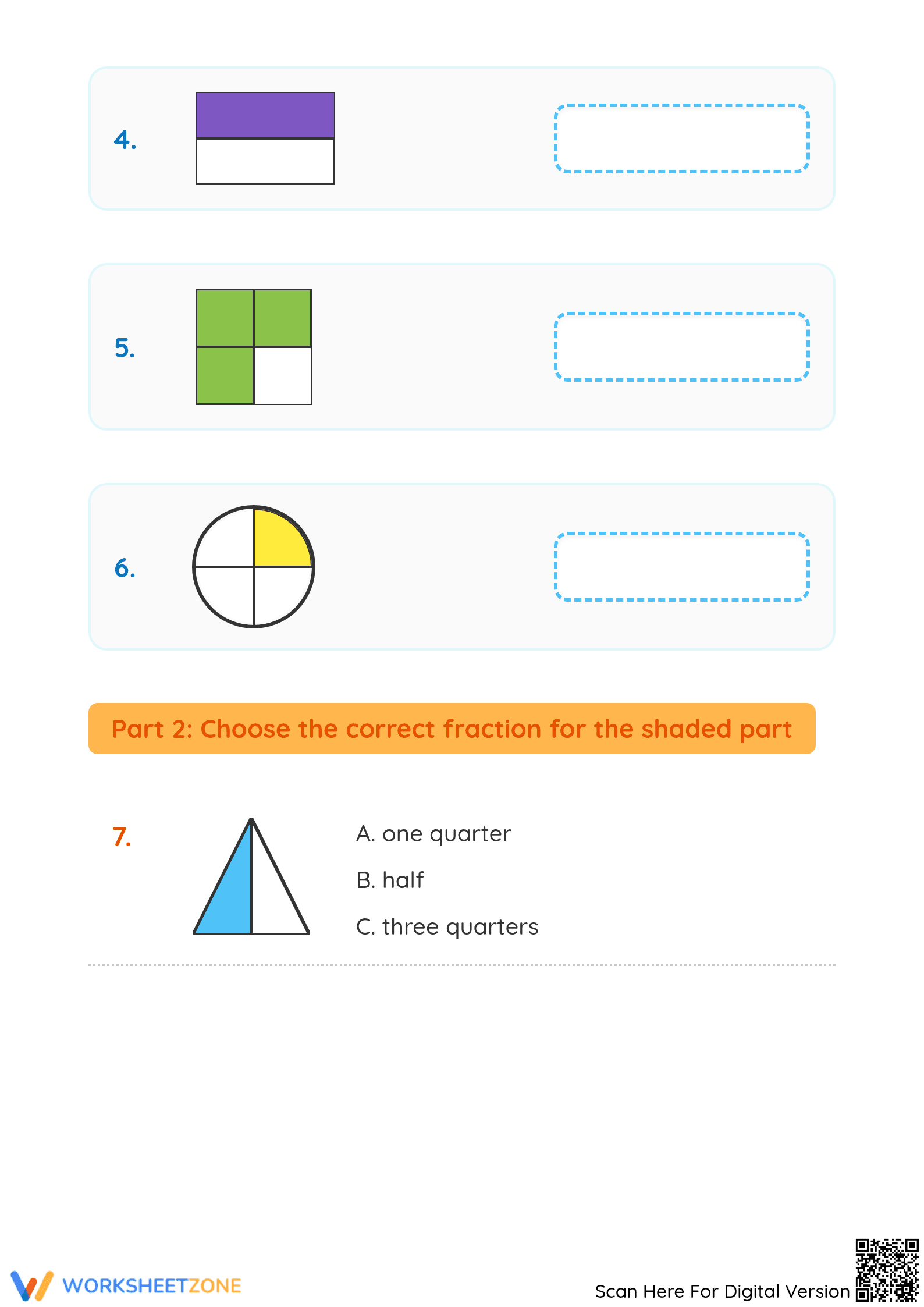
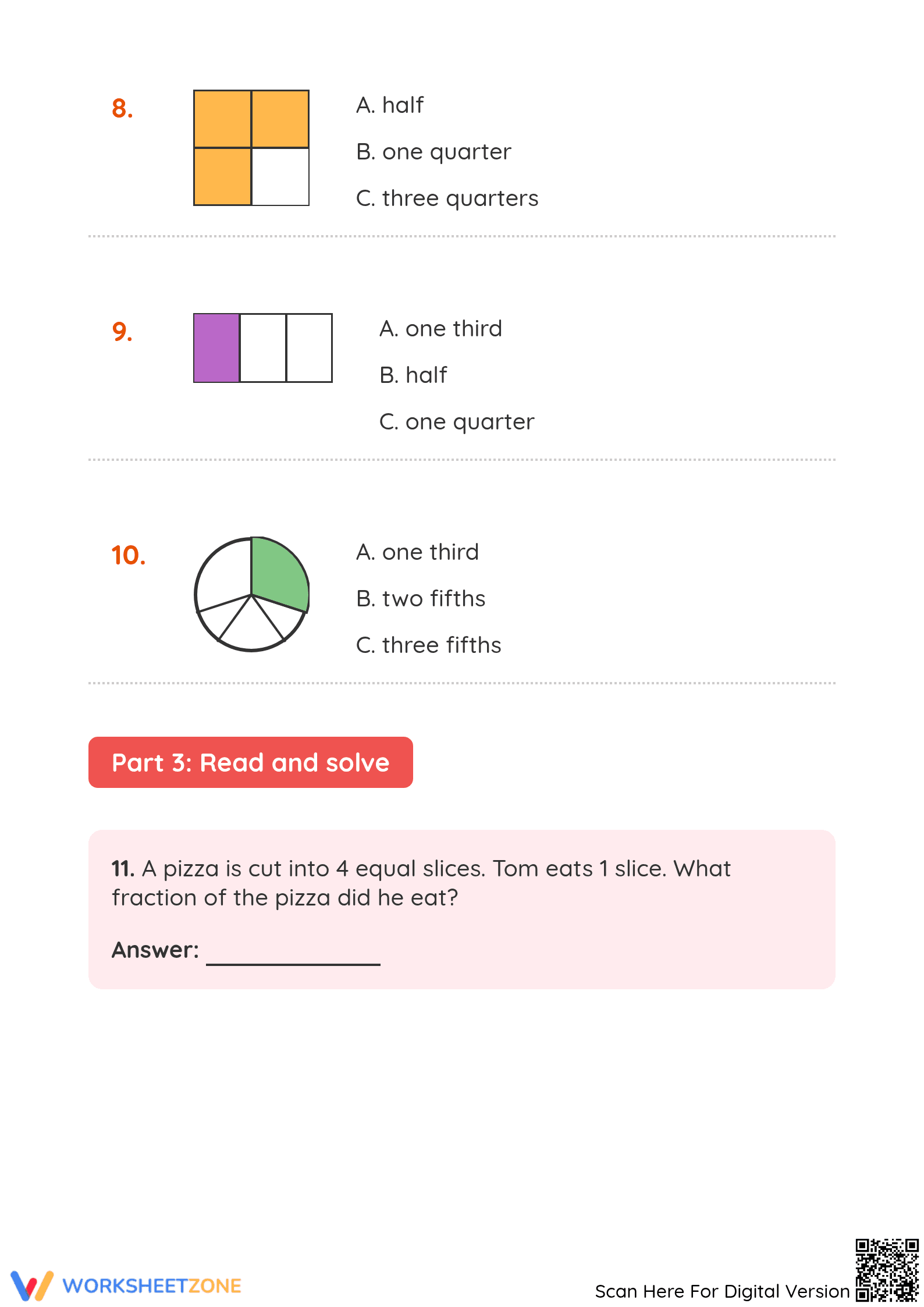
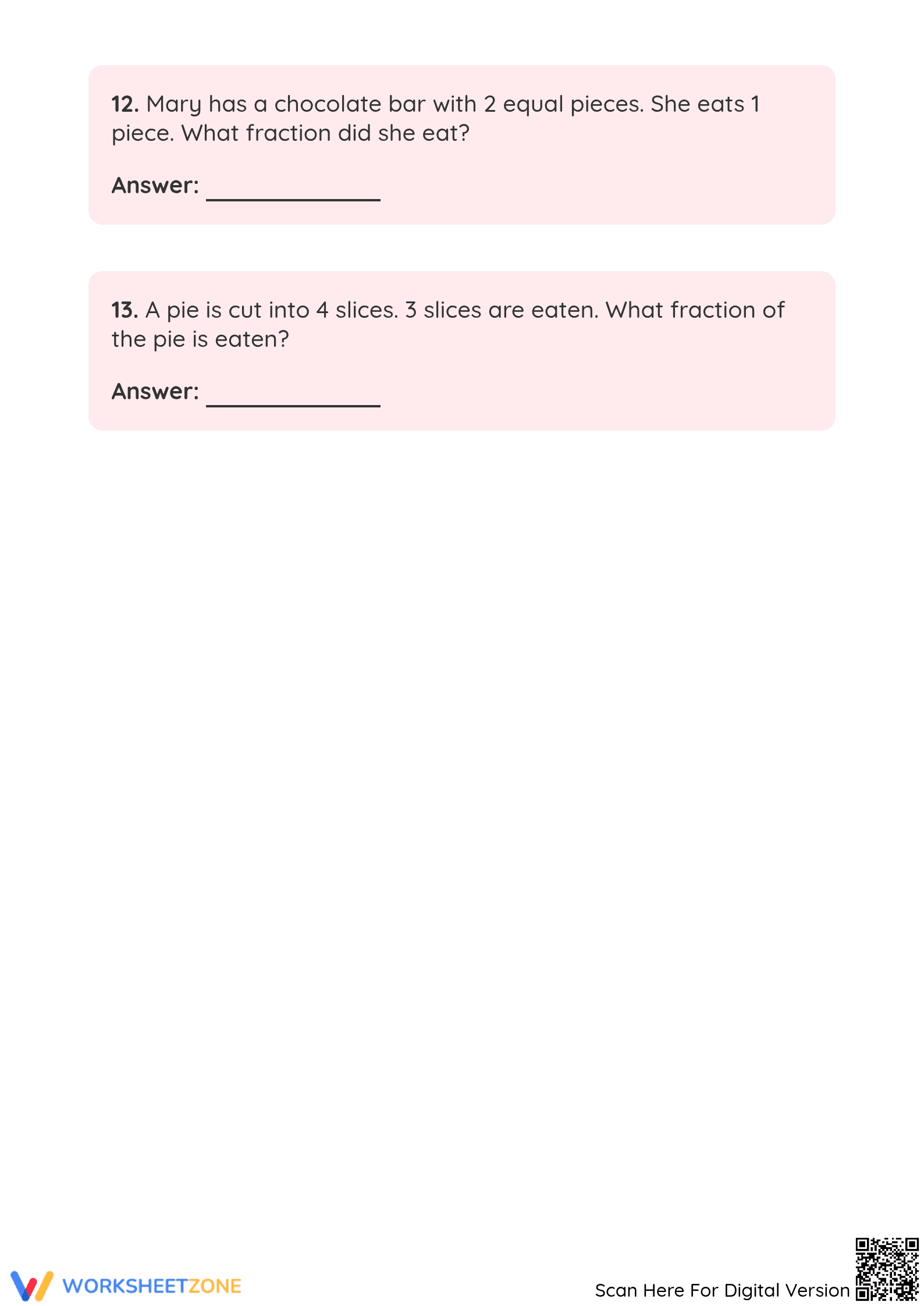

Grade 3 Fractions — Printable No-Prep Worksheet
Paste this activity's link or code into your existing LMS (Google Classroom, Canvas, Teams, Schoology, Moodle, etc.).
Students can open and work on the activity right away, with no student login required.
You'll still be able to track student progress and results from your teacher account.
This worksheet provides Grade 3 students with focused practice on recognizing and writing basic fractions. Through a series of clear visual exercises, learners will build foundational understanding of numerators, denominators, and how they represent parts of a whole, preparing them to apply these concepts in more complex problems.
At a Glance
- Grade: 3 · Subject: Math
- Standard:
CCSS.MATH.CONTENT.3.NF.A.1— Understand a fraction as part of a whole partitioned into equal parts.- Skill Focus: Recognizing and Writing Fractions
- Format: 3 pages · 7 problems · Answer key included · PDF
- Best For: Independent practice or station work
- Time: 20–30 minutes
What's Inside
This three-page resource guides students through 7 distinct tasks designed to build fluency with fractions. The exercises include writing fractions from shaded shapes, coloring parts to match a given fraction, and matching fractions to their visual representations. A complete, single-page answer key is included for easy review.
A Zero-Prep Workflow
This worksheet is designed for immediate use. 1. Print (<1 min): Print the three worksheet pages and the answer key. 2. Distribute (<1 min): Hand out for independent work, small groups, or math centers. 3. Review (5-10 mins): Use the key for a whole-class review or have students self-check. The entire cycle is under 15 minutes, making it perfect for sub plans or a quick skills refresher.
Standards Alignment
This worksheet directly supports Common Core standard CCSS.MATH.CONTENT.3.NF.A.1, which requires students to "Understand a fraction 1/b as the quantity formed by 1 part when a whole is partitioned into b equal parts; understand a fraction a/b as the quantity formed by a parts of size 1/b." It also provides foundational practice for partitioning shapes into parts with equal areas (CCSS.MATH.CONTENT.3.G.A.2). Both standard codes can be copied directly into lesson plans or curriculum mapping tools.
How to Use It
Use this for independent practice after a lesson on fractions or as a math rotation station. For a quick formative check, circulate as students work on tasks 5-6, noting who correctly interprets the fraction parts. Most students will complete the worksheet in 20-30 minutes.
Who It's For
This resource is ideal for Grade 3 students beginning their study of fractions, advanced Grade 2 learners, or Grade 4 students needing a straightforward review. The clear visual models support all learners, including English Language Learners. Pair this worksheet with a fraction anchor chart for a complete learning station.
Grounded in the principle of concrete representation, this worksheet helps Grade 3 students meet CCSS.MATH.CONTENT.3.NF.A.1 by connecting abstract fraction symbols to visual models. This approach is critical for developing number sense with rational numbers. Research consistently shows that a strong foundation in fractions is a primary predictor of later success in algebra. As documented by the `NAEP`, students who cannot fluently operate with fractions by the end of middle school are at a significant disadvantage. By providing varied, repetitive practice with partitioning wholes and identifying fractional parts, this resource gives students the foundational experience necessary for future success. It provides the structured practice that builds the automaticity needed to tackle more complex fraction operations, a key finding highlighted in the `RAND AIRS 2024` report on effective math instruction.


