




























Views
Downloads

Ready Tide-Pool Organisms Word Search | Grades 4–5 Science

Paste this activity's link or code into your existing LMS (Google Classroom, Canvas, Teams, Schoology, Moodle, etc.).
Students can open and work on the activity right away, with no student login required.
You'll still be able to track student progress and results from your teacher account.
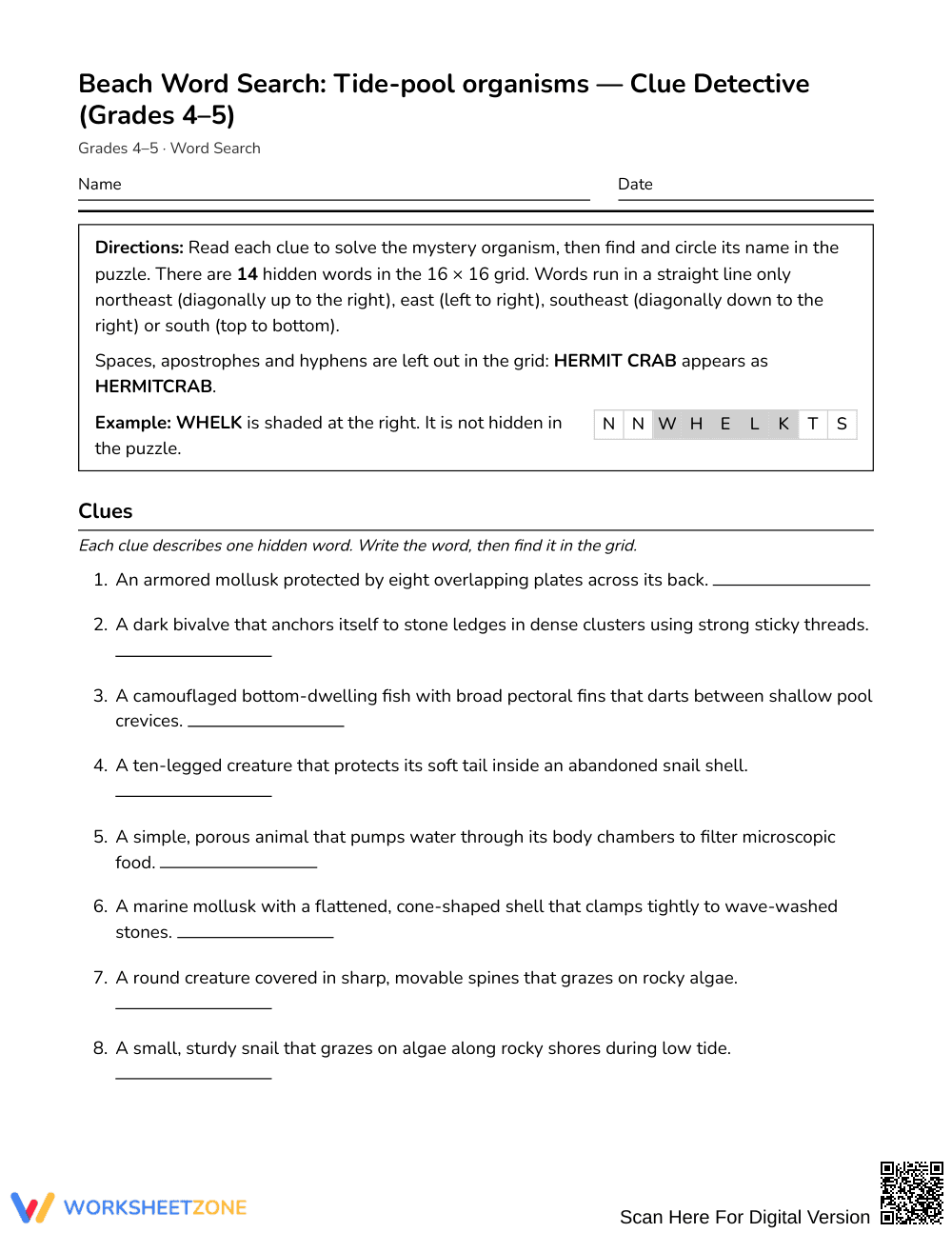
This Grades 4–5 tide-pool organisms word search reinforces marine biology vocabulary through an engaging clue-based challenge. Students read functional descriptions of intertidal wildlife to deduce target terms, then locate 14 hidden words within the grid. The activity strengthens scientific reading comprehension and organism identification during elementary science lessons.
At a Glance
- Grade: Grades 4–5 · Subject: Elementary Science
- Standard: Not standards-assessed — vocabulary enrichment for marine biology units
- Skill Focus: Tide-pool organisms and rocky shore animal physical adaptations
- Format: 3 pages · 14 words · Complete 3-page answer key included · PDF
- Best For: Science stations, emergency sub plans, and fast finishers
- Time: 20–35 minutes
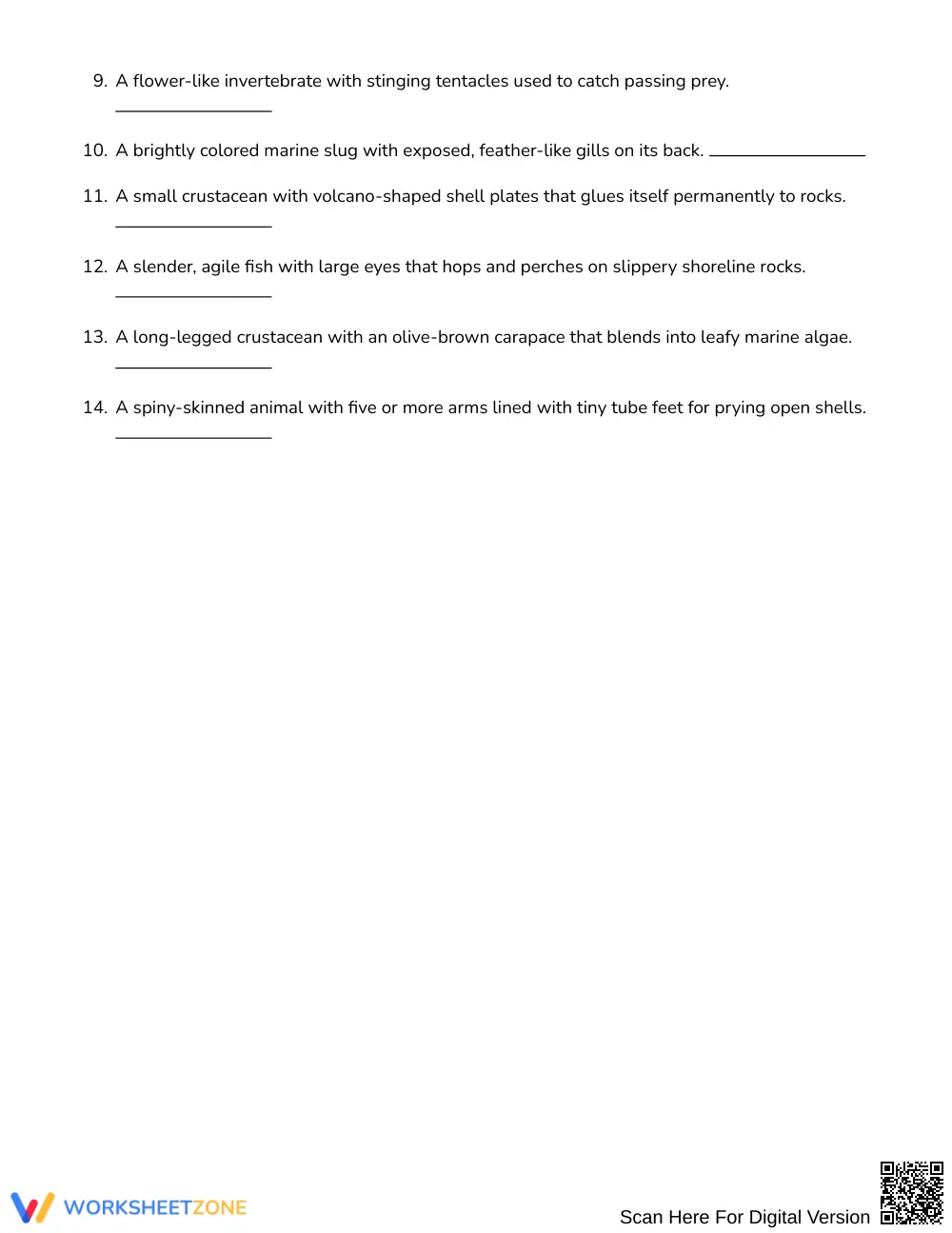
This 3-page printable science resource features a complete Clue Detective activity highlighting 14 tide-pool organisms. Students read detailed behavioral clues—such as the barnacle's volcano-shaped plates or the sea star's tube feet—to deduce each mystery animal before locating it in a shuffled word bank. A full 3-page answer key provides clear visual solutions for fast grading.
Puzzle Mechanics and Structure
The word search employs deliberate puzzle mechanics tailored for upper-elementary learners:
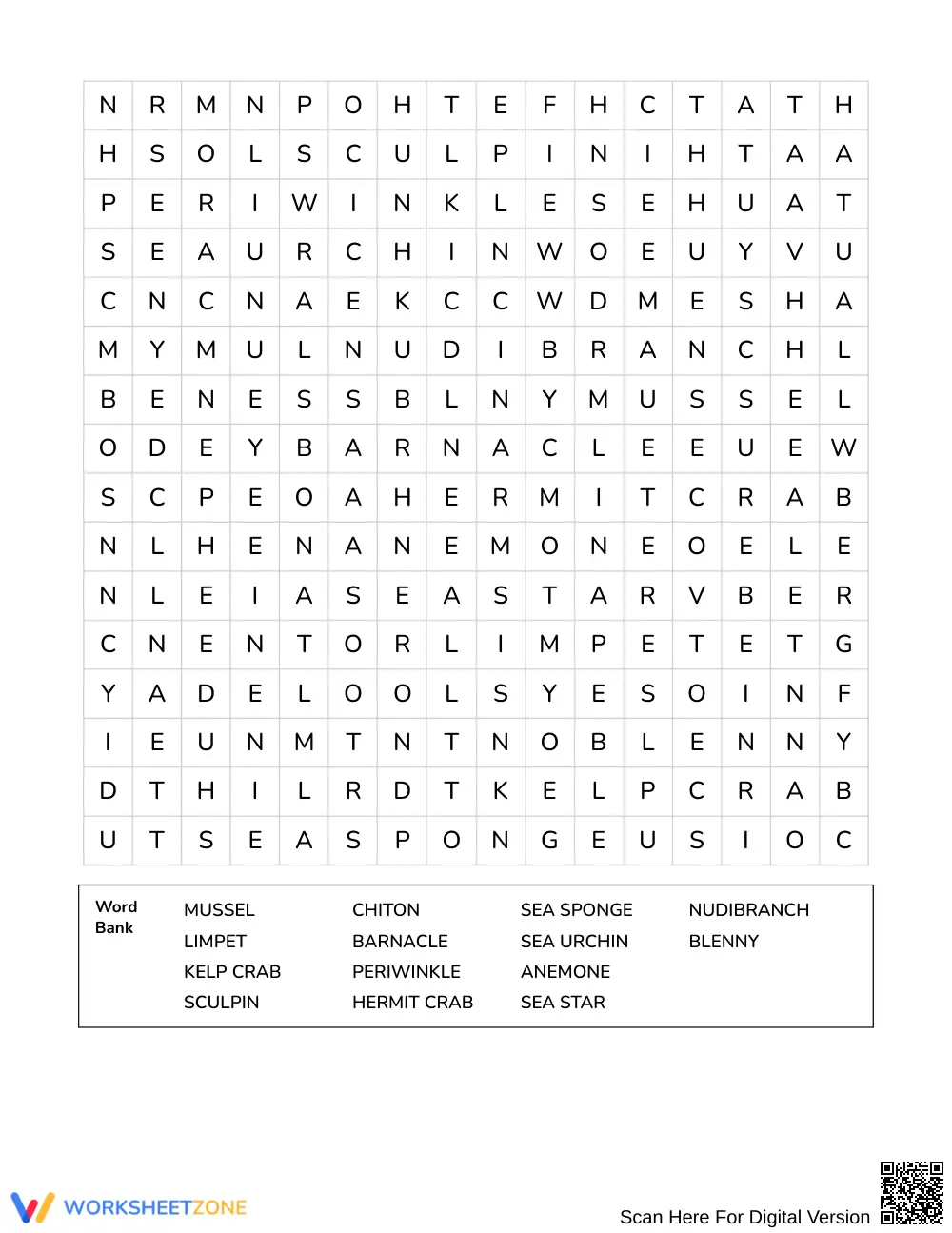
- Grid Dimensions: A 16 x 16 letter grid supports intermediate visual scanning without overcrowding.
- Word Placement Directions: Words run in four distinct directions—northeast, east, southeast, and south—offering balanced spatial practice.
- Clue Detective Format: Students solve 14 biological clues first, connecting functional definitions directly to target organism names.
- Shuffled Word Bank: Words appear in a shuffled arrangement to encourage authentic identification rather than rote alphabetical scanning.
Standards Alignment
This word search serves strictly as supplemental vocabulary enrichment and is not aligned to a formal standard. It supports elementary life science instruction by reinforcing terminology associated with marine ecosystems and animal adaptations during living things units.
How to Use It
Incorporate this activity flexibly across your instructional sequence:
- Science Station Practice: During marine habitat units, place this puzzle at an independent station where students apply clue definitions to identify species.
- Post-Lesson Formative Check: Use the sheet after direct instruction. Formatively observe whether students deduce terms like nudibranch and chiton independently from anatomical clues.
Students typically complete the search in 20 to 35 minutes.
Who It's For
This puzzle is ideal for Grades 4–5 students studying ocean ecosystems. Support English learners by pairing the sheet with an illustrated tide-pool anchor chart for visual reinforcement. Advanced students can write follow-up sentences explaining how one organism survives wave action. Pair this resource with a nonfiction passage on rocky shorelines.
Designed for Grades 4–5 science instruction, this clue-driven tide-pool organisms word search builds domain-specific life science vocabulary through active contextual puzzle solving. Students analyze physical adaptations and ecological niches to identify 14 distinct intertidal species before locating them across a 16 x 16 letter grid. According to Fisher & Frey (2014), intentional exposure to technical terminology within engaging, low-stakes learning structures significantly improves long-term semantic retention and informational reading comprehension in content-area classrooms. Because this resource functions strictly as standalone vocabulary enrichment rather than a formal standards-assessed testing instrument, elementary educators can implement it flexibly during marine biology units, sub days, or science stations without cumbersome reporting requirements. Complete with an unabridged 3-page answer key, the puzzle provides immediate visual verification that supports learner autonomy, self-regulation, and scientific literacy during upper-elementary living systems investigations.


