





























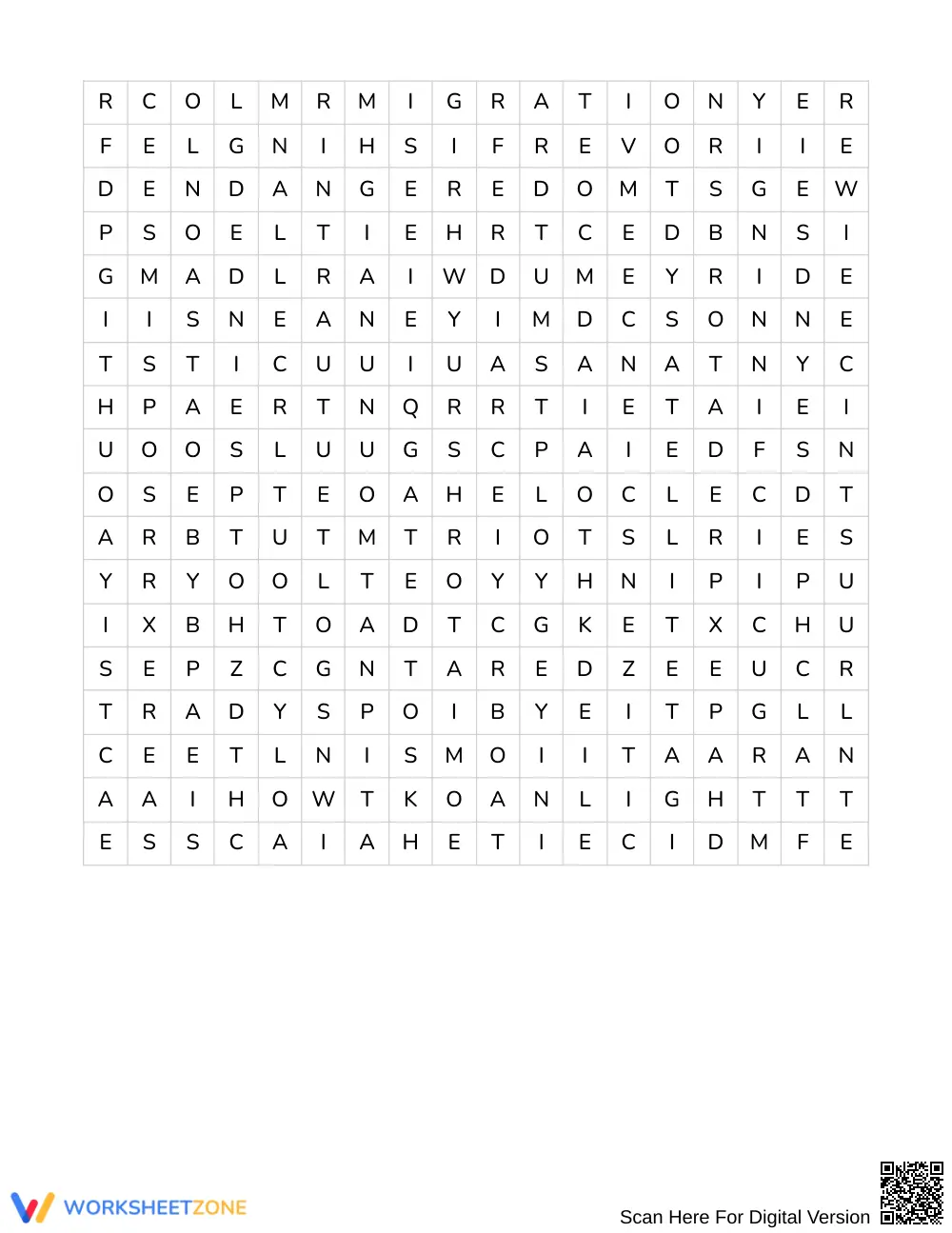


Ready Shark Conservation Word Search | Grades 6–7 Science

Paste this activity's link or code into your existing LMS (Google Classroom, Canvas, Teams, Schoology, Moodle, etc.).
Students can open and work on the activity right away, with no student login required.
You'll still be able to track student progress and results from your teacher account.
This Grades 6–7 science word search reinforces shark research and conservation vocabulary through an active clue-solving challenge. Students define key marine biology concepts and locate 16 target terms across the puzzle grid. The activity strengthens environmental science literacy, deepens understanding of marine ecosystems, and builds retention of specialized scientific terminology without passive copying.
At a Glance
- Grade: Grades 6–7 · Subject: Science
- Standard: Not standards-assessed — vocabulary enrichment
- Skill Focus: Shark research and conservation
- Format: 3 pages · 16 words · Answer key included · PDF
- Best For: Vocabulary reinforcement and marine science enrichment
- Time: 20–30 minutes
This printable 3-page science resource features an untimed puzzle layout designed for independent or paired exploration. Students analyze 16 rigorous definition clues covering modern tagging methodologies, ocean habitats, and biodiversity threats before searching the letter grid. The document includes complete clue lists and a 4-page answer key showing full letter coordinates and word placement paths for efficient verification.
The activity challenges students through an 18 x 18 grid with no word bank provided. Learners read descriptive biological clues to determine each target term before searching. Hidden words run in all eight possible directions: north, northeast, east, southeast, south, southwest, west, and northwest. This no-bank format requires active cognitive retrieval rather than simple letter matching.
This word search serves strictly as science vocabulary enrichment and is not formally aligned to a specific state or national content standard. It reinforces essential interdisciplinary terminology spanning ecology, oceanography, and conservation biology to support broader middle school life science units.
Introduce this word search after direct instruction on marine food webs as an engaging mid-unit review, or assign it before a conservation project as a conceptual preview. During work time, circulate to observe which technical clues—such as telemetry or photogrammetry—prompt students to reference class notes, pinpointing vocabulary that warrants reteaching. Most middle school learners finish the puzzle within 20 to 30 minutes.
This resource is tailored for Grades 6–7 life science and environmental science students exploring marine biodiversity. For students needing support, allow peer pairs to tackle clue decoding collaboratively, while advanced learners can compose original context sentences using each discovered term. Pair this activity with an ocean conservation reading passage or coral reef food web anchor chart.
Designed for middle school learners in Grades 6–7, this environmental science word search builds academic vocabulary in shark research and conservation through clue-based retrieval. Rather than relying on a passive word bank, students interpret 16 detailed scientific definitions before locating terms hidden across an 18 by 18 puzzle grid. This instructional design aligns with findings from Fisher & Frey (2014) on disciplinary literacy, which demonstrate that intentional vocabulary instruction embedded within authentic content contexts significantly strengthens conceptual comprehension and long-term memory consolidation. By connecting technical terms like photogrammetry, telemetry, and apex predator directly to biological functions, the activity helps students internalize critical ecological concepts. Educators can utilize this three-page learning tool during marine biology units, sub plans, or review stations to reinforce scientific discourse and assess student familiarity with ocean conservation practices without requiring preparatory instructional adjustments.


