































Ready Civic Spaces Word Search | Grades 4–5 Social Studies

Paste this activity's link or code into your existing LMS (Google Classroom, Canvas, Teams, Schoology, Moodle, etc.).
Students can open and work on the activity right away, with no student login required.
You'll still be able to track student progress and results from your teacher account.
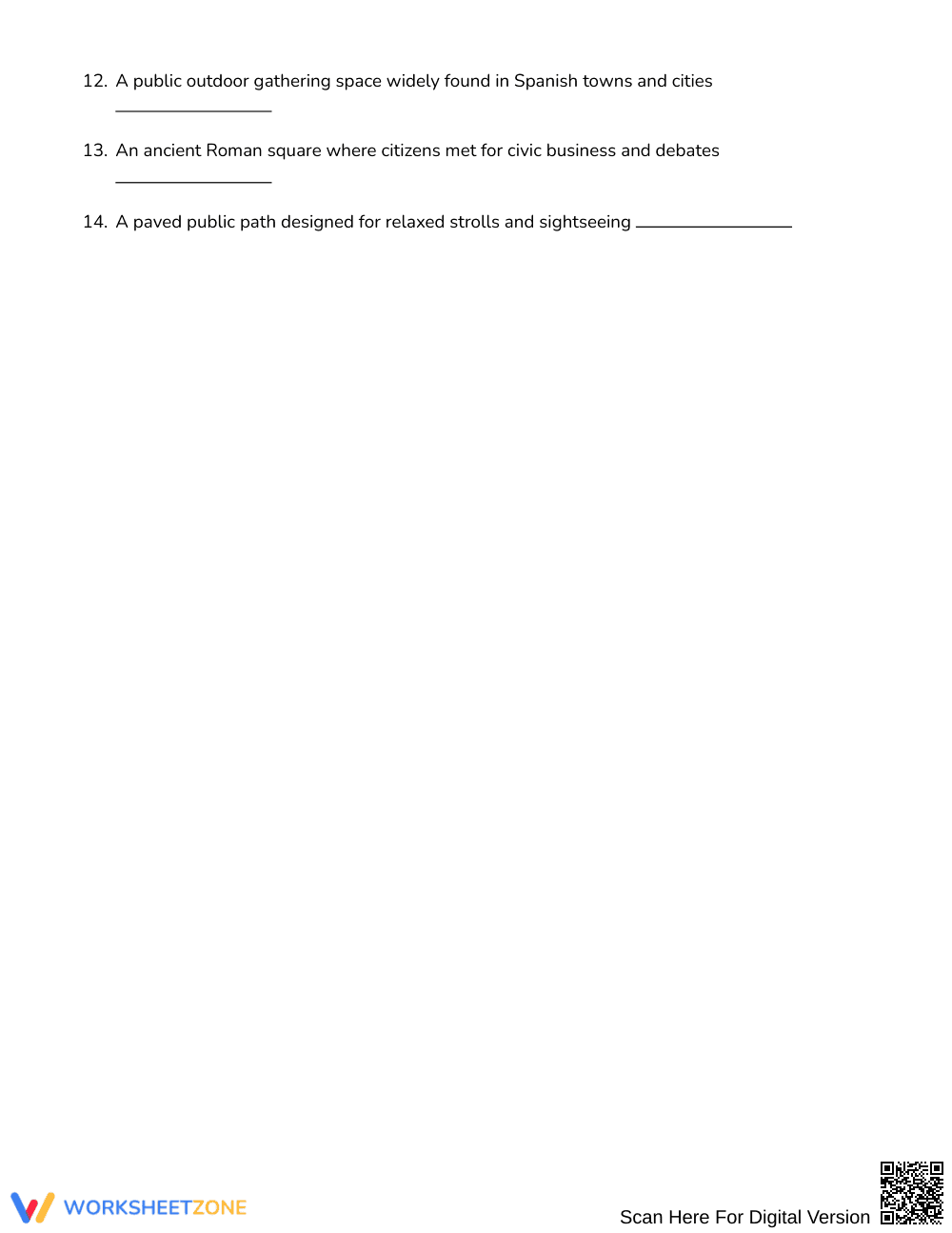
This Grades 4–5 social studies word search reinforces essential European geography and architecture vocabulary through active clue decoding. Students read descriptive definitions of historic community spaces, identify target terms such as piazza, agora, and forum, and locate them within the puzzle grid. The activity develops civic literacy, contextual word analysis, and cultural awareness across 14 focused terms.
At a Glance
- Grade: Grades 4–5 · Subject: Social Studies
- Standard: Not standards-assessed — vocabulary enrichment
- Skill Focus: Civic squares and public spaces
- Format: 3 pages · 14 words · Answer key included · PDF
- Best For: Vocabulary review or extension
- Time: 20–30 minutes
What's Inside: The 3-page printable resource includes a clue-driven puzzle sheet alongside a comprehensive 3-page solution set. Rather than relying on a simple word list, students review 14 substantive clues detailing architectural and urban design concepts, matching each historical description to its corresponding term before searching the puzzle grid.
Puzzle Structure and Mechanics
The activity centers on a 16 × 16 letter grid containing 14 hidden vocabulary terms. Words run in four specific orientations: northeast, east, southeast, and south. Instead of a direct letter-matching list, students use a clue detective format paired with a shuffled word bank, requiring learners to connect spatial definitions to precise vocabulary before scanning the letter array.
Standards Alignment
This activity provides dedicated vocabulary enrichment and is not aligned to an assessed state standard. It enhances cross-curricular background knowledge in world history, geography, and civic architecture, building foundational terminology that strengthens reading comprehension across elementary informational texts.
How to Use It
Introduce this word search as an engaging mid-unit transition or a high-interest Friday review activity following direct instruction on ancient European civilizations or modern urban geography. Alternatively, assign the puzzle as purposeful early finisher work or an emergency social studies sub plan that students can manage independently. During work time, circulate to verify that learners read the architectural clues rather than guessing letter strings randomly. Most learners complete the vocabulary matching and puzzle search in 20 to 30 minutes.
Who It's For
Designed for fourth and fifth-grade social studies learners, this puzzle offers an accessible entry point to European civic heritage. For students who need extra reading support, partner reading allows collaborative clue solving before letter hunting. Pair this activity with an illustrated photo tour or anchor chart displaying famous historic plazas such as the Roman Forum and Venetian piazzas to deepen visual connections.
Vocabulary acquisition requires repeated, meaningful contact with specialized domain terms. Fisher & Frey (2014) demonstrate that structured vocabulary instruction combined with intentional retrieval routines produces measurable increases in informational reading comprehension across upper elementary grades. When students analyze descriptive clues to identify civic concepts such as courtyards, colonnades, and agoras, they anchor unfamiliar academic language to clear mental representations. This clue-driven search format transforms routine word recognition into an active definitional inquiry task, helping fourth and fifth graders retain 14 essential social studies terms through multisensory scanning and contextual decoding.


